- 1
Book six to eight weeks ahead for April or November; midwinter leaves room days out.
- 2
Take the train: one stop to Tofukuji, then Keihan to Gion-Shijo, about 18 minutes door to door.
- 3
Bring clean white socks and bare hands: no shoes, no jewelry, no perfume inside.
This geisha tea ceremony in Kyoto - what travelers said
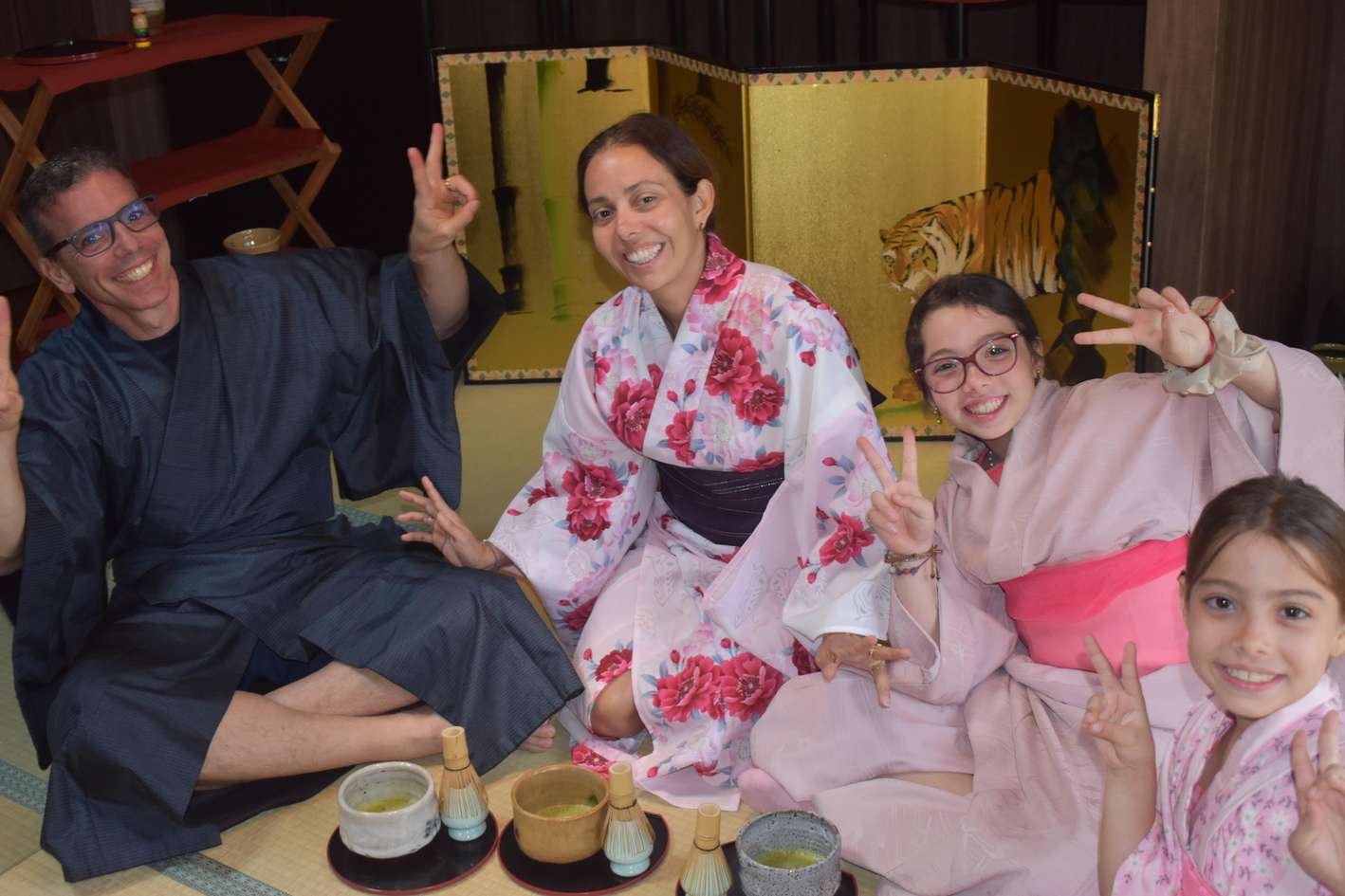
Most reviewers love the kimono dressing, where the staff help them pick a design and style their hair.
Many are surprised they can keep the kimono on afterwards and stroll Kyoto in it for the rest of the day.
A few wish the tea ceremony itself ran longer after all the dressing and photos were done.
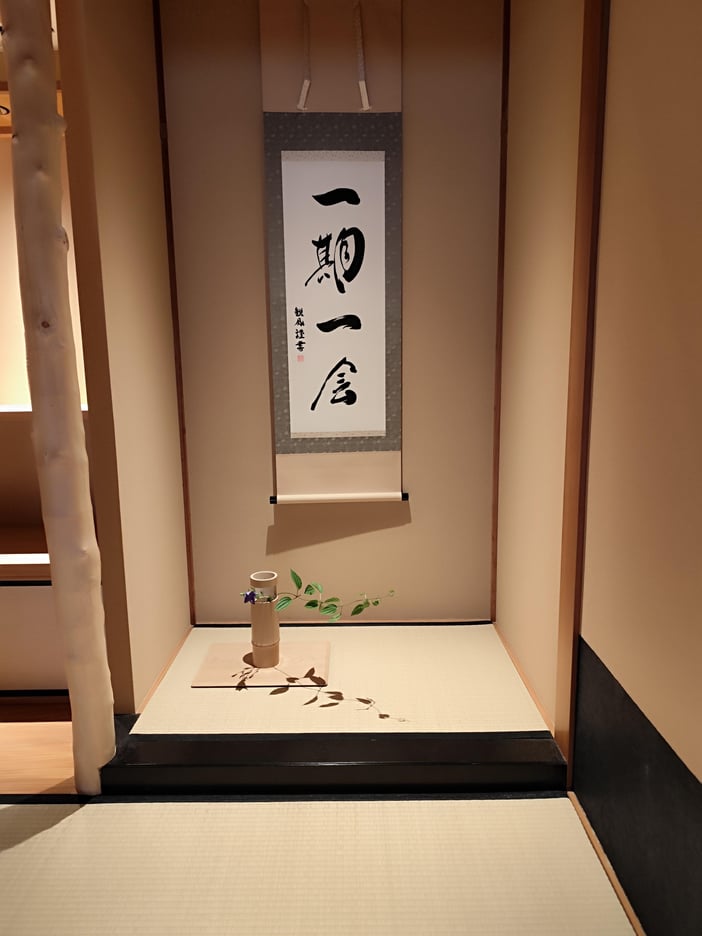 ★★★★★
Beautiful traditional spot, kind staff, picked our own kimonos, short but genuine ceremony.
Martyna · United States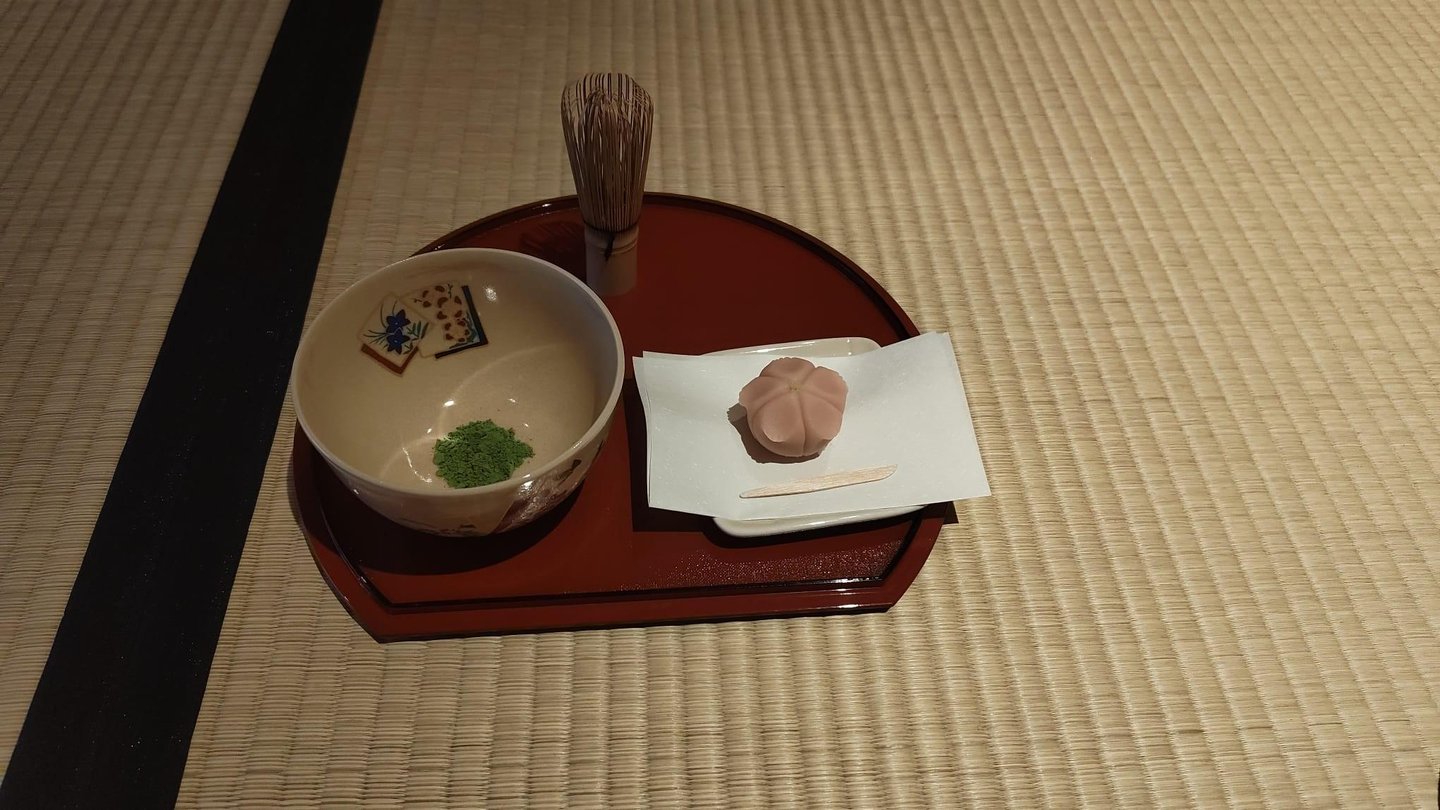 ★★★★★
Really enjoyable ceremony with a sweet guide. You take kimono photos before and after, then keep wearing it to visit nearby temples. Feeling like a geisha!
Sena · Turkey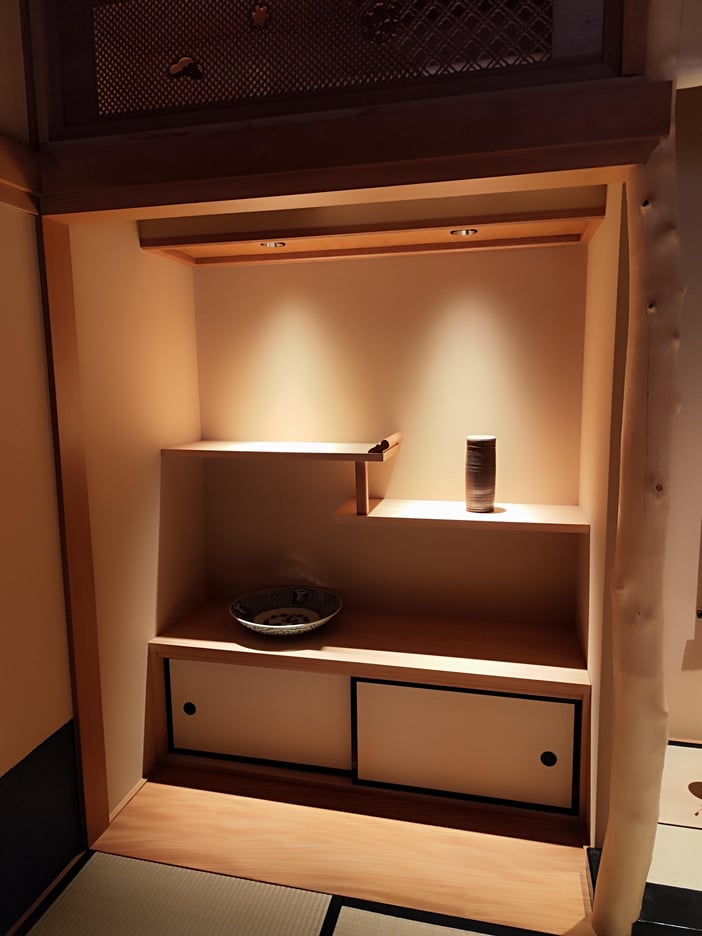 ★★★★★
Beautiful tea ceremony! You pick your own kimono and get traditional hair styling, they handle all hair types. Learned the history, had matcha and sweets, and wore the kimono afterward. Highly recommend!
A traveler · Canada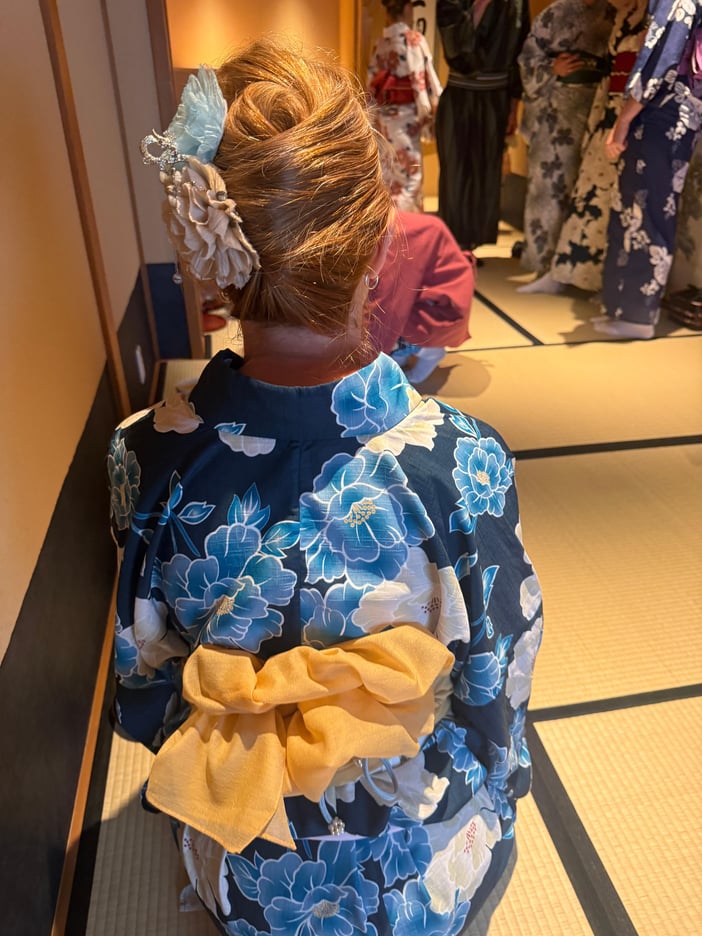 ★★★★★
¡Increíble! El personal te hace sentir especial, con excelente ayuda con el kimono y el peinado. Puedes usarlo hasta las 5 pm y te toman fotos durante la ceremonia. ¡Nos fascinó!
Clayna · Mexico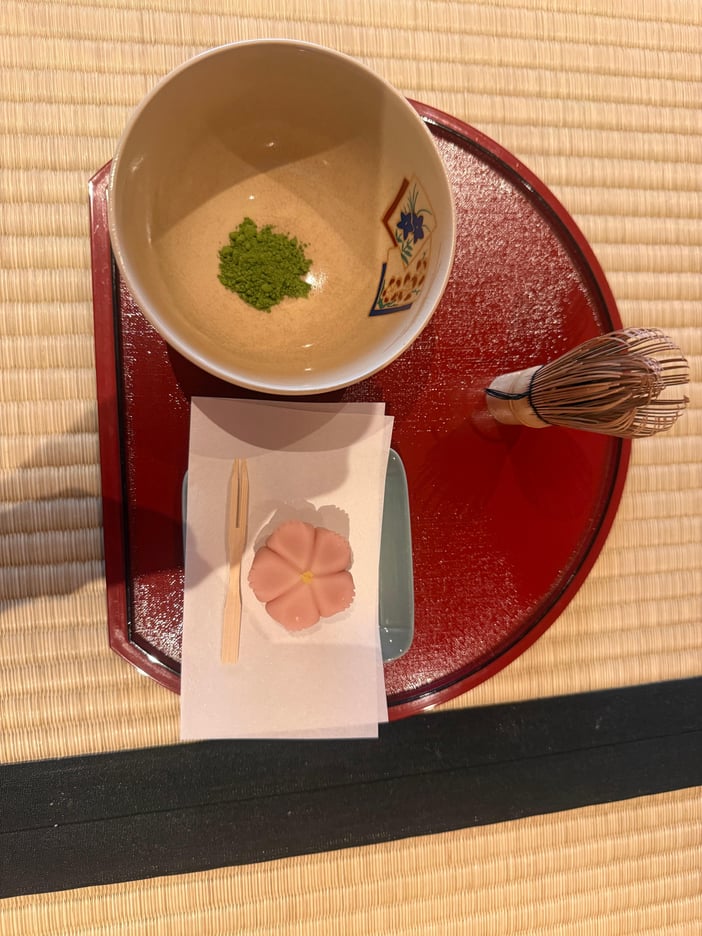 ★★★★★
Magical! They dressed us in kimono, styled our hair. The calm, respectful ceremony in a gorgeous traditional setting, plus photos.
Fanny · France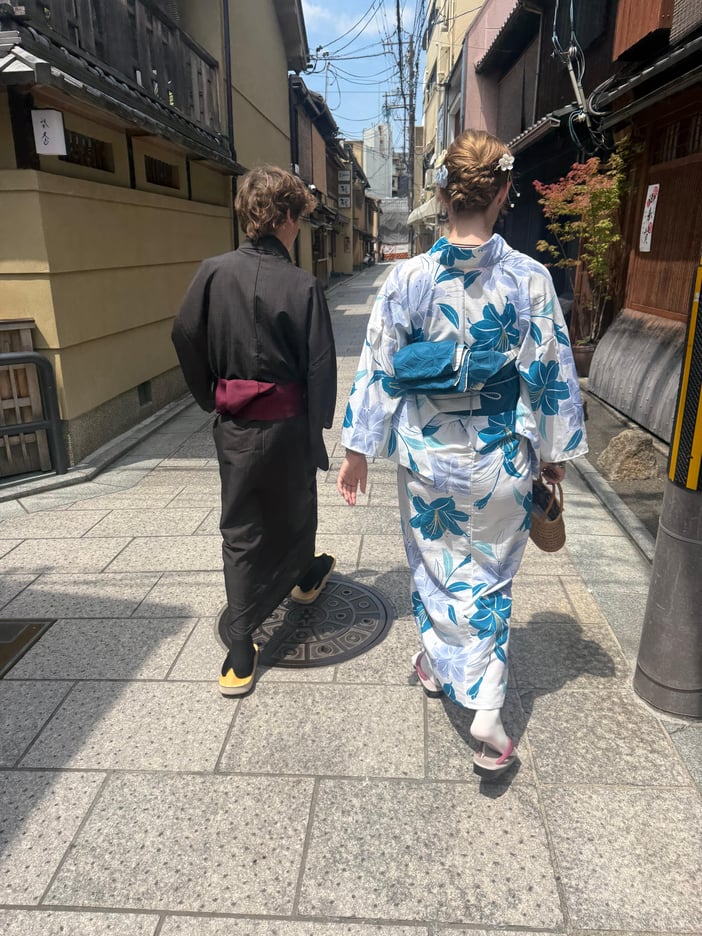 ★★★★★
Beautiful. I loved putting my kimono outfit together, lovely combinations. A happy surprise that we could keep it on until end of day. The ceremony was explained thoroughly and the matcha was excellent.
Katie · United States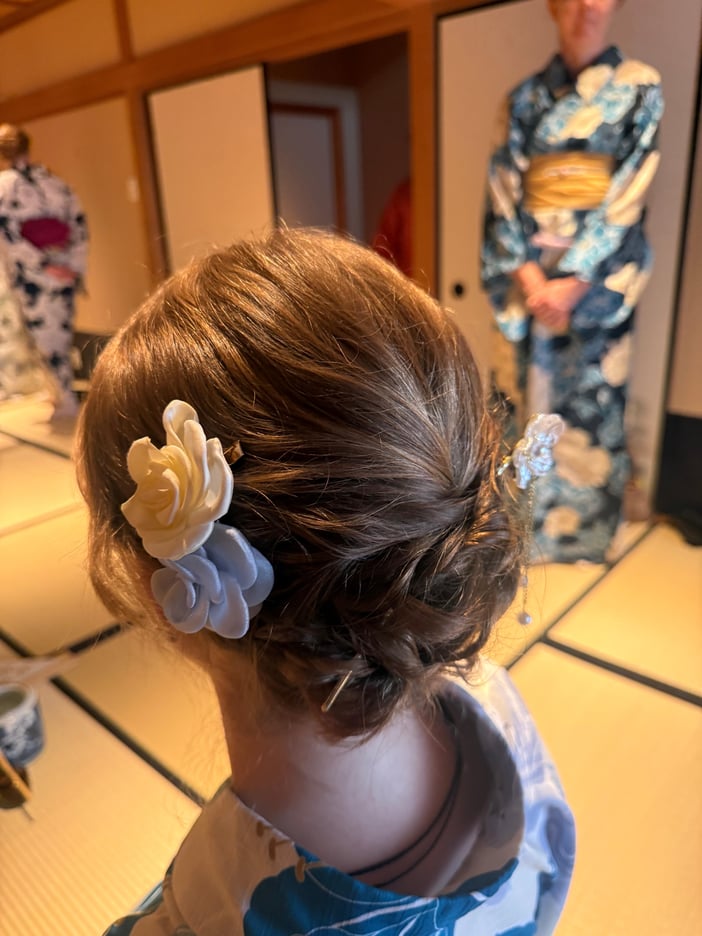 ★★★★★
Amazing! Dressed in cute kimonos and the tea lady was warm and professional. Only three of us, so it felt intimate. Got plenty of cute photos inside and outside. Definitely recommend!
A traveler · Lithuania
What a maiko tea ceremony in Kyoto is and why it's worth it
Tea rooms in Gion close their doors to strangers. A traditional ochaya admits nobody without an introduction from an existing patron, which is why most visitors meet maiko only as figures crossing Hanamikoji.
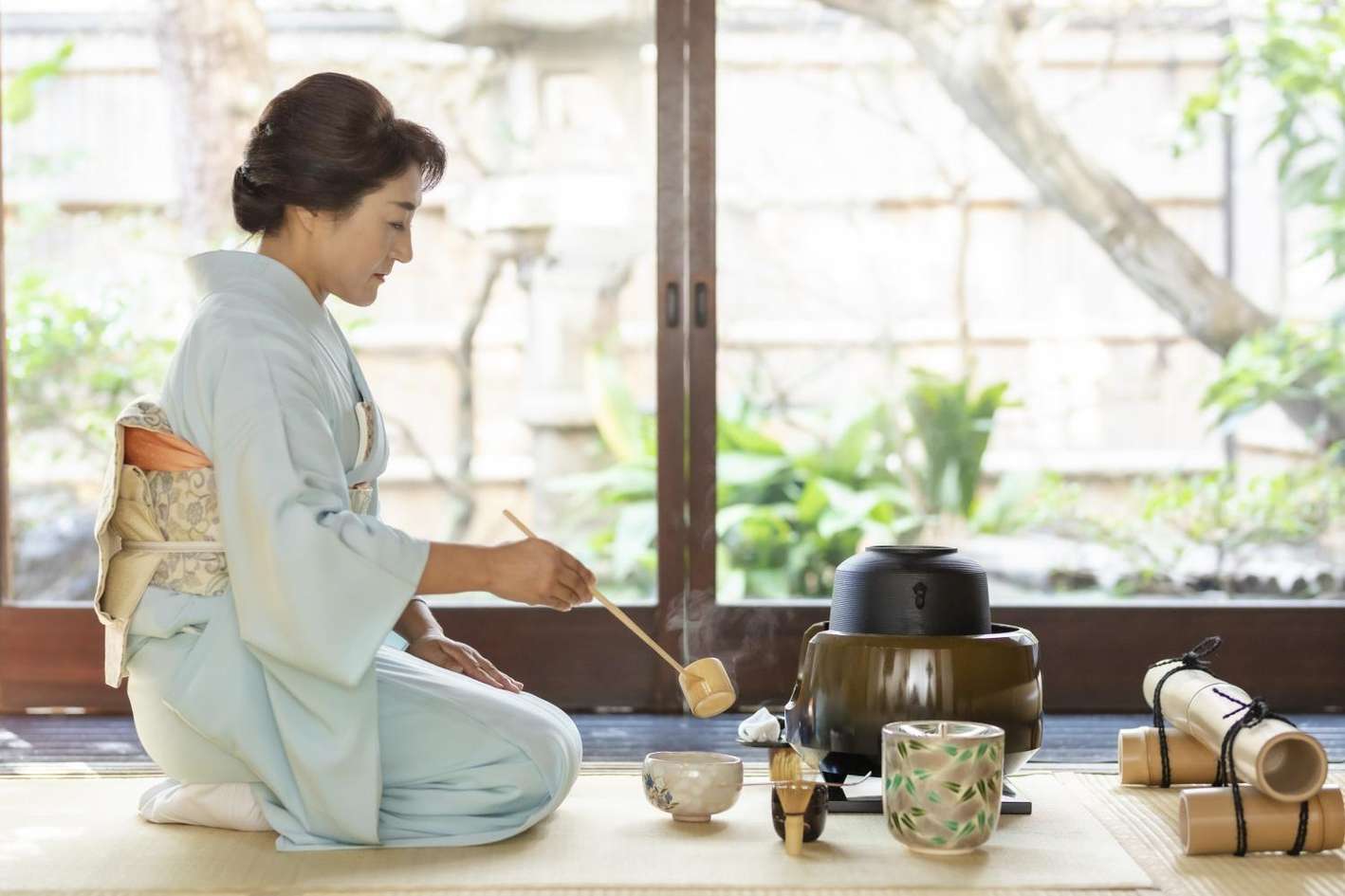
A bookable tea ceremony changes that: the maiko conducts the formal tea, dances Kyomai to one or two short classical songs, and then sits down with the guests for conversation through an interpreter.
Everything a guest sees is the real thing: the white makeup, the seasonal flower hairpin, the silk kimono. Hosts state plainly who is appearing, and the group stays small. The dance alone gives you about fifteen minutes of Kyoto performance, more stage time than a whole evening of lantern-lit street watching.
Three beliefs keep people from booking, and all three miss what these sessions are.
Makeover studios dress guests as maiko with no real one present; a genuine session states who hosts, and a working maiko conducts the tea
Ochaya dinners work that way, and need a patron; bookable sessions let travelers join a working maiko directly
Hosts guide each step in English, and small mistakes at tourist sessions are routinely overlooked
On price and fit: the session suits visitors who want the ritual of chado in a quiet, contemplative hour. First-timers do fine, because the host explains every movement and nobody expects a tea scholar at the door.
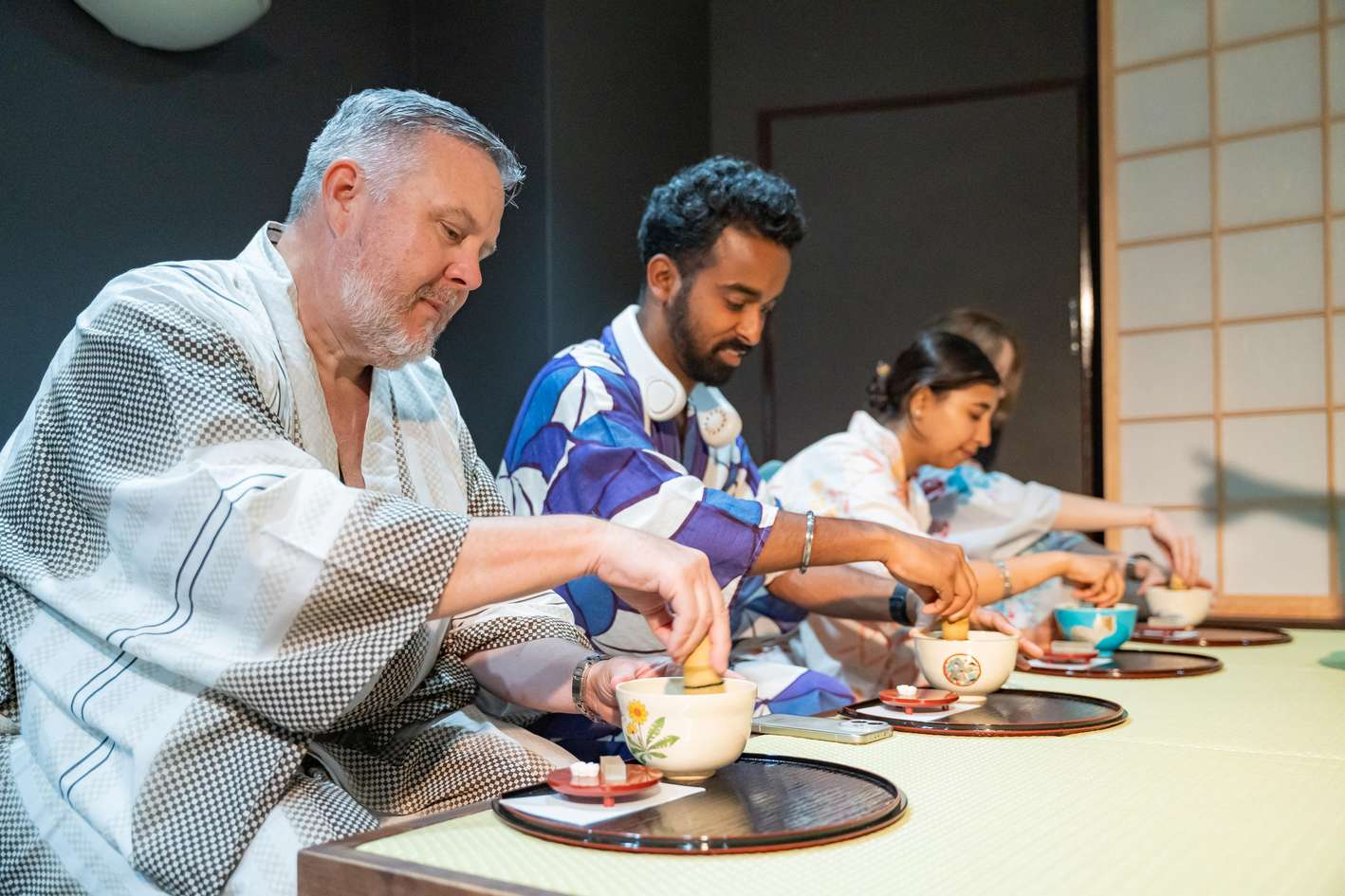
When to visit Gion for a tea ceremony and how busy it gets
The calendar decides more than the weather. Kyoto tea bookings peak in April, September and November, when popular slots fill well in advance and walk-ups are unreliable.
Across Japan, cherry blossom season and the November foliage demand six to eight weeks of lead time. Winter, from December to February, is the quiet stretch, and a few days ahead is often enough.
The hour matters as much as the month. Gion's lanes are calm before nine in the morning, busy from ten to four as tour groups pass through, and warm again after five when the lanterns come on.
May: 5 out of 5 for how busy it gets.
Tap a month to read it.
For the ceremony itself, aim for either end of the day: an early slot before the streets fill, or late afternoon when the light softens over the gardens.
Spring and November sit at the top of the crowd scale, so in those months the booking goes in as soon as your dates are fixed. Midwinter rewards the spontaneous.
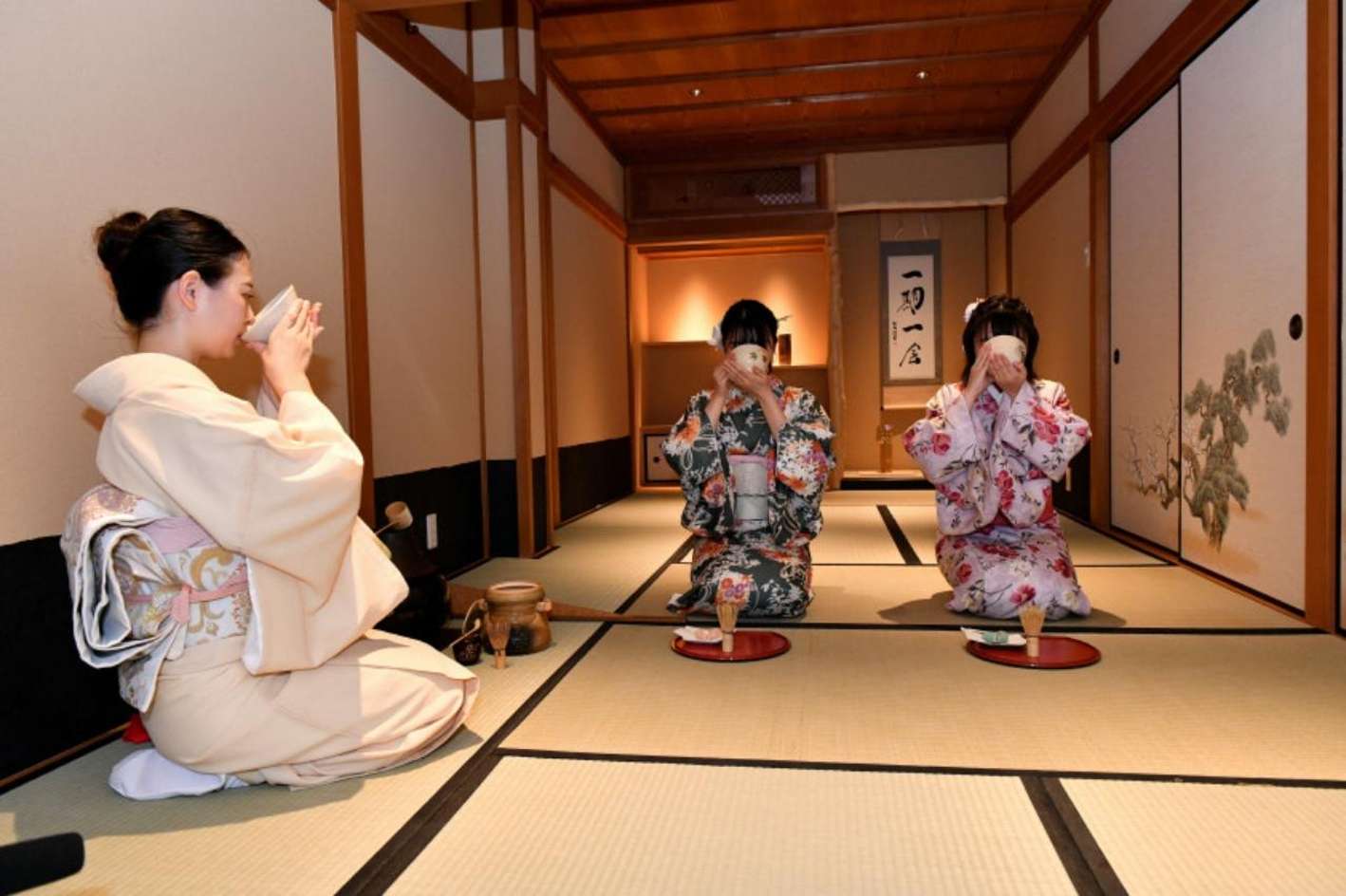
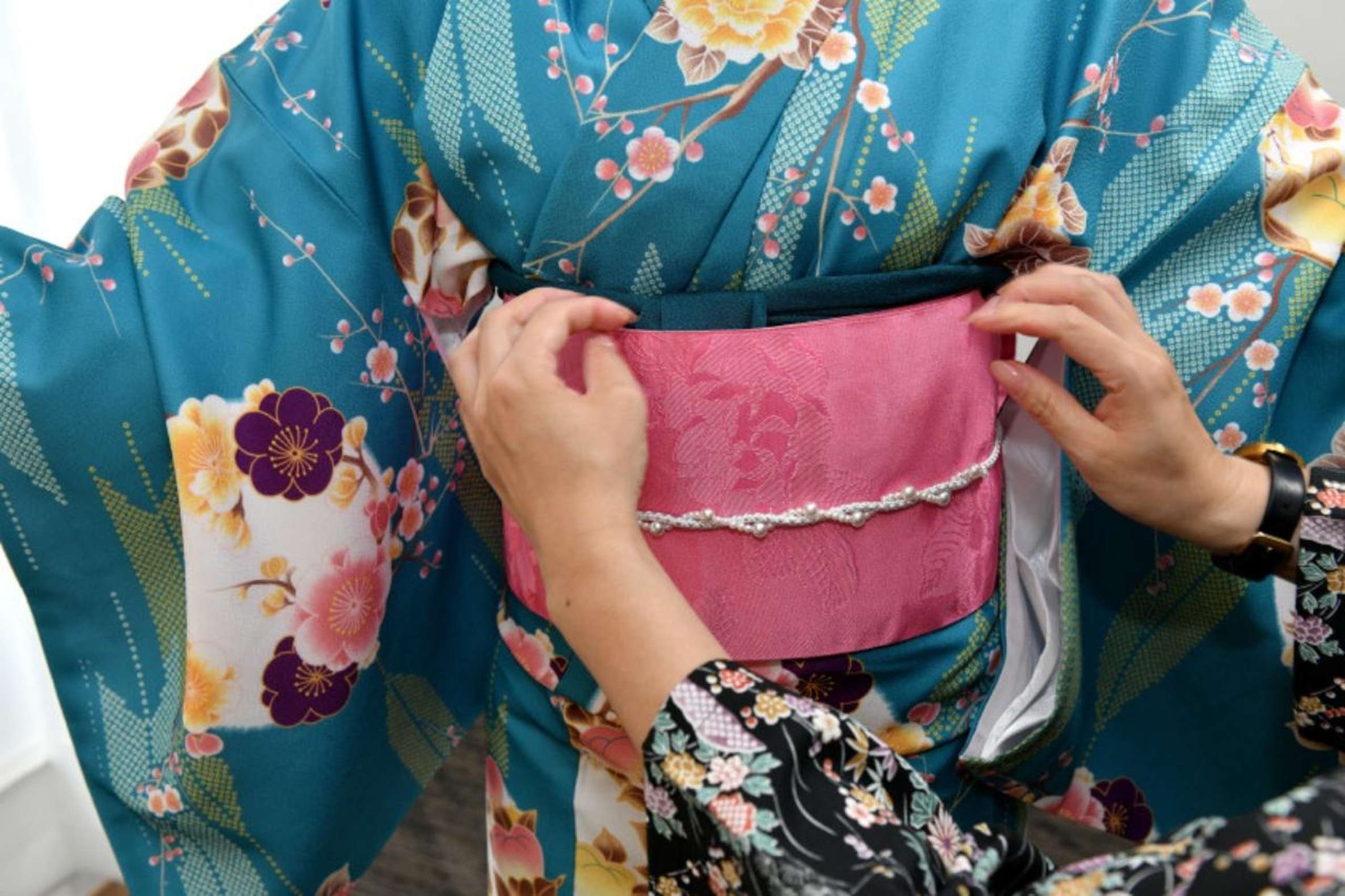
How to get to the Gion tea house from Kyoto Station
Kyoto Station to Gion looks simple on the map and tests you in traffic. City bus 206 and the weekend express EX100 schedule the trip in 17 to 21 minutes, but peak-season road traffic stretches that, and the sightseeing routes run packed.
The train skips the road entirely: one stop on the JR Nara Line to Tofukuji, a transfer to the Keihan Main Line, a 13- to 19-minute ride, then a three-minute walk from Gion-Shijo.
Door to door the rail route takes about 18 minutes, and the timetables keep that number steady in peak season, which the bus schedule on paper cannot promise once the roads jam.
With a stroller, skip the bus entirely: a taxi does Gion in about ten minutes, door to door, and folds nobody's stroller. Whichever way you go, build in margin on ceremony days, because the session starts on a precise timetable and the room does not wait.
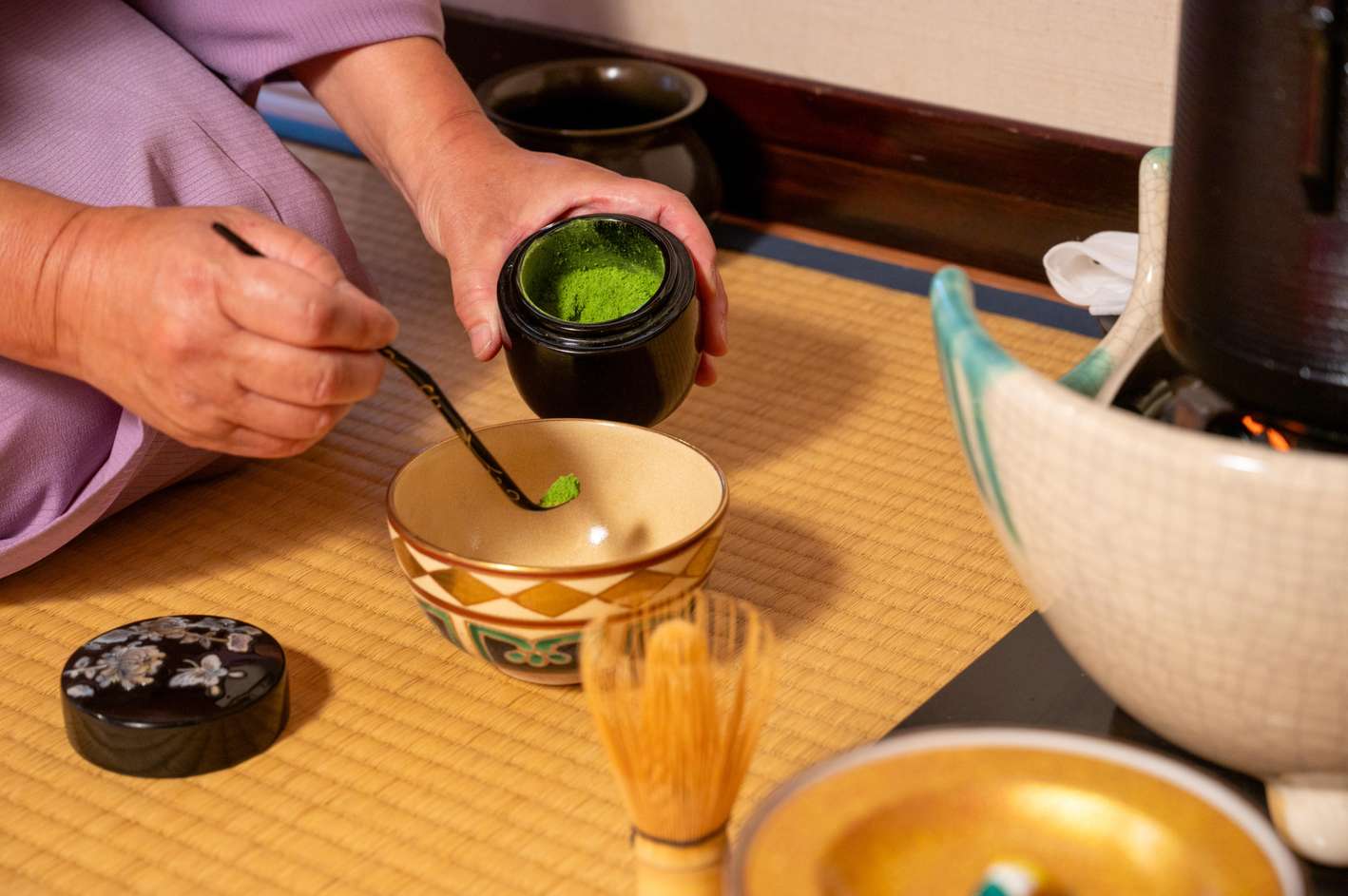
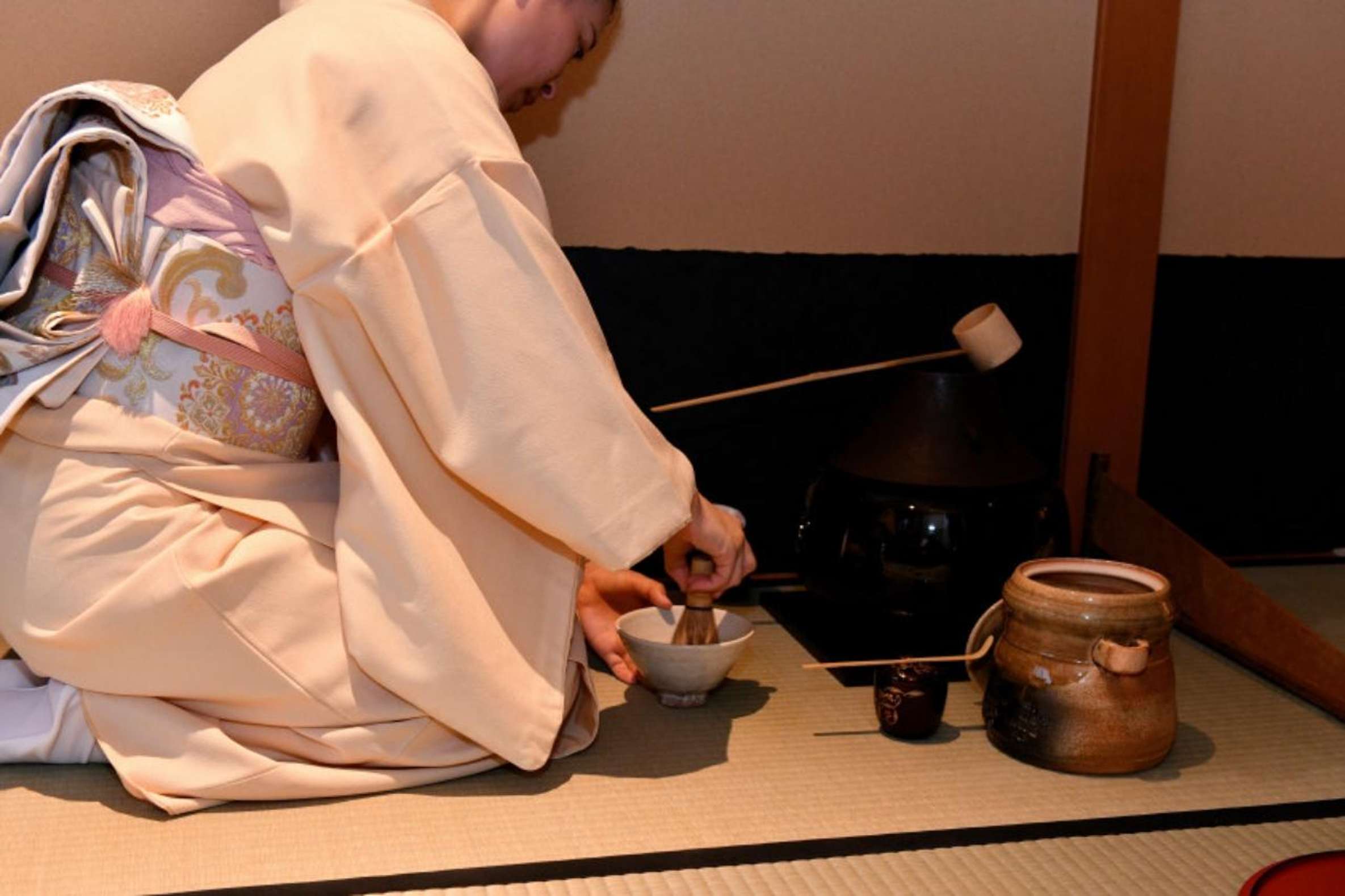
What to wear and bring to a tatami tea ceremony
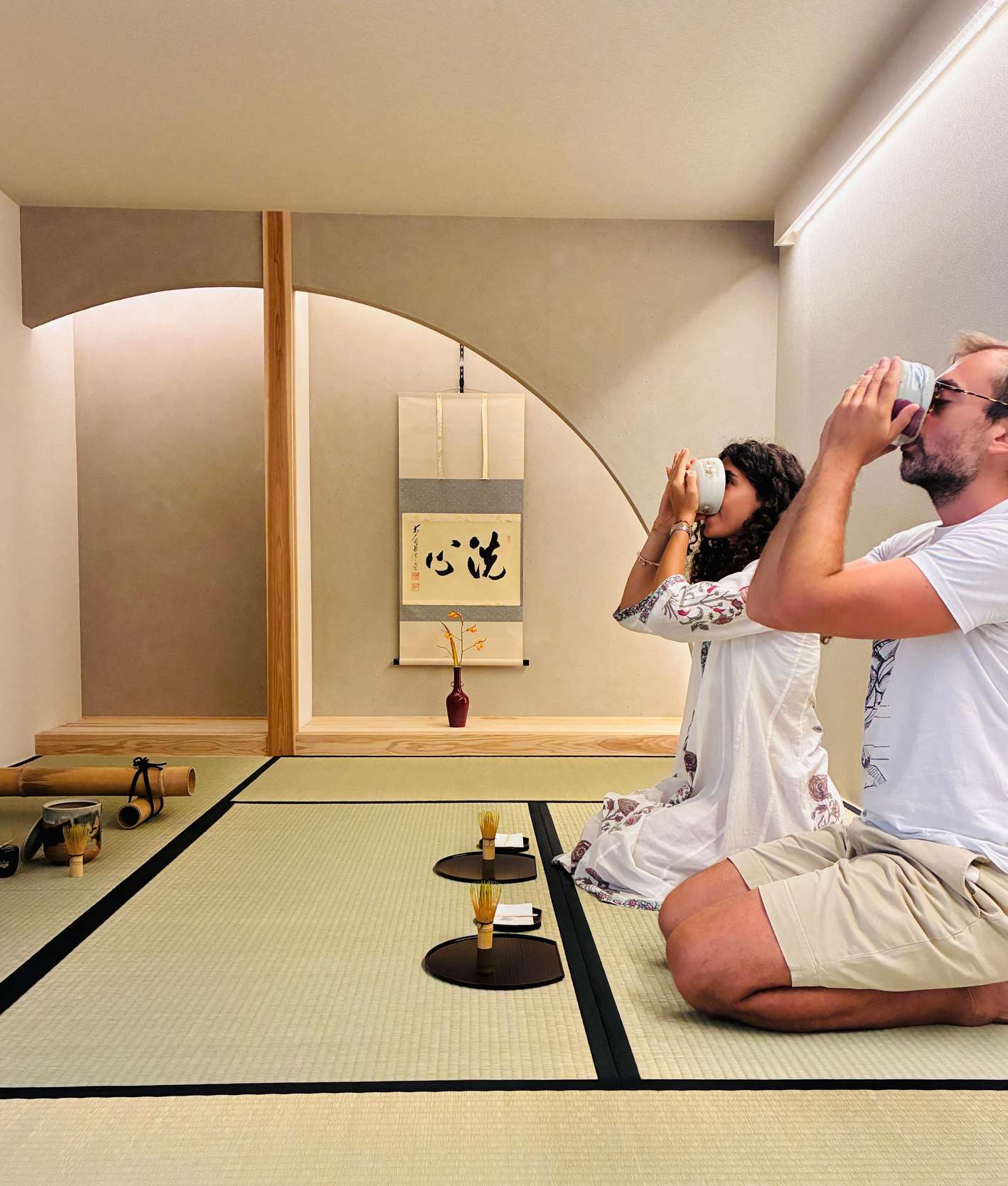
The tea room has its own dress code, and it is written on the floor. Tatami takes no bare feet, so a clean pair of white socks or tabi goes on just before you step up. Modest, muted clothing covers shoulders and knees, and slip-on shoes save you the laces at the entrance.
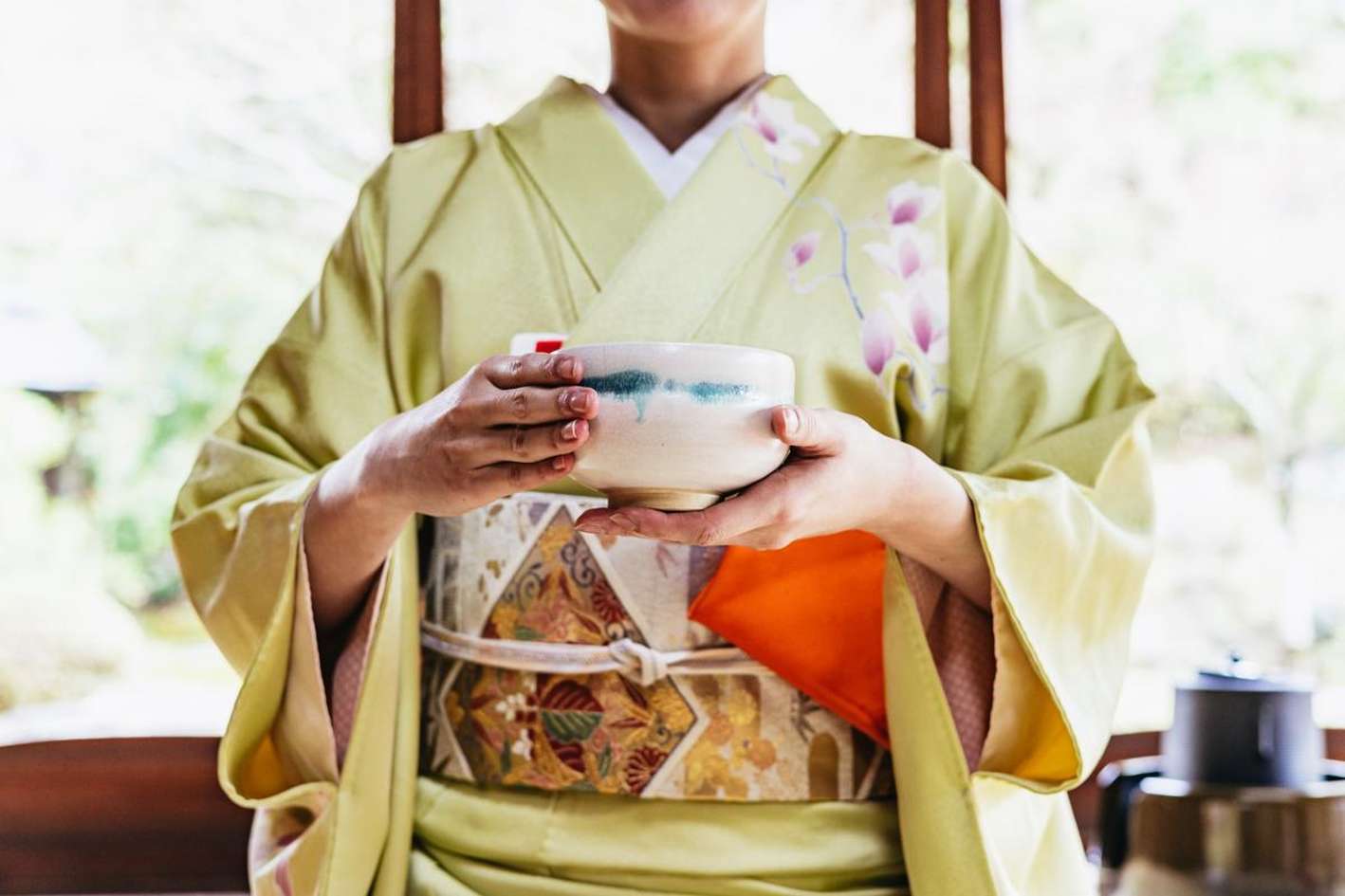
Hands come bare: rings, watches and bracelets stay off, because metal scratches and cracks the ceramic bowls you will hold with both hands. Skip perfume too; the aroma of the matcha is part of the experience, and cologne buries it.
Booking the kimono option changes the clock: arrive 50 to 60 minutes early for dressing and hairstyling, so the whole plan runs closer to two hours. Wagashi sweets can hide wheat, soy or nuts, so anyone with an allergy tells the host well ahead.
- Clean white socks or tabiBare feet are forbidden on tatami mats; fresh white socks maintain purity and protect delicate straw flooring from street dirt.
- Modest, loose-fitting clothingChoose subdued colors with covered shoulders and knees that allow easy sitting or kneeling without riding up.
- Easy slip-on shoesFootwear must be taken off at the entrance before stepping into the teahouse reception and tatami rooms.
- Bare wrists and fingersTake off all watches, rings, and bracelets beforehand to ensure metal edges do not scratch antique ceramic tea bowls.
- Fragrance-free personal careSkip perfume, cologne, and scented lotions so artificial aromas do not overpower the delicate smell of incense and matcha.
- Hair tie or clipKeep longer hair tied back so it does not fall across your face or dip toward the bowl when bowing and drinking.
One last comfort: when your legs go numb on the tatami, shift to cross-legged or side-sitting with your feet tucked away or pointing to the side, never aimed at the host or another guest. Nobody minds the change of posture.
How a maiko tea ceremony unfolds, step by step
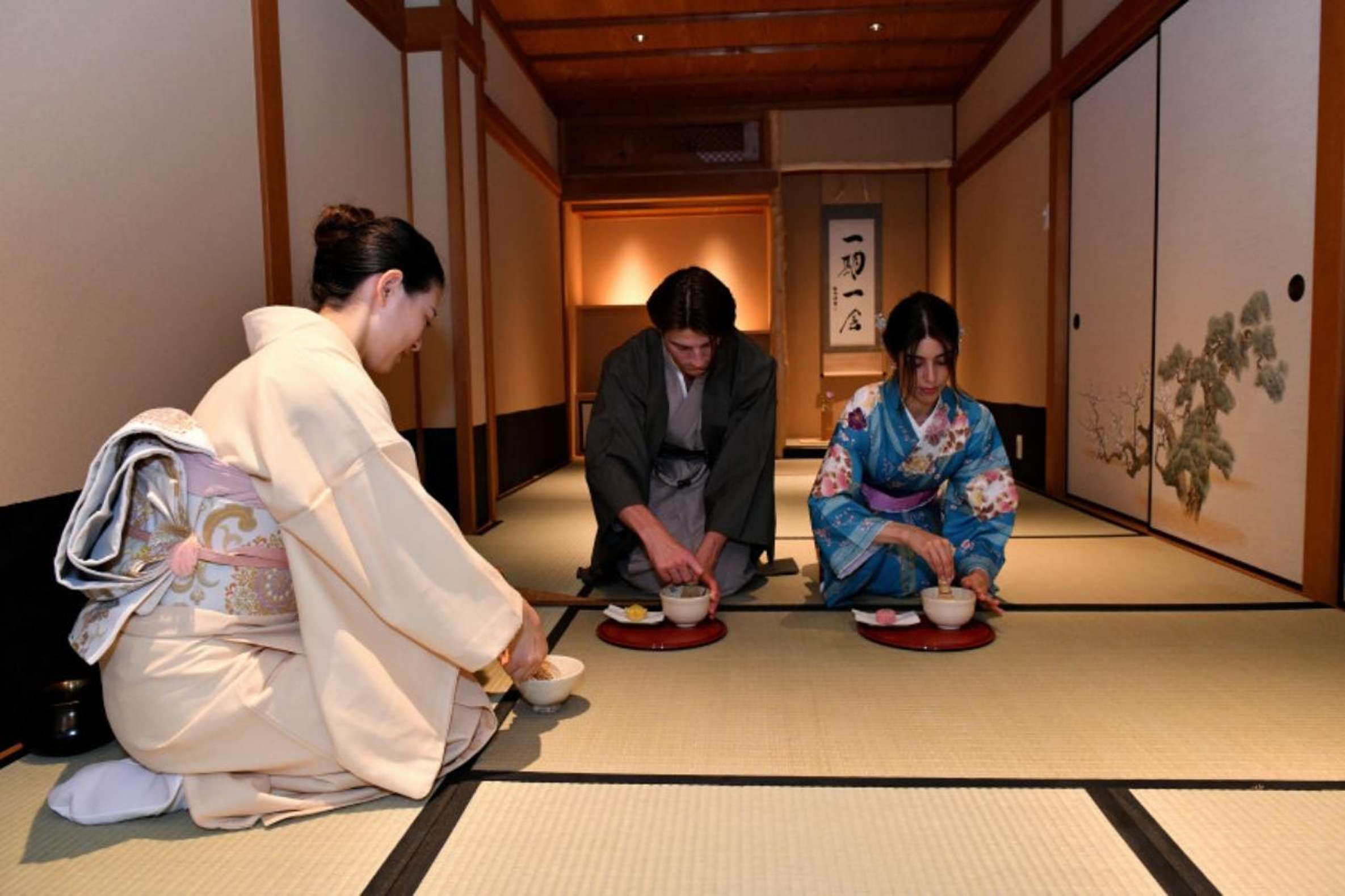
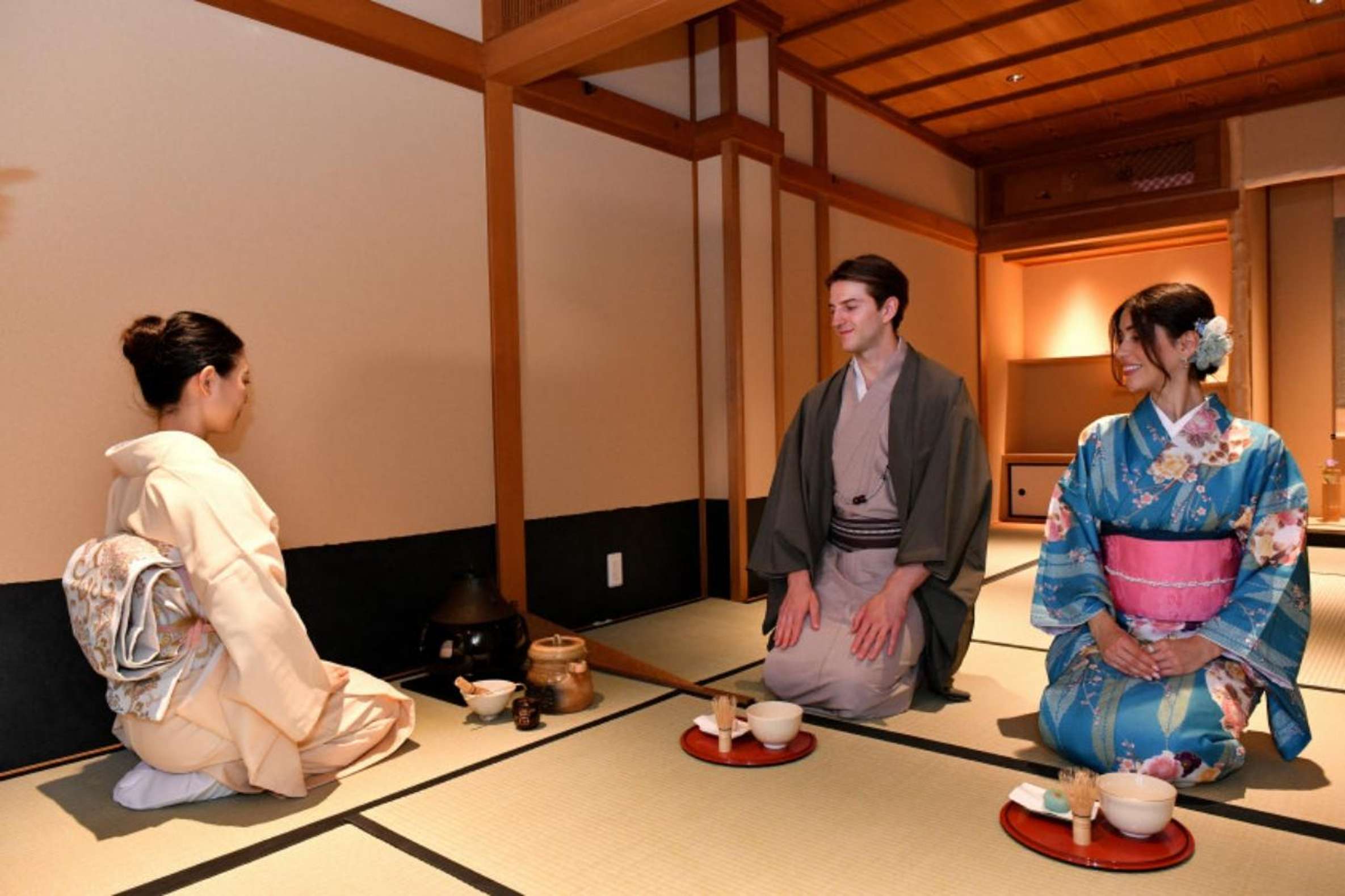
The room settles before the maiko does. Shoes are off, hands are rinsed, and guests take their places on the tatami. The formal ceremony runs 45 to 60 minutes, and an interpreter stays in the room the whole time, so nothing said or shown goes over your head.
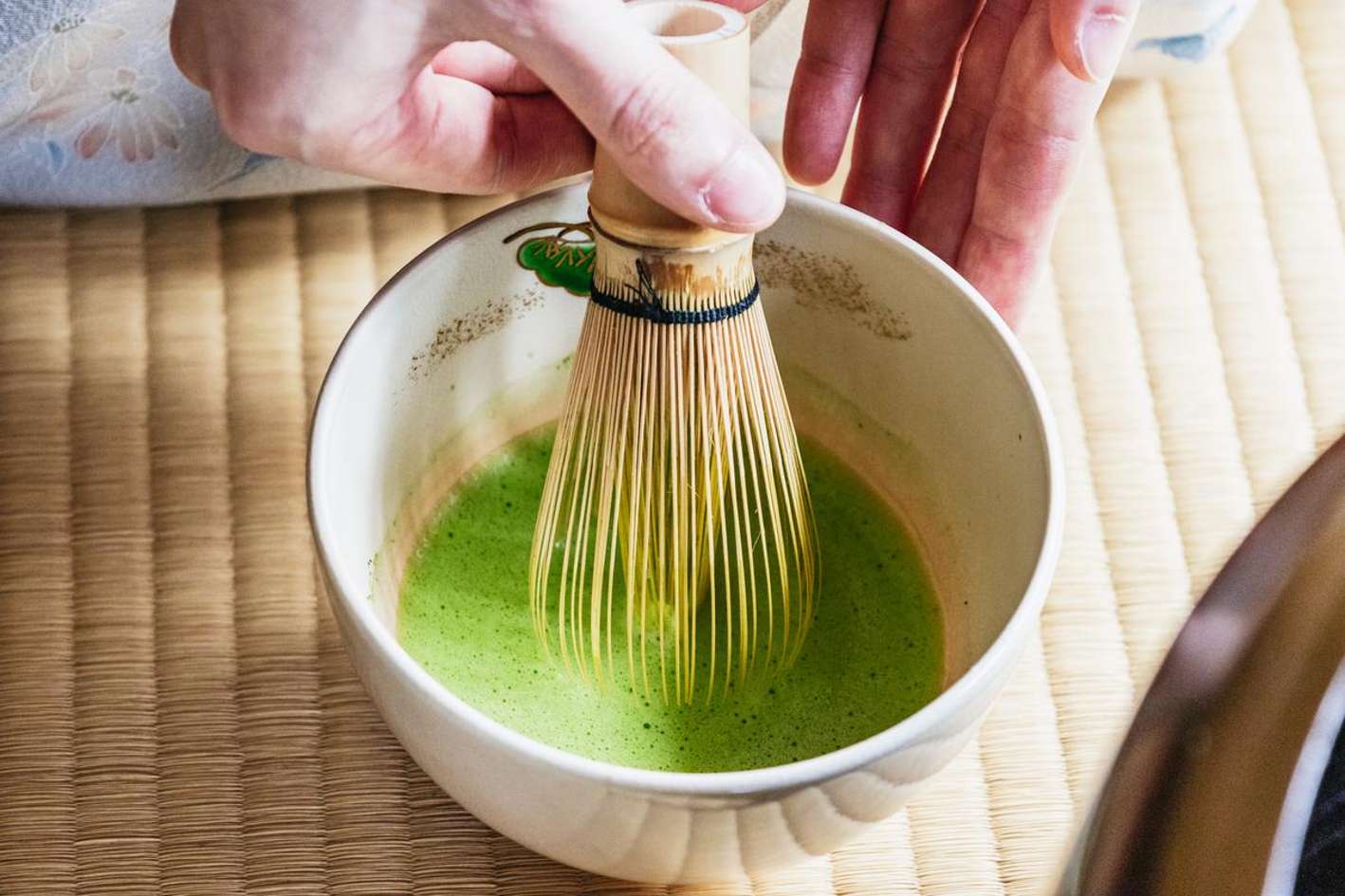
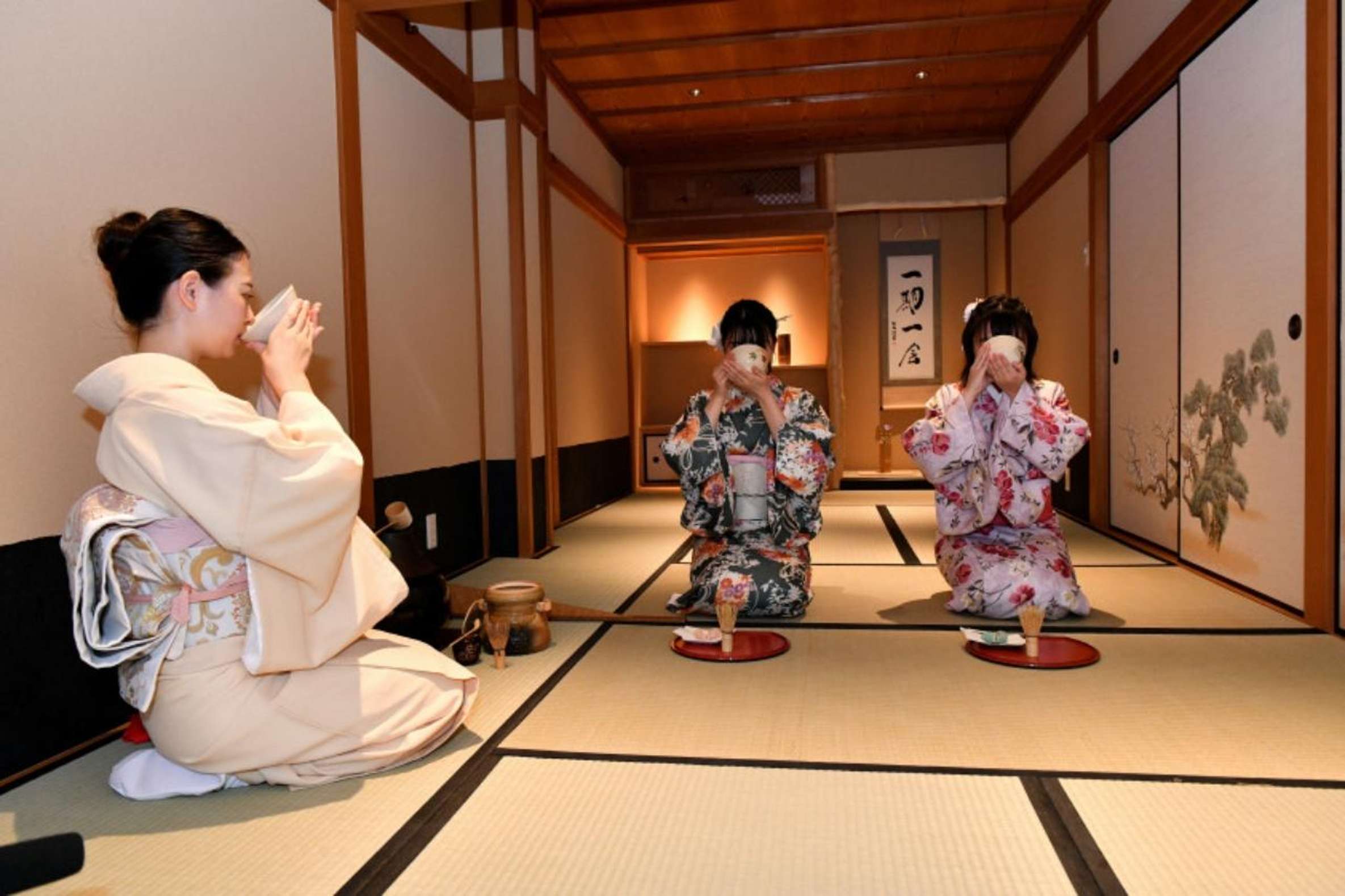
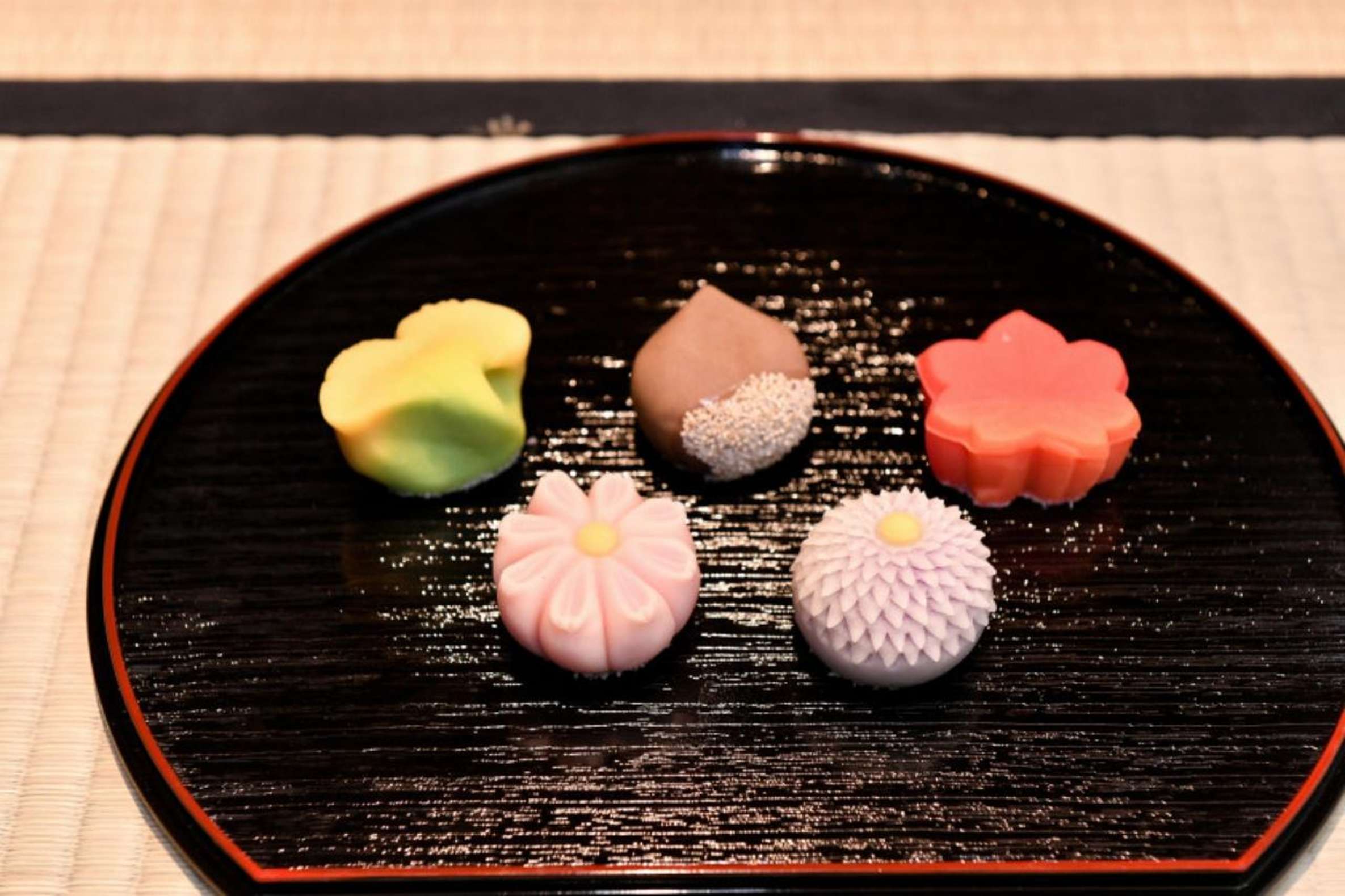
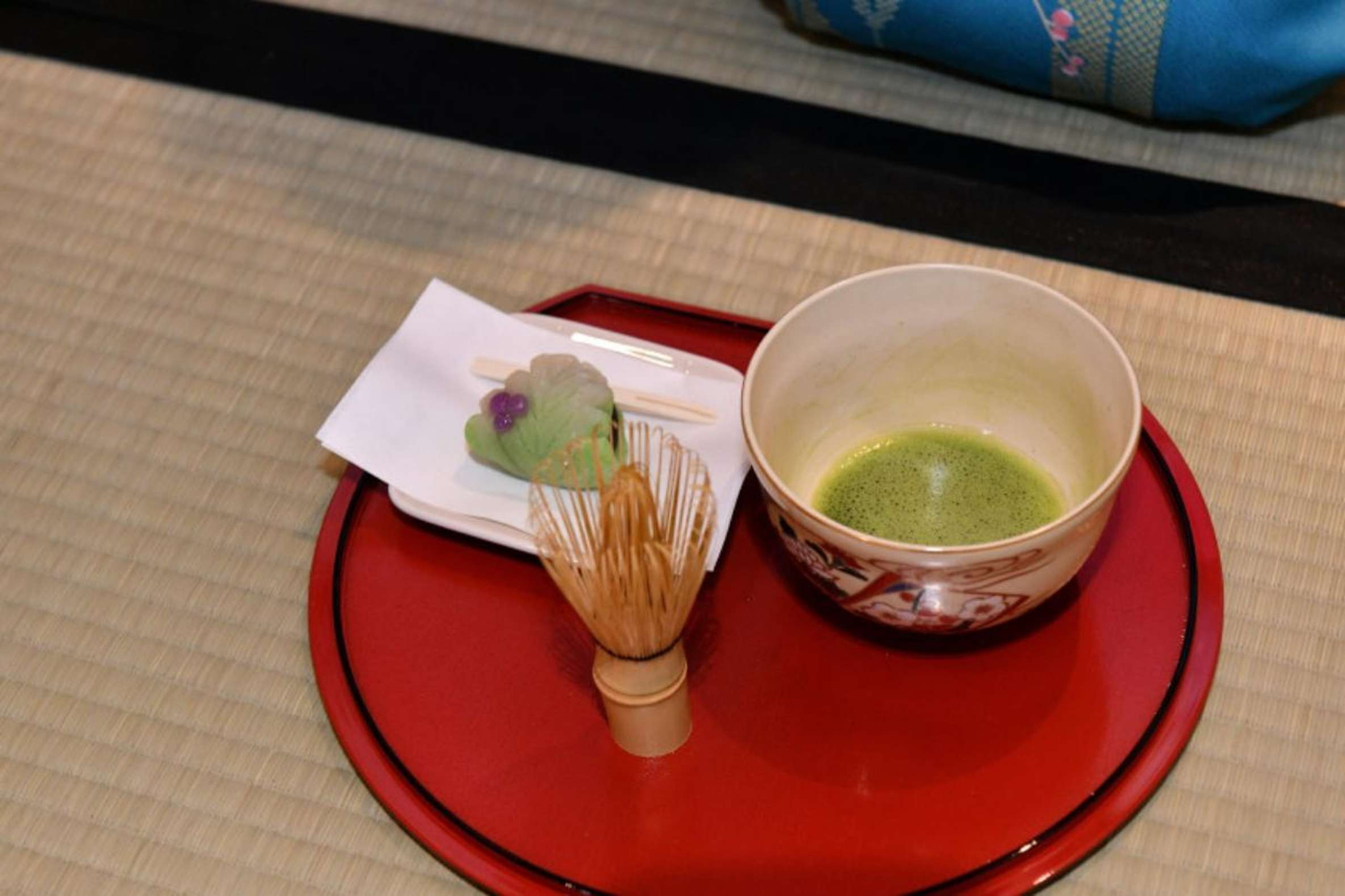
She prepares the tea first, and the wagashi sweet comes before the first sip to temper the bitterness of concentrated matcha. When your bowl arrives, lift it and turn it slightly away from its front before you drink.
The portion is a few small sips, and the tea is meant to be drunk promptly, while the whisked foam still holds.
- 1Entering the tea roomShoes off, hands rinsed, seated on the tatami
The formal ceremony runs 45 to 60 minutes with an interpreter present
- 2The maiko prepares the teaShe conducts the formal tea while guests watch
Cameras stay down during the preparation
- 3Kyomai danceOne or two short classical songs
Kyoto-style dance, about 15 minutes in total
- 4Sweets, then teaThe wagashi comes first to balance the bitter matcha
Rotate your bowl 90 degrees clockwise before the first sip
- 5Conversation and photosShe sits with guests through the interpreter
Ask about her training, her day or her hairpin
After the dance, the formality drops. She talks with guests over more confectionery, and any honest question lands well: what her training was like, what a working day holds, what the hairpin in her hair means this month.
Wipe the rim of your bowl with thumb and finger when you finish, and admire the glaze low, elbows on your knees, because these bowls are often valuable.
Booking a tea ceremony tour or going on your own
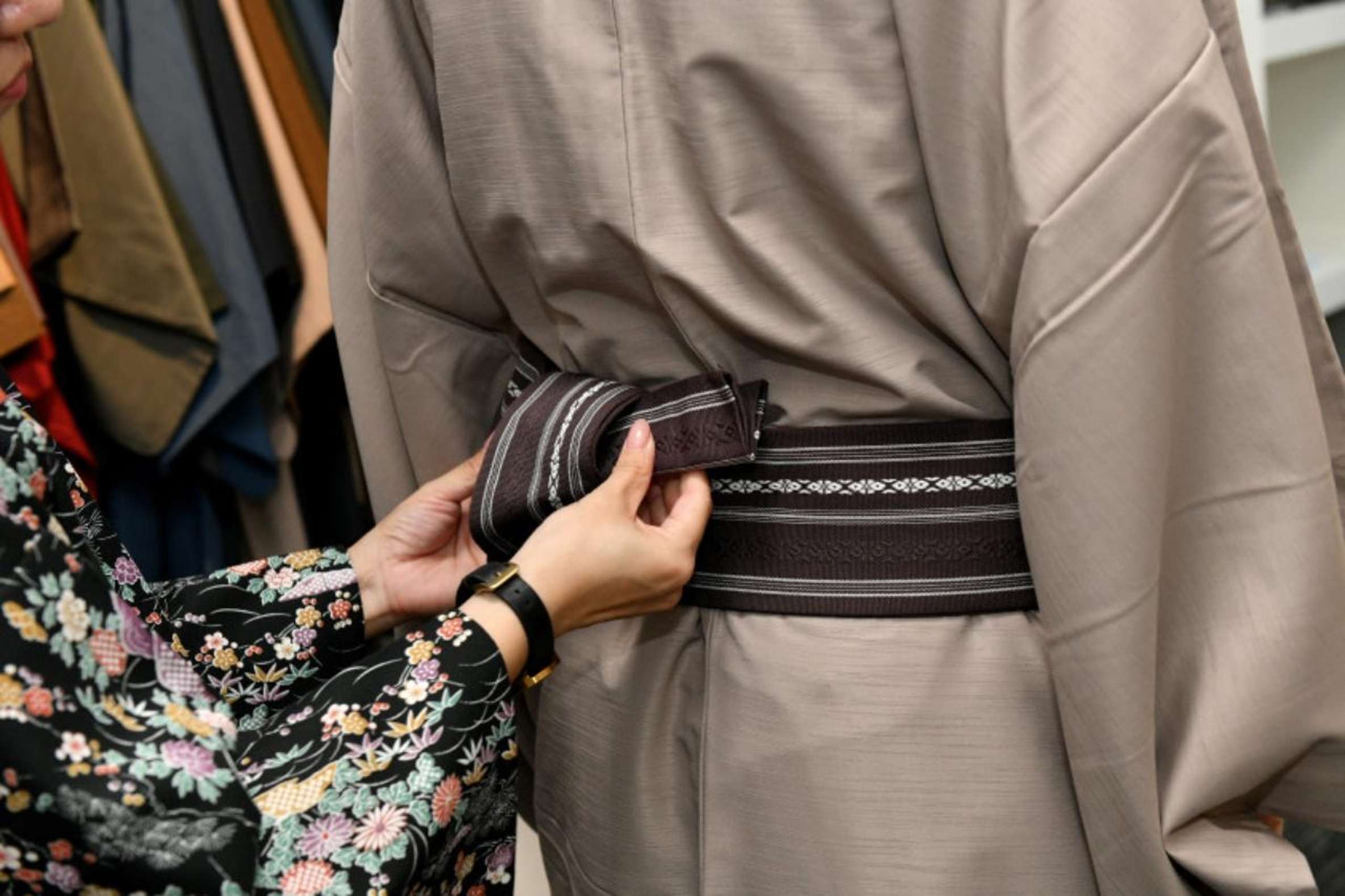
A maiko gathering can only be arranged through a bookable session, since there is no walk-up route into an ochaya. The real choice is between a stripped-back tea experience and a structured one that handles the costume, the language and the choreography for you.
Before booking anything, read the listing for three things: group size, session length, and whether you whisk your own matcha or only watch.
Travelers who want tea without the performance have a near option in Gion: the Kyoto: Traditional Tea Ceremony with Matcha & Sweets in Gion seats guests in chairs, so nobody has to kneel; it teaches the history of tea as it goes and ends with a bowl you whisked yourself.
Beautiful tea ceremony! You pick your own kimono and get traditional hair styling, they handle all hair types. Learned the history, had matcha and sweets, and wore the kimono afterward. Highly recommend!
Guest talk afterwards keeps returning to the whisking and the dressing up; the tea itself earns quieter praise. Both come built into the structured formats, and both are why the guided route pays off.
How to choose an authentic maiko tea ceremony and how this one measures up
You can judge a session before you pay. Look for a named host, a small group, explicit photo rules and real cultural context; vague promises and suspiciously cheap pricing point the other way.
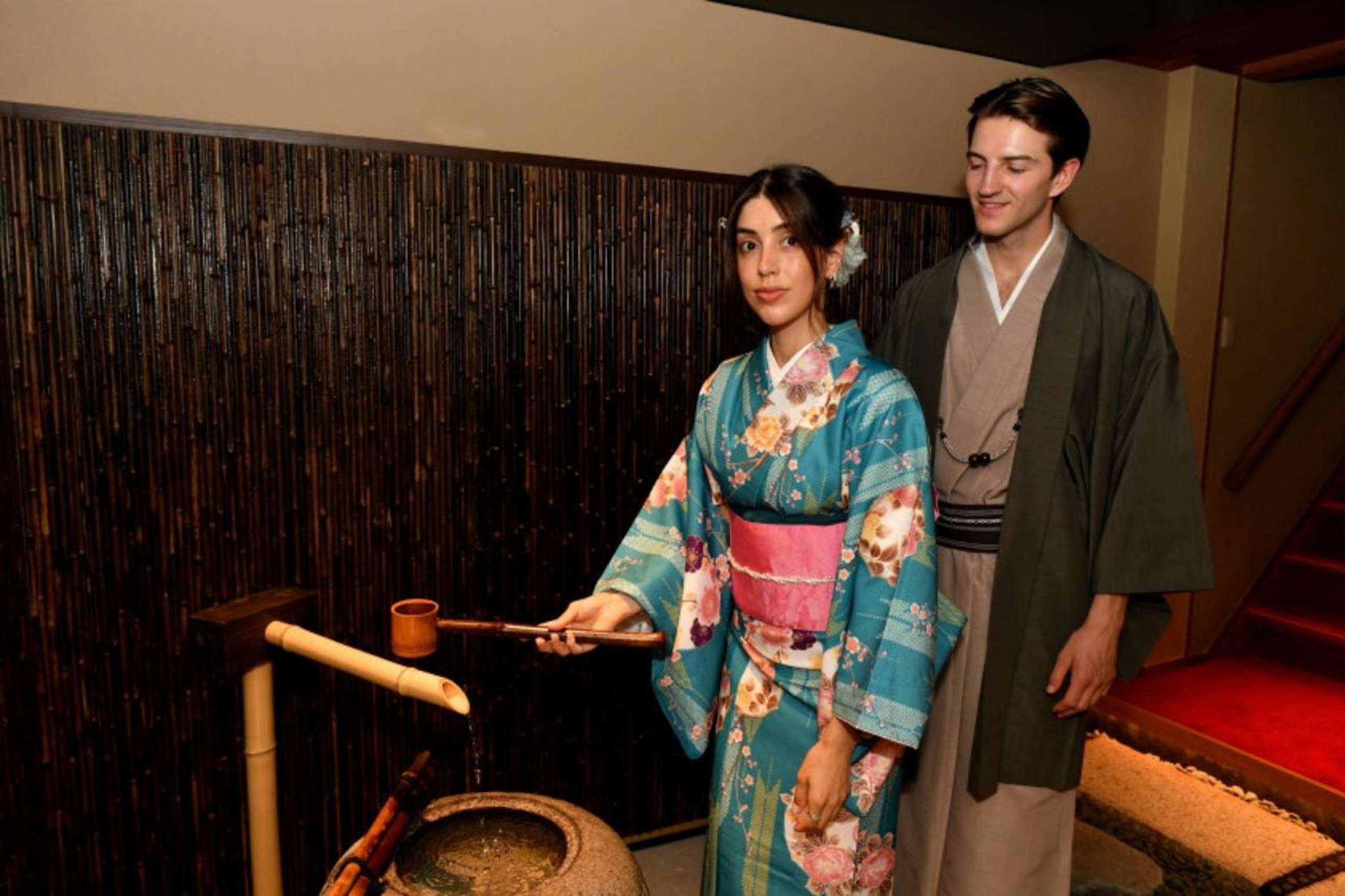
Against that shortlist, the Kyoto: Kimono Tea Ceremony at Orizuruya Gion covers nearly everything: a licensed guide runs the English commentary, groups cap at ten guests, kimono rental with hairstyling is part of the booking, and the maiko option adds the performance and the conversation.
Free cancellation up to 24 hours ahead covers a change of plans.
- A guide with youInstructor
- Free cancellationCancel up to 24 hours in advance for a full refund
- Book now, pay laterReserve your place and pay closer to the date
- A small groupSmall group
- Skip the ticket lineIncluded
- Hotel pickupNo, you meet at the start
- Your languageEnglish
The gaps are the small ones: there is no hotel pickup, so you make your own way to the door, and the English commentary comes from the instructor who runs the room. Neither changes the day. Judge any listing on those same lines and the tourist-trap question answers itself.
Booking, late arrivals, and what happens if plans change
Tea rooms keep time like trains. Doors shut at the start, and some venues refuse late entry even by a minute. Past 30 minutes, entry and the fee are both gone, and that holds for train delays too. The session itself is never extended for stragglers.
Payment terms differ: one operator charges the full fee in advance to a card, so read that line before you count on settling up at the door. The sessions here carry free cancellation up to 24 hours before, and that window is the buffer to plan your day around.
When plans change
| If this happens | What happens then |
|---|---|
| Cancelled a day or more ahead | Full refund under the free-cancellation terms |
| More than 30 minutes late | Entry denied and the fee gone, even for a train delay |
| Arriving after the start | The session cannot be extended to make up the time |
| Settling the bill | Nothing to add; tipping is not expected in Japan |
One thing never to budget for is a tip. Tipping is not a custom in Japan, and the listed cost is the whole cost. A thank you at the door is the custom, and it is received as one.
What to see around Gion after your tea ceremony
Out by mid-afternoon, Gion hands you a route with no planning. Hanamikoji's stone lane runs past preserved machiya and teahouses, and Kennin-ji, Kyoto's oldest Zen temple, waits 400 meters south at the lane's end, five minutes on foot. East along Shijo, Yasaka Shrine and Maruyama Park sit another five minutes out.
- 1Kennin-jitemple, shrine or church4 min walkDirections
- 2Nishiki Tenmangūtemple, shrine or church7 min walkDirections
- 3Rokuharamitsu-jitemple, shrine or church9 min walkDirections
Show all 10 places
- 4St. Francis Xavier Cathedraltemple, shrine or church9 min walkDirections
- 5Maruyama Parkpark or garden10 min walkDirections
- 6Ryozen Museum of Historymuseum13 min walkDirections
- 7Museum of Kyotomuseum14 min walkDirections
- 8Mimizukahistoric place17 min walkDirections
- 9Chisō Gallerymuseum17 min walkDirections
- 10Kyoto Municipal Museum of Artmuseum18 min walkDirections
- 1Manju-jitemple, shrine or church9 min driveDirections
- 2Kyoto Towerviewpoint11 min driveDirections
- 3Ryūkoku Museummuseum12 min driveDirections
- 4Kyoto Gyoen National Gardenpark or garden12 min driveDirections
- 5Rozan-jitemple, shrine or church12 min driveDirections
- 6Sen-Oku Hakukokan Museummuseum14 min driveDirections
One rule of the neighborhood: the private alleys branching off southern Hanamikoji, Kosode Koji among them, bar entry and photography, and the signs carry a steep fine for trespassers. Your permitted portrait happens inside the tea room at the end of the session, which is exactly the picture most people want.
A full day allows more: start early at Kiyomizu-dera, walk down Sannenzaka and Ninenzaka past the Yasaka Pagoda, take in Kodai-ji about 800 meters from central Gion, and finish at Kennin-ji and Maruyama Park with your ceremony folded in around the middle.
The sights connect on foot, and the whole southern Higashiyama walk holds together without a single bus.
What to know before you book a geisha tea ceremony
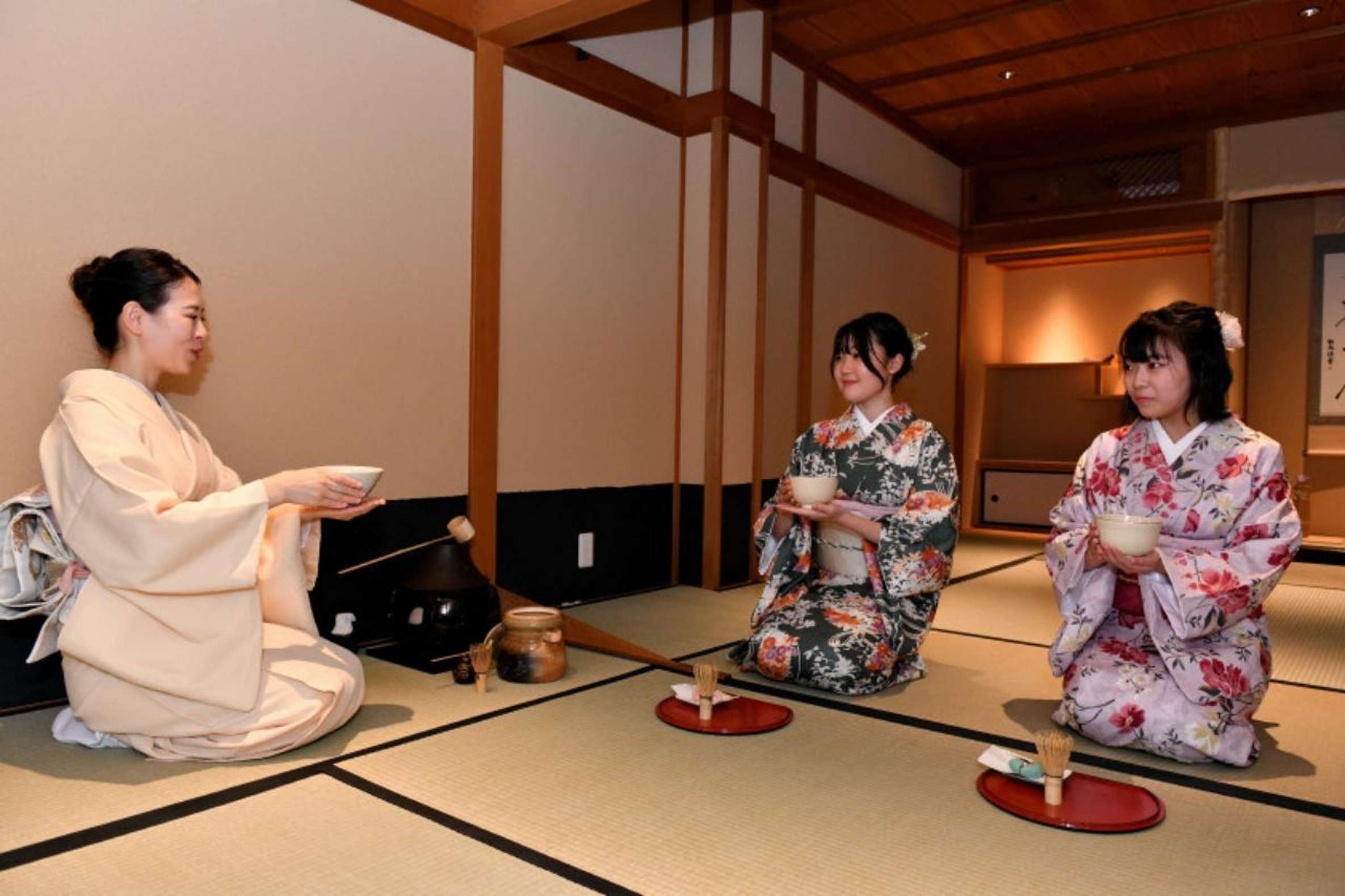
Wear modest, muted clothing that covers shoulders and knees and lets you sit comfortably on tatami. Skip sandals and flip flops, and avoid heavy perfume, which competes with the aroma of the matcha.
Shoes come off at the entrance, and bare feet on tatami are prohibited. Bring a clean pair of white socks or tabi to slip on just before stepping into the tea room.
Remove all rings, watches, and bracelets before the session. Metal can scratch or crack the ceramic tea bowls when you lift them with both hands to admire the glaze.
Photography is generally forbidden during tea preparation and formal performances, so the commemorative portraits with the maiko happen in the designated segment. Keep your camera ready for that moment, not the ritual.
Some private side alleys off southern Hanamikoji-dori, such as Kosode Koji and Kojikoji, ban entry and photography and fine trespassers. Public lanes like Hanamikoji-dori, Shijo-dori, and the Shirakawa Canal path stay open.
Sessions run on a precise timetable, and arriving late typically bars entry once the ceremony has begun, with no refund. Aim to be there five minutes early, and plan the train route from Kyoto Station to avoid bus traffic.
Expect a Kyoto-style dance called Kyomai, set to one or two short classical songs, about 15 minutes in total. It sits between the tea preparation and the conversation, so the whole session keeps a steady rhythm.
An English-speaking interpreter is present throughout, so the maiko speaks naturally in her own language and you still follow every step. The tea ceremony itself is conducted in English.
After the dance the maiko sits with guests for informal talk over confectionery. Ask about her training, her working day, or the transition from maiko to geiko, and she will answer through the interpreter.
Eat the wagashi sweet before the tea arrives. The sugar balances the bitterness of ceremonial matcha, which is far stronger than the sweetened kind you may know at home.
Worth it, if you arrive on time
The maiko session suits the traveler who has wanted this for years and will follow the house rules: arrive early, wear the socks, keep the camera down until the formal parts end.
Anyone who wants good matcha without the performance is happier in a plain Gion ceremony, and anyone chasing the four-hour formal chaji with a kaiseki meal is looking for a different event entirely.
Your geisha tea ceremony in Kyoto - questions answered
Do I need a personal invitation to meet a geisha in Kyoto?+
The old teahouses still run on introductions from regular patrons, but open-booking sessions have changed that. You can reserve a tea ceremony where a working maiko attends, with an interpreter present through the formal part so you can speak with her afterwards.
How do I know a session has a real maiko in the room?+
Maiko makeover studios dress visitors in makeup and wigs for photos, with no maiko anywhere in the building. In a genuine session the host is plain about her role: how long she performs, who translates, and when the group gets to speak with her.
Is the ceremony explained in English?+
Yes. At Orizuruya Gion a licensed guide runs the session in English, and a tea ceremony with a maiko includes an interpreter throughout the 45 to 60 minutes in the tea room. After the formal part, the maiko talks with guests through her.
What happens during a maiko tea ceremony?+
The maiko prepares the tea, then performs Kyomai, a Kyoto-style dance, to one or two short songs lasting about 15 minutes in total. After the formal part she sits with the group over sweets for informal conversation, with the interpreter carrying the talk.
Can I take photos of the maiko?+
Keep the camera down during the tea preparation and the dance. Photos are generally forbidden in those parts of the session so nothing disrupts the ritual. The host will say when a portrait is possible, and indoors in Gion that moment is the one to use.
What should I wear to a tea ceremony in Gion?+
Modest, muted clothing that covers your shoulders and knees and lets you sit comfortably on tatami. Shoes come off at the entrance, so bring a clean pair of white socks or tabi. Take off rings and watches before handling the bowls, and skip the perfume.
What happens if I arrive late?+
Sessions run on precise timetables. At the Gion tea house ceremonies on this page you should arrive five minutes before the start, and once a session has begun latecomers cannot join and lose their booking. Trains beat the city bus when road traffic builds.
Do I turn the bowl before drinking?+
Yes. Lift the bowl to waist height with both hands, rotate it 90 degrees clockwise, and only then take a sip. The turn keeps you from drinking from the front of the bowl, a gesture of respect to the host.
Is the matcha bitter?+
It is strong and unsweetened, and the sweet comes first on purpose: the wagashi balances the bitterness on your palate. You drink only a few small sips, so even visitors who usually avoid matcha come away surprised at how fresh it tastes.
Do I tip the maiko or the tea master?+
No. Tipping is not a custom in Japan, and the price of a session covers everything, including a maiko appearance. A simple thank you at the end says it all.
What can I ask the maiko about?+
Her training, her working day, and the road from maiko to geiko are all welcome topics. The flower hairpin she wears changes every month with the seasons, so asking what it means is an easy opener.
Why does a tea ceremony with a maiko cost more?+
You are paying for a performer as well as a tea ritual: a dance, structured conversation with interpretation, and a small group in the tea room. It suits travelers who want the encounter itself, and those dates go first.