4.915,230 beginners whisked their own bowl of matcha
Kyoto Tea Ceremony Class Beginner Lessons and School Courses
Book a Kyoto tea ceremony class where you whisk your own bowl of matcha with step-by-step guidance in English. Small groups, patient teachers, and the meaning behind every movement. Join a session led by tea masters in a historic machiya and leave with a skill you can use at home.
"The tea ceremony was wonderful. Hosts Sakura and Yuko made everything easy. Sakura explained it gently, was patient with our small mistakes. I left feeling happy and relaxed."
4.9★average rating15,230traveler reviews100%free cancellation53countries travelers came from
Which Kyoto Tea Ceremony class fits you best
Every class here ends with a bowl of matcha you make yourself. The real difference is the setting and the extras: a garden tea house near Kiyomizu-dera, a kimono fitting in Gion, a temple workshop at Jotokuji. Pick by what you want to wear, see, and sit on.
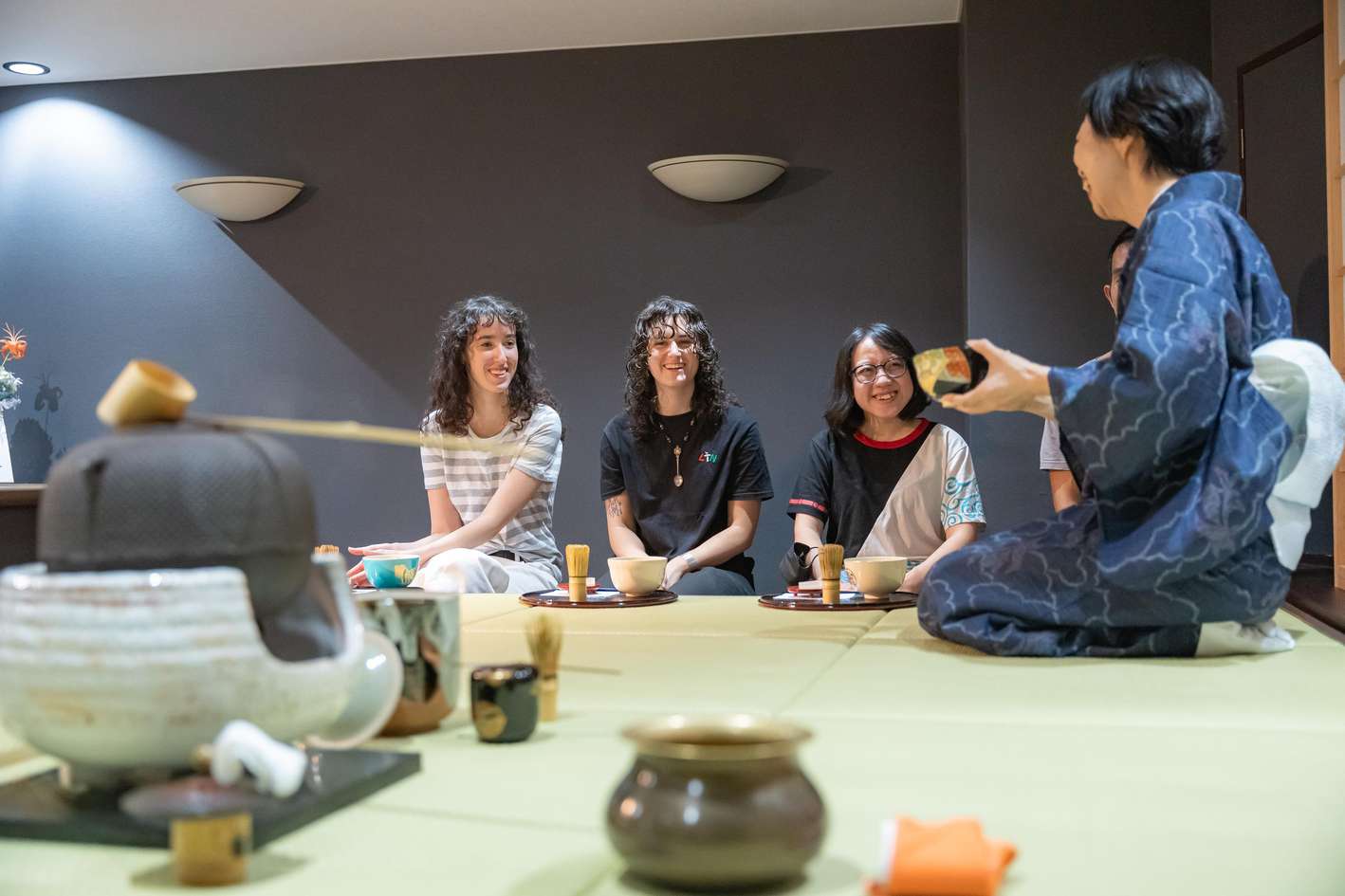
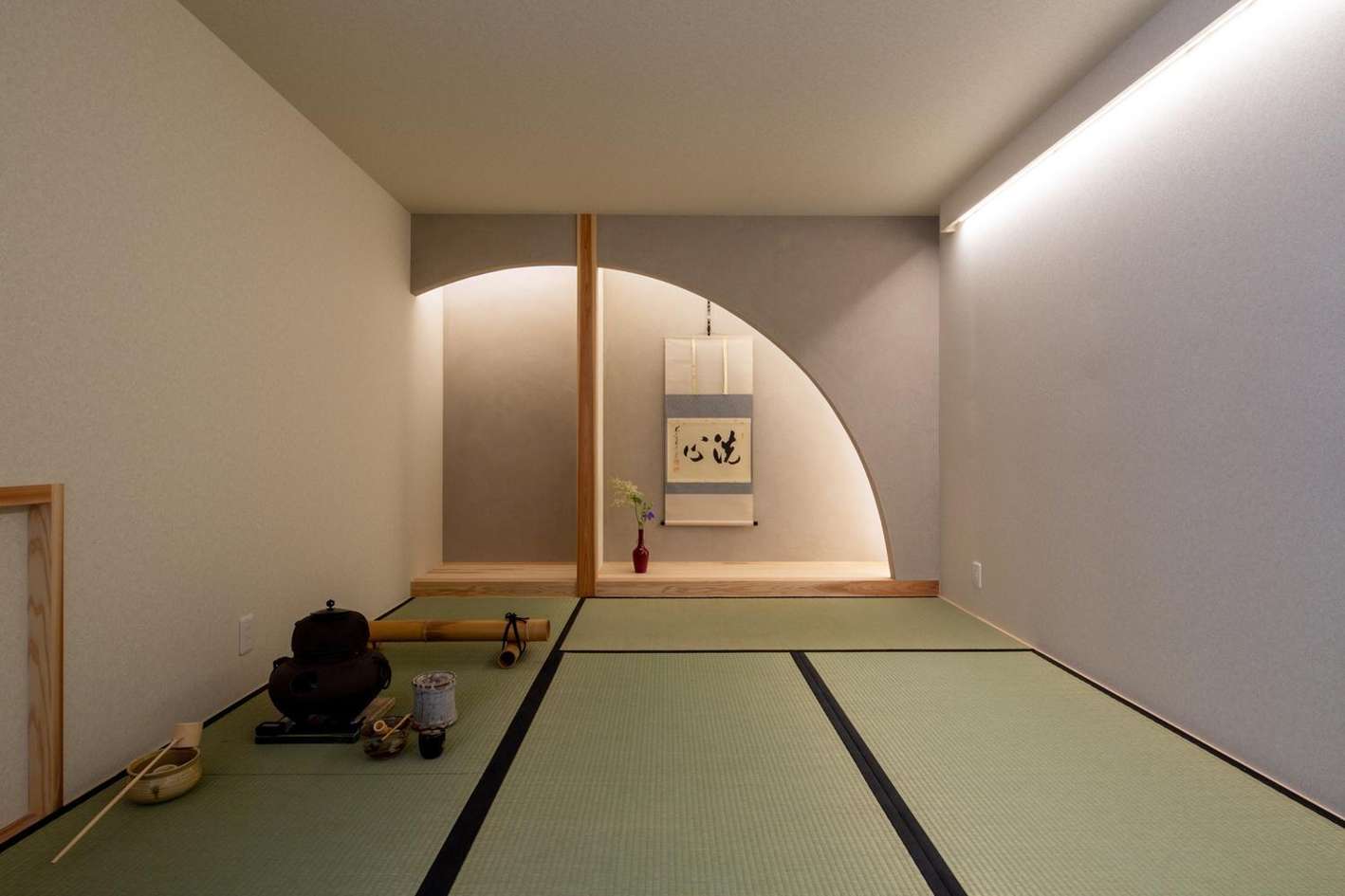
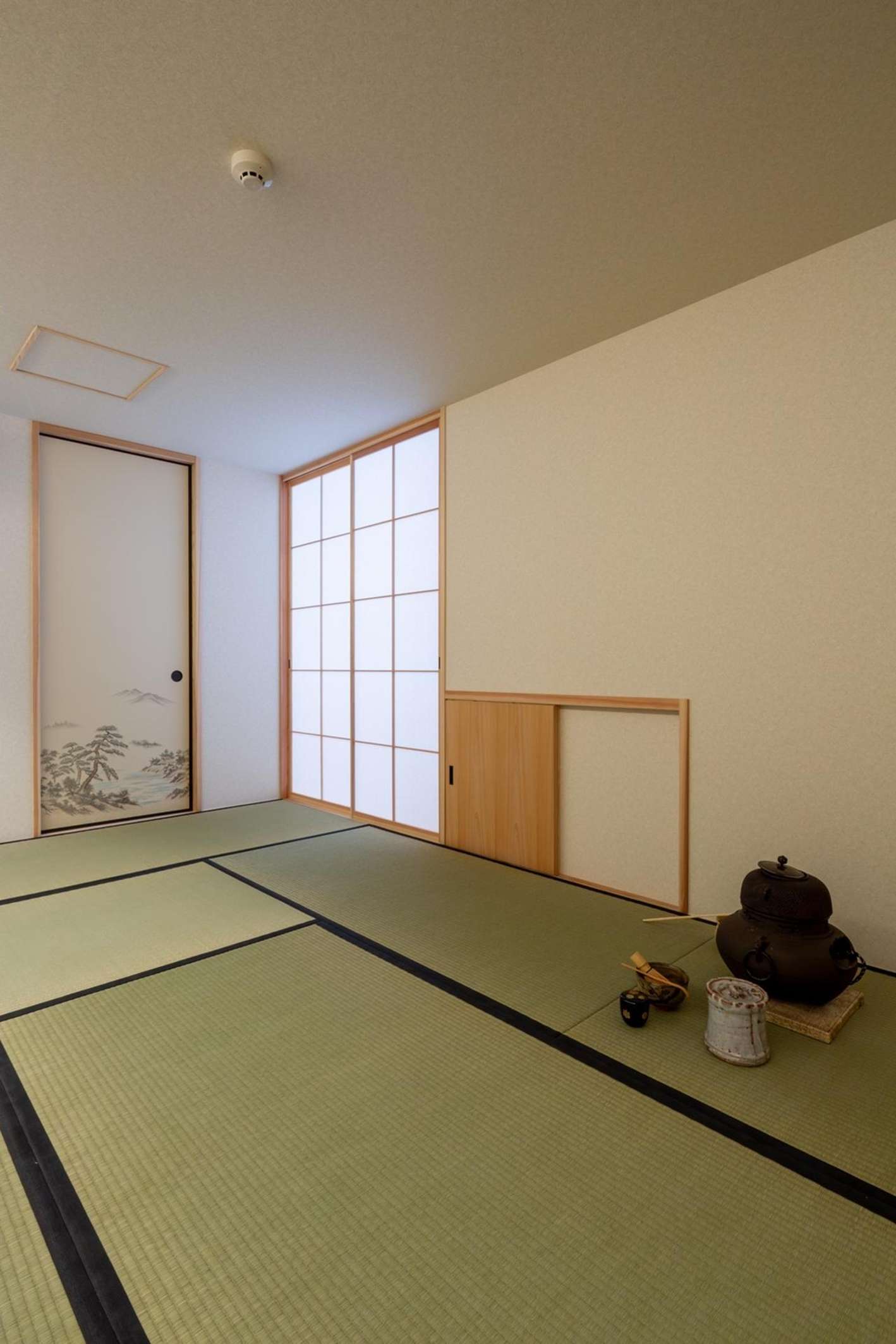
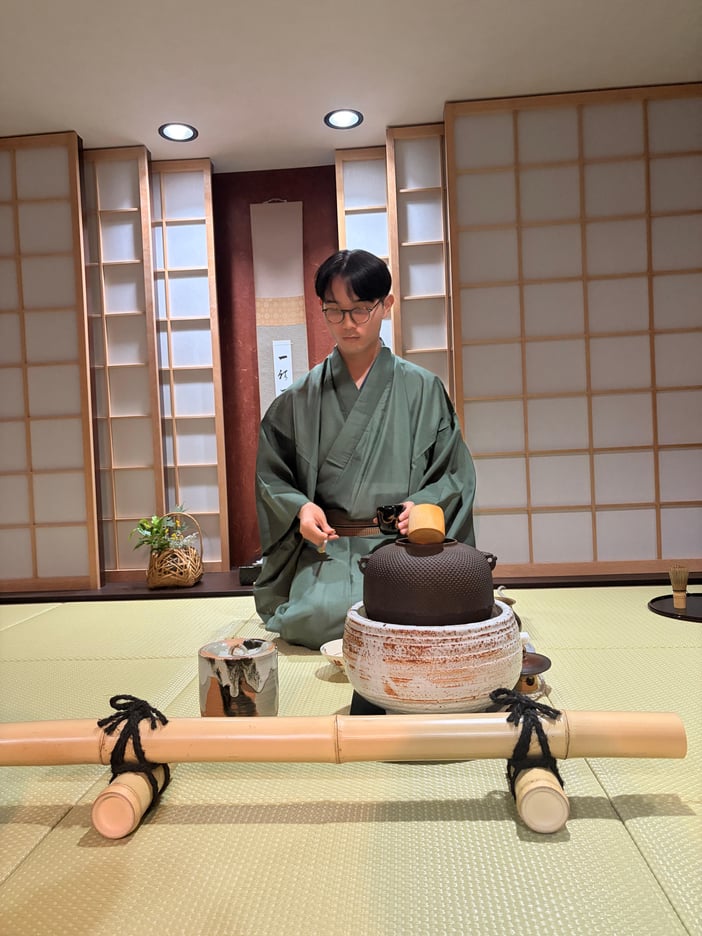
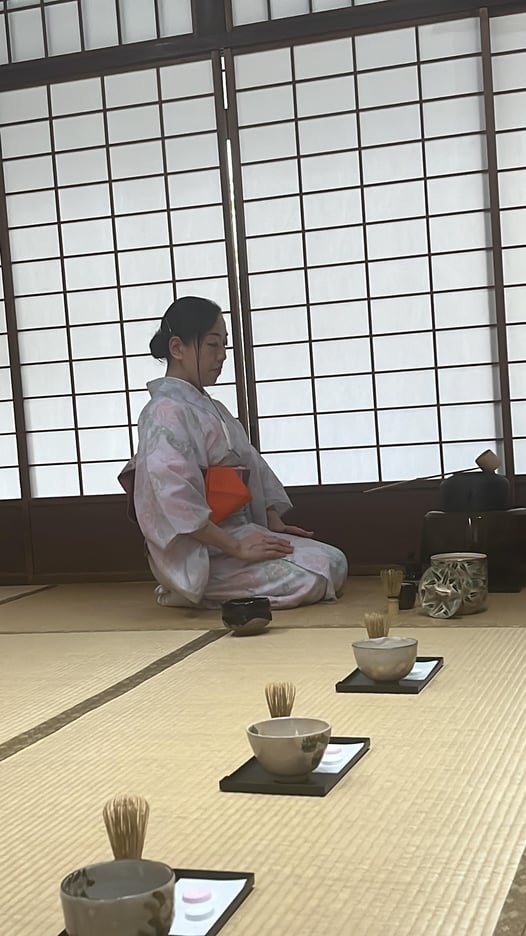
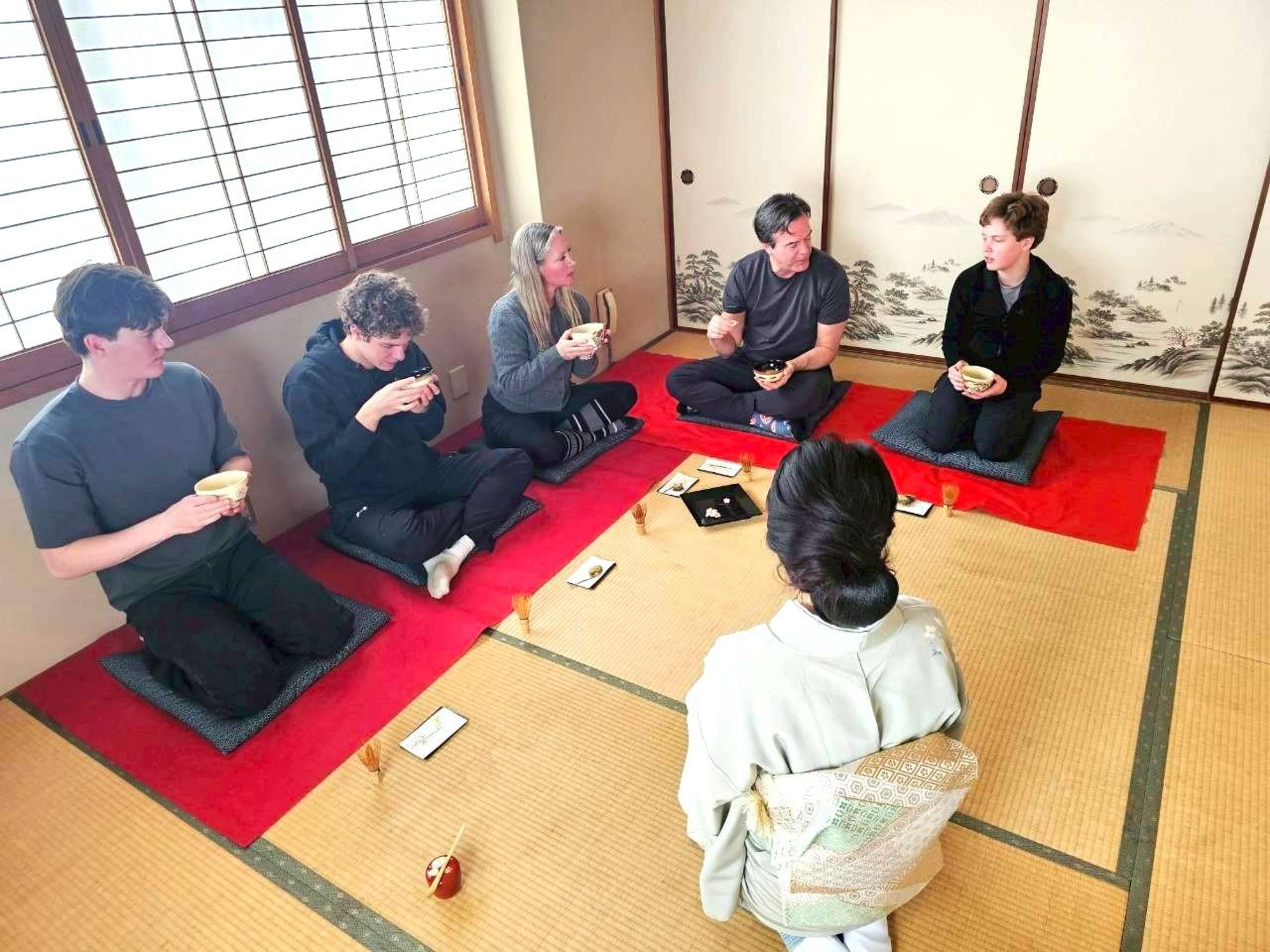
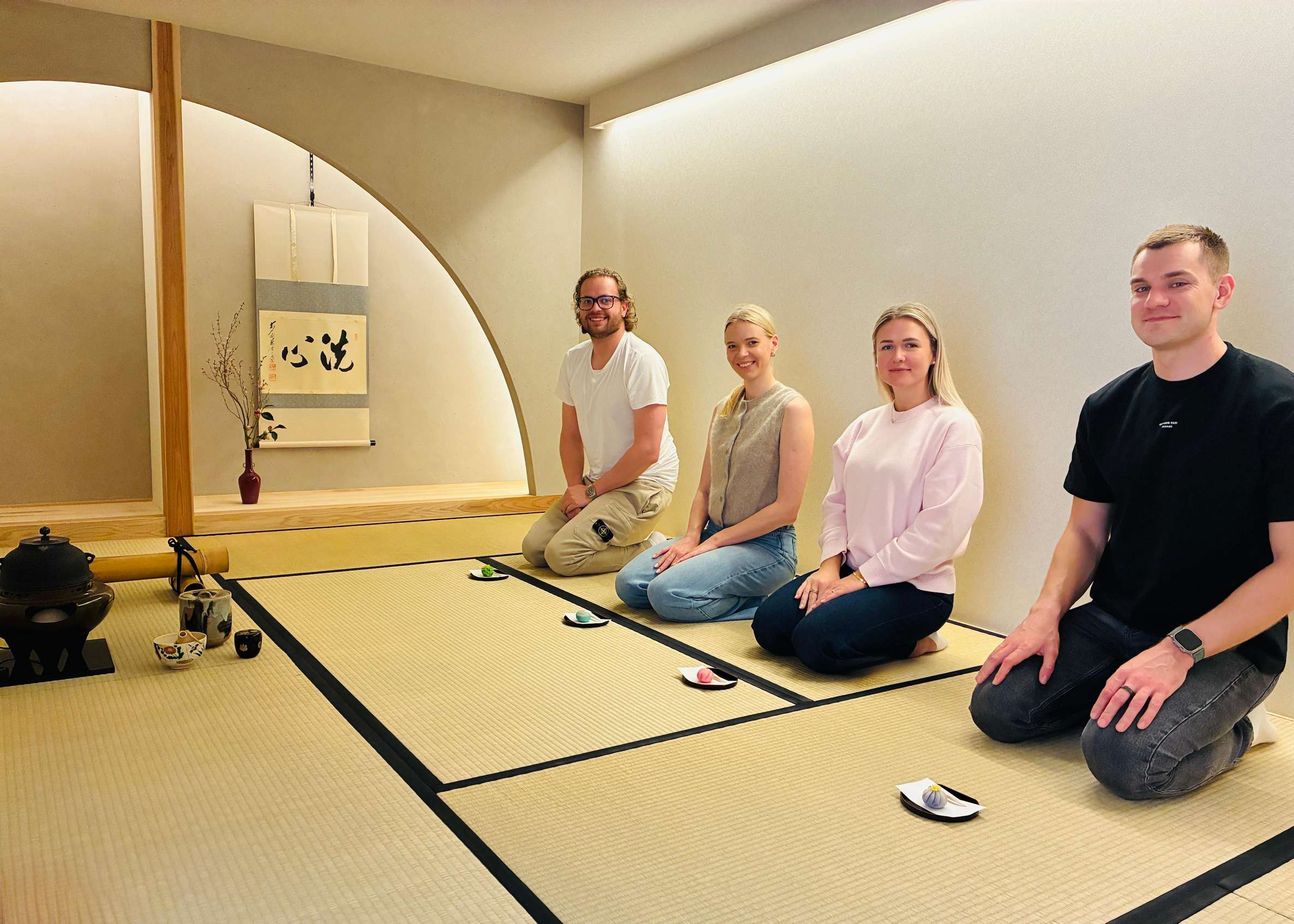
The class runs for one hour in a tatami room near Sanjo, shared with at most ten guests and explained entirely in English.
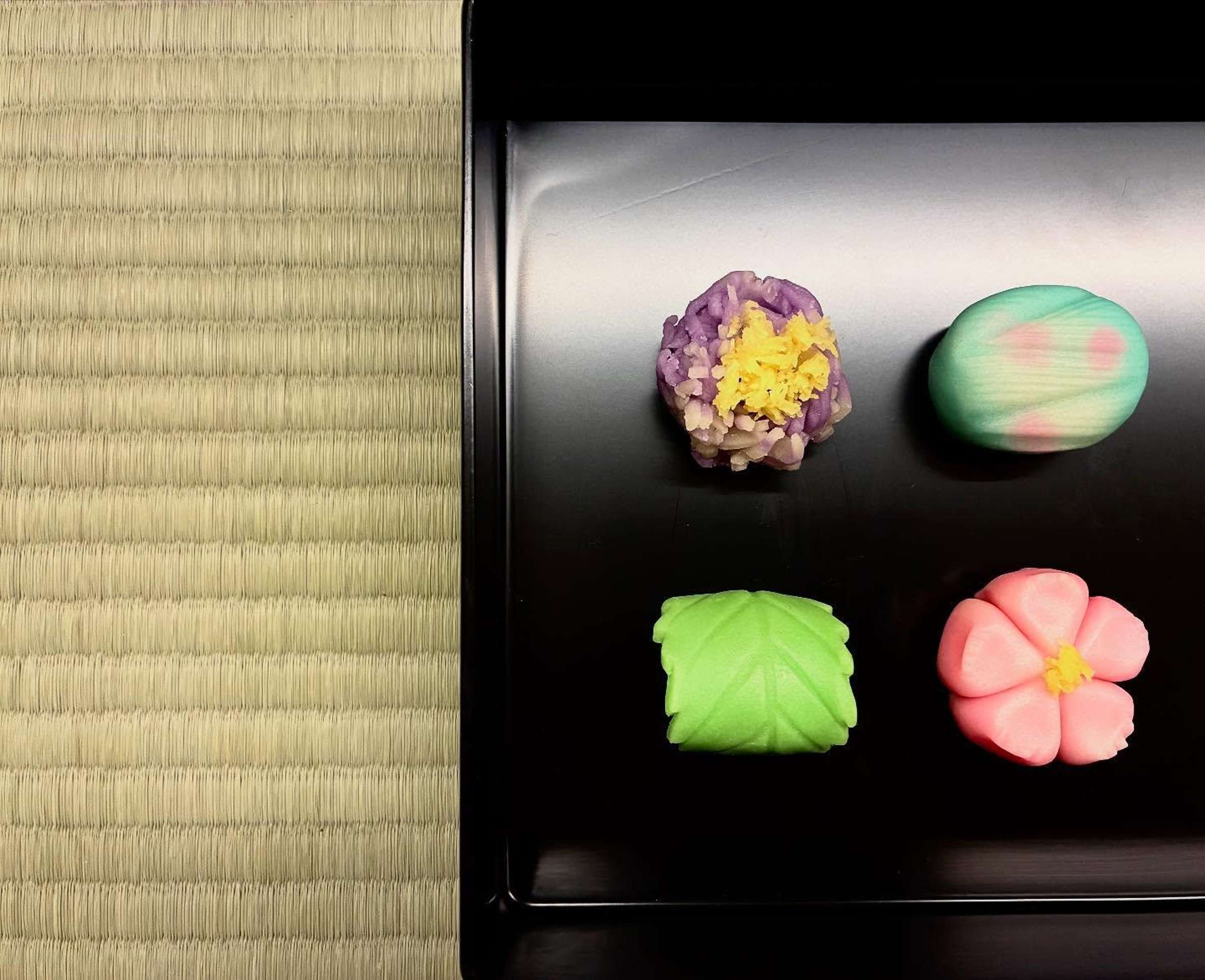
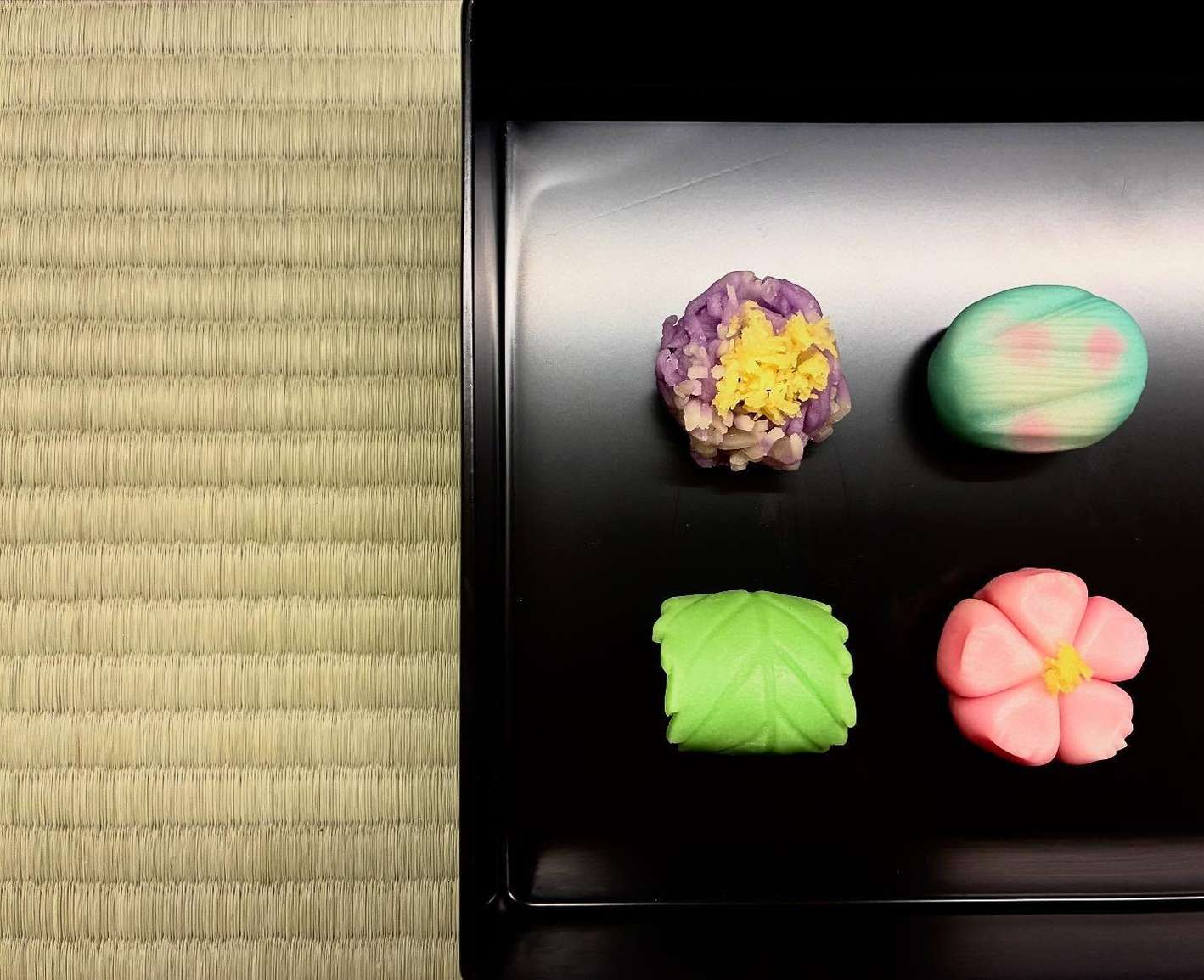
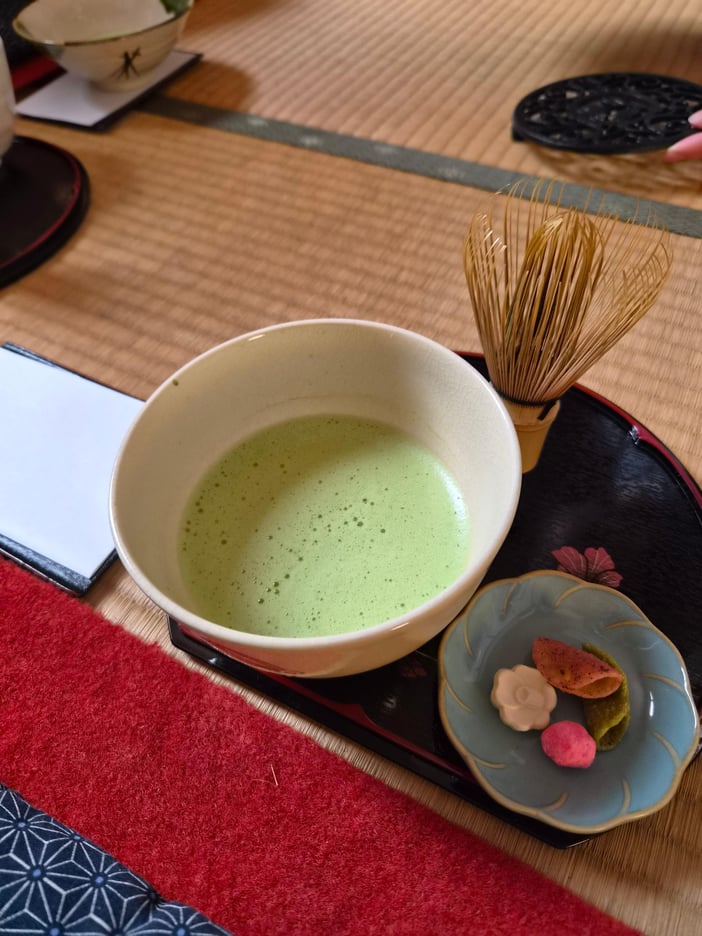
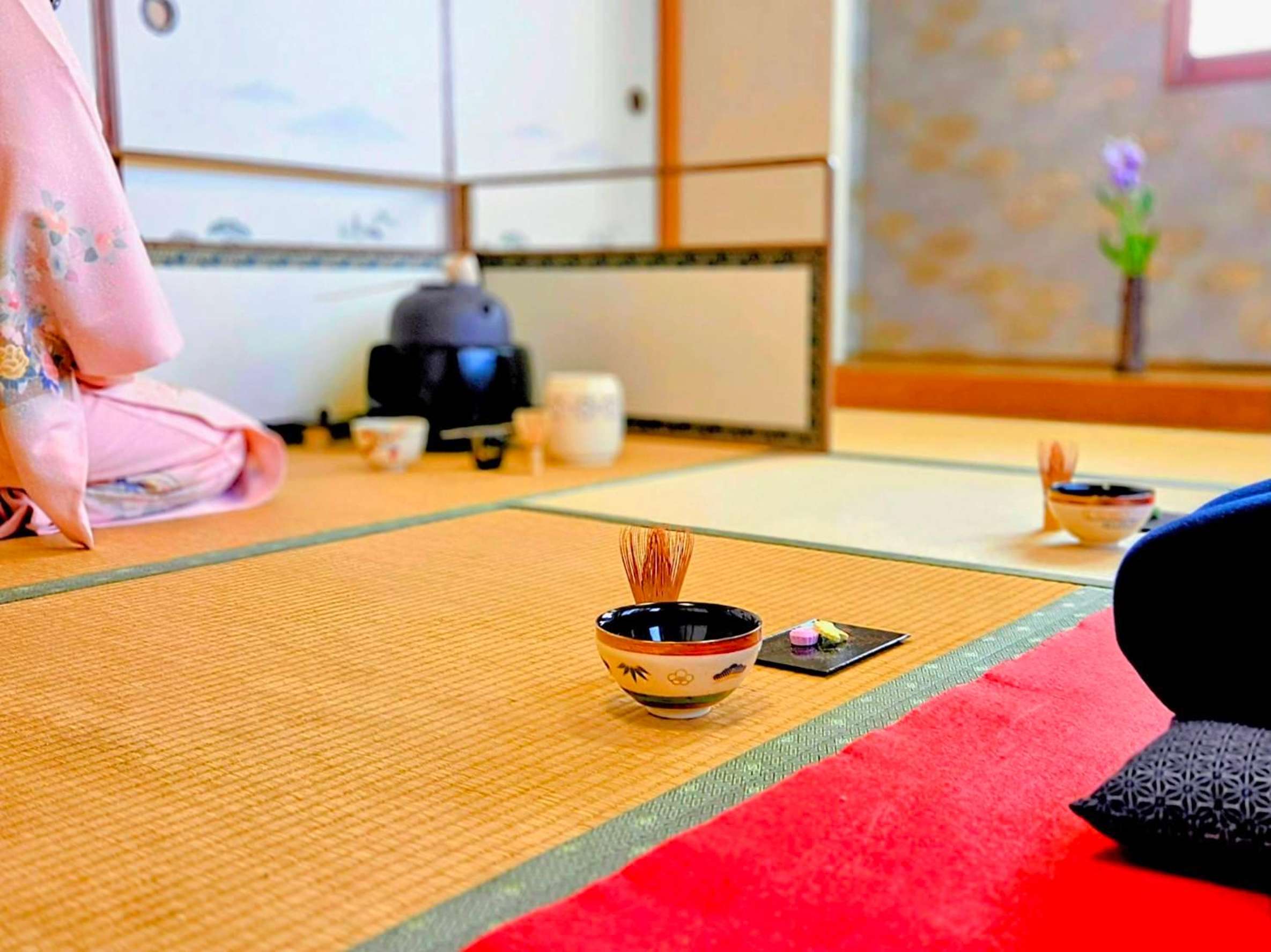
It opens with the philosophy behind the ritual, then your host demonstrates the full preparation while a seasonal sweet from a Kyoto confectioner with over a century of history arrives alongside a bowl of matcha.
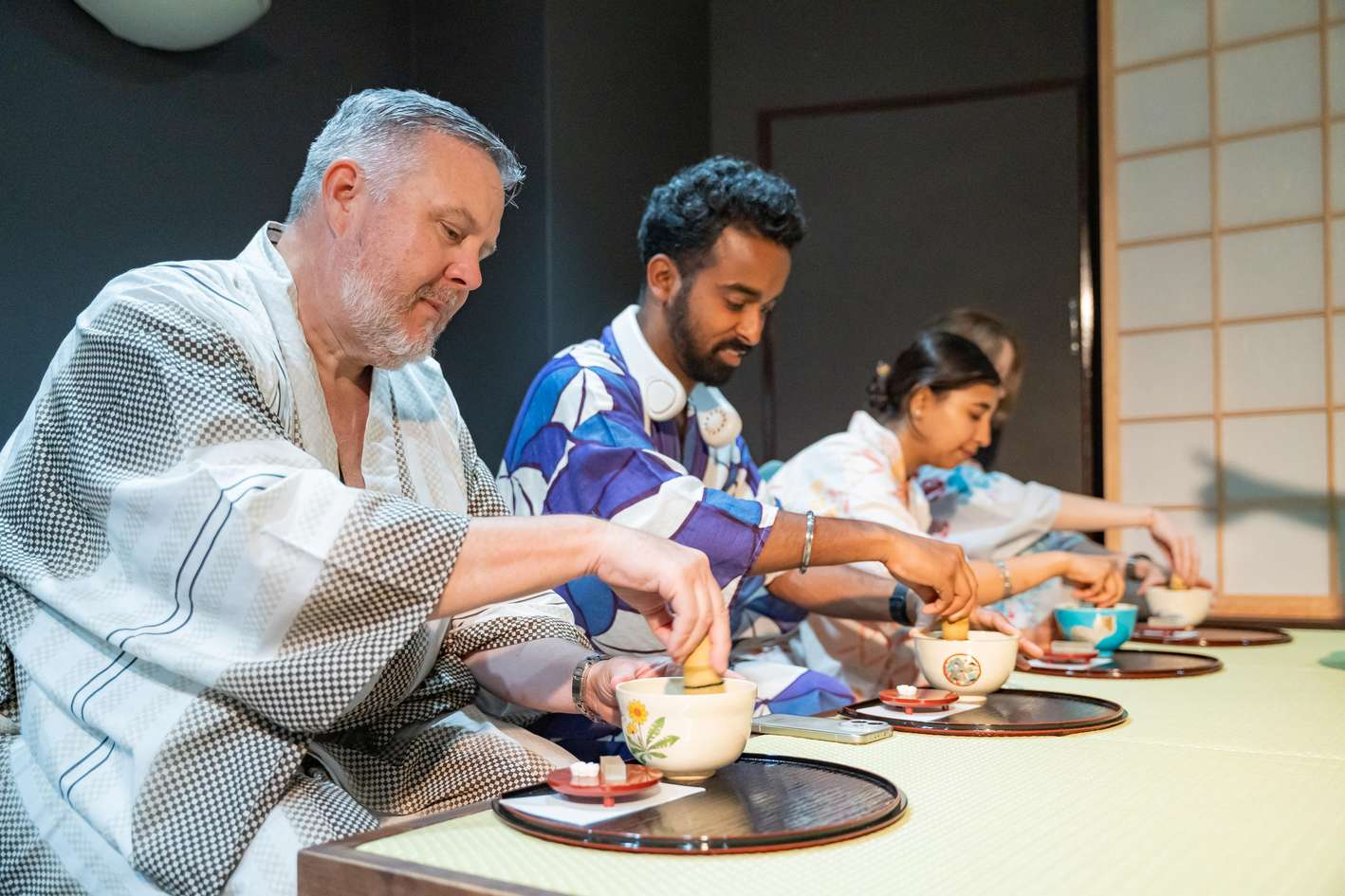
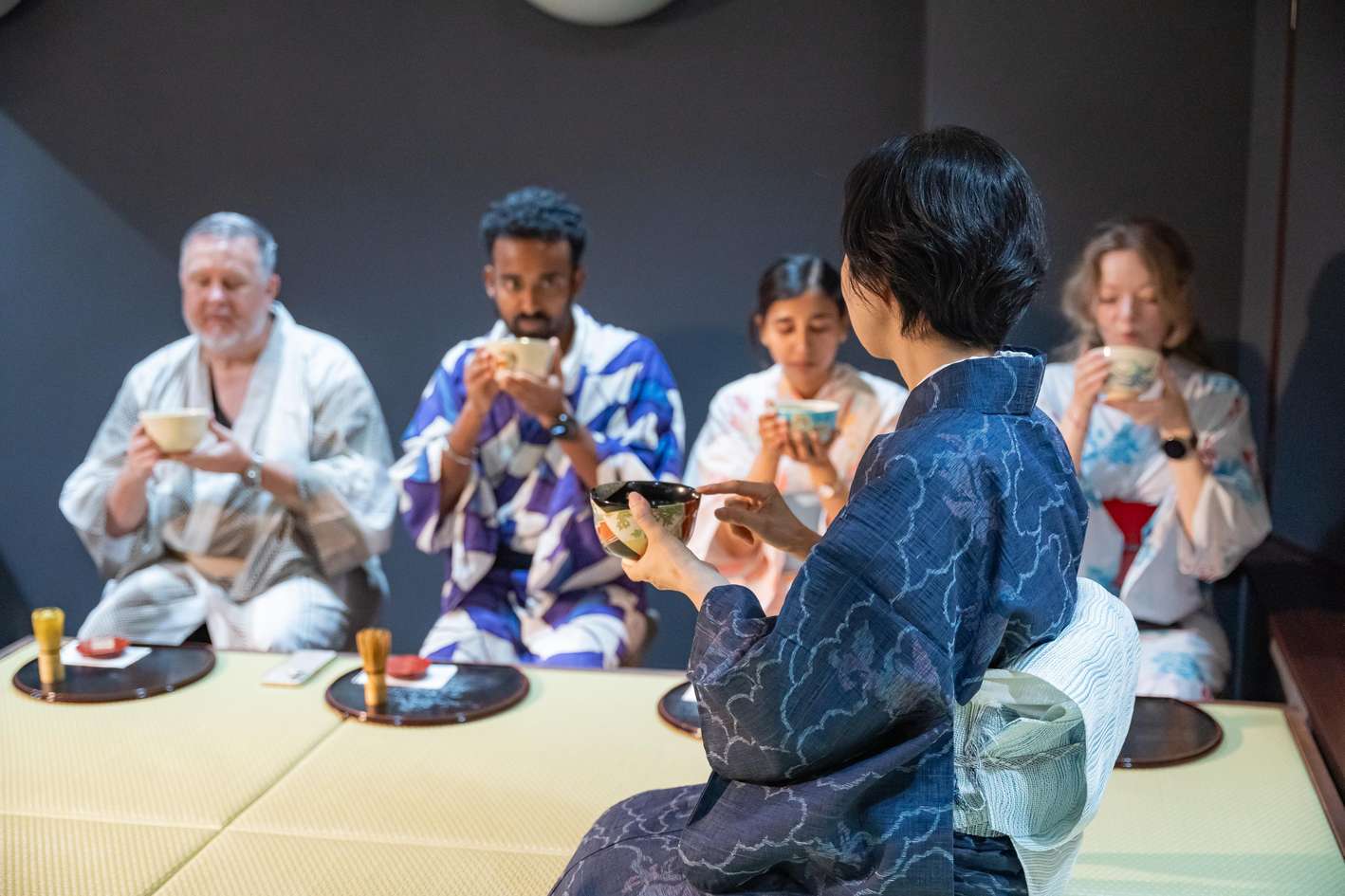
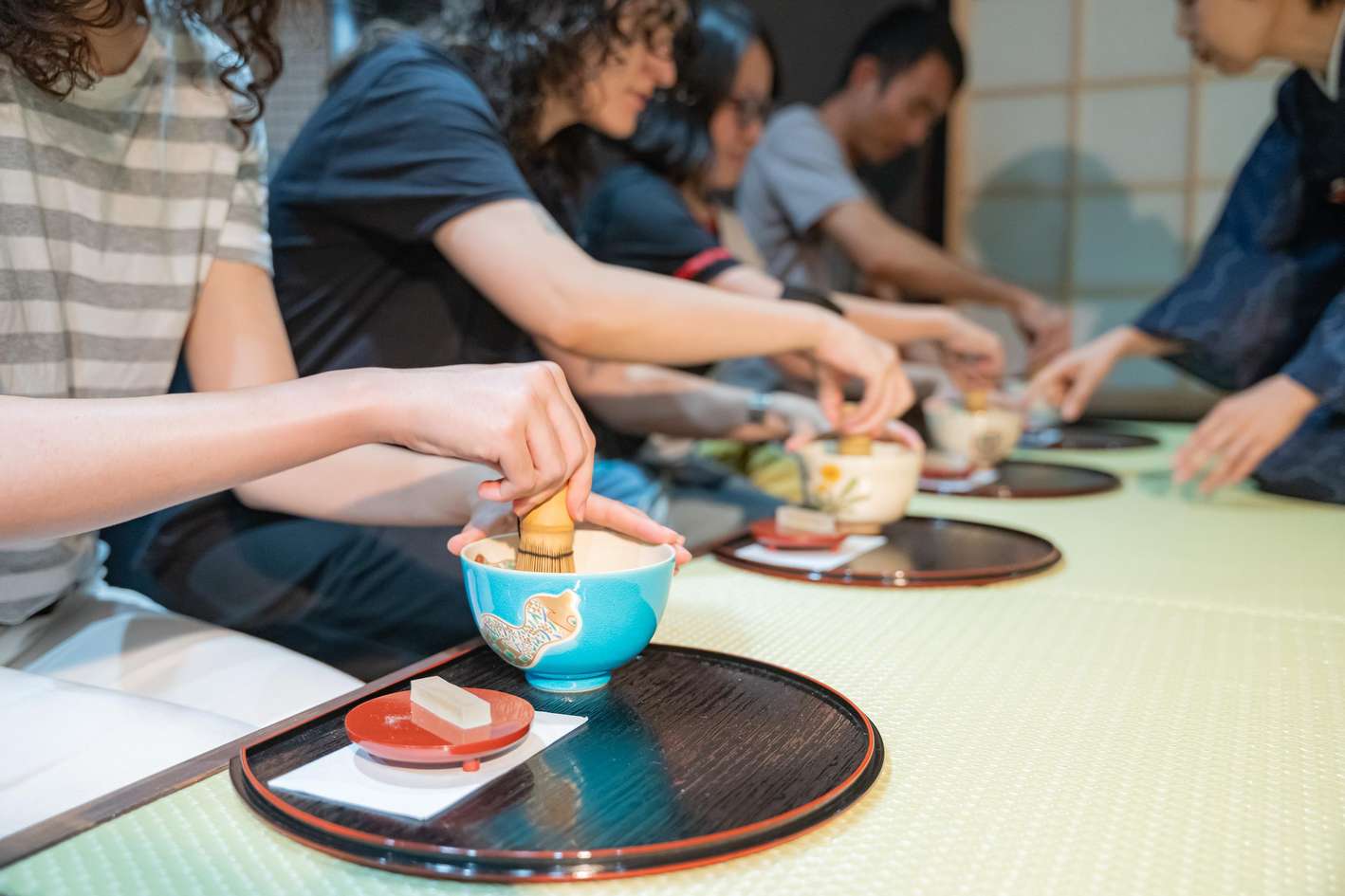
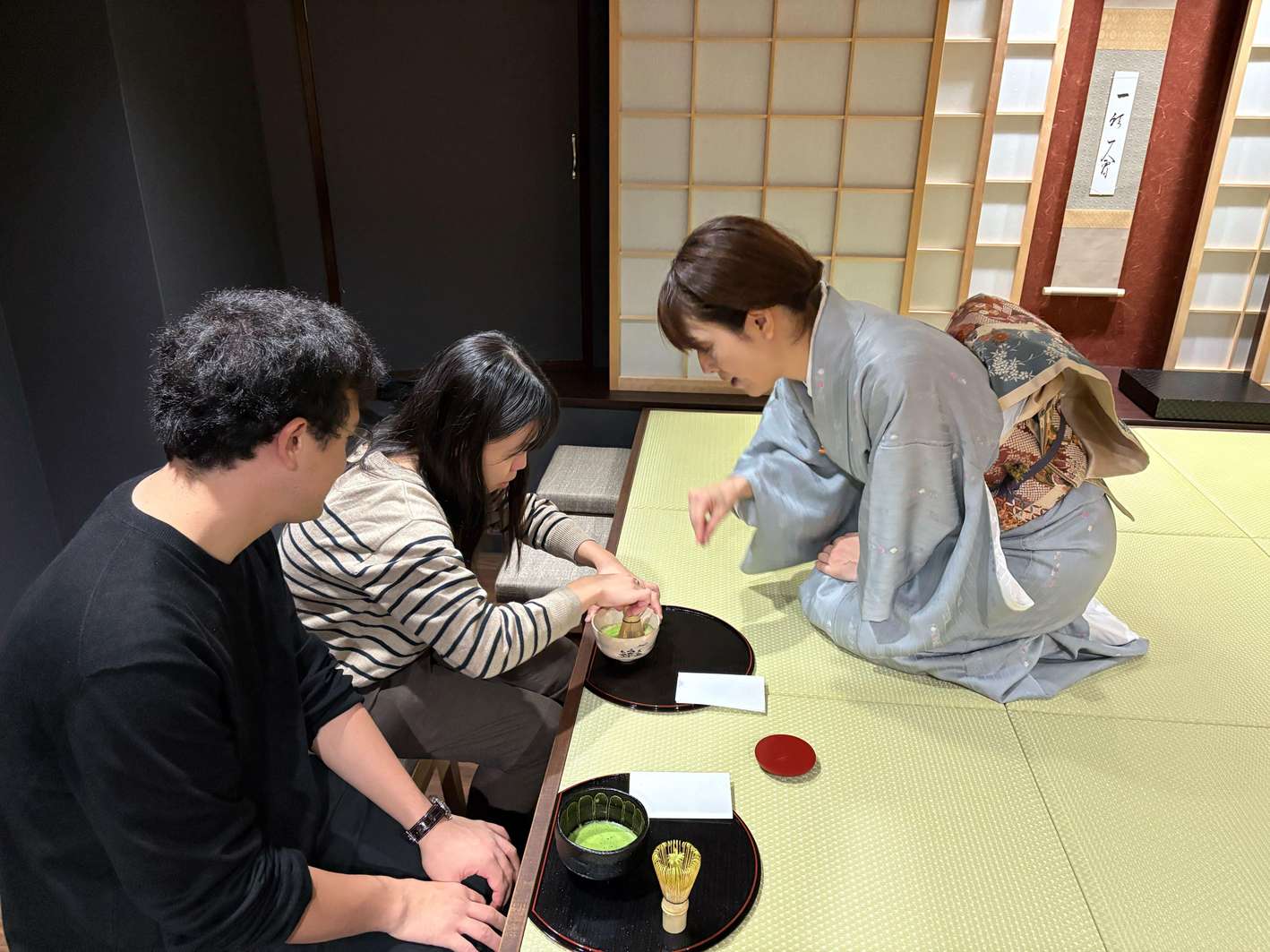
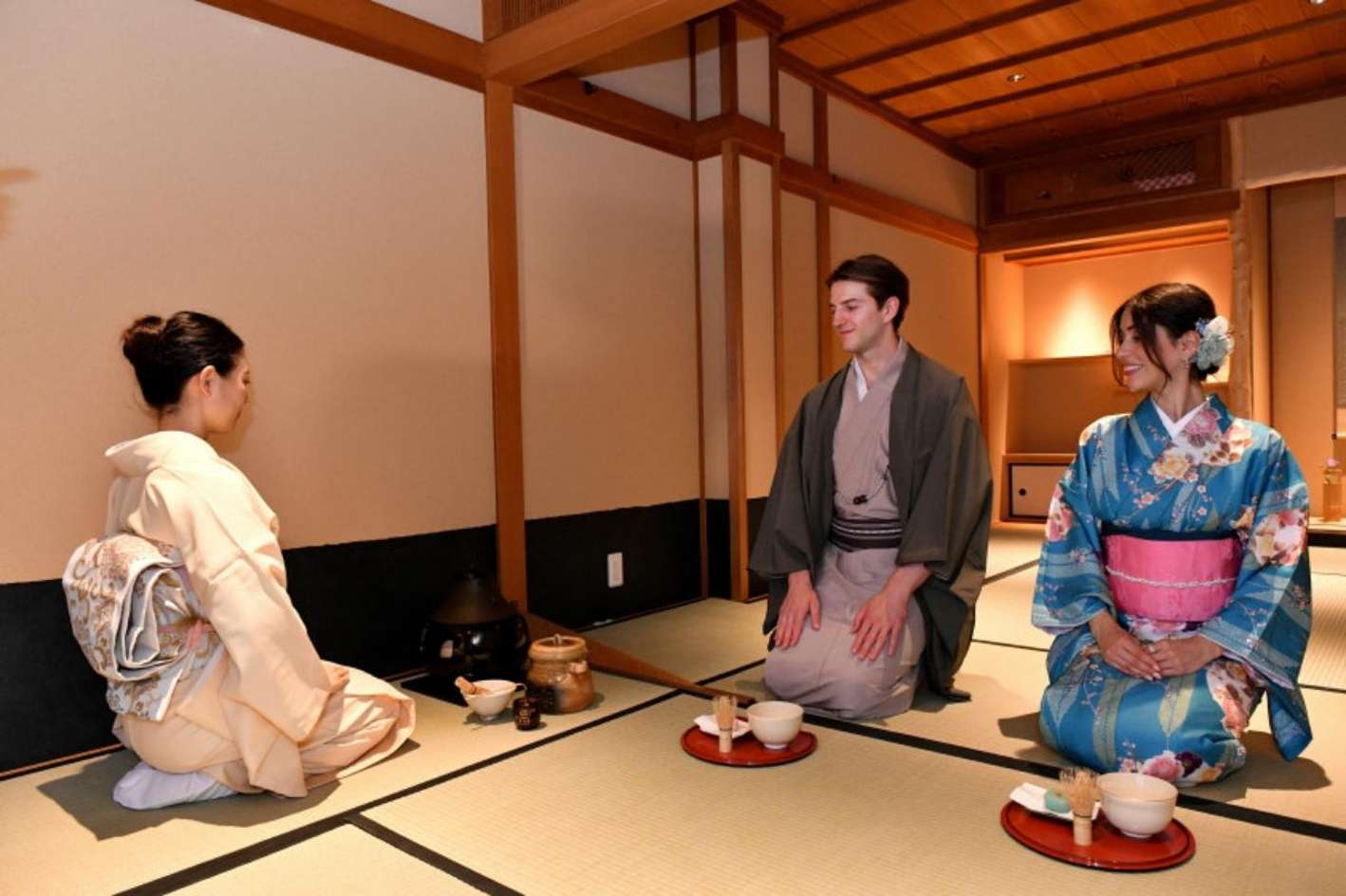
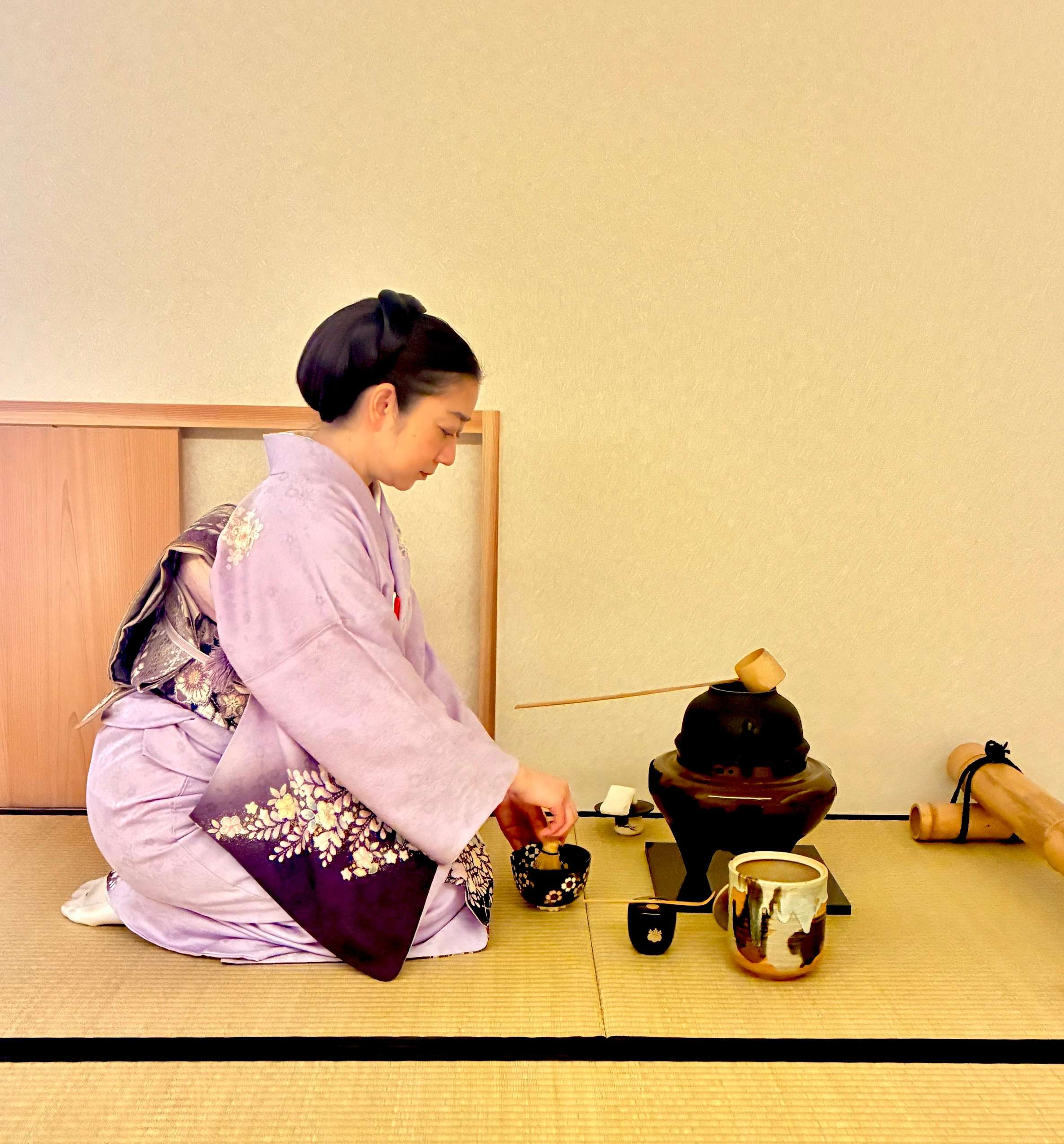
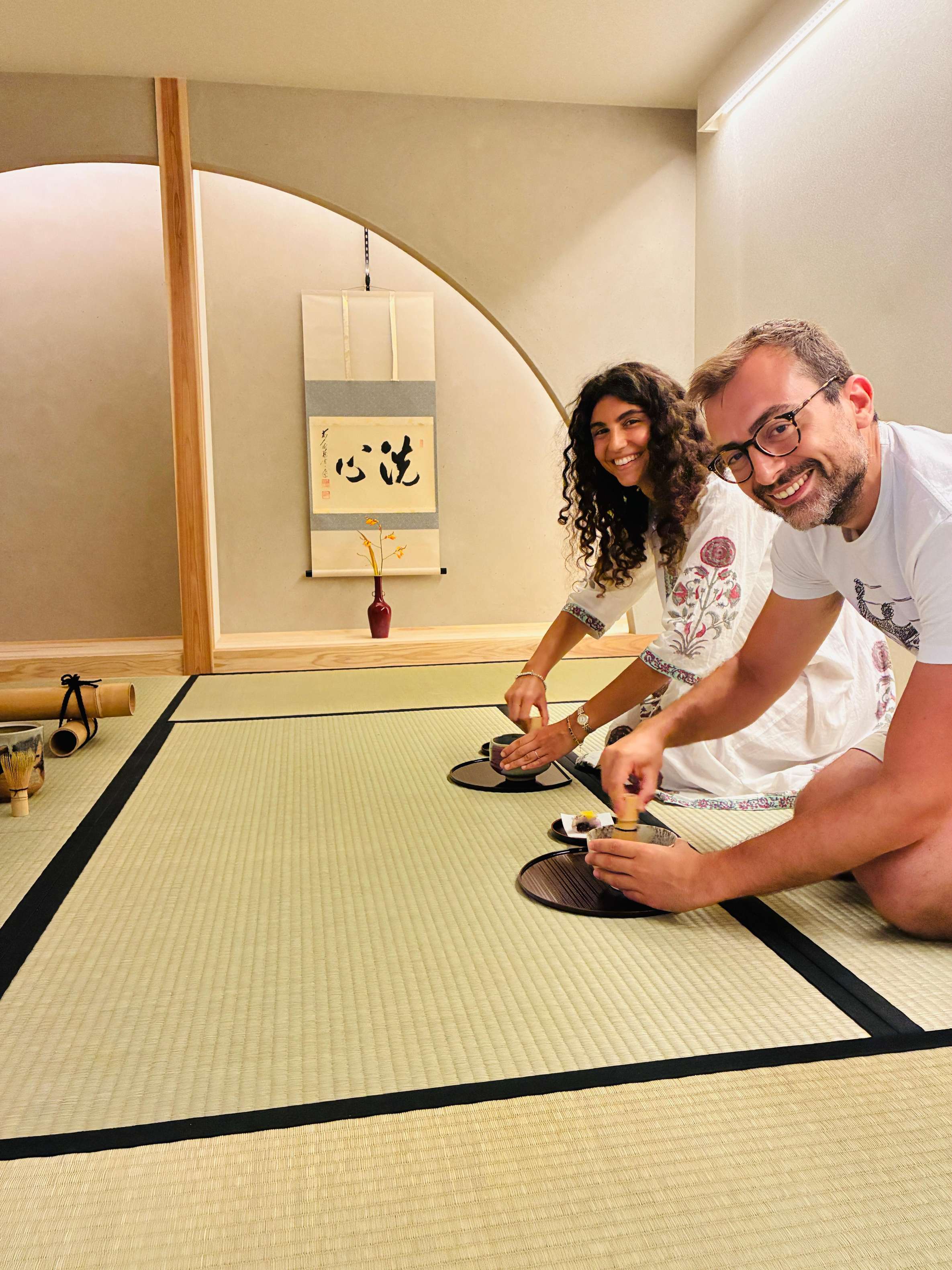
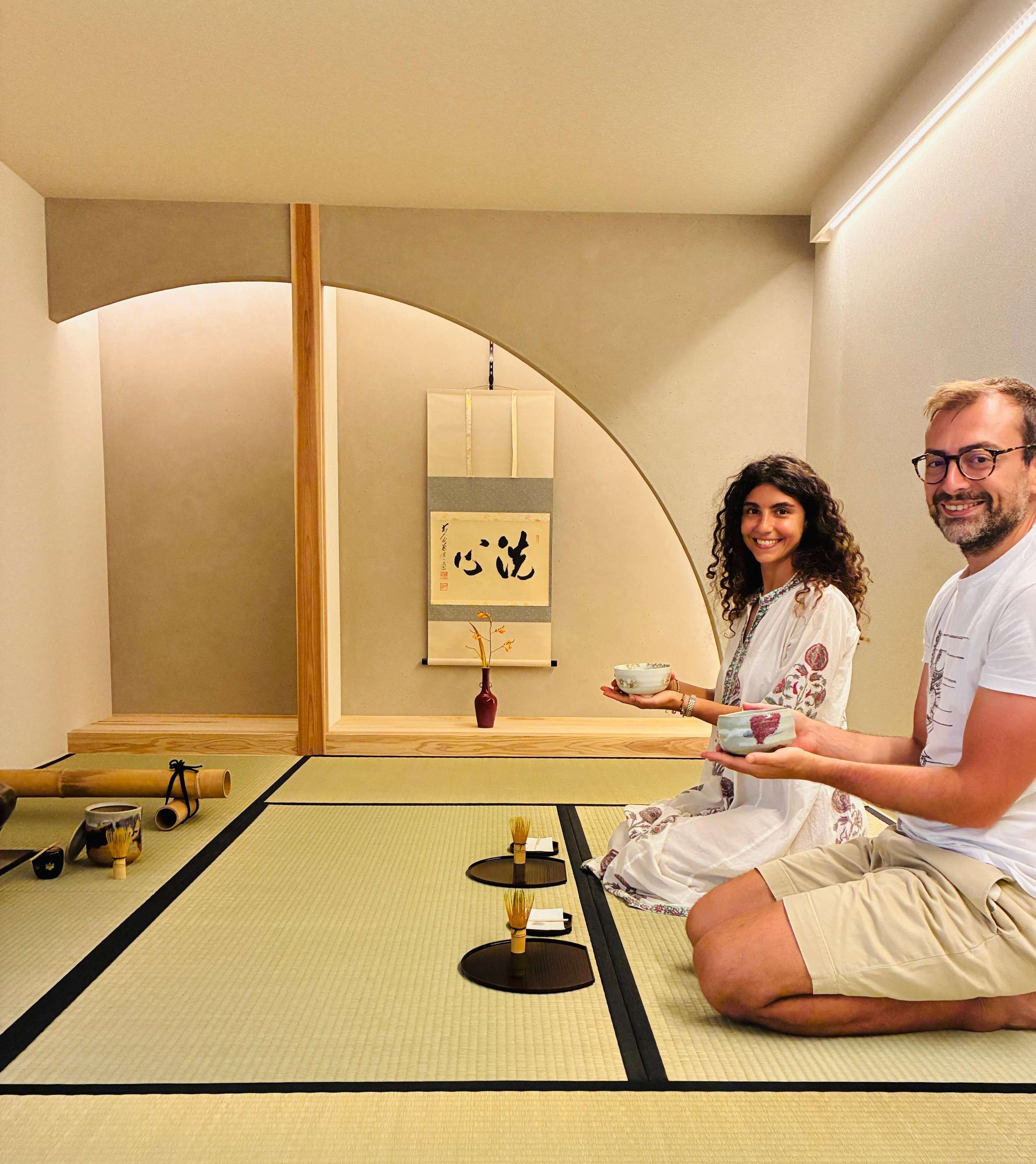
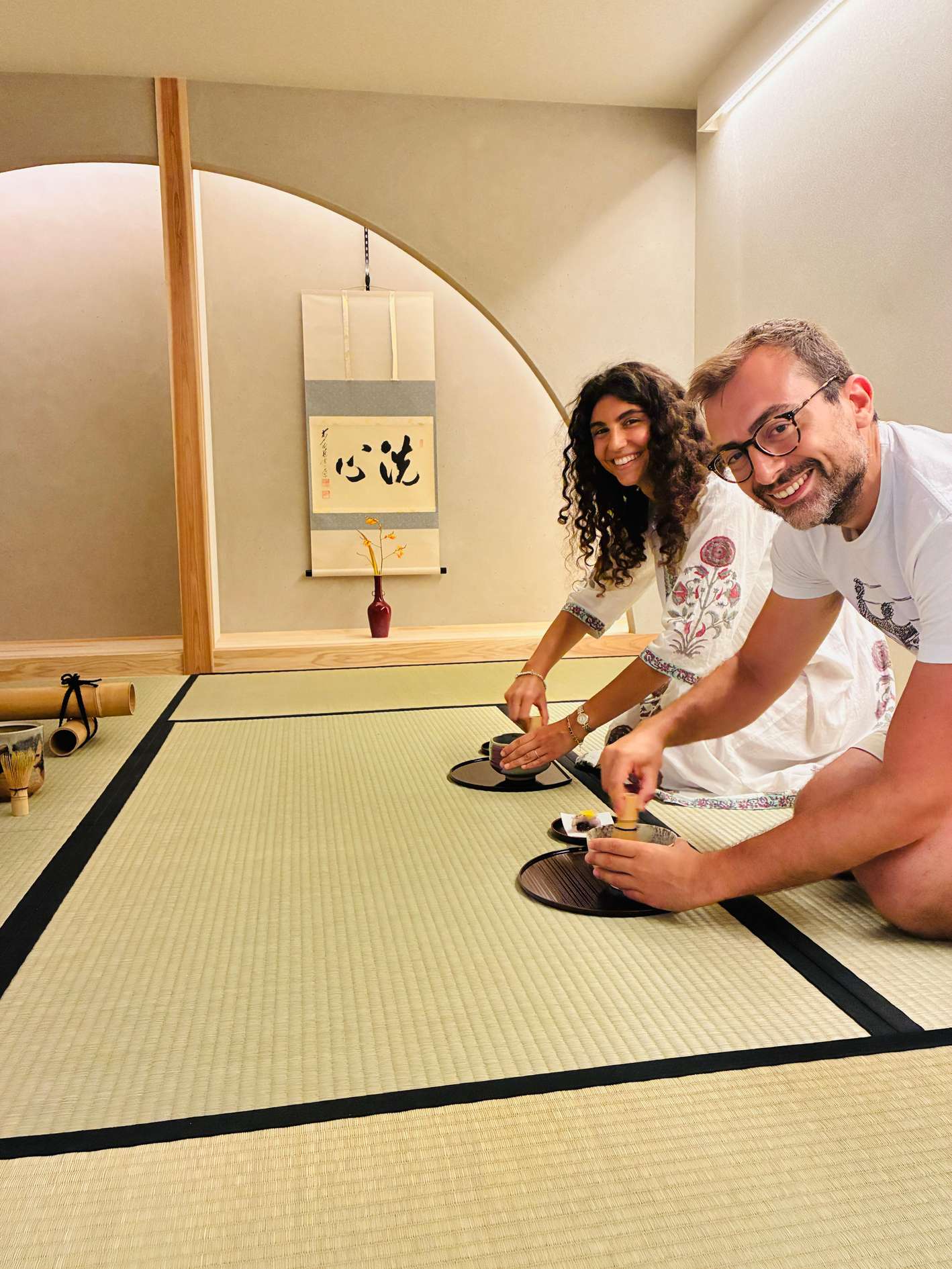
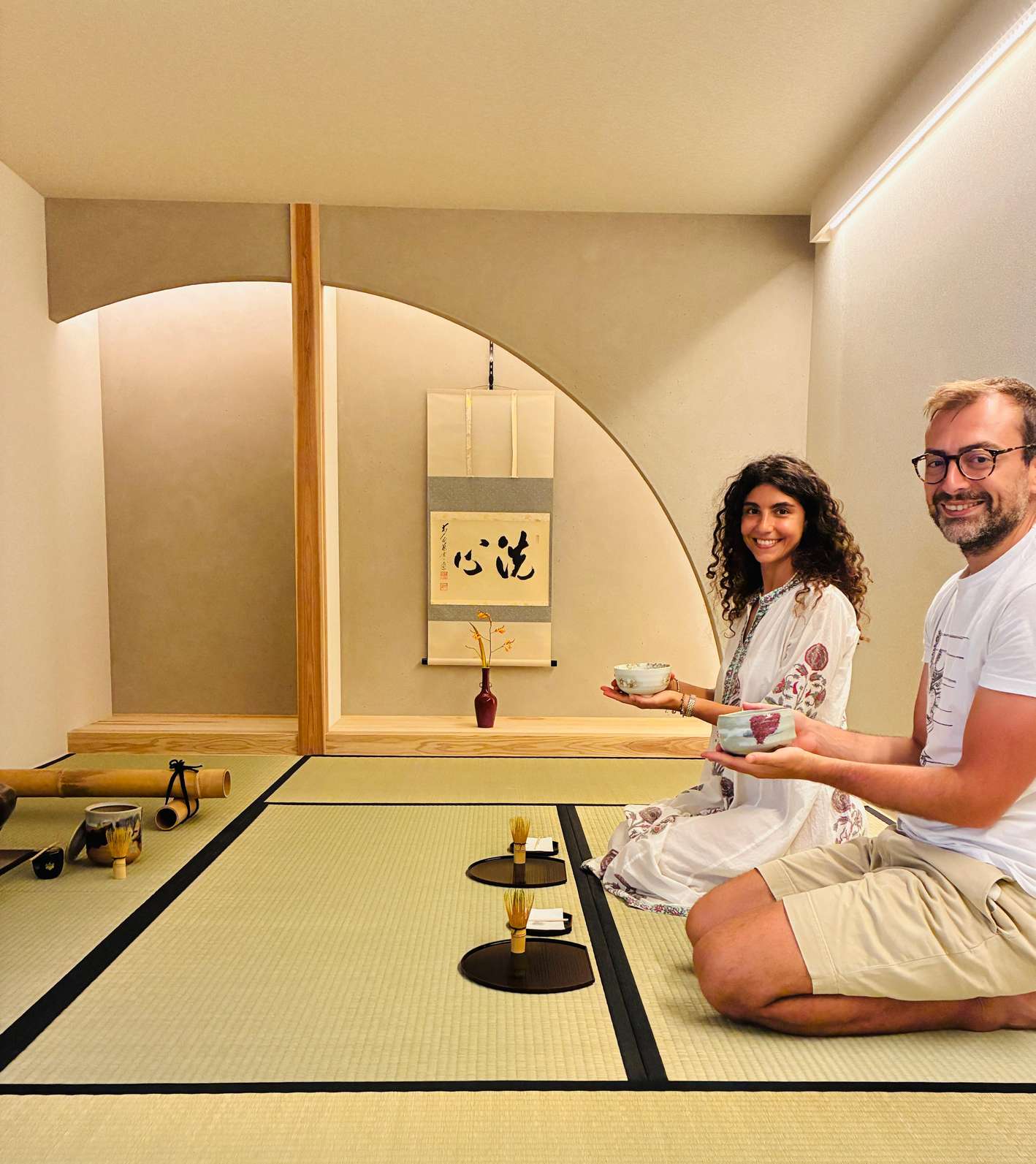
The second half is yours. You choose a tea bowl and prepare your own matcha with step-by-step guidance, or swap bowls with a companion so each of you plays guest and host.
Every gesture comes with its meaning, from the history of tea to its ties with Zen, so the movements make sense instead of just looking graceful.
1Introduction to the way of tea· about 15 minYour host introduces tea ceremony's history, its connection to Zen, and the spirit of respect behind each movement, before demonstrating the ritual.2The host's demonstration· about 10 minWatch the full preparation performed with deliberate, explained movements, and learn what each utensil and gesture is for.3Matcha and a Kyoto sweet· about 10 minTaste a bowl of matcha made by your host, paired with a seasonal Japanese confectionery from a confectioner with over 100 years of history.4Whisking your own bowl· about 15 minChoose a tea bowl and prepare a second bowl of matcha yourself, with step-by-step guidance from your host.5Guest and host, both ways· about 10 minExchange bowls with a companion if you like, so you experience both serving tea and receiving it as a guest.
Where the other tours go
Kyoto: Traditional Tea Ceremony with Matcha & Sweets in Gion
Most reviewers praise their host's patient, clear teaching, especially when explaining the history behind each step to beginners.
Best surprise
Several visitors who thought they disliked matcha found the tea they whisked themselves fresh and genuinely delicious.
Most common wish
Many reviewers wished the session ran longer, saying the lesson felt over just as they settled into it.
How to book your class at a Kyoto tea ceremony school
01
Pick your date and time
Choose a date first, then a start time. Sessions run at fixed times through the day, and in April and November the popular slots fill up weeks ahead, so booking early is the safe route.
Pro tipAim for a morning slot before 9 am, when the lanes in Gion and Higashiyama are calm and the light is soft
RecommendedDecember to February are the quietest months, so a few days' notice is usually enough then
02
Choose the right option
Read the option titles before you book. Some sessions are tea only, others add kimono dressing, calligraphy or a private room, and each changes how long you stay and where you start the day.
Common mistakeBooking a kimono option without planning for the extra dressing time, which stretches the session to 90 minutes or more
Pro tipIf kneeling on tatami worries you, pick a class with chair seating or request a chair in advance
03
Check who is coming
Count every guest, including young children, and add them to the booking. Age limits differ by class, with some sessions open from age 6 and others only from 7 or older.
ImportantEvery participant, even a small child, must be included in the reservation, and non-participants cannot wait inside
ImportantNo kimono or interpreter? Some classes ask guests needing one to book a private plan instead
04
Pay and read the voucher
Free cancellation applies up to 24 hours before, so paying ahead carries little risk. After payment the confirmation arrives with the exact meeting point, which in Kyoto is often a side alley or a spot inside temple grounds.
Pro tipSave the voucher offline, because the meeting spot may sit down a narrow lane where a map pin is hard to find
05
Arrive five minutes early
Doors open shortly before the start and close at the start time, sharp. Latecomers are turned away even by a minute, with no refund, so build in time for trains and finding the door.
ImportantBring socks, since shoes come off at the entrance and bare feet are not allowed on the tatami
Pro tipSlip off rings and watches before you lift the tea bowls, as metal scratches the ceramics
Know before you book a tea ceremony class in Kyoto
Can stop the dayGood to knowGood news
01
ChoosingWhat it is, who it suits, when to go
5
Jewellery
Take off rings and watches before you handle the tea bowl. Metal edges can scratch or crack the ceramic when you lift it with both hands, and the bowls themselves are often valuable. Tuck them in your bag before the session starts.
Kimono
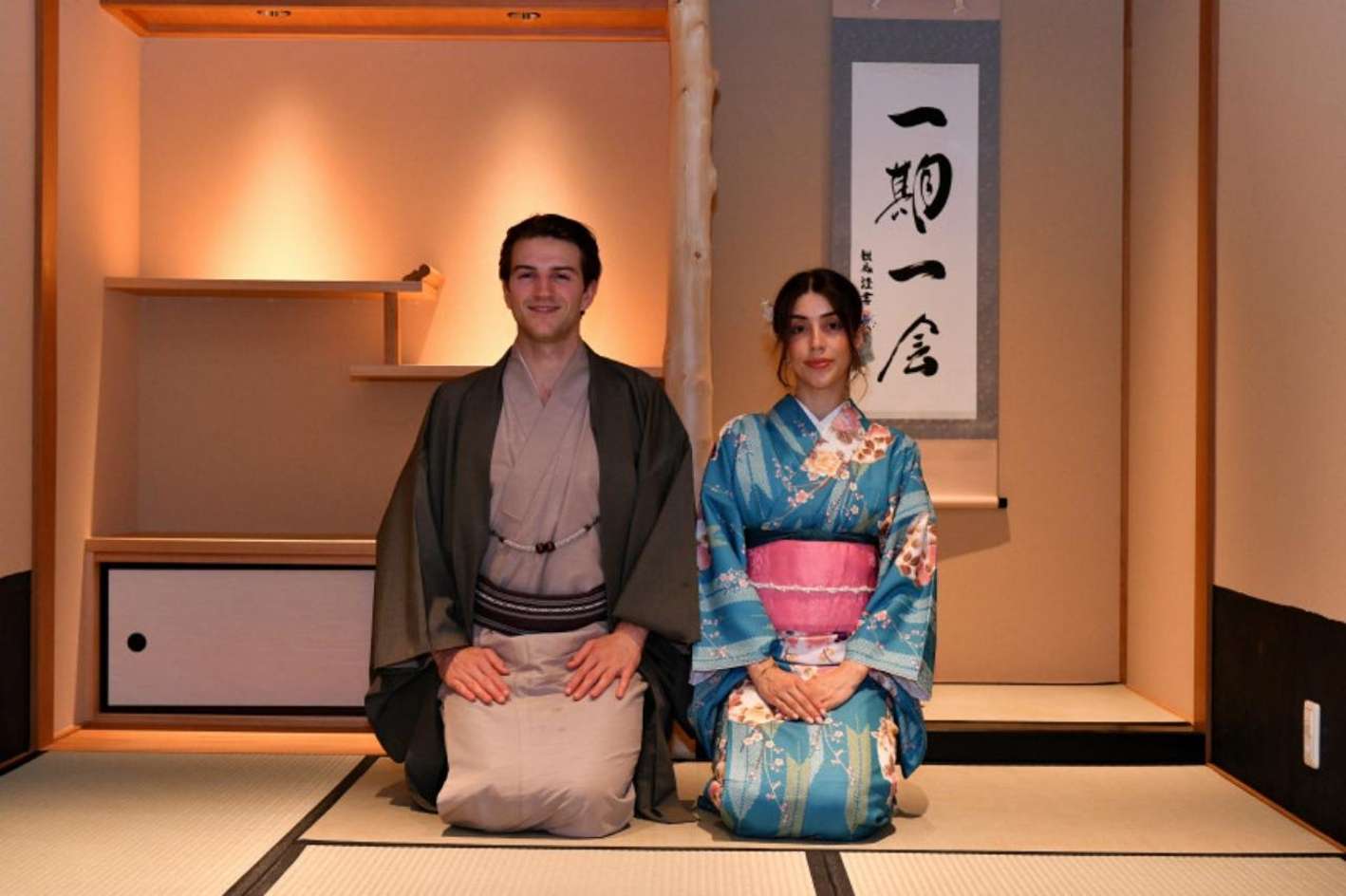
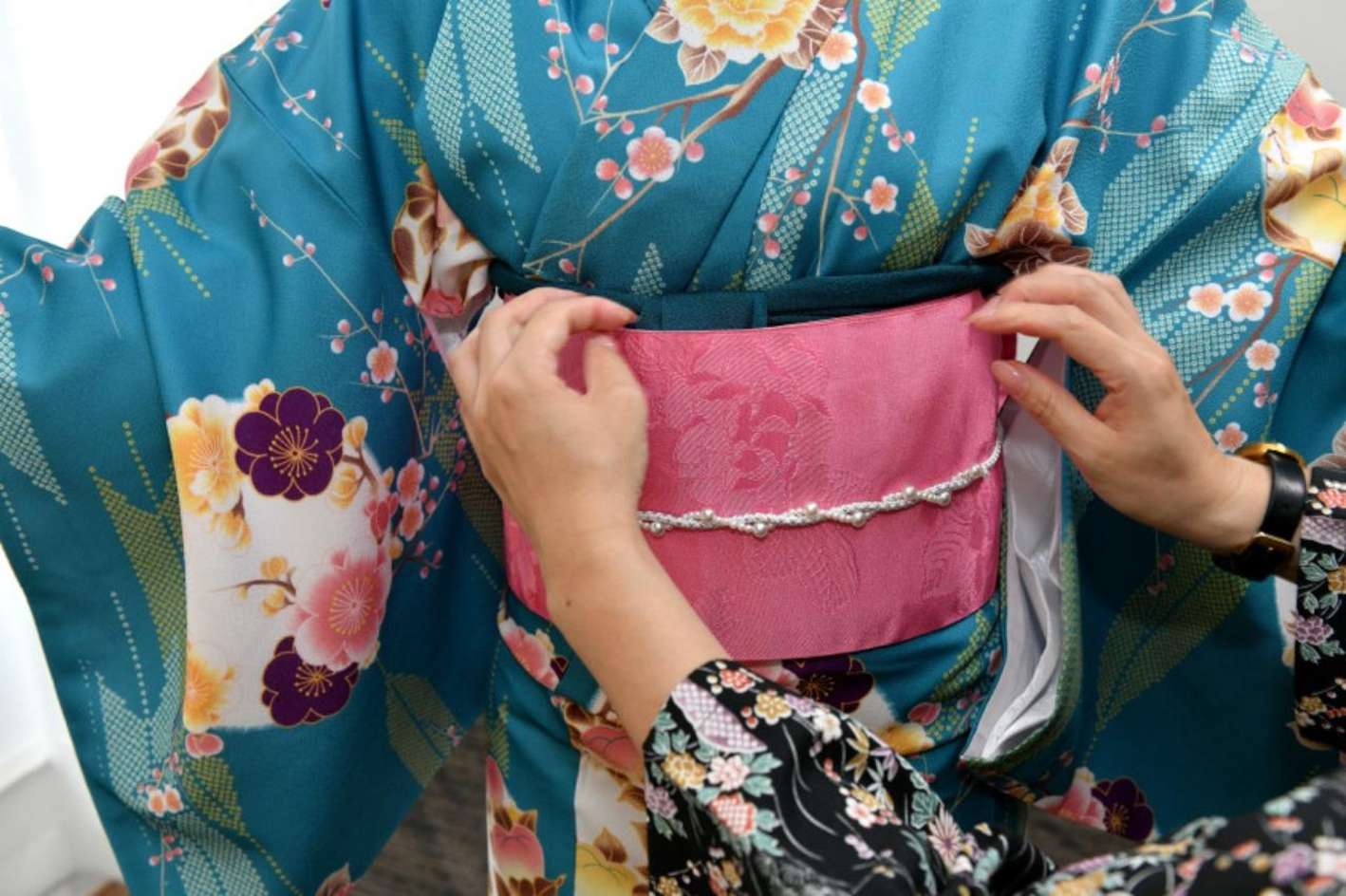
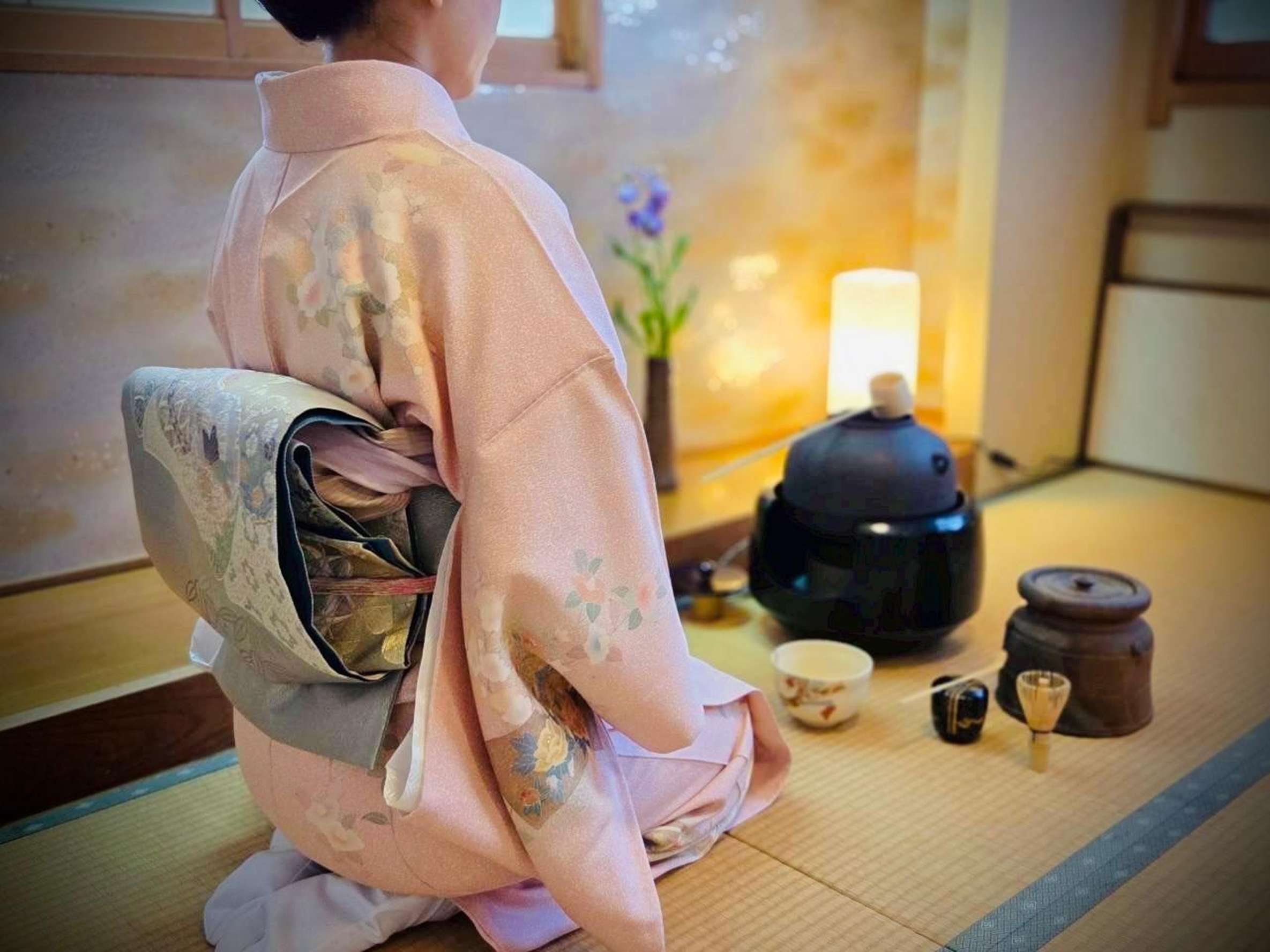
Several classes add kimono dressing, hair styling and the chance to stroll the district afterwards. Check whether the rental is in the base booking or a separate option before you reserve. In Gion, the kimono store sits a two-minute walk from the meeting point and the ceremony time follows your dressing slot.
Group size
Shared classes in townhouses usually seat 8 to 12 guests, so there is room for the host to guide your hands individually. Some venues take bookings from several platforms and reach 14 or more. Private bookings reserve the whole room for your group alone.
Photos
Video recording is off limits at some venues, and flash is out everywhere because it distracts from the ritual. Some hosts take a photo for you at the end, which one garden tea house includes. Ask where the line sits before you raise the phone.
Rooms
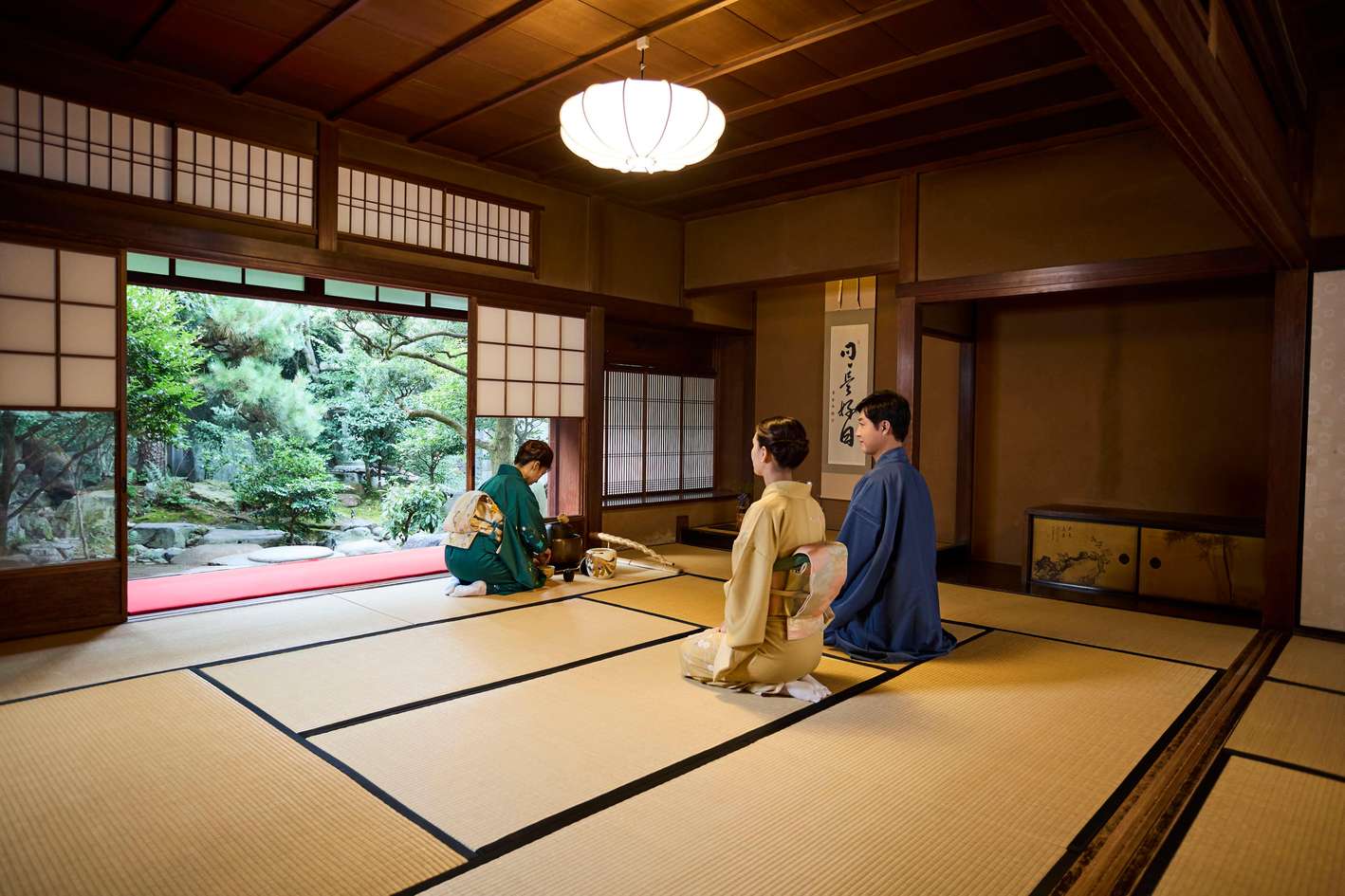
Treat the tea room gently and the small gestures come naturally. Lean nothing against the paper screens, which tear easily, and step around the cloth borders of the tatami mats. The host shows you the rest as you go.
02
BookingHow far ahead, and what happens if plans change
2
Cancellation
Every class on this page can be cancelled up to 24 hours in advance for a full refund. That makes it easy to reserve your spot early and adjust plans if the day shifts. Rebooking a full session is the only option once the start time has passed.
Seating
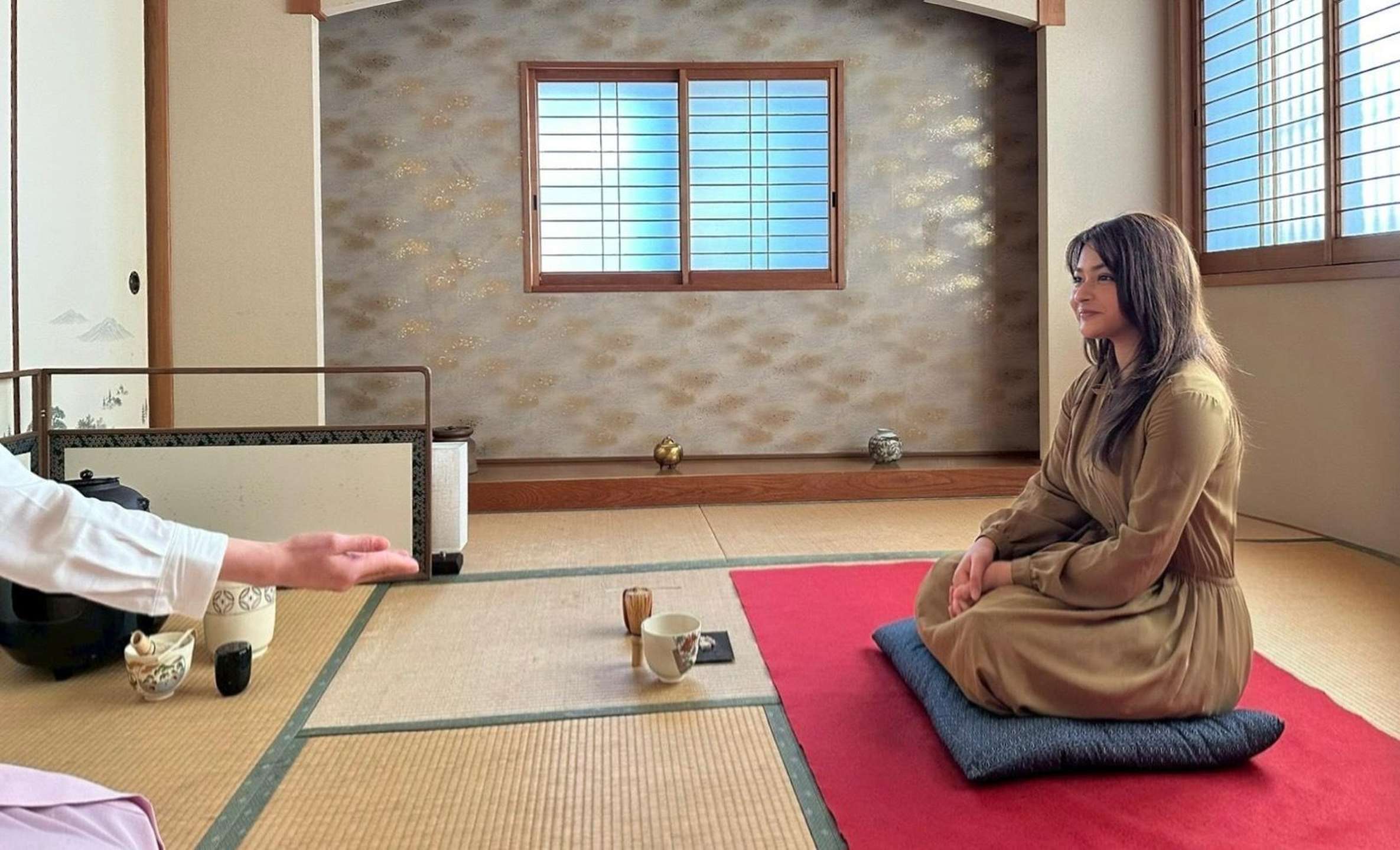
You do not have to kneel on the tatami for the full session. Most venues offer a chair or stool if you ask, and one Gion class seats everyone on chairs as standard. Request it in advance where the option needs a heads-up.
03
Before you goPapers, health, what to bring
2
Socks
You take off your shoes at the entrance, and bare feet never touch the tatami. Bring a clean, hole-free pair of socks, or buy a set on site at some venues for a small on-the-day charge. White ones are the traditional courtesy, though any colour works.
Age limitsCan stop the day
Minimum ages vary by venue and they are enforced. One class near Kiyomizu-dera and the Gion session admit children from about 6, while the Karasumashijo kimono class requires 7 or older. Families with toddlers should look at private sessions or the temple class, where parents may step out briefly with a crying baby.
04
On the dayWhere to be, when, and how you get there
1
Arrival timeCan stop the day
Doors close when the session starts, even at venues that let you in from five minutes early. Guests who arrive late are turned away with no refund, whatever caused the delay. Plan the train journey with time to spare and aim to arrive ten minutes ahead.
05
During the tourWhat is expected of you
1
Whisking
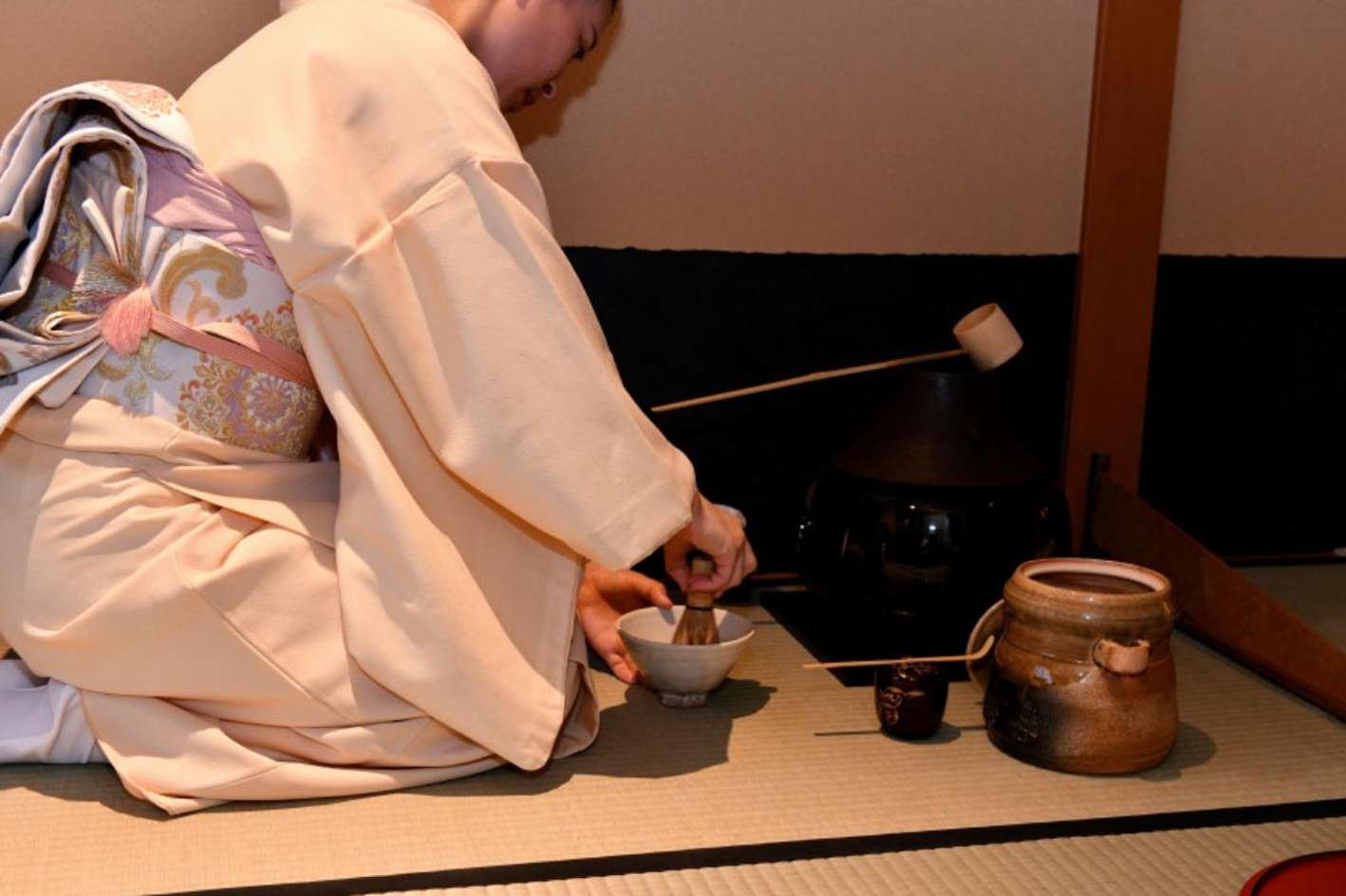
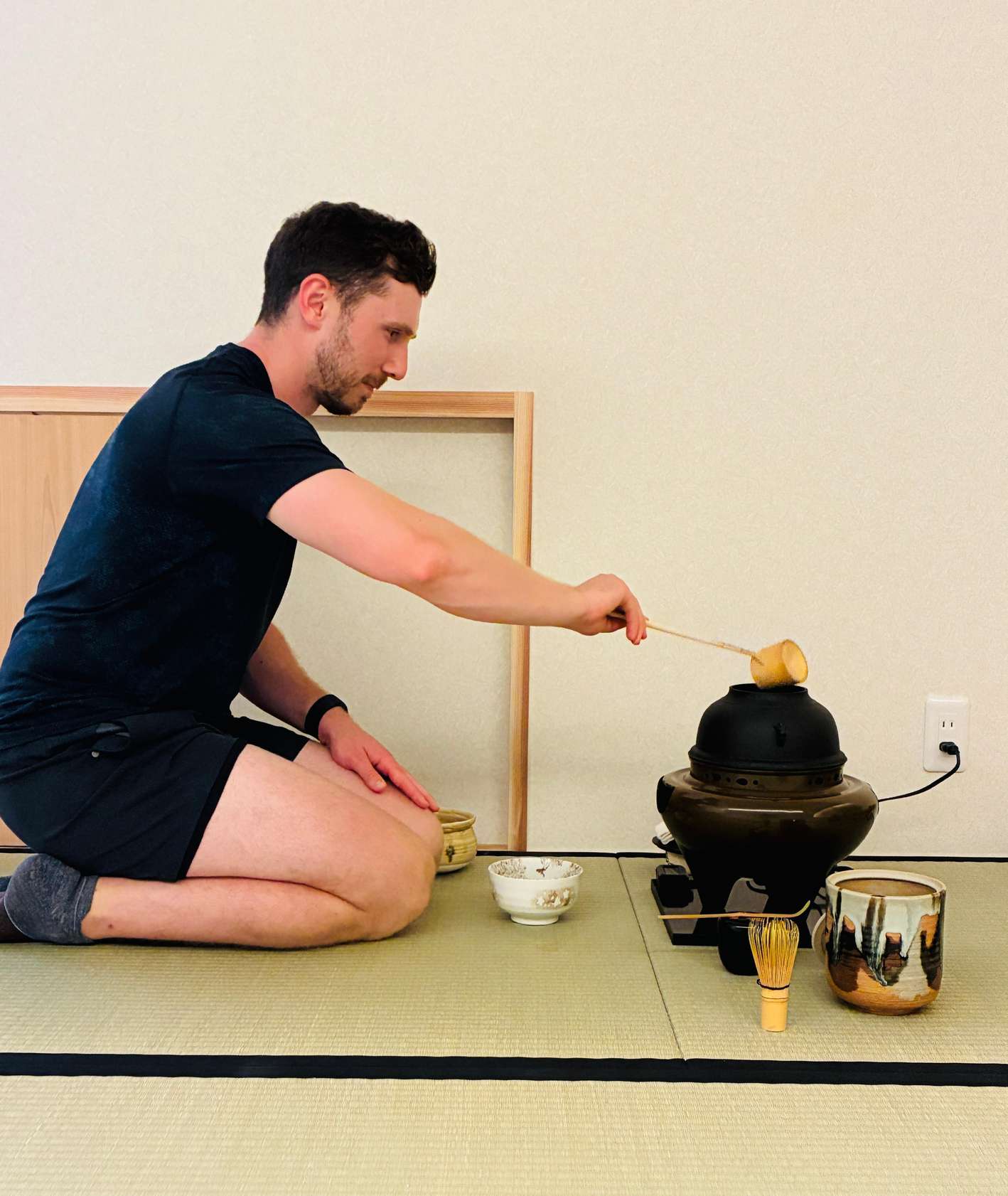
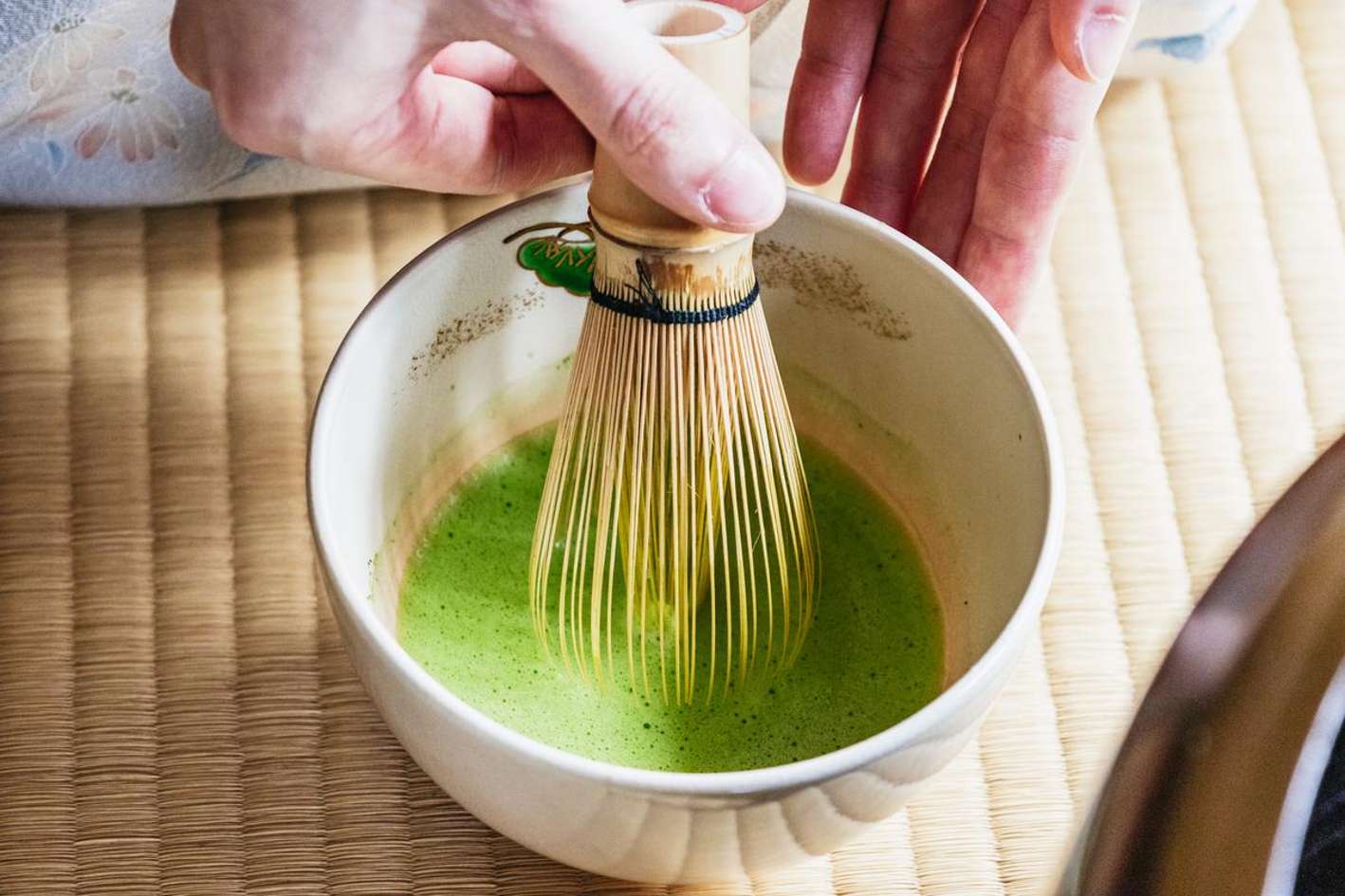
The wrist does the work. After softening the bamboo whisk tips in hot water, you whisk briskly back and forth in an M shape for around 15 seconds with a light flick, keeping your arm still. Most beginners first stir in circles from a stiff arm, so this is the move your instructor will correct.
A hands-on guide to a tea ceremony class in Kyoto
A good class puts the bamboo whisk in your hand, a hundred fine tines under your control. What a beginner lesson actually involves, how to reach the tea room, and how to book without losing your slot: this guide walks all of it.
Kyoto· 35.00° N, 135.77° E
If you only remember three things
1
Arrive 5 minutes early: doors lock at the start and latecomers lose their seat.
2
Eat the sweet before the matcha, never after; it tames the bitterness of real ceremonial tea.
3
Whisk with the wrist in quick zigzag strokes for about 15 seconds, never from the arm.
Is a hands-on tea class worth it, or just watch?
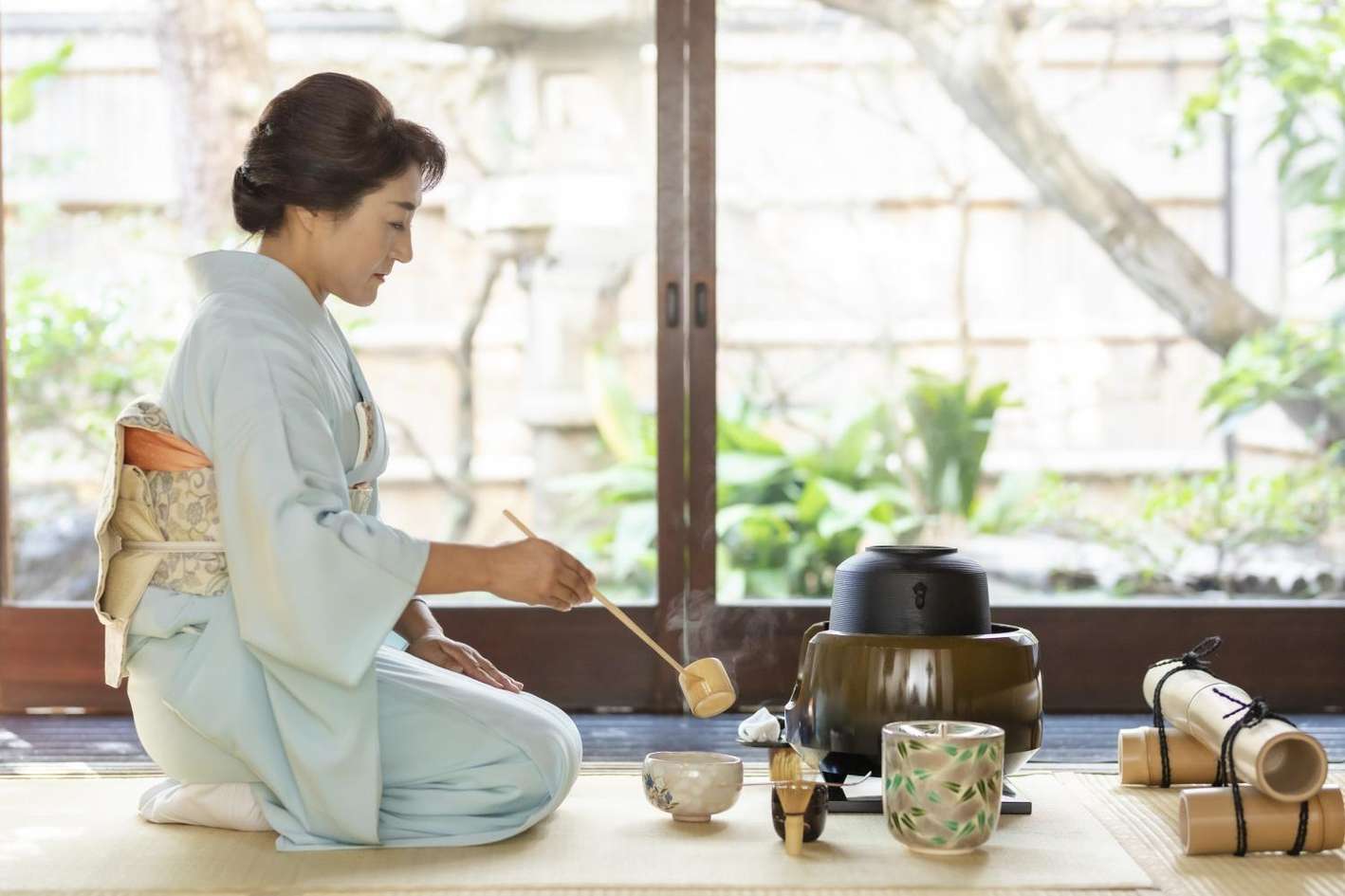
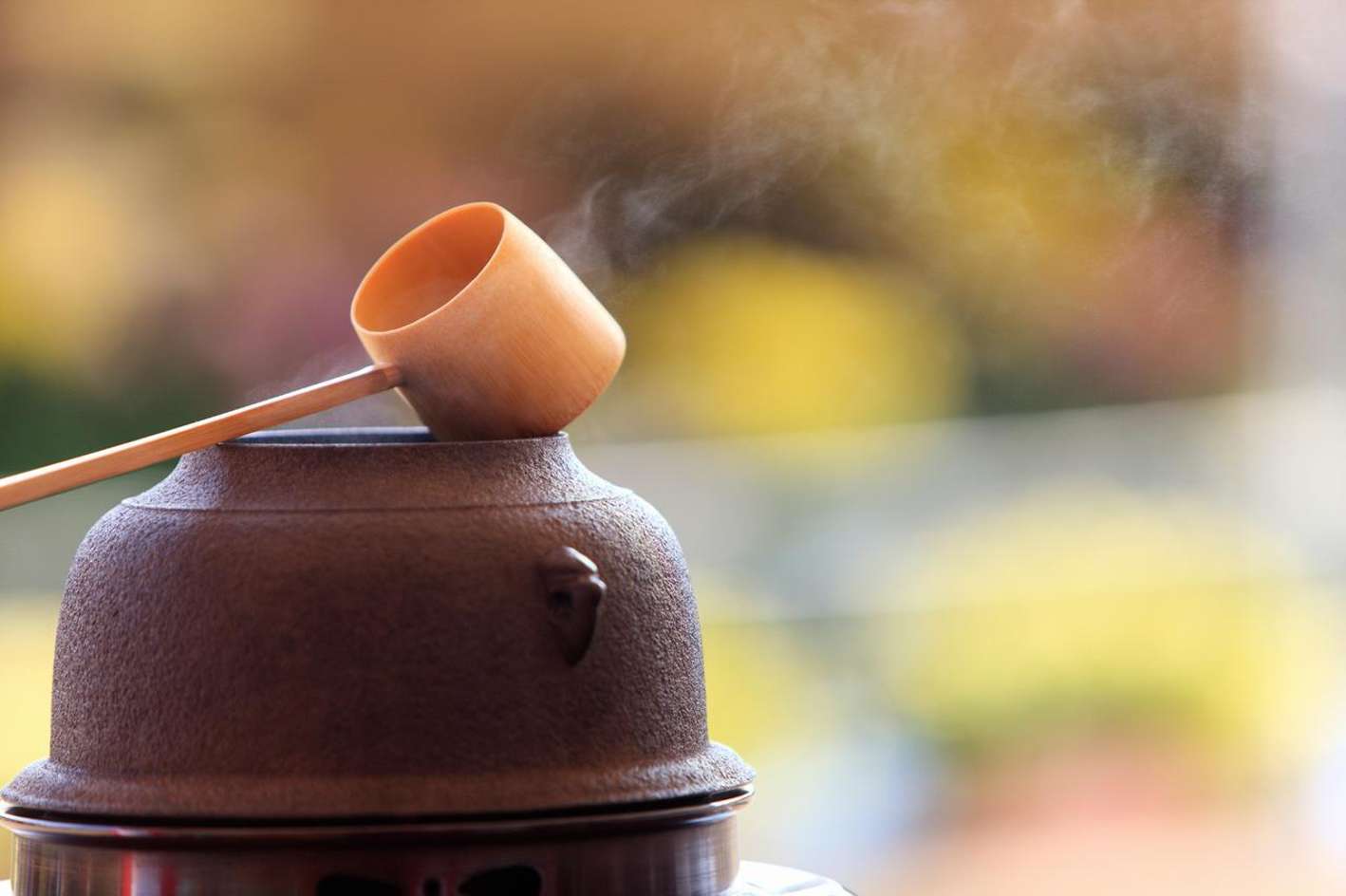
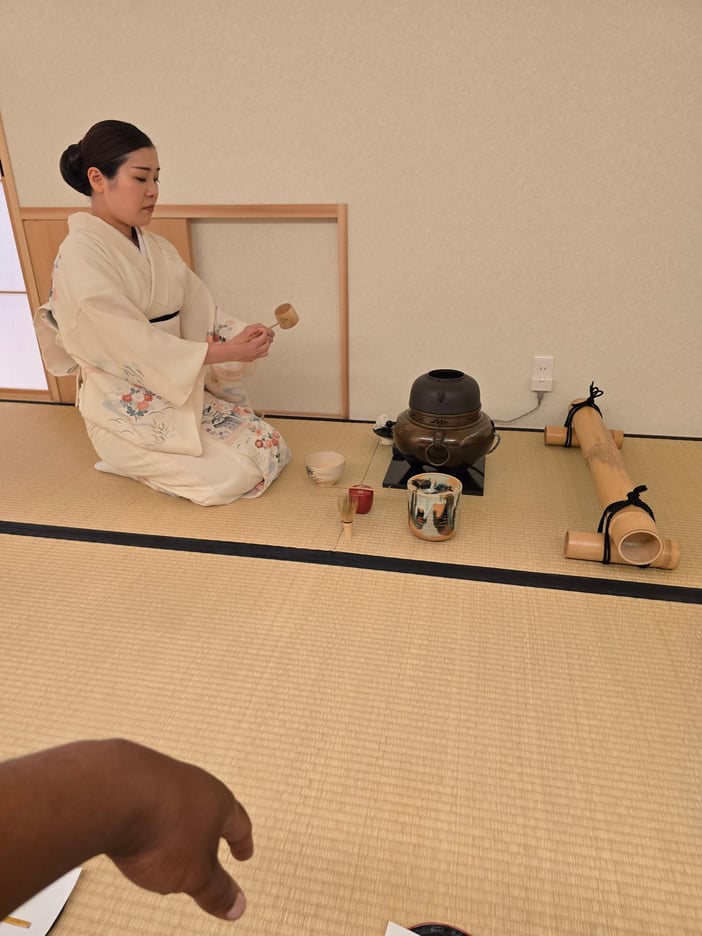
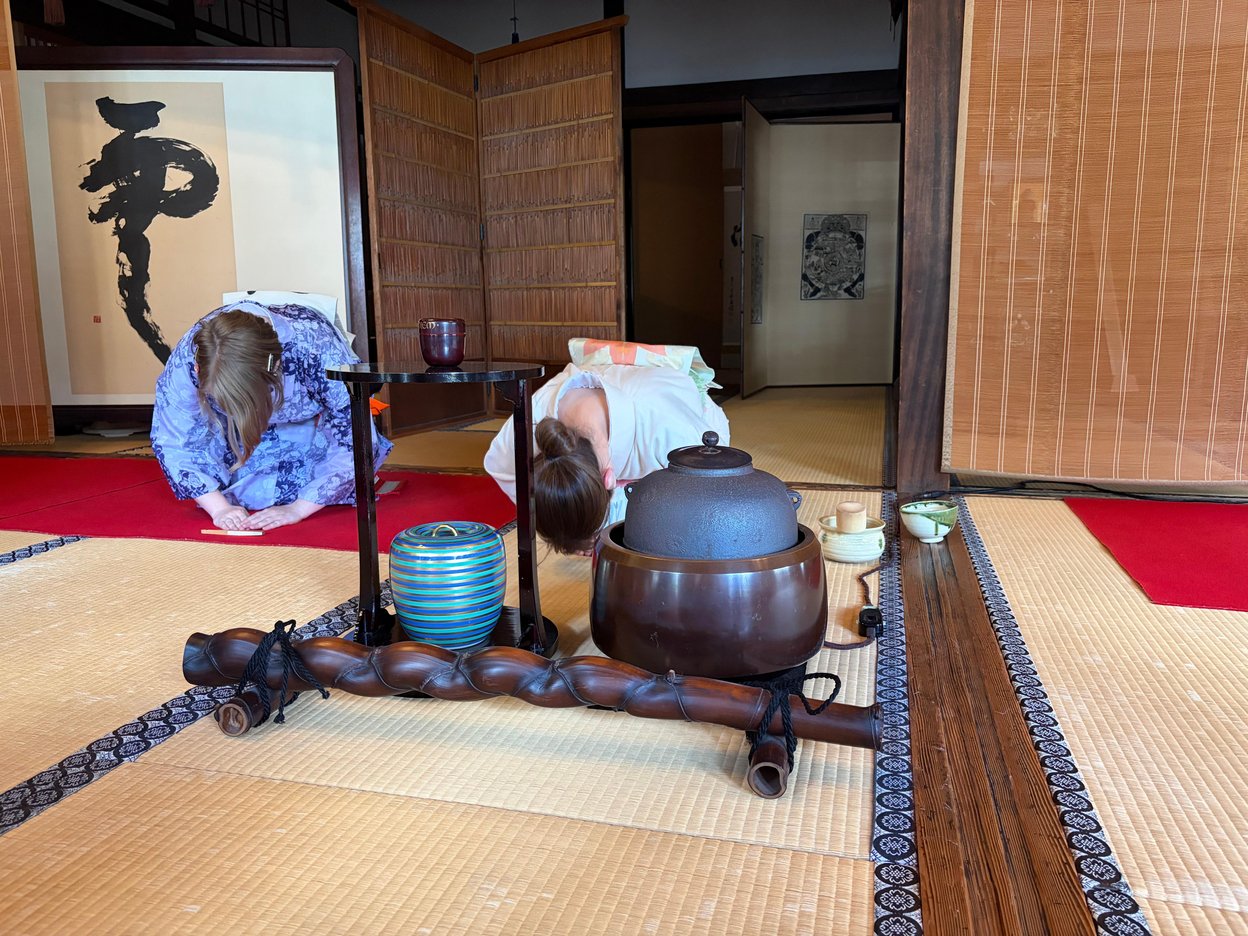
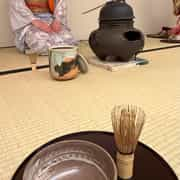
Steam rises off the kettle, the host folds a square silk cloth three times, and the bowl turns once before it reaches you. That part you could watch almost anywhere in Higashiyama. What a class adds is the second bowl: the one you whisk yourself, with an instructor standing beside you correcting the grip.
The difference shows in what gets taught. A scripted demonstration near a big temple processes visitors in and out; a proper lesson covers the order of cleaning utensils, folding the cloth and turning the bowl, with the reasoning explained in English. First-timers consistently get more from that than from a silent formal ritual.
Time decides the day. A standard introductory session runs 45 to 60 minutes; add kimono dressing and it stretches to 90 minutes or two hours. A 40-minute slot can feel rushed, so weigh the duration before you commit.
Kyoto tea ceremony durations and buffer times
45 to 60 minstandard introductory ceremony
5 to 15 minrequired arrival buffer
90 min to 2 hrsession with kimono dressing
3 to 4 hrformal chaji gathering
Those lengths add up to a simple plan: an ordinary class fills comfortably inside an hour, a kimono day doubles it, and the formal four-hour gathering belongs to another world.
The Authentic Kyoto Tea Ceremony - Small Group Experience keeps a demonstration, history and your own whisking inside 45 minutes with no more than ten guests.
People who have done both describe the switch the same way.
A traveler's note
Tea ceremony in a peaceful place, warm welcome. Great explanations from the tea master and hostess. A gentle ceremony following tradition, you feel Japan's spirit in every word and gesture. Highly, highly recommended.
What you actually do in a beginner class, step by step
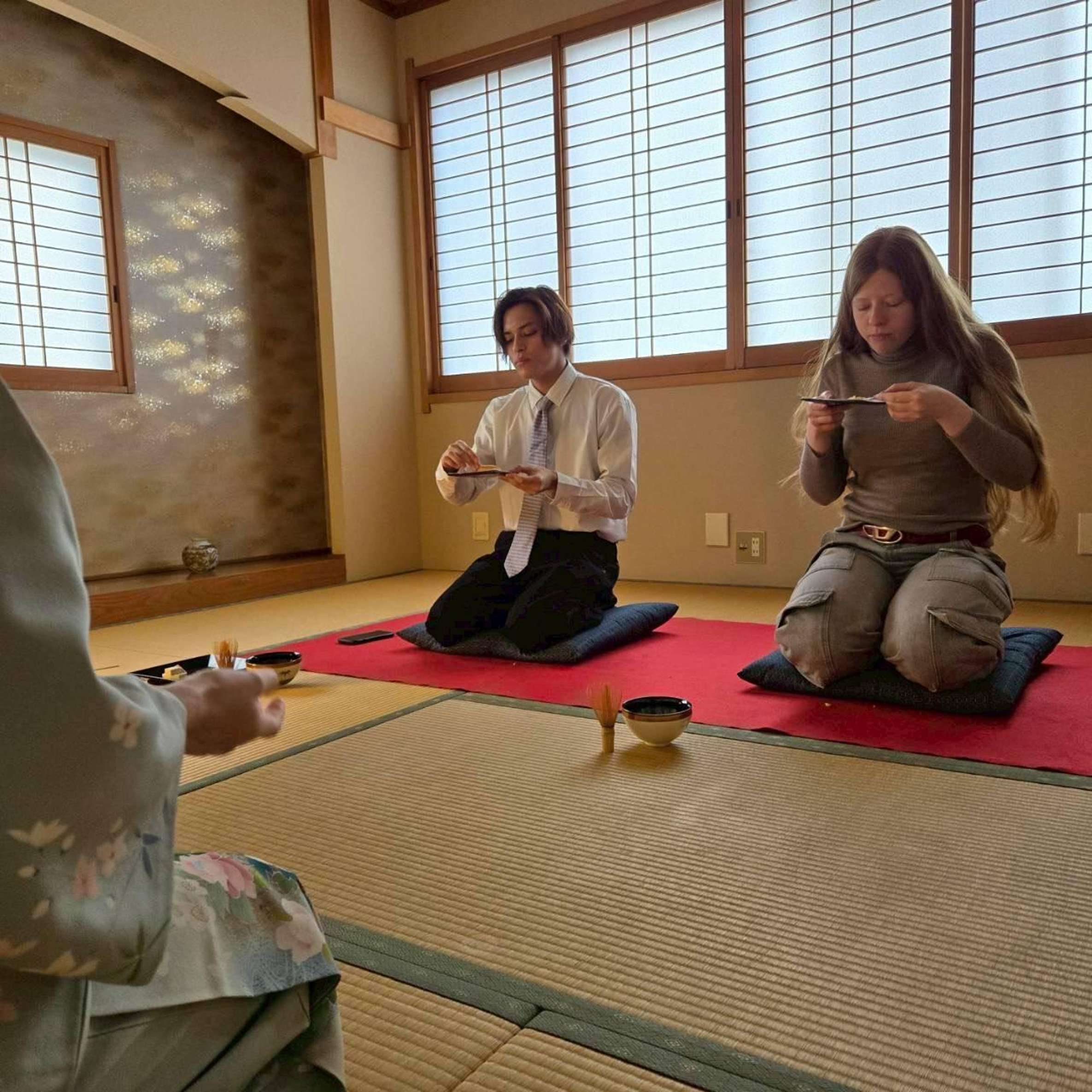
The sweet comes first, and there is a reason. Traditional wagashi are eaten before the tea so the sugar balances the bitterness of ceremonial matcha, which is far stronger than the sweetened versions sold in western cafes. You only drink a few small sips.
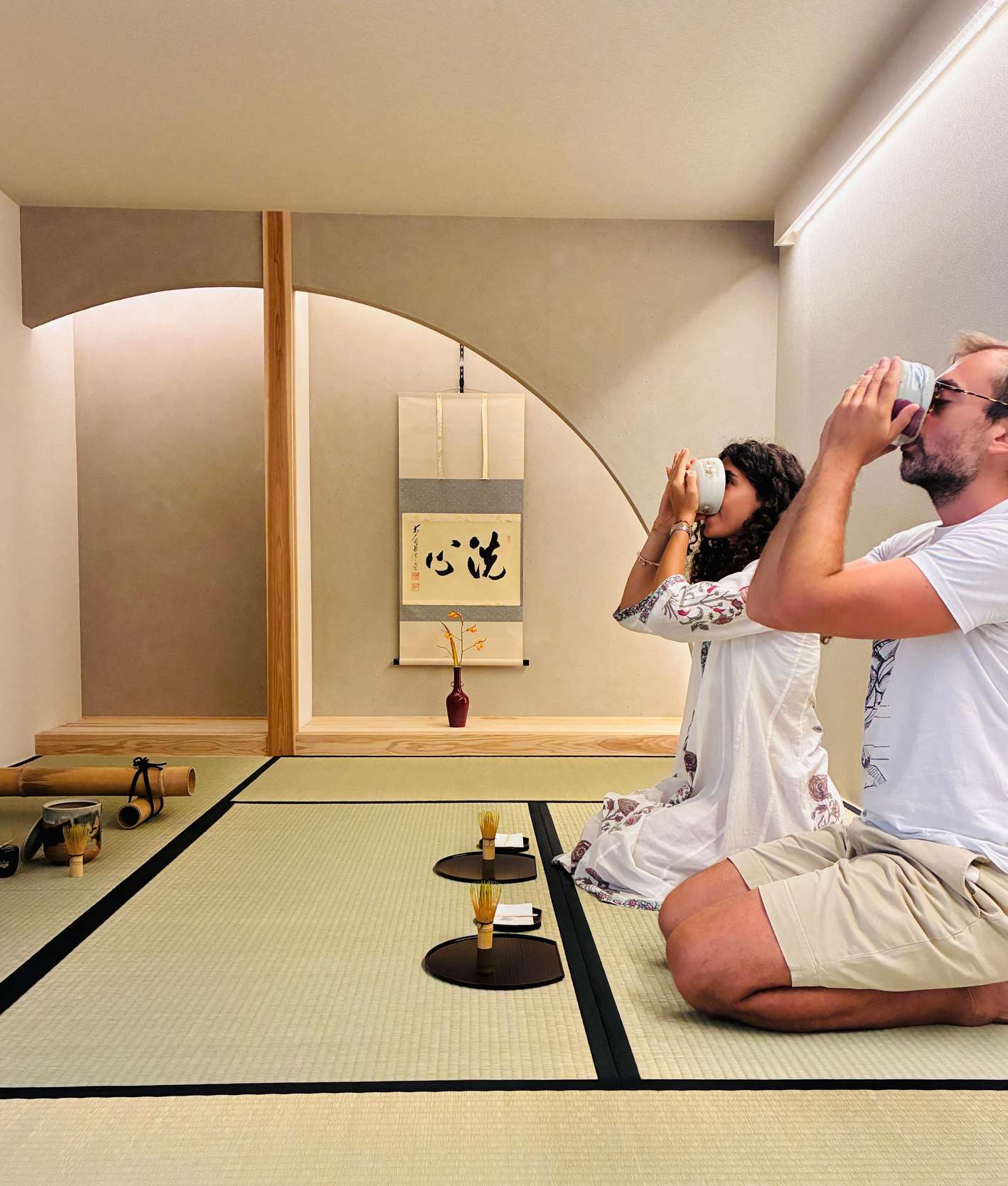
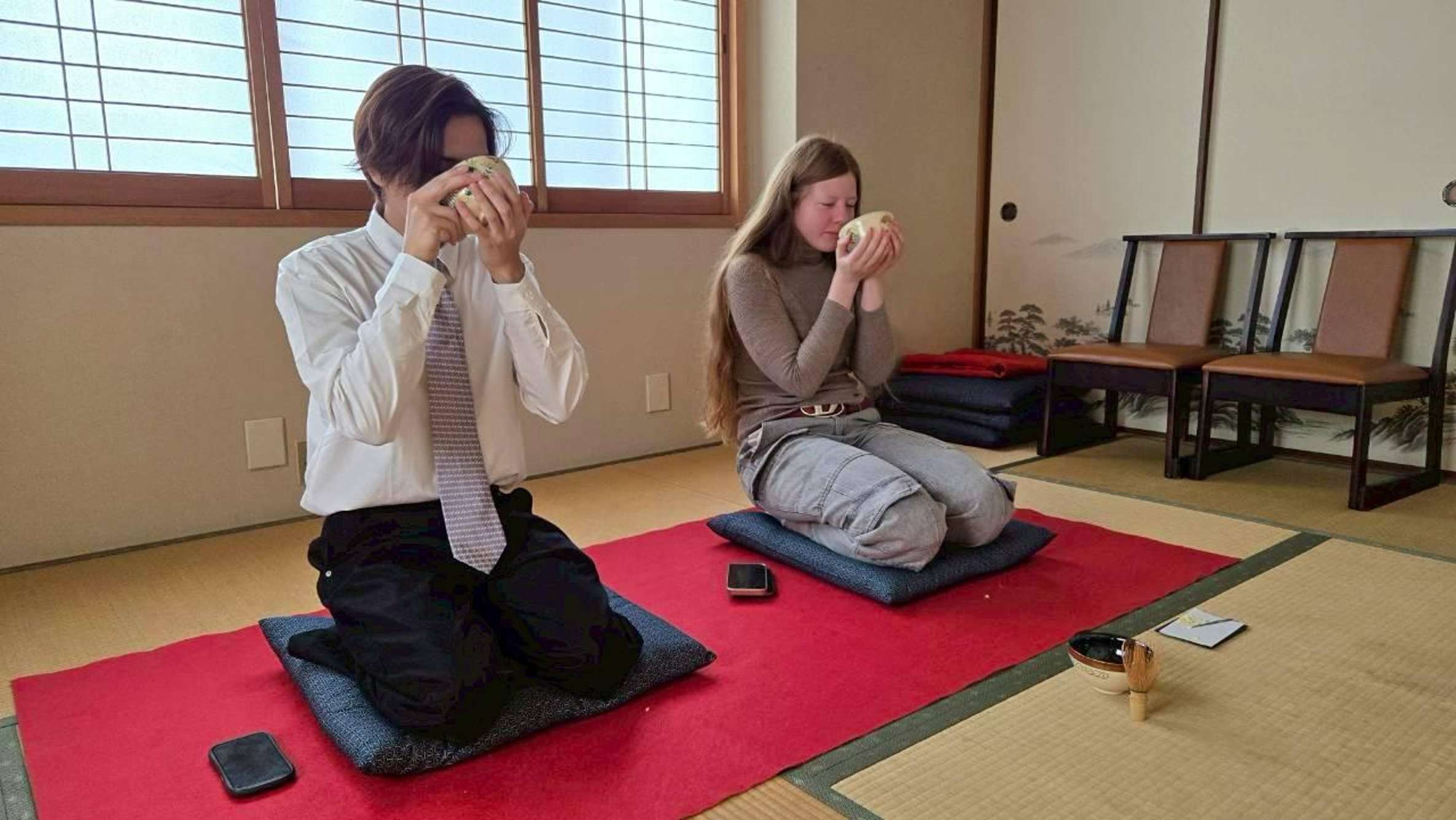
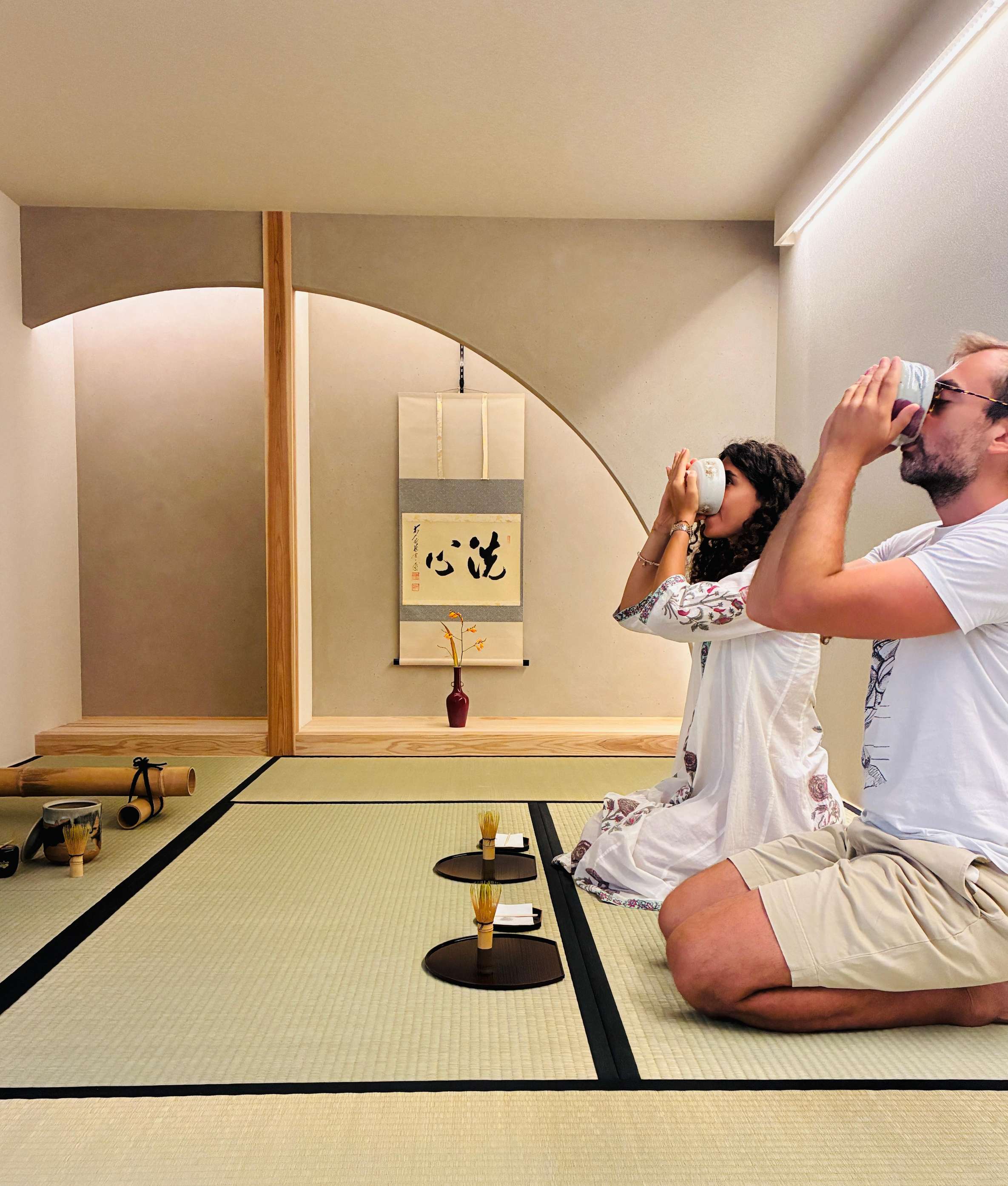
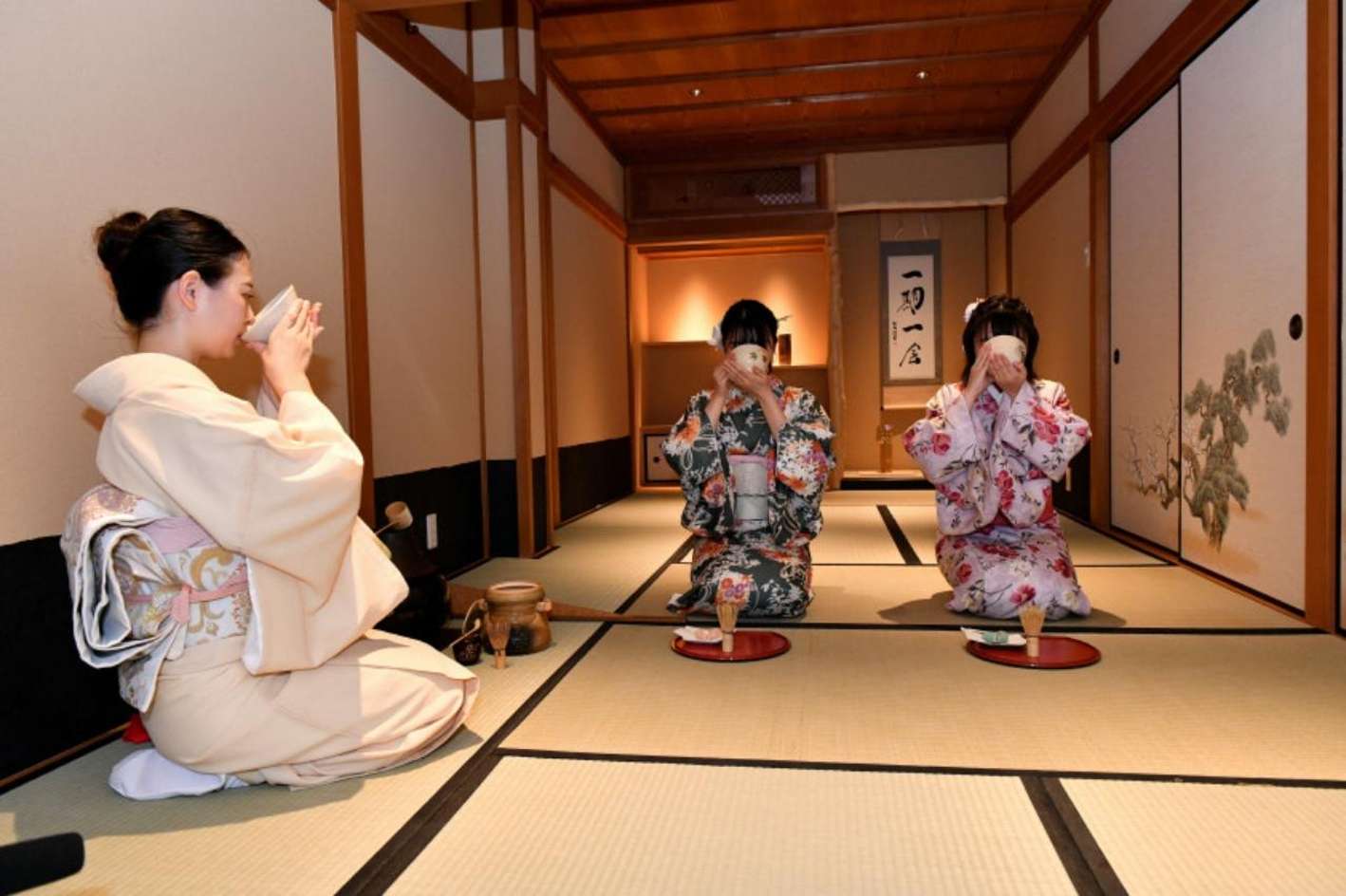
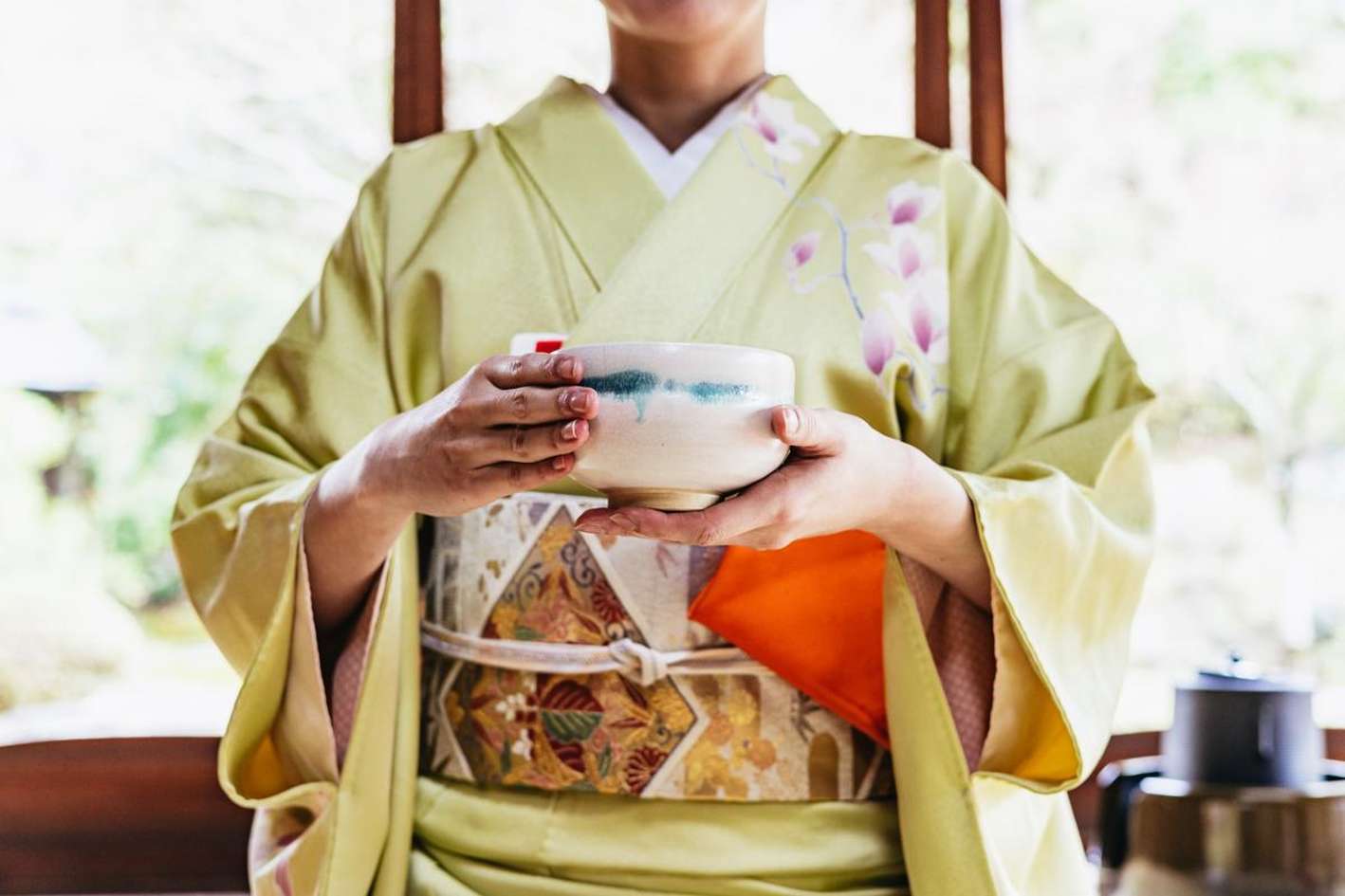
When your own bowl arrives, lift it to waist height, raise it slightly toward the host, and turn it 90 degrees clockwise so you never drink from its front side. Then the whisking begins.
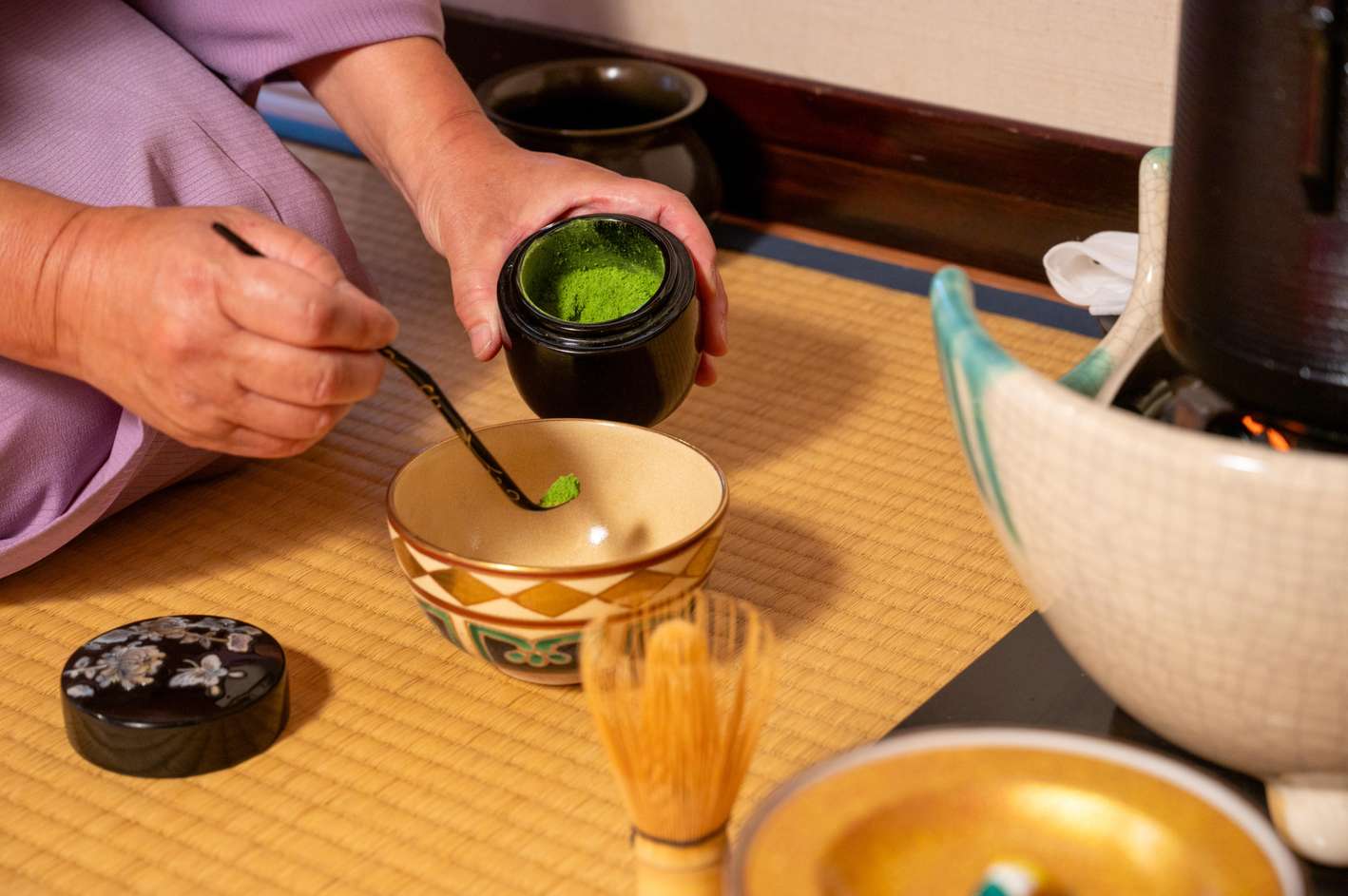
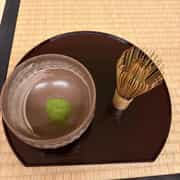
The whisk is a chasen, a bundle of fine bamboo tines. Its tips get swished in hot water first so they do not snap.
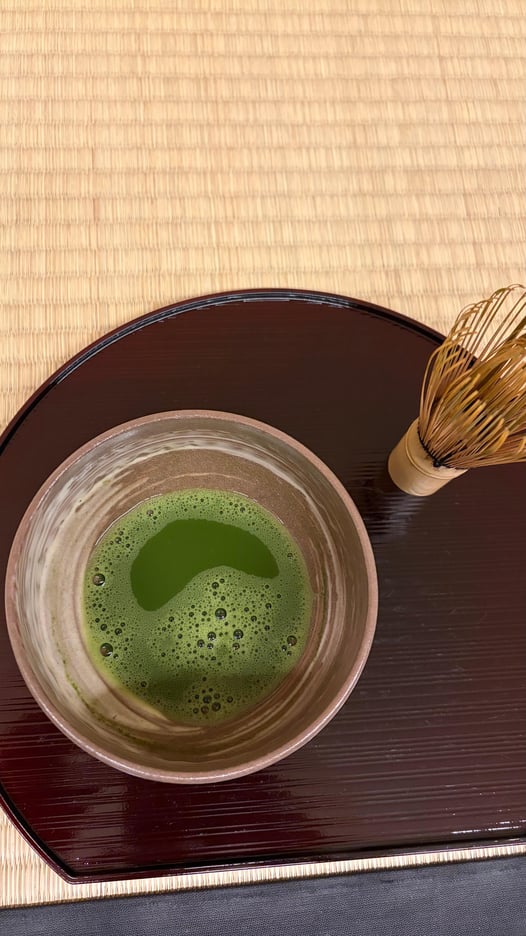
Blend the powder in slow circles with the whisk resting on the bottom, then lift it a couple of millimeters and flick the wrist back and forth in an M or W shape for about 15 seconds.
Here is where beginners stumble: stirring in circles instead of whipping, or driving the whisk from a stiff arm and shoulder. Finish with one slow circle in the center, lift straight up, and a soft peak of foam stays behind.
Watch the sequence below for where the wrist work falls: last, and briefest.
How the class unfolds
1
5 minutes before the start
shoes off, socks on, seated
doors lock at the start time
2
First
the seasonal sweet
eaten before any tea, to soften the bitterness
3
The demonstration
the host prepares matcha while explaining each movement
the bowl's decorated front is turned toward you
4
Your turn
soften the whisk in hot water, blend in slow circles
keep the whisk light on the bowl bottom
5
The whisking
quick back-and-forth strokes, wrist only
about 15 seconds raises the foam
The whole arc fits inside an hour, and the part people worry about, the whisking, takes barely a quarter of it.
Tour for this
Kyoto Gion: Tea Ceremony Experience in a Traditional House4.8★ (255) · 45 minutes · Free cancellation
Good instructors talk while they work, and this is where a class pays for itself. Every gesture carries meaning: the host presents the bowl with its most beautiful side facing you, a gesture of respect, and you turn it away from that front before you sip.
In a machiya townhouse session, the teacher walks the group through the history, the utensils and the teachings of Sen no Rikyu, the sixteenth-century master who shaped the way of tea, including his Four Rules and Seven Principles. Guests often pair up afterwards to serve each other and taste the result.
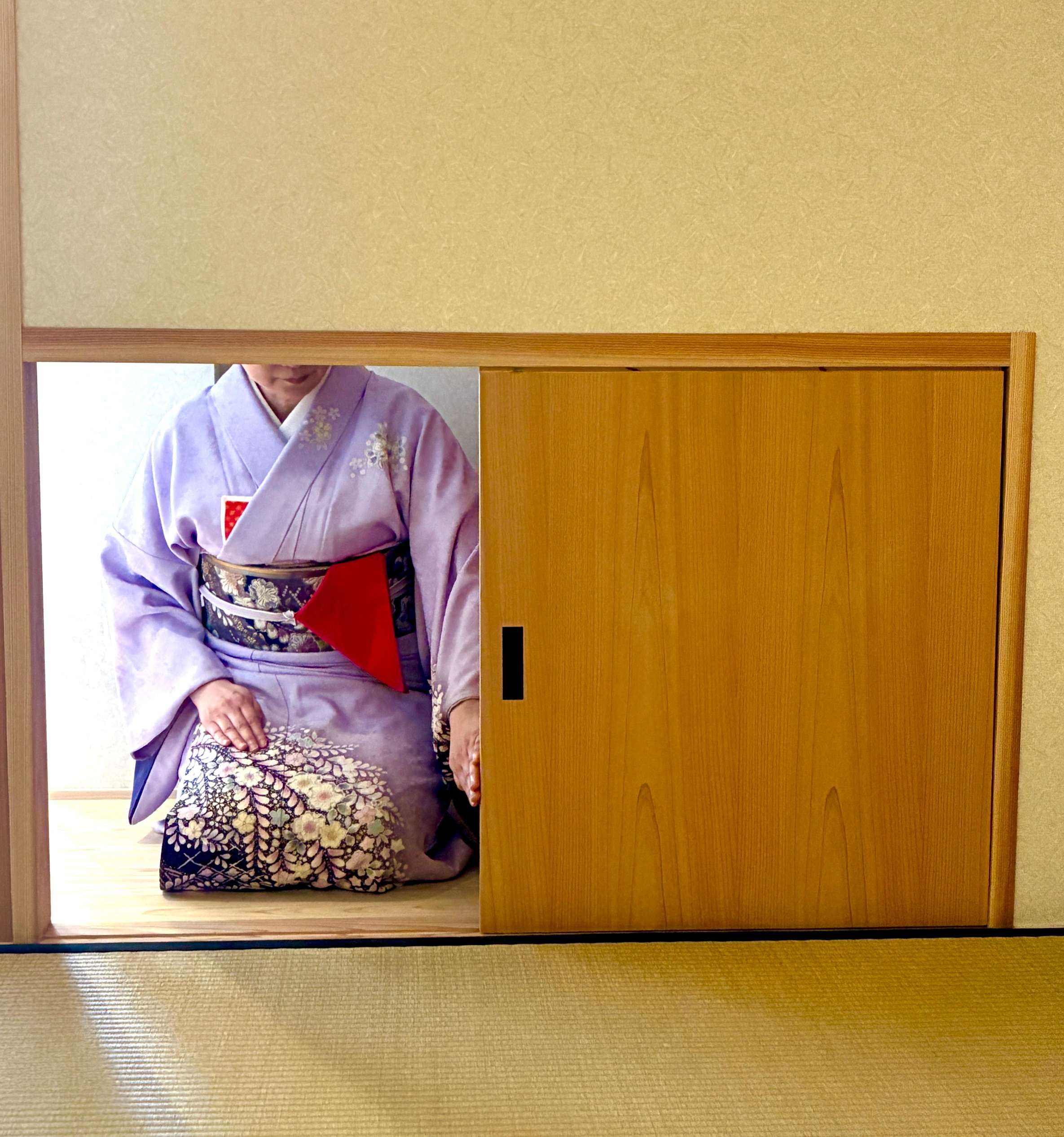
Two details surprise everyone. Old tea rooms sometimes have a crawl-in doorway barely waist-high, built so that samurai had to remove their swords and bow like anyone else; inside, every rank sits equal. And the tea you whisk is the everyday kind, thin tea called usucha, one bowl per person.
The notes below gather the background most first-timers only learn halfway through.
What nobody tells you
The tiny crawl-in doorway was deliberate
built so samurai had to lower themselves like everyone else, making all guests equal inside
The foam means nothing about skill at first
thin tea, usucha, is the everyday bowl; the thick shared koicha belongs to formal four-hour gatherings
The sweets are eaten first for the tea's sake
sugar on the palate balances matcha far stronger than cafe versions
Knowing these before you sit down changes what you notice: the doorway becomes a story rather than an obstacle, and your own thin, frothy bowl reads as daily tea instead of a lesser version of something grander.
Tour for this
Authentic Kyoto Tea Ceremony - Small Group Experience4.9★ (404) · 45 minutes · Free cancellation
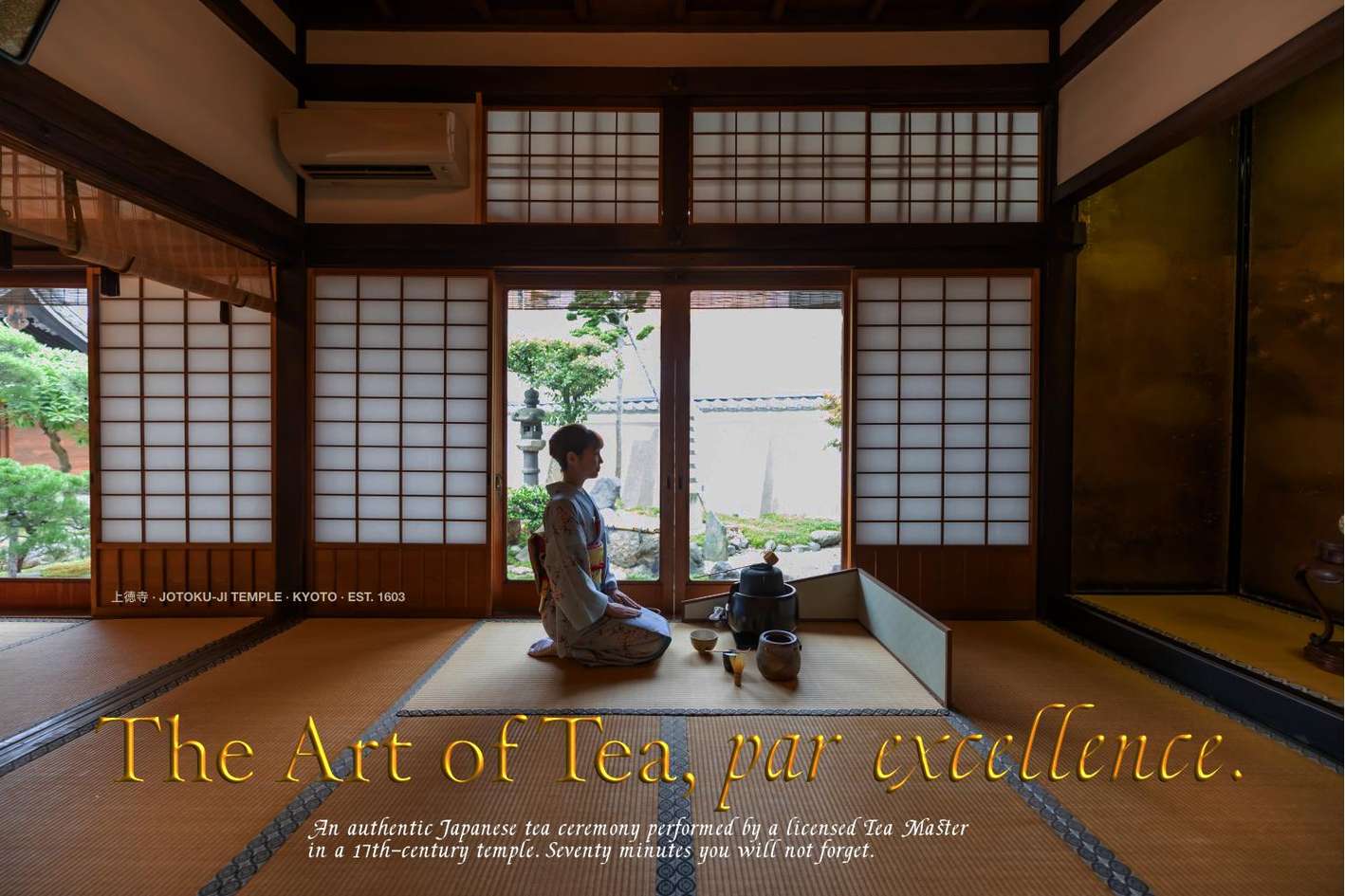
Three formats dominate the listings, and they suit different trips. Temple sessions, like the one at Jotokuji Temple, sit inside gardens and historic halls and run simpler and less formal; the tearoom there is reached by three steps, and the temple usually welcomes visitors without much advance planning.
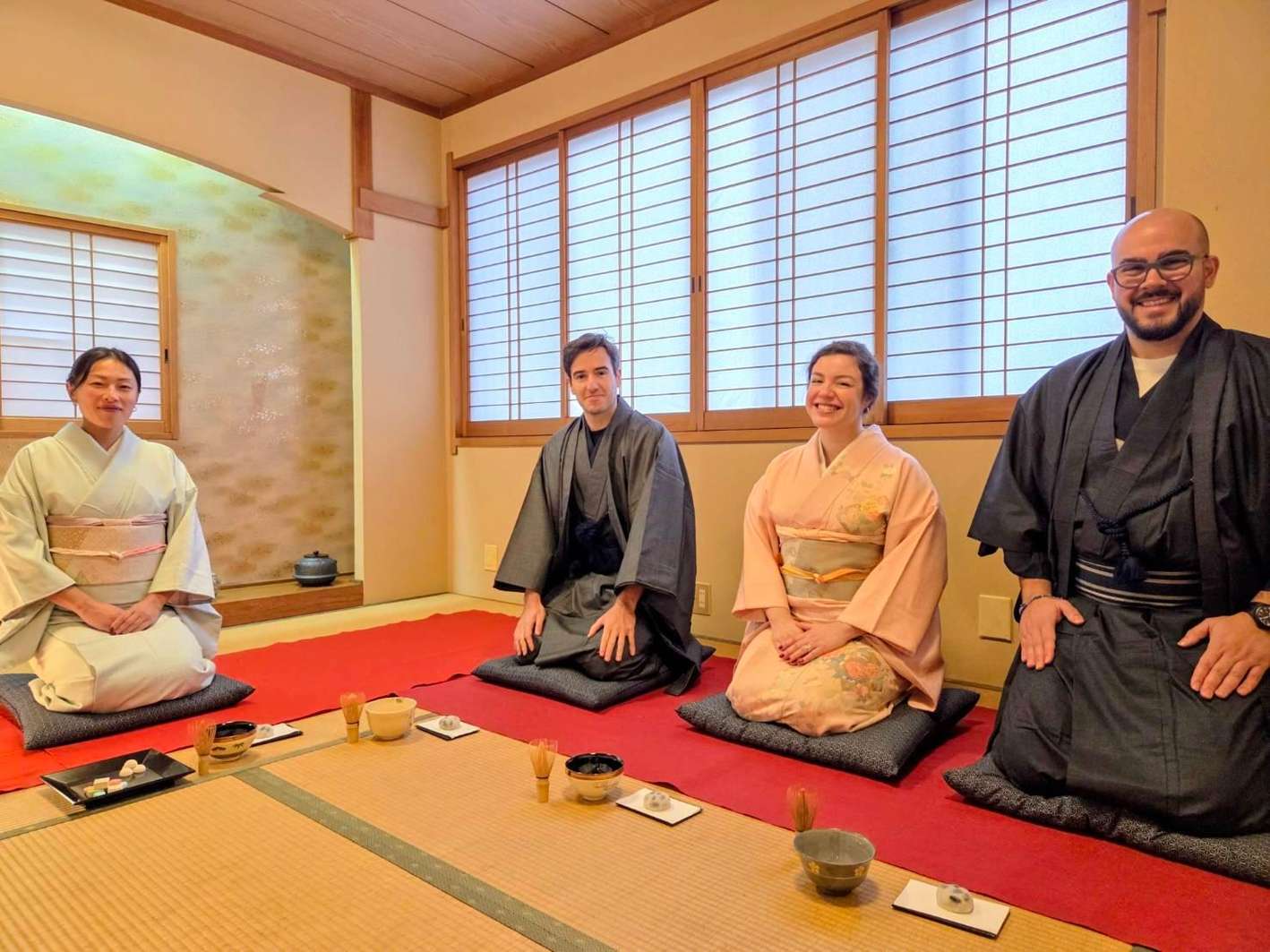
Townhouse classes put you inside a preserved hundred-year-old home, shared with 8 to 12 other guests or booked privately for your group alone. Machiya venues host most of the kimono packages too. The trade-off is space: shared sessions fill, and the staircases in these old houses are steep.
Before booking any of them, check four things on the listing: group size, duration, whether kimono is included or extra, and whether you whisk your own bowl or only watch.
The Kyoto: Traditional Tea Ceremony with Matcha & Sweets in Gion session answers the last one directly, adds a simple recipe to take home, and runs on chairs for anyone who dreads the floor.
Set the three formats side by side and the right row jumps out.
Tea class formats in Kyoto
Temple session
Shared townhouse class
Private townhouse booking
Group size
varies, often larger
8 to 12 guests
only your party
Setting
temple halls and gardens
preserved 100- to 125-year-old home
the whole machiya to yourselves
Formality
simpler, sometimes shortened
relaxed beginner teaching
most relaxed and personal
English support
less reliable
english-speaking host
english-speaking host
Booking
often fine without reservations
books out in peak season
reserves well ahead
Temple session
Group size
varies, often larger
Setting
temple halls and gardens
Formality
simpler, sometimes shortened
English support
less reliable
Booking
often fine without reservations
Shared townhouse class
Group size
8 to 12 guests
Setting
preserved 100- to 125-year-old home
Formality
relaxed beginner teaching
English support
english-speaking host
Booking
books out in peak season
Private townhouse booking
Group size
only your party
Setting
the whole machiya to yourselves
Formality
most relaxed and personal
English support
english-speaking host
Booking
reserves well ahead
Read the rows against your own day. Short on time, the temple session suits; drawn to old Kyoto underfoot, the shared townhouse; traveling as a couple or family who prize privacy, reserve the whole house.
The city bus is the trap. Sightseeing routes out of the station run packed, and road traffic strands them long past the posted time, which matters when tea room doors lock at the start.
Two rail routes solve it. For Gion and southern Higashiyama, take the JR Nara Line one stop to Tofukuji and change to the Keihan Main Line for Gion-Shijo or Kiyomizu-Gojo, about 15 minutes door to door.
For northern Higashiyama, the Karasuma subway line to Karasuma Oike, then the Tozai line, lands you at Higashiyama Station in roughly the same time.
After the change at Tofukuji, allow a few minutes on foot; many tea houses sit a short walk from the station, and the last stretch is often an alley.
One more wrinkle: Kyoto addresses confuse maps. The city never adopted the modern addressing law, so registry lot numbers double as house numbers, and townhouses cluster down blind alleys where one lot number can cover several buildings. Save the venue photo and walking directions from your voucher along with the address.
Staying near Kyoto Station, or near Karasuma Oike or Karasuma Shijo subway stations, keeps nearly every class within an easy hop.
Tour for this
Kyoto: Tea Ceremony in a Garden Tea House near Kiyomizu-dera4.8★ (4,618) · 45 minutes · Free cancellation
What to wear and leave in your bag for a tea class
Shoes come off at the entrance, so slip-ons beat laces on the day. Bare feet never touch tatami, which means socks are the one true requirement, and clean, hole-free socks of any color are accepted almost everywhere.
The white pair is a courtesy, demanded only by a handful of formal schools; one venue rents pairs on site if you forget.
Jewelry is the quieter rule. Rings and watches come off before handling the tea bowls, because metal scratches and cracks ceramics and lacquerware. Carry a small pouch for them so nothing wanders off in the tea room.
Skip the perfume too. Matcha's aroma is part of what you are there to taste, and heavy fragrance smothers it.
The short list below covers the whole dress code.
What to wear and remove for a tatami tea ceremony
Clean white socks or tabiWalking barefoot on tatami is strictly prohibited; clean white socks protect the fragile rush mats and symbolize purity.
Remove rings, watches, and braceletsMetal accessories must come off before entering to prevent scratching valuable handcrafted ceramic tea bowls and lacquerware.
Loose pants or below-the-knee skirtModest, flexible bottoms allow you to kneel comfortably in seiza on the tatami floor without tight fabric cutting off circulation.
No strong perfume or cologneFragrances are forbidden because they overpower the subtle natural aroma of whisked matcha and traditional tea-room incense.
Slip-on footwearShoes must be taken off at the tea house entrance before stepping onto tatami, making easy slip-on shoes the most practical choice.
Small pouch for removed jewelryStores watches, rings, and metal accessories safely in your bag during the ritual so delicate items do not get misplaced.
One quirk for the left-handed: every procedure in the way of tea, from whisking to wiping, is performed right-handed. Follow the instructor's right hand and the bowl behaves.
Can't kneel on the floor? you can still take the class
Seiza, the formal kneeling posture, scares more first-timers than etiquette ever does. The fix is usually a booking away.
Seats and stools are provided at the Jotokuji Temple session for anyone uncomfortable on the floor, the hundred-year-old townhouse class offers small chairs, and bamboo chairs wait for those who request them in advance at the Karasumashijo venue.
The Gion class seats every guest in a chair, so tatami kneeling never enters the picture. Legs still fall asleep sometimes, and shifting is fine when done quietly: sit cross-legged or to the side with feet tucked away or pointed aside, never aimed at the host or another guest.
The building itself works with the seasons. In summer, open screens pull cross-breezes through the wooden house, leaving the room noticeably cooler than the street, with the brazier moved aside.
In winter the room centers on a sunken hearth with glowing charcoal and a steaming kettle, though the tatami stays cold, so bring warm layers and thick socks from December through February.
Bringing children to a tea class and what hosts adjust
Read the age lines before promising the kids anything, because venues differ sharply.
Children aged six and under are not admitted near Kiyomizu-dera, four and under cannot join the session at Jotokuji Temple, the shared Gion class draws its line at five, and the hundred-year-old townhouse welcomes only guests aged ten and above. Karasumashijo asks for seven or older.
Where children are welcome, one expectation holds everywhere: a quiet room. Disruptive behavior can end with a family being asked to leave, even in private sessions, since restless toddlers clash with a ritual that needs calm.
The tea itself is the other hurdle. Ceremonial matcha tastes strongly bitter, and no decaf exists; hosts can be told in advance to pour plain hot water, or to offer a tiny courtesy sip instead of a full bowl.
A few kid-oriented providers serve milder drinks and shorter formats. Either way, tell the host about any dietary needs or preferences well before the day.
Tour for this
Karasumashijo: Kimono Tea Ceremony with Matcha and Sweet4.9★ (754) · 1.5 hours · Free cancellation
Wheelchair access, kimono and other practical tea class questions
Century-old townhouses are charming and stubborn: steep, narrow staircases and a raised entrance step are standard, and the hundred-year-old Kyo-Machiya session states plainly that it cannot take wheelchair users. Some rebuilt machiya nearby have accessible first floors and stair lifts, but never assume; confirm the venue before booking if access matters.
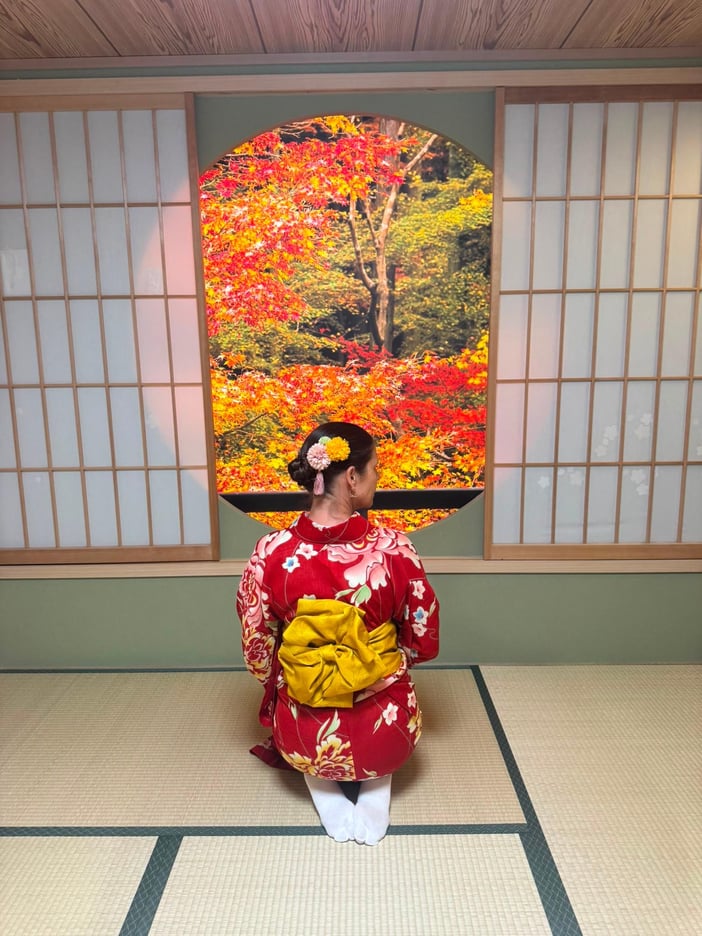
Kimono adds the class the photos promise, and timing is the cost. Dressing and hairstyling take 50 to 60 minutes ahead of the ceremony when both happen under one roof, bringing the whole thing to 90 minutes or two hours.
The Kyoto: Kimono Tea Ceremony at Orizuruya Gion bundles dressing, tea and the option of calligraphy in one booking. Separately rented kimono often means better selection for walking the streets afterwards, and temples like Jotokuji leave rental to you.
Visible tattoos carry no ban in Kyoto tea rooms or dressing rooms. The quiet convention in formal settings is to keep them covered or discreet, so a light layer solves it without a conversation.
Tour for this
Tea Ceremony Kyoto - An Authentic Cultural Experience4.9★ (415) · 1 hour · Free cancellation
When to book a tea class and the calmest time of day
The year has two squeezes. Cherry blossom weeks in April and the November foliage peak pull Kyoto bookings forward, and Japan-wide, tea ceremonies in those windows need reserving 6 to 8 weeks ahead.
September fills too, and walk-ups are unreliable at those times. Winter from December to February sits wide open, and a few days' notice usually does.
Kyoto tea ceremony crowd levels and search interest by month
May experiences high tour traffic and mild weather, making advance booking several weeks ahead strongly recommended.
HighestMar to May, Nov
In betweenJun to Jul, Sep to Oct
LowestAug, Dec to Feb
Darker: a higher how busy it gets score, out of 5
Tap a month to read it.
November is the busiest month of the year for autumn foliage, with group tea ceremony slots booking out two to four weeks ahead and private sessions filling mon….
HighestMar to Apr, Nov61,046 to 67,366 readers a month
In betweenMay, Dec to Jan54,646 to 57,671 readers a month
LowestFeb, Jun to Oct41,929 to 50,326 readers a month
Darker: more search interest, from 41,929 to 67,366 readers a month
Tap a month to read it.
Time of day shapes the class differently. Streets in Gion and Higashiyama empty before 9 am, tour groups arrive from about 10, and the lanes stay busy until 4 pm
Lighting and street quietness in Gion and Higashiyama
Morning Peak7 am to 10 am
Golden morning light and calm, nearly empty historic streets before tour groups arrive.
Midday10 am to 4 pm
Streets jam with tour groups and midday sun creates harsh contrasts.
Late afternoon4 pm to 7 pm
Warm dusk tones and lantern light emerge as day-trippers head back toward stations.
QuietBusyThe busiest
An early morning slot buys soft light and near-silent alleys on the walk in. Late afternoon from about 3:30 pm brings warm garden light, and after 5 pm the lanterns come out as day-trippers drain toward the stations.
Tour for this
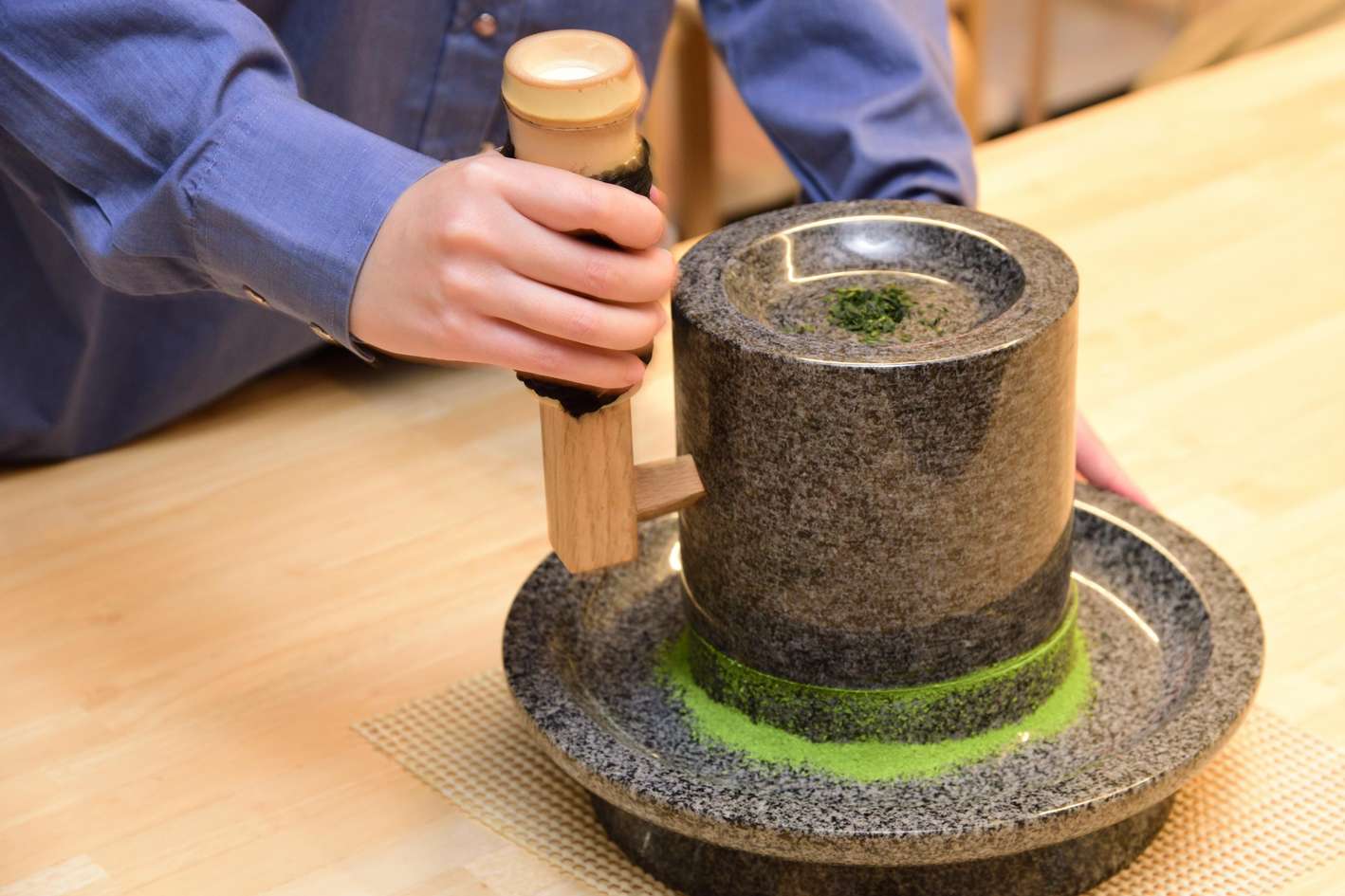
Kyoto: Tea Museum Tickets and Matcha Grinding Experience4.9★ (1,110) · 1 hour · Free cancellation
Tea rooms run on a hard clock, and the fine print is sterner than most travelers expect. Several venues lock their doors at the start and refuse late entry even by a single minute, for any reason, trains included.
The typical outer limit is thirty minutes past the scheduled start. Cross it and participation is refused, the explanation cannot be repeated for you, and the fee is not refunded.
Arrivals inside that window may be allowed to slip into a session already underway, but the class will not run longer to compensate. Private bookings face the same math: the session ends at the booked time, and arriving ten to fifteen minutes late can cancel it outright.
Payment runs ahead of time at some venues, charged to a card when you book, so a lost slot costs twice. Build buffer into the transit plan, aim to arrive five minutes early, and treat the booking time as a departure time rather than a target.
The terms below come straight from the operators' own conditions.
If the clock turns against you
If this happens
What happens then
More than 30 minutes past the start
entry denied and the fee forfeited, even for a train delay
One minute late at a locked-door venue
no entry at all once the start time passes
Late to a private session
the class still ends at the booked time, never extended
Plans change a day or more ahead
most classes refund in full for cancellations up to 24 hours before
Every one of those outcomes is avoidable; the rules punish lateness and never earliness.
The tea room makes a fine anchor for a half-day, because southern Higashiyama stacks its sights into one walking route. Kennin-ji, Kyoto's oldest Zen temple, sits under a 5-minute walk from the Gion class venues, close enough to fill the twenty minutes before a booking.
A natural circuit: start early at Kiyomizu-dera, descend the stone steps of Sannenzaka and Ninenzaka past the Yasaka Pagoda, continue to Kodai-ji about 800 meters from central Gion, and finish through Hanami-koji and Maruyama Park. Classes sit neatly at either end of that walk.
Practical staging matters. Doing the walk after a kimono class is the version people remember, willow-lined Shirakawa and the pagoda framed in silk, but the slopes and stone pavement tire the legs in zori sandals, so keep the route short or save the long climb for sneakers.
A beginner class earns its place over a demonstration the moment the bowl passes into your hands, and the best of them run 45 to 60 minutes with an English-speaking host and no more than ten guests.
Book 6 to 8 weeks out for April or November, aim for an early slot, and arrive five minutes early with socks on.
Go ifYou want hands-on practice whisking your own bowl of matchaIt is your first tea ceremony and you want the movements explained in EnglishYour knees prefer a chair, since several classes run on seat seating
Skip ifYou are traveling with children under five or six, since most venues draw a hard age lineYou cannot tolerate caffeine at all, as decaf matcha does not exist at these ceremonies
Our pick to book
Tea Ceremony Kyoto - An Authentic Cultural Experience4.9★ (415) · 1 hour · Free cancellation
Quick answers about your tea ceremony class in Kyoto
The questions beginners ask most, answered plainly before you pick a session.
Kyoto2026
The quiet half hour with a whisk in your own hands is the one you keep. Bring socks, arrive early, and let the host walk you through it.
I know nothing about tea or Japanese manners. Will I feel out of place?
No. Introductory classes in Kyoto are built for first-timers and run as relaxed, welcoming lessons in English. The host explains the history and the meaning behind each movement, and small slips in etiquette are routinely overlooked.
Do I just watch, or do I actually make the tea myself?
In a hands-on class you do both. You first watch the host's demonstration and taste a bowl they prepared, then you take the whisk and make your own matcha under step-by-step guidance.
How long does a beginner class take?
Most introductory sessions run 45 to 70 minutes, which is enough time for a demonstration, a sweet, and your own whisking. Options with kimono dressing stretch to 90 minutes or two hours, and some travelers find the shortest 40-minute formats feel rushed.
How do I whisk matcha so it froths properly?
The common mistake is stirring in circles from the arm. You lift the bamboo whisk a couple of millimeters off the bowl bottom and flick it briskly back and forth in an M or W shape for about 15 seconds, keeping the arm still and letting the wrist do the work.
I have bad knees. Do I have to kneel on the tatami?
You don't. Several classes seat you in a chair: the Gion session is held in chairs as standard, the temple class at Jotokuji provides seats and stools, and one Karasumashijo venue keeps bamboo chairs on request if you ask in advance.
Is the matcha bitter, and do I have to finish the whole bowl?
Ceremonial matcha is stronger than the sweetened café versions, which is exactly why you eat the wagashi sweet first. The portion is only a few small sips, and many guests who normally avoid matcha are surprised by how fresh it tastes when they whisk it themselves.
Can I bring my children?
It depends on the class, so check the age rule before booking. Most sessions do not take children under 5, 6, or 7, and one townhouse class is for guests aged 10 and up. Kids who join are expected to sit quietly, since disruptive guests may be asked to leave.
Can I take photos or record video during the lesson?
Photos are usually fine, but video recording is not allowed at some venues, and flash is off limits in the townhouse sessions. A few venues also ask that photos from the session not be posted on social media, so ask your host before filming.
What should I wear and bring?
Wear comfortable, modest clothes you can sit on the floor in, and bring socks, since bare feet never touch the tatami. Slip off watches and rings before handling the tea bowls so the metal does not scratch the ceramic, and skip strong perfume, which masks the tea's aroma.
I'm sensitive to caffeine. Can I still join?
Yes, with a plan. Matcha cannot be made with decaf leaves, so tell your host in advance and either take a single courtesy sip or ask for plain hot water instead.
What if I'm running late?
Arrive five or so minutes early and treat it as firm. Many Kyoto tea rooms lock their doors at the start time and admit no late entry, even by a minute or because of a train delay, with no refund.
Will I be able to make matcha at home after the trip?
That is part of the lesson. The Gion class hands you a simple recipe to use in your daily life, and the whisking technique you practice with the host is the same one you repeat in your own kitchen.
After your ceremony class in Kyoto, keep exploring


 Your best match