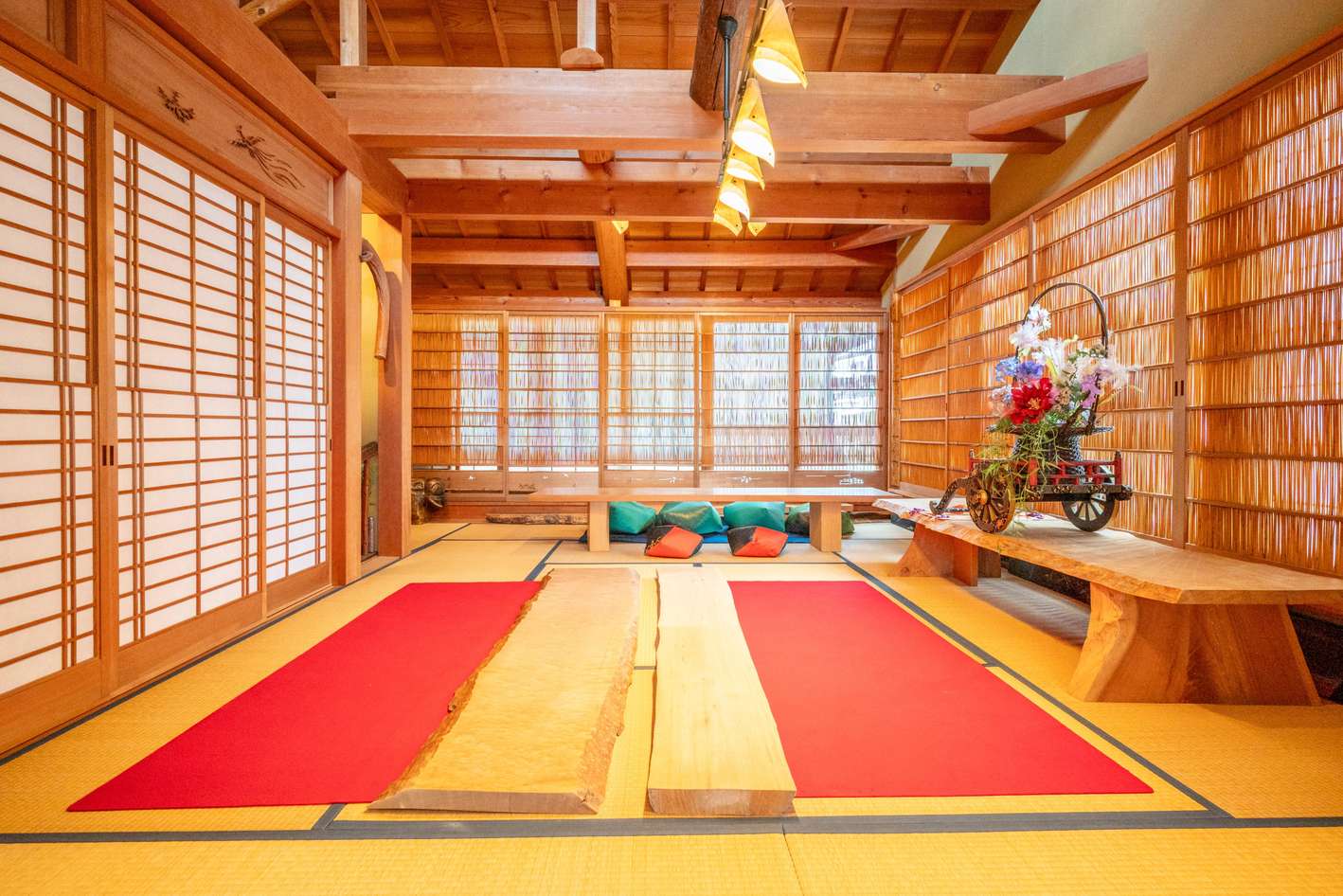
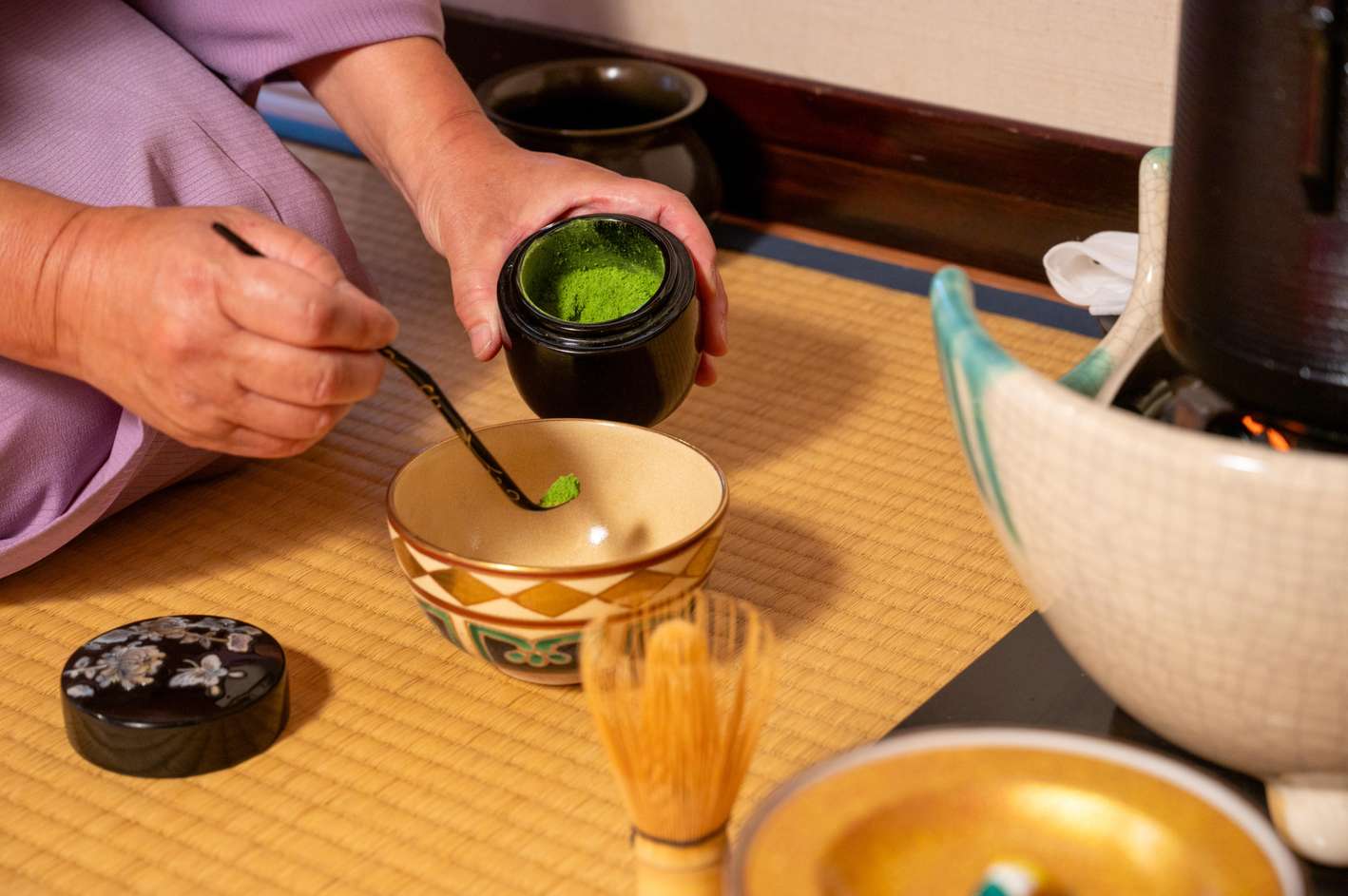
Kyoto Machiya Tea Ceremony Tea Ceremony in a 100-Year-Old Machiya
Book your machiya tea ceremony in a real century-old Kyoto townhouse, where 8,000 travelers have whisked their own matcha on tatami once walked by generations of the same family. Chairs are ready if the floor is not. Pick your session and reserve in minutes.
★★★★★their first bowl of matcha, in a 100-year-old machiya
"My wife and I loved learning the origin and meaning of the ceremony. The host was gentle and knowledgeable, explaining each step of making matcha. Pleased with everything, thank you!"
4.8★average rating1,602traveler reviews100%free cancellation33countries travelers came from
Choosing your machiya tea ceremony
Kyoto's townhouse tea ceremonies come in three broad shapes: a short shared session in a historic room, a private booking of an entire old house, and a ceremony paired with kimono dressing or calligraphy. The deciding difference is how much of the experience you take part in, from watching a master prepare your matcha to whisking your own bowl.
AgesThe 100-year-old townhouse session welcomes guests aged 10 and above, the Gion traditional house starts at 6, and some venues elsewhere set a minimum of 4 or 5.
SocksYou take off outdoor shoes at the entrance, so bring clean socks; bare feet are not allowed on tatami.
Late arrivalArriving late can cost you your booking, since some tea houses deny entry past the start time and some allow you to join without extending the session.
BookingPopular slots fill up in advance during cherry blossom season in April and the autumn foliage months, so reserve ahead for those seasons.
DressCasual clothing works at the Gion house, but loose, modest clothes that let you sit on the floor suit any tatami room, and sandals or flip flops are not welcome at some venues.
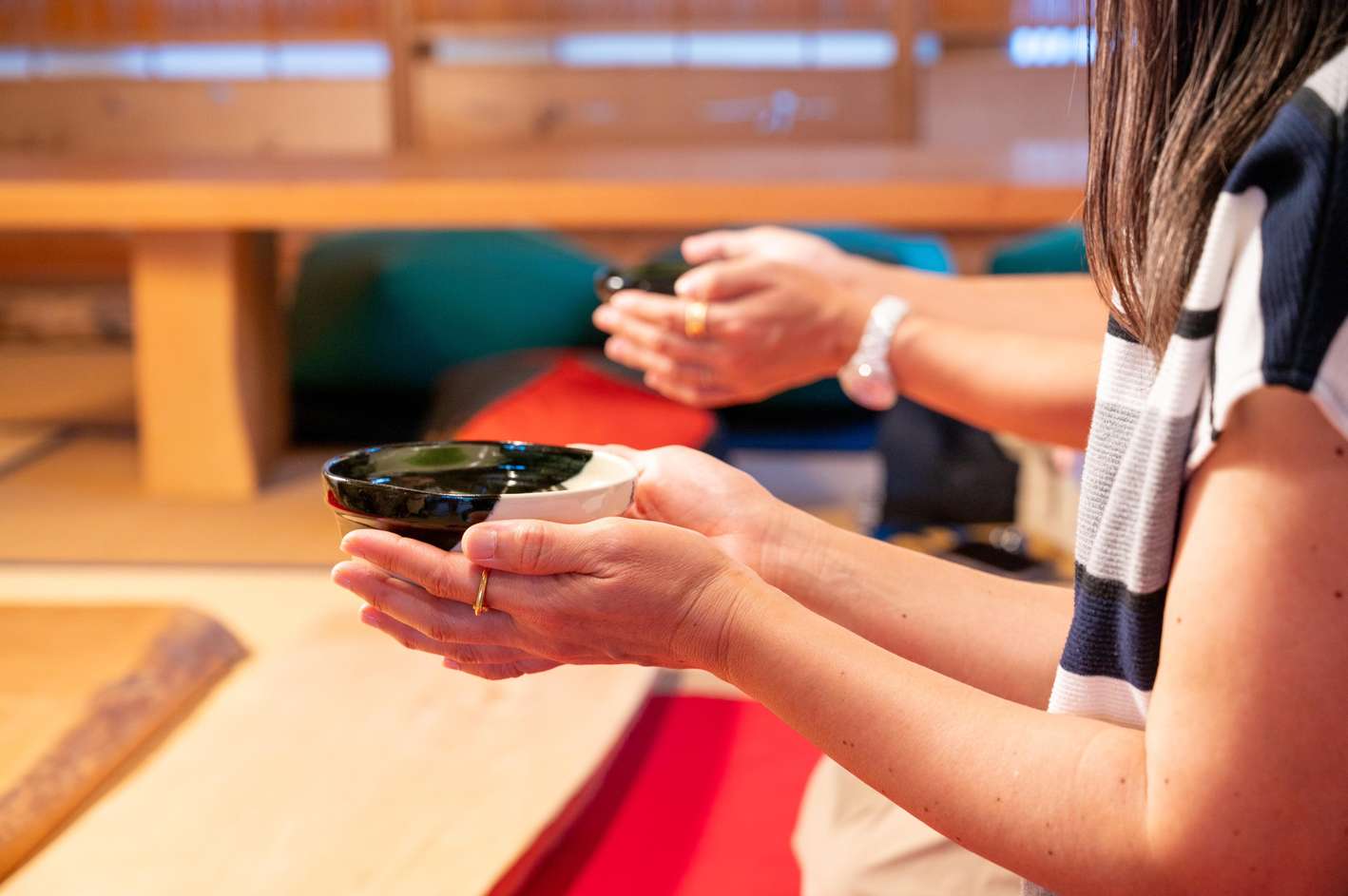
JewelryTake off rings and watches before handling the tea bowls, which they can scratch.
SeatingIf kneeling on tatami sounds hard, small chairs or stools are available at several machiya venues, sometimes on request in advance.
AccessSteep, narrow staircases and a raised entrance step are typical of century-old townhouses, so not every machiya suits wheelchair users or electric wheelchairs.
QuietTea rooms ask for a calm atmosphere, and disruptive noise can lead to being asked to leave.
importantThe 100-year-old Kyo-Machiya townhouse tea ceremony welcomes only guests aged 10 and above, and a few other machiya venues set their own minimums, such as 5 or 6 years old.
Traveling with younger children? Book a session built for families instead, or choose the private Gion townhouse ceremony, where a quieter setting and a smaller group make the age rules easier to work with. Check the age note on each listing before you book.
Kyoto machiya tea ceremonies - how the options differ
Cheapest in Gion
45 minutes·Japanese, English
4.8(255)
Kyoto Gion: Tea Ceremony Experience in a Traditional House
The lowest entry price on this page, 45 minutes in a Gion townhouse where you whisk your own matcha and pick your tea bowl.
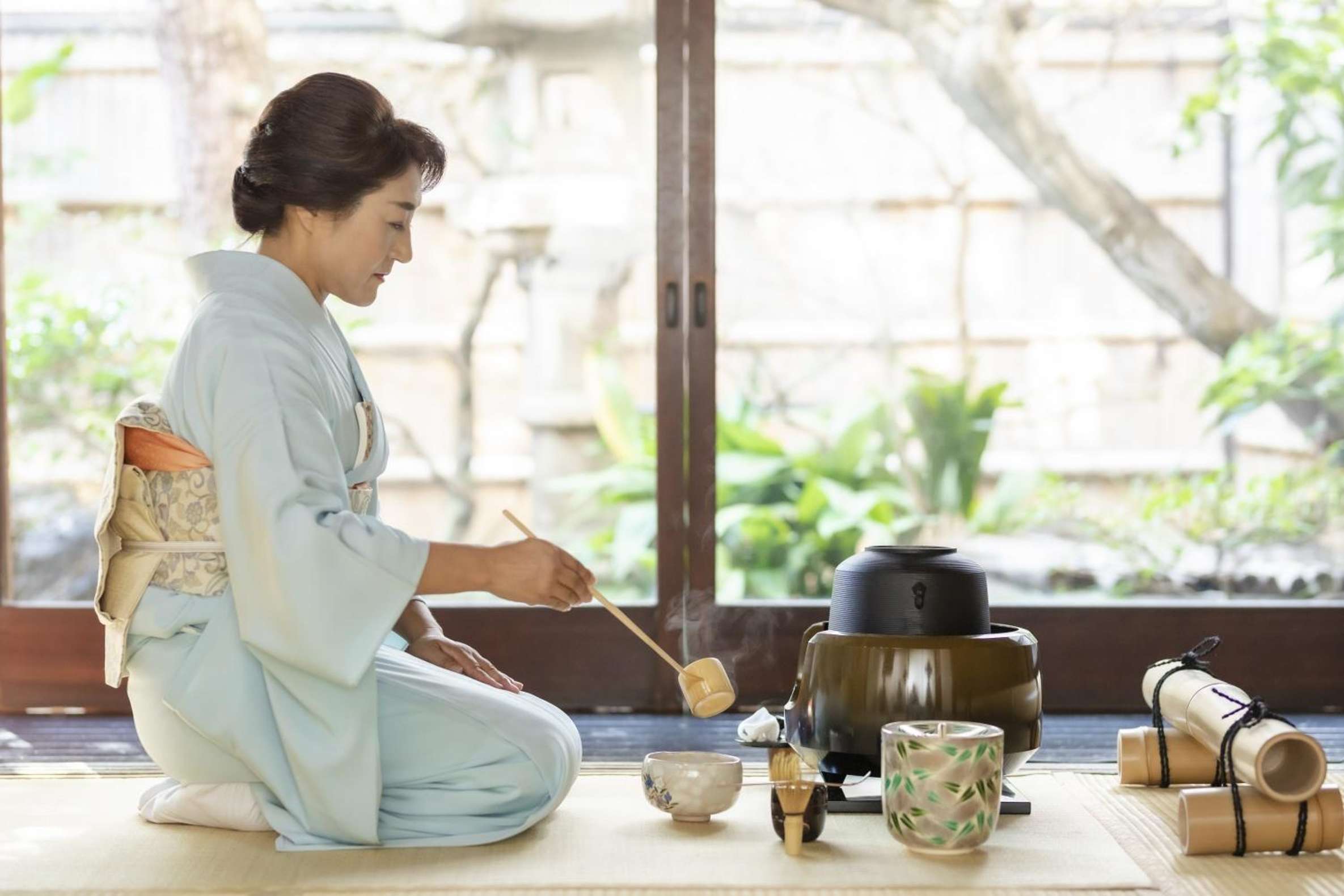
The oldest of these experiences takes place in a 100-year-old wooden townhouse near Gojo, where an experienced tea master leads you through a full ceremony in about 50 minutes.
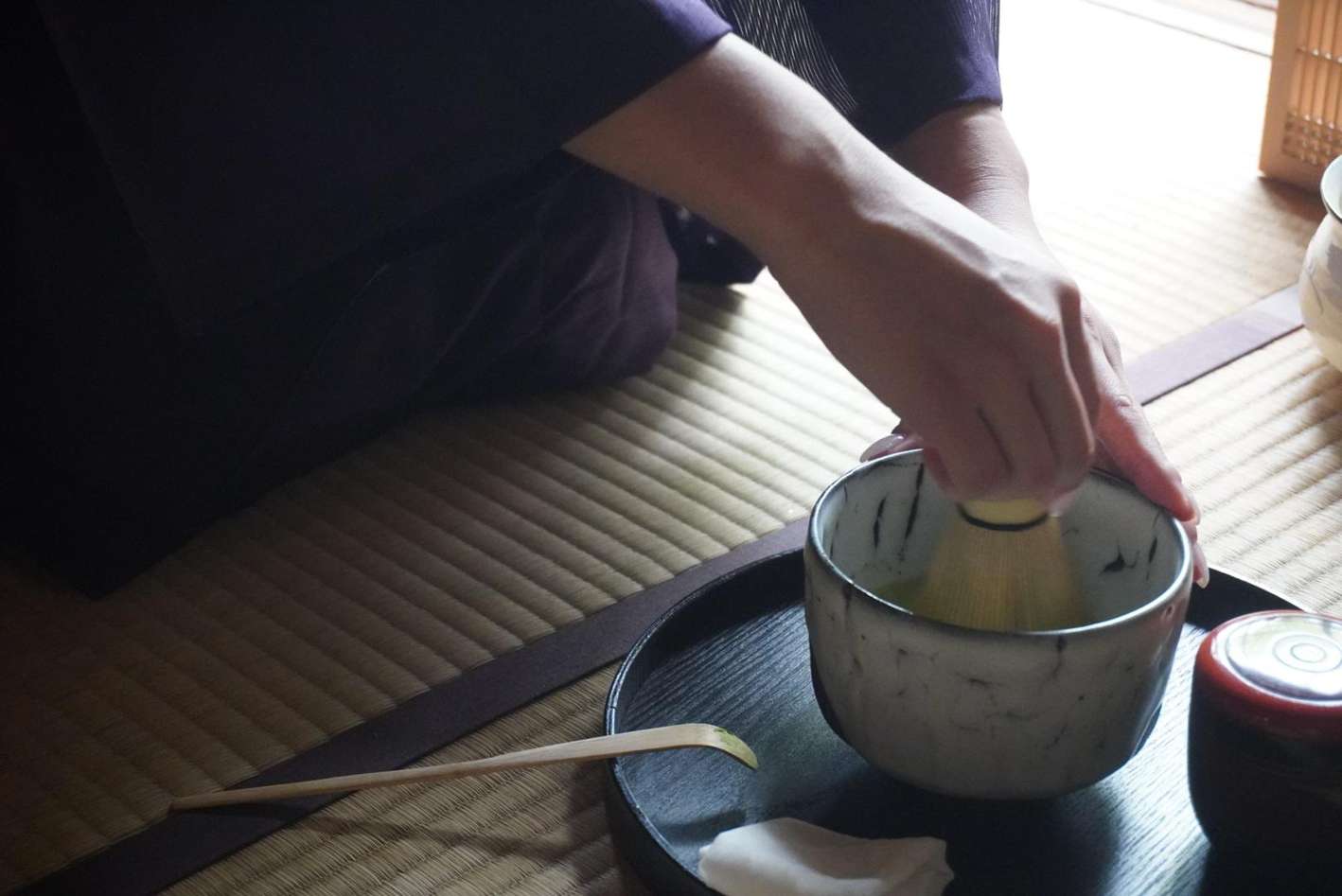
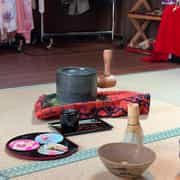
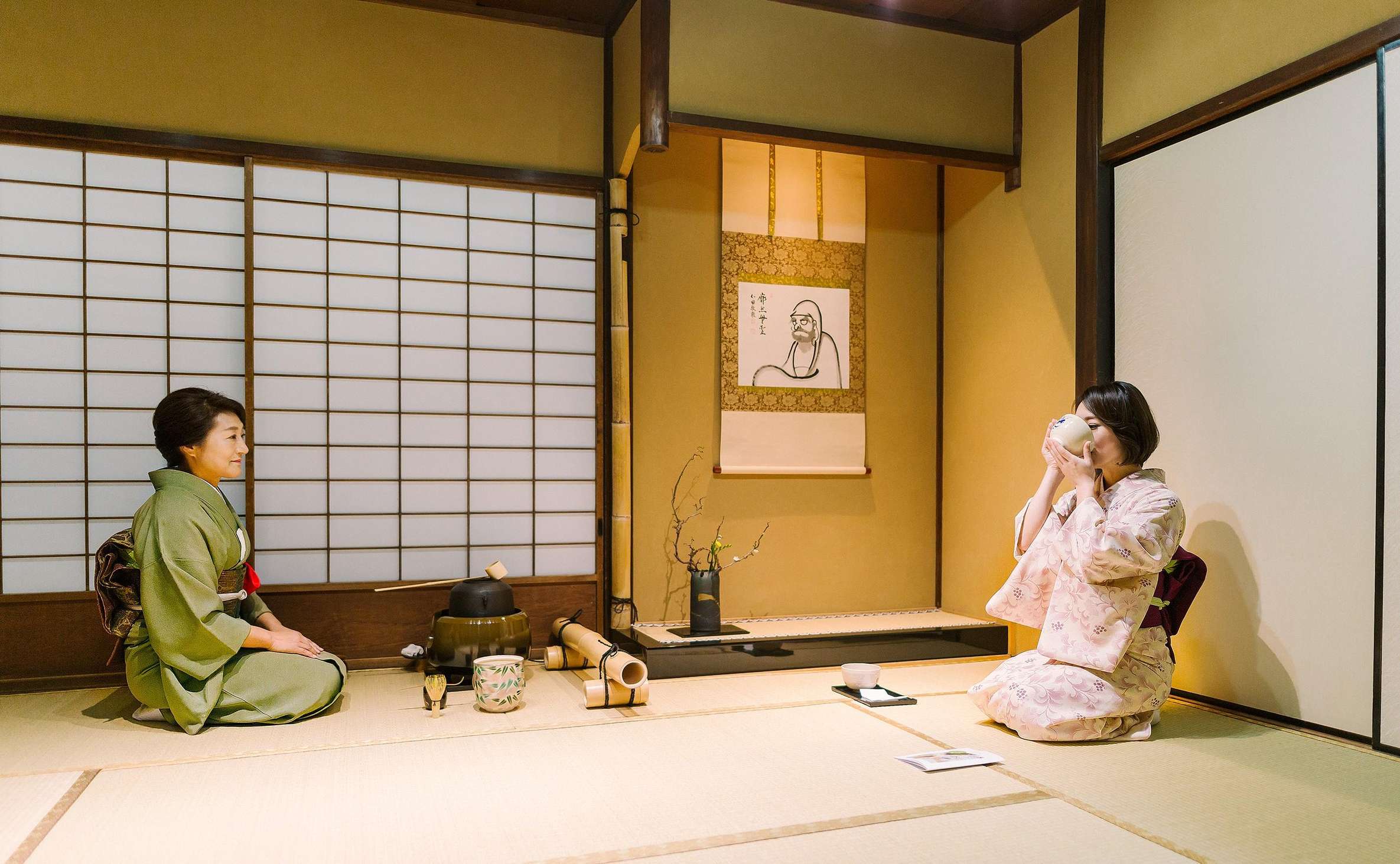
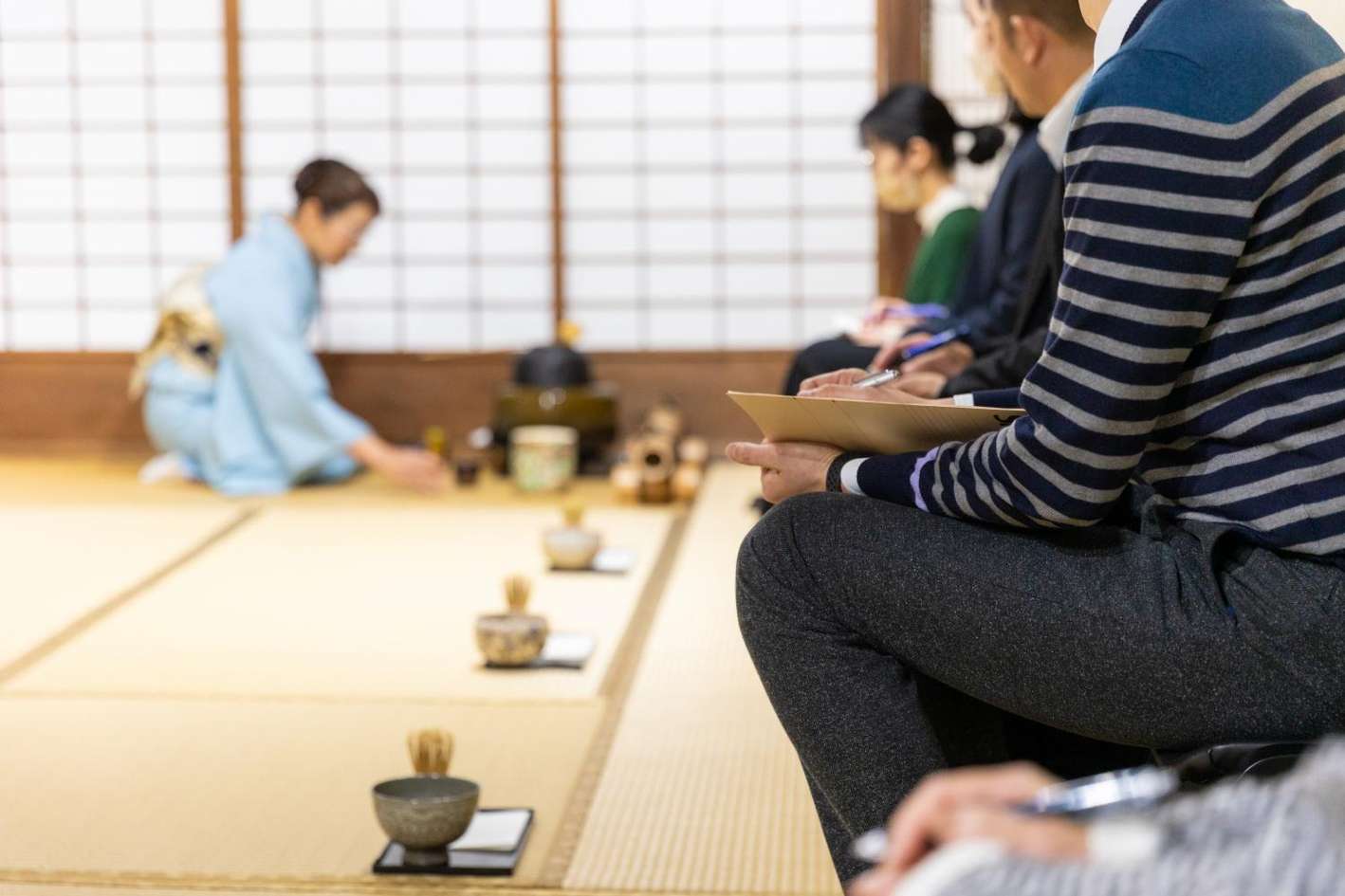
You watch the preparation, learn the greetings and etiquette, then whisk and taste your own bowl of matcha with traditional sweets, which change with the season. A leaflet explains the ceremony, and an interpreter is on hand.
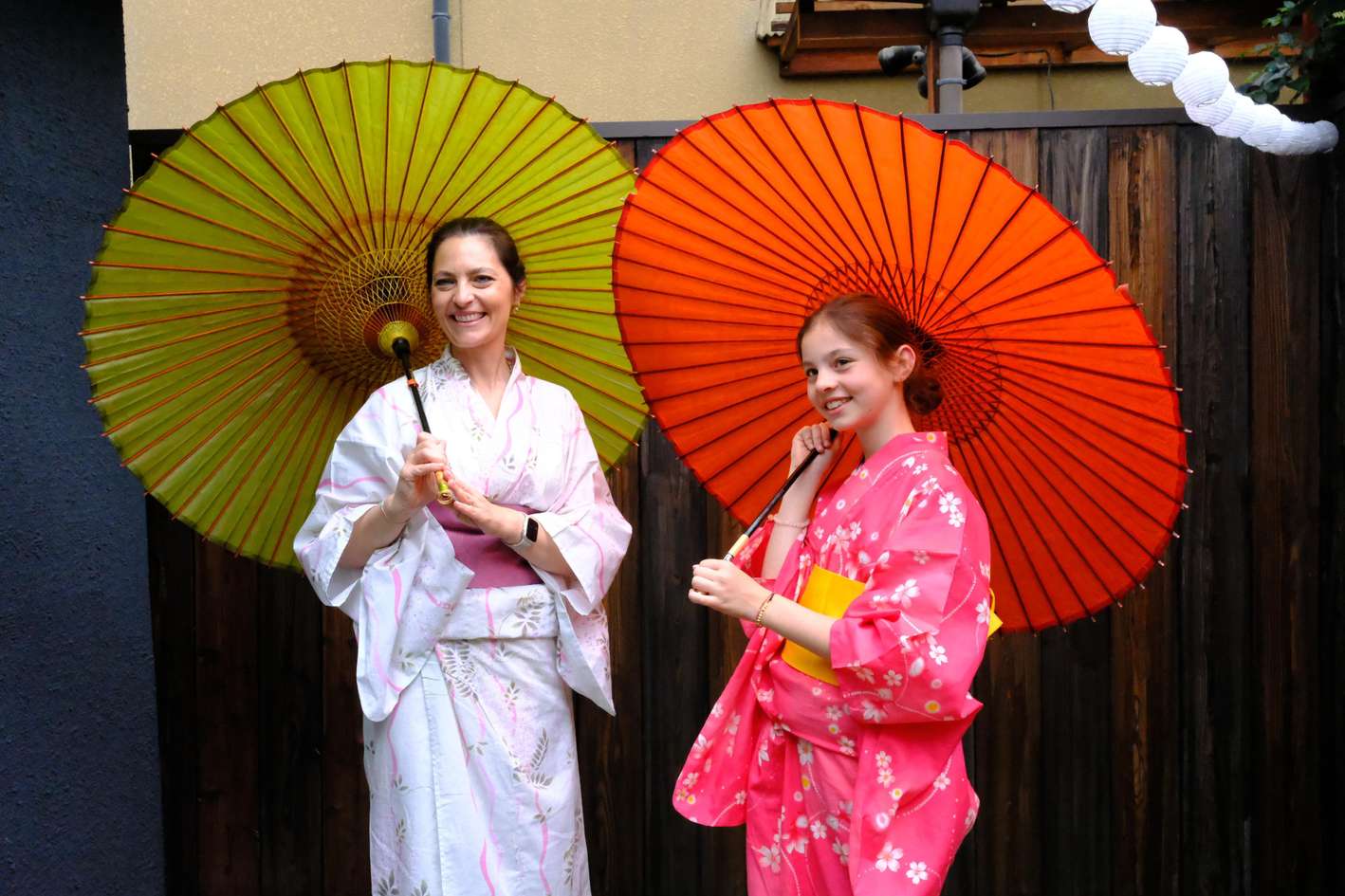
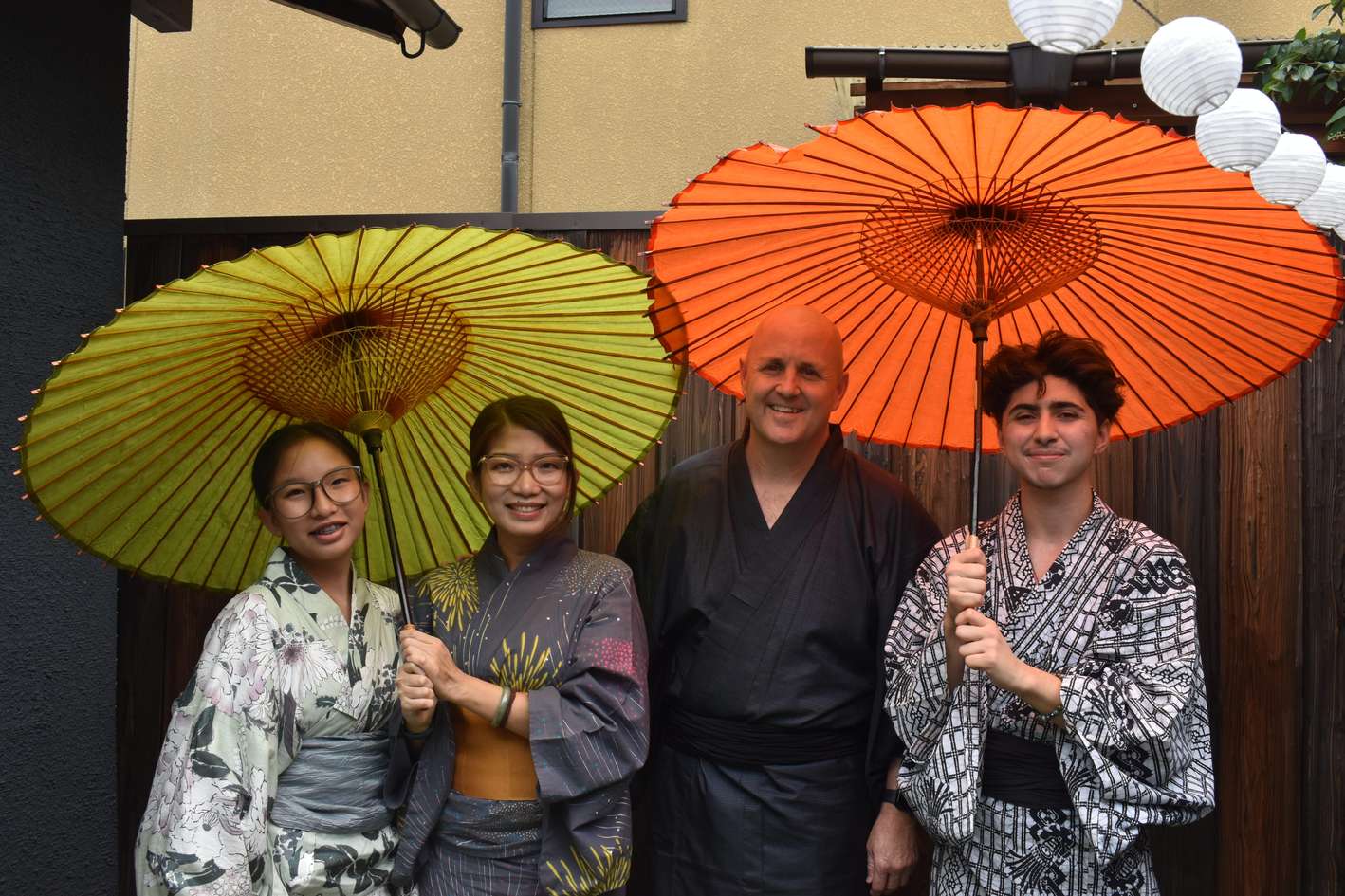
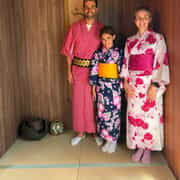
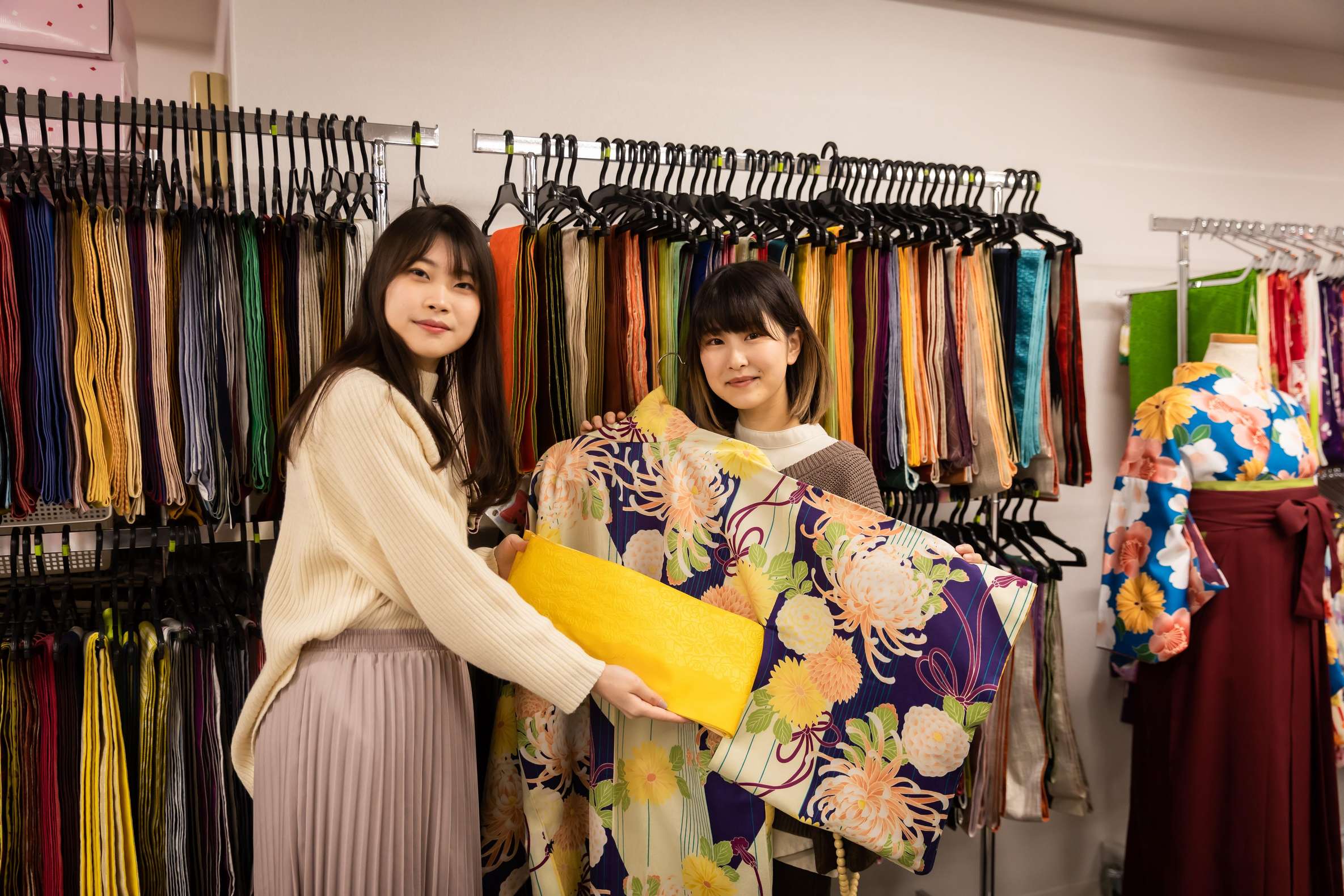
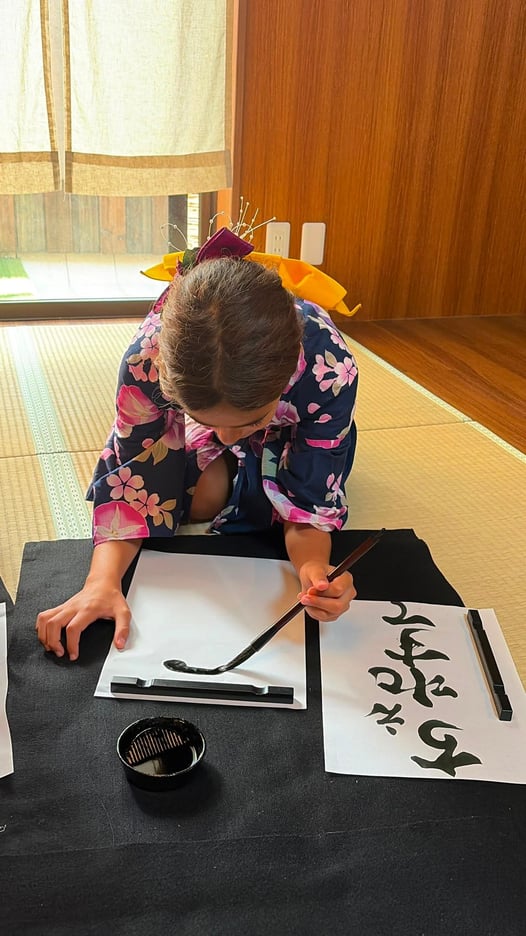
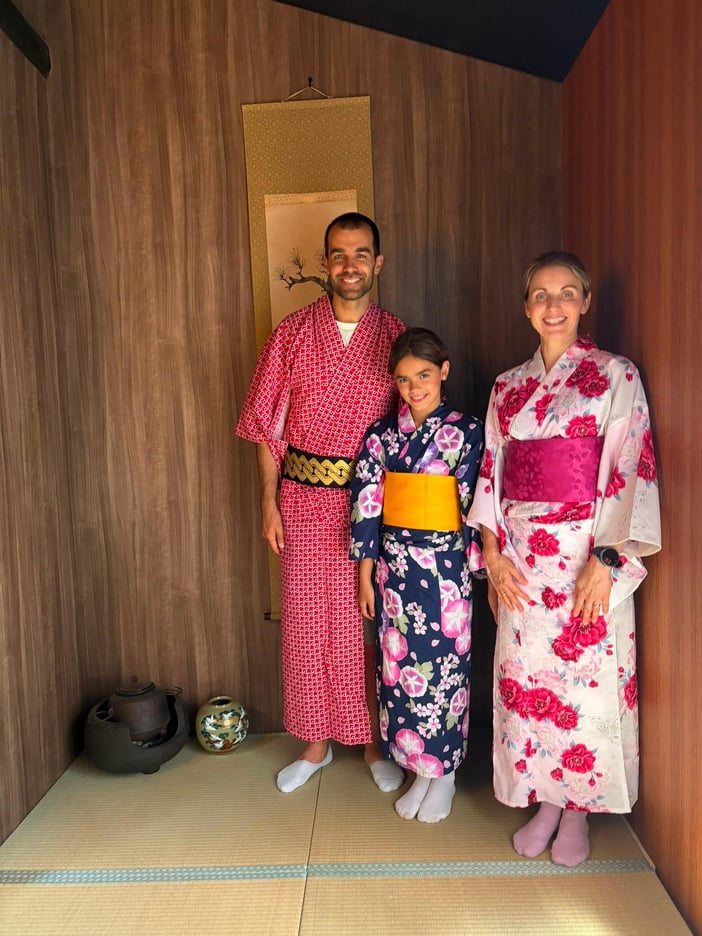
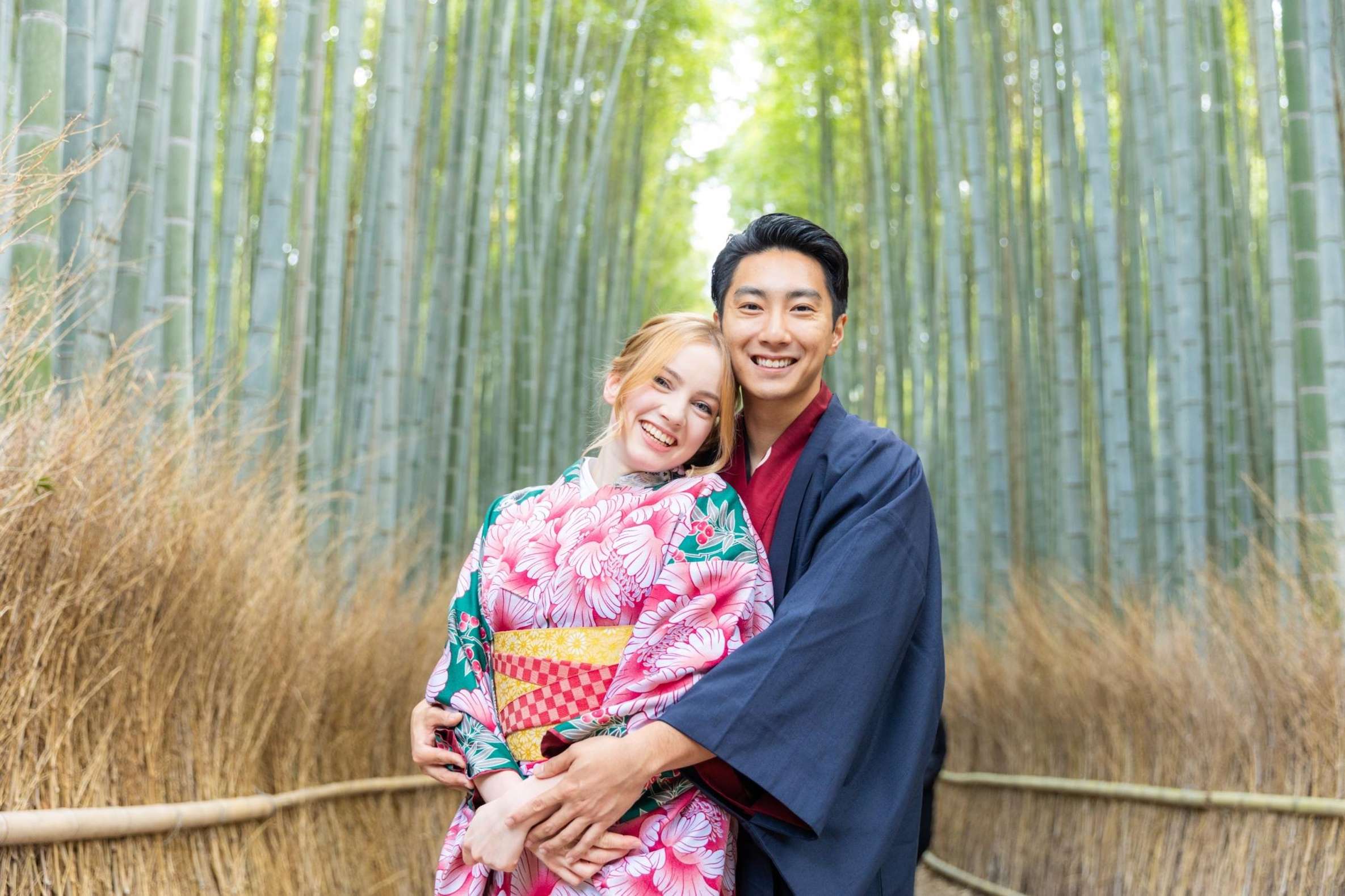
Add the kimono plan and the day stretches to around three hours: you pick a kimono at the Gojo shop, get dressed and styled, travel to the townhouse for the ceremony, then keep the kimono on to stroll around Kyoto until you return it by 5:30 pm.
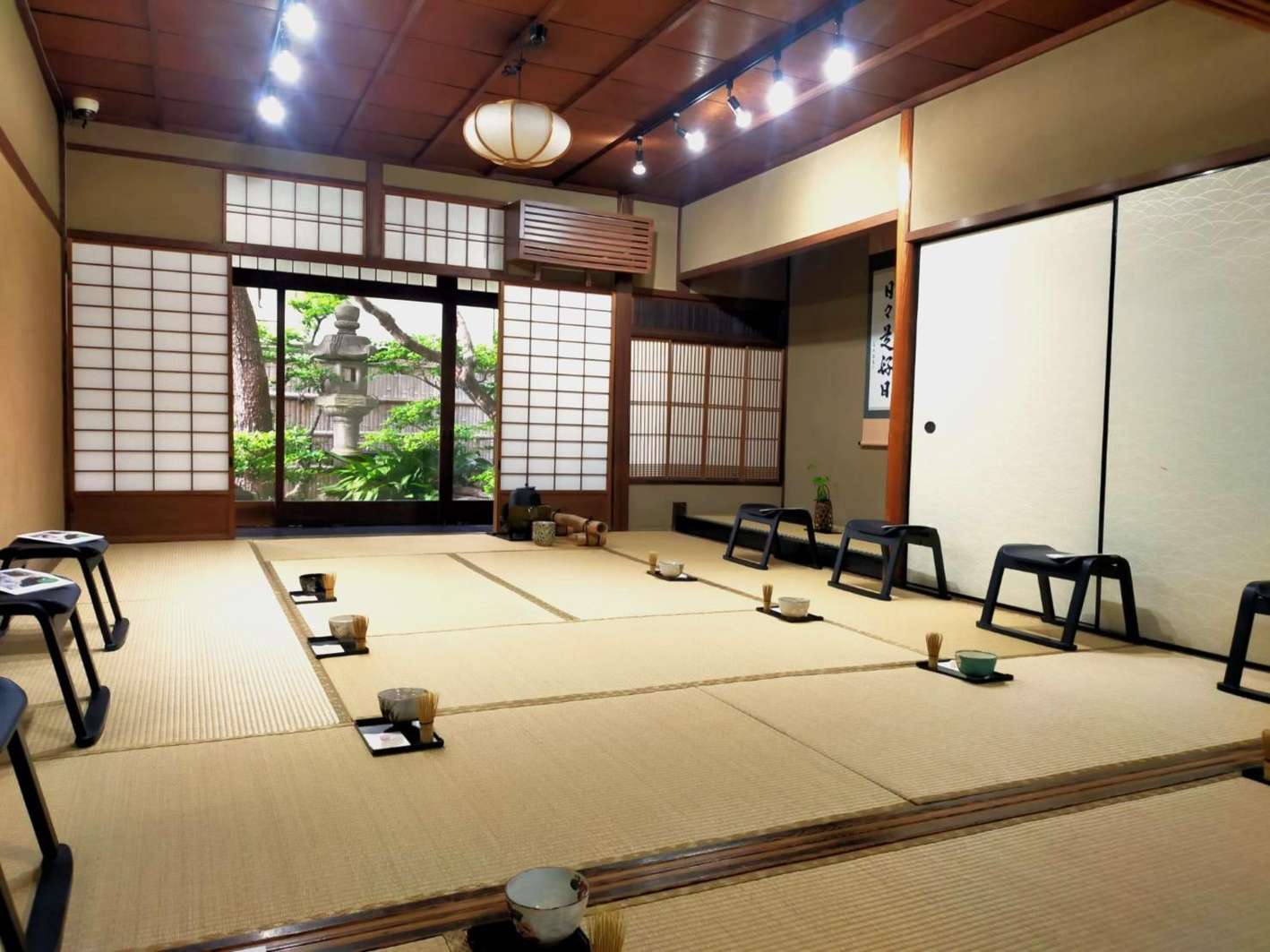
Guests who would rather not kneel on the tatami sit on a small chair instead.
1Kimono dressing at the Gojo shop· about 90 minYou choose from a range of colors and sizes, and women can add hairstyling, makeup or a formal houmongi upgrade.2Getting to the townhouse· about 25 minThe ceremony happens at a separate machiya, so you travel there yourself by subway or taxi at your own cost.3The tea ceremony itself· 50 minIn a tatami room of the 100-year-old house, the tea master demonstrates the ritual, then you prepare your own matcha and taste it with seasonal sweets. A chair is available if you prefer not to sit on the floor.4Out into Kyoto in kimono· about 15 minWith the kimono plan you keep wearing your kimono for photos and strolling, then return it to the Gojo shop by 5:30 pm.
Where the other tours go
Kyoto: 100% Private Tea Ceremony, Calligraphy, and Kimono
Tea ceremony experience in a traditional town houseMatcha teaTraditional Japanese sweets (The contents vary depending on the season.)A leaflet explaining the tea ceremonyTea master and interpreterJapanese Haori(Jacket) rental (if add-on selected)
Not included
Professional photos/videosTransportation between Gojo Shop and Oike Bettei (townhouse) - subway (¥220 per person, one way) or taxi (approximately ¥1,600 round trip)
Which machiya tea ceremony in Kyoto suits you
Green marks the lowest price. Prices per person.
Tour
Price
Duration
Languages
Best for
Our pick
Kyoto: Tea Ceremony in 100-year-old Kyo-Machiya Townhouse
4.8★ (988)
from $33per person
50 minutes - 3 hours
English, Japanese
travelers who want to pair the ceremony with kimono rental and styling
Most reviewers praise the hosts by name, calling Naomi and Airi warm, patient teachers who explained every step.
Best surprise
Many travelers say they expected a tourist show and instead felt like genuine guests in a real family home.
Most common wish
Several reviewers wished the kimono dressing time had lasted longer, saying it went by almost too quickly.
Booking a tea ceremony inside a Kyoto machiya
01
Pick your date and time
Choose a date first, then a time slot. Sessions run as group bookings or private ones, and slots fill up fast in April and November. Cancel up to 24 hours ahead for a full refund.
Pro tipMorning slots between 9 and 11 am give you quiet streets and calm inside the townhouse
RecommendedOne operator runs an early-morning tea ceremony option, the calmest way to start a sightseeing day
02
Choose the right option
Decide what the booking includes. Some options add kimono rental, calligraphy or a townhouse tour; others are tea only. Kimono plans take up to three hours because dressing and travel to the tea house come first.
Common mistakeAdding kimono without checking the schedule. You pick up the kimono at one shop and walk to the townhouse yourself, so the ceremony starts two hours after your booked time
ImportantThe machiya tea ceremony welcomes guests aged 10 and over, so younger children need a different venue
03
Pay and get your voucher
After payment a confirmation with your voucher arrives by email. Check the meeting address on it carefully, because Kyoto machiya sit down blind alleys and map apps often struggle with the land-lot style addresses.
Pro tipSearch the venue by its nearest landmark or station rather than the street address, and screenshot the map before you leave your hotel wifi
04
Know the meeting point
There is no pickup. You travel to the machiya yourself. Kimono plans start at a rental shop, tea-only plans start at the townhouse, so read the voucher to see which building is yours.
ImportantBring socks. Outdoor shoes come off at the entrance and bare feet are not allowed on the tatami
RecommendedAim to arrive five to ten minutes early, since latecomers may join late but lose session time
05
On the day
Wear something comfortable for sitting, skip strong perfume and leave rings off so they cannot scratch the tea bowls. Then let the host guide you through the rest.
Common mistakeWearing sandals or flip flops, which some tea venues do not allow at the door
What to know before you book a machiya tea ceremony
Can stop the dayGood to knowGood news
01
ChoosingWhat it is, who it suits, when to go
6
AccessCan stop the day
Old townhouses have steep, narrow stairs and a raised entry step. The Gion venue sits on the second floor, and the 100-year-old townhouse cannot take wheelchairs or electric wheelchairs. If mobility matters to your group, pick a ground-floor venue instead.
Jewelry
Take off rings and watches before the ceremony. Lifting a ceramic tea bowl with both hands over rings or a bracelet can scratch or crack it, and hosts ask guests to remove them to protect the bowls.
Quiet hours
For the calmest streets, book between 9 and 11 in the morning, before the day-trippers arrive. Late afternoon, from 3:30 to 5, brings softer light into the garden rooms as the crowds thin.
Allergies
The wagashi sweets often contain wheat, soy or nuts, and shared equipment can leave traces. Tell your host well before the session so they can check the label or adjust, rather than assuming a sweet is safe.
Finding it
Kyoto addresses run on land lot numbers, and machiya often sit down blind alleys inside a block. Pin the venue on your map the night before, and allow a few extra minutes to find the doorway.
Tipping
Japan has no tipping custom, and a tea ceremony is no exception. The listed price covers everything, and a simple thank you to the host is the right way to end the session.
02
BookingHow far ahead, and what happens if plans change
1
Seating
Sitting seiza on tatami is optional. In the 100-year-old townhouse you can take a small chair, and at one Karasumashijo venue a bamboo chair waits if you ask in advance. Ask when you book so the host sets it out.
03
Before you goPapers, health, what to bring
3
Socks
You take off your shoes at the entrance, so bring socks. Any clean pair works at most venues; white ones are the traditional courtesy, and a few formal ceremonies do insist on them. Avoid sandals and flip flops, since some houses turn those away too.
AgesCan stop the day
Machiya sessions run quiet and still, so age limits apply. The 100-year-old townhouse hosts guests aged 10 and above, the Gion house starts at 6, and children under 4 cannot join the temple ceremony. Check the listing before booking for your family.
Weather
These wooden houses have little insulation. In summer the tsuboniwa courtyard pulls cooling breezes through, dropping the room a few degrees below the street. In winter the tatami stays cold, so layer up and wear thick socks.
04
On the dayWhere to be, when, and how you get there
1
Timing
Arrive before the start time, and aim for several minutes early at the river-view house. Late arrivals at many tea houses join the session already running or lose their slot, and no session gets extended or refunded.
05
During the tourWhat is expected of you
1
Photos
Flash photography is banned everywhere, and some houses also ban video. A few venues let you photograph during the session but ask you to keep those images off social media, so listen to the host's rules at the start.
Machiya tea ceremony in Kyoto - the full guide
Tea in a wooden Kyoto townhouse is among the quietest hours you can book in this city, once you pick the right house, the right hour and arrive in clean socks.
Gojo, Nara· 34.98° N, 135.75° E
If you only remember three things
1
Book 6 to 8 weeks ahead for April or November, or walk in during winter.
2
Arrive 5 to 15 minutes early: latecomers past the start lose their seat and their booking.
3
Bring socks; bare feet never touch the tatami.
Why a machiya changes the whole ceremony
The fear has a name, even if nobody says it aloud: booking a session sold as traditional and walking into a modern studio with tatami rolled out over concrete.
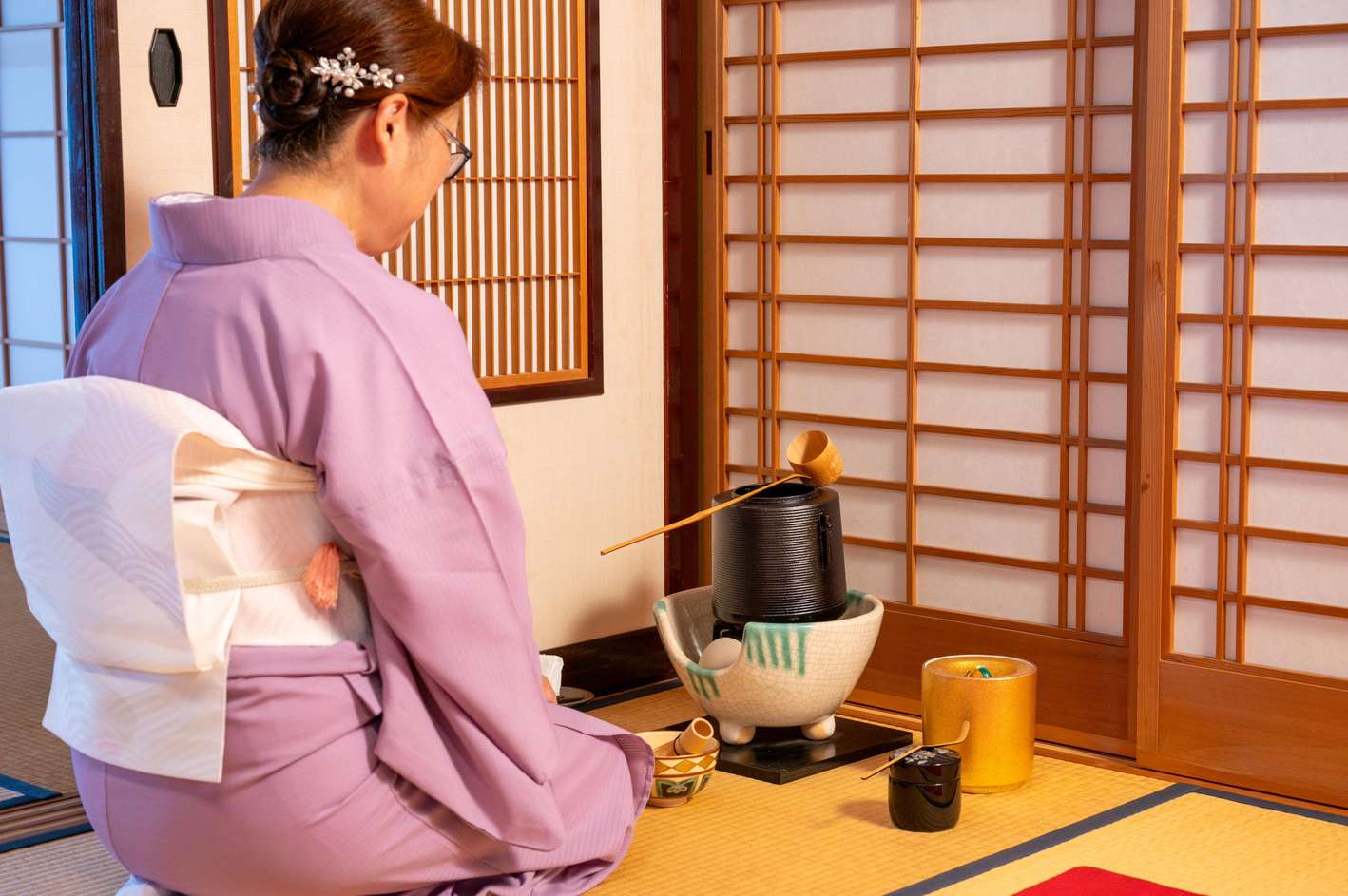
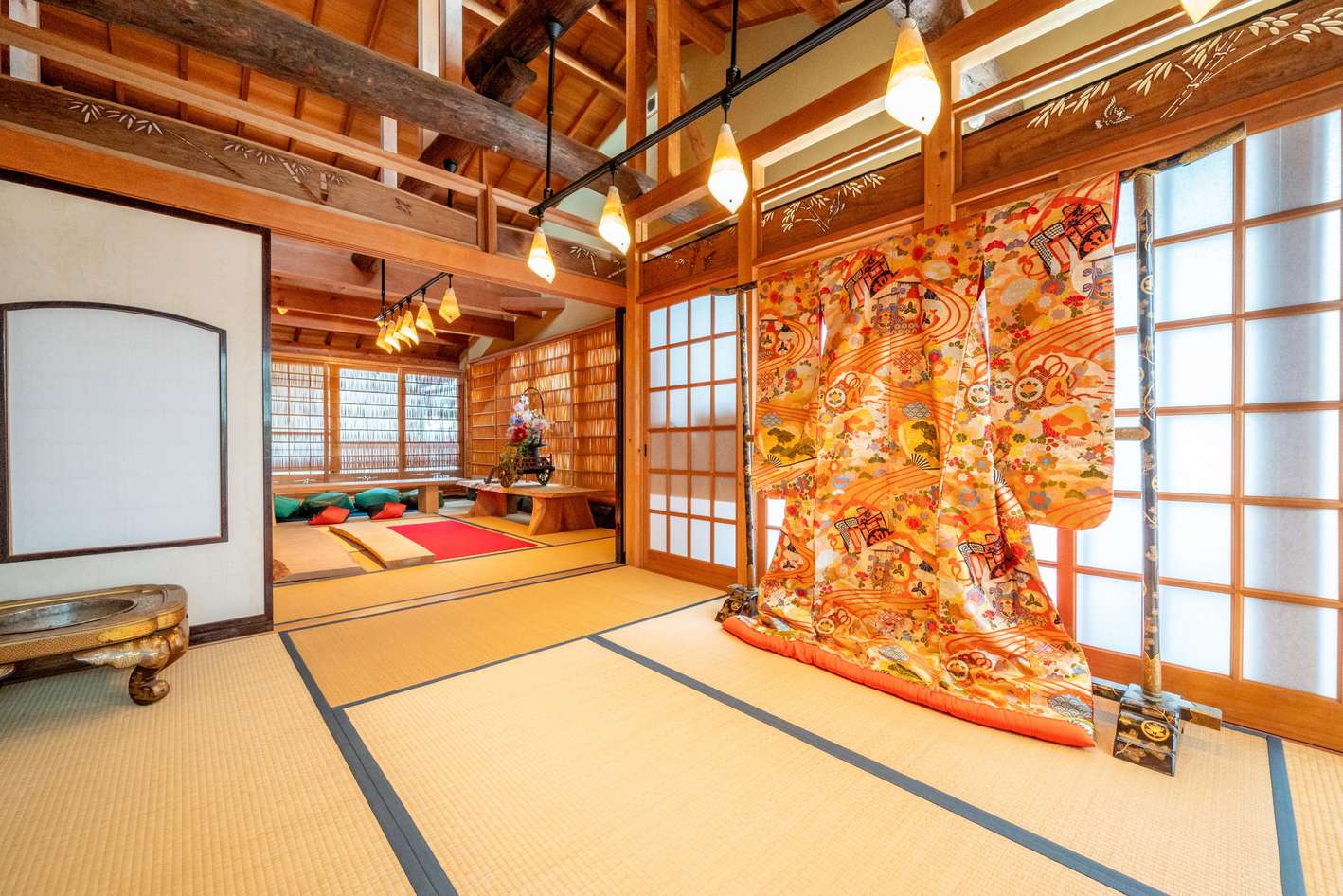
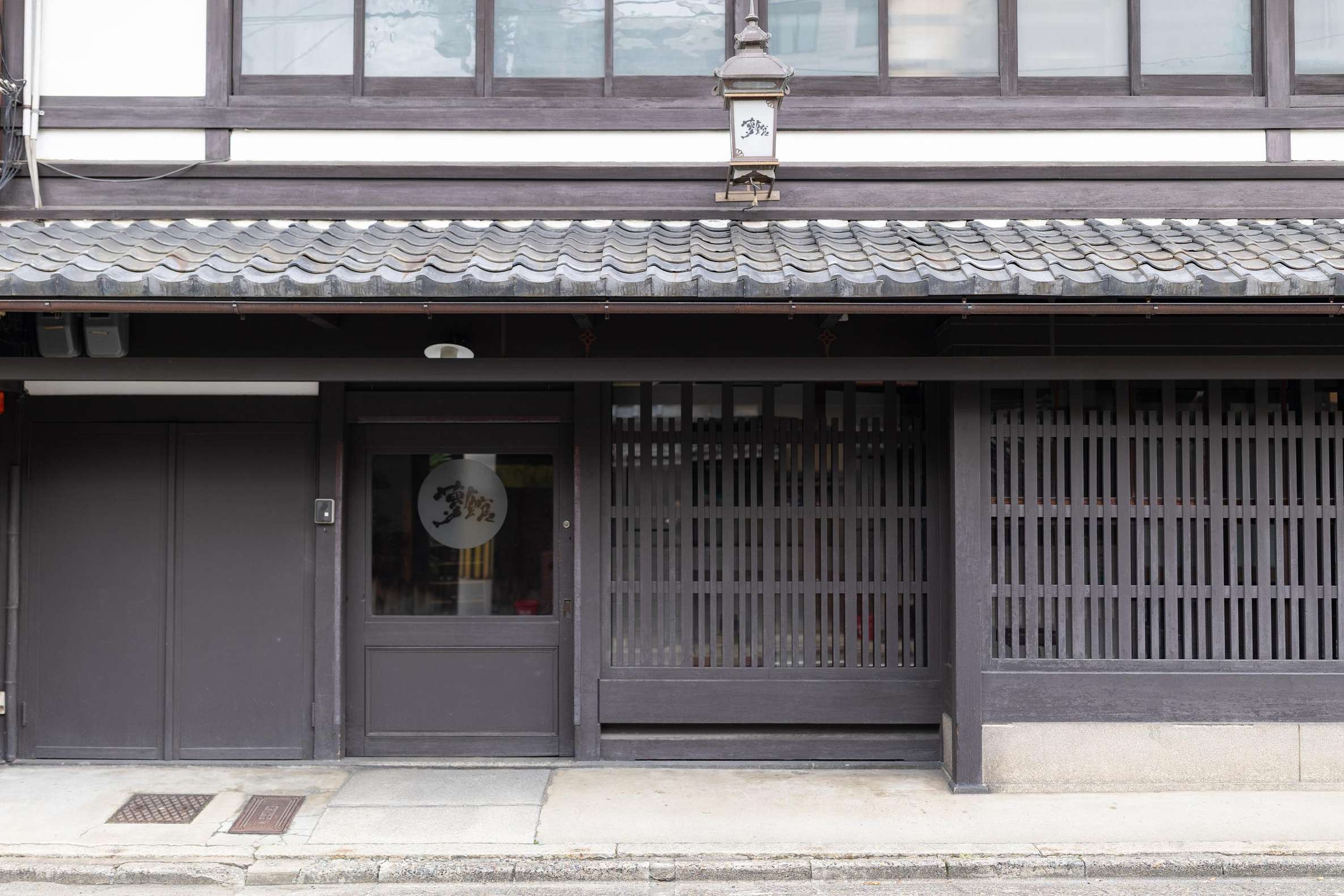
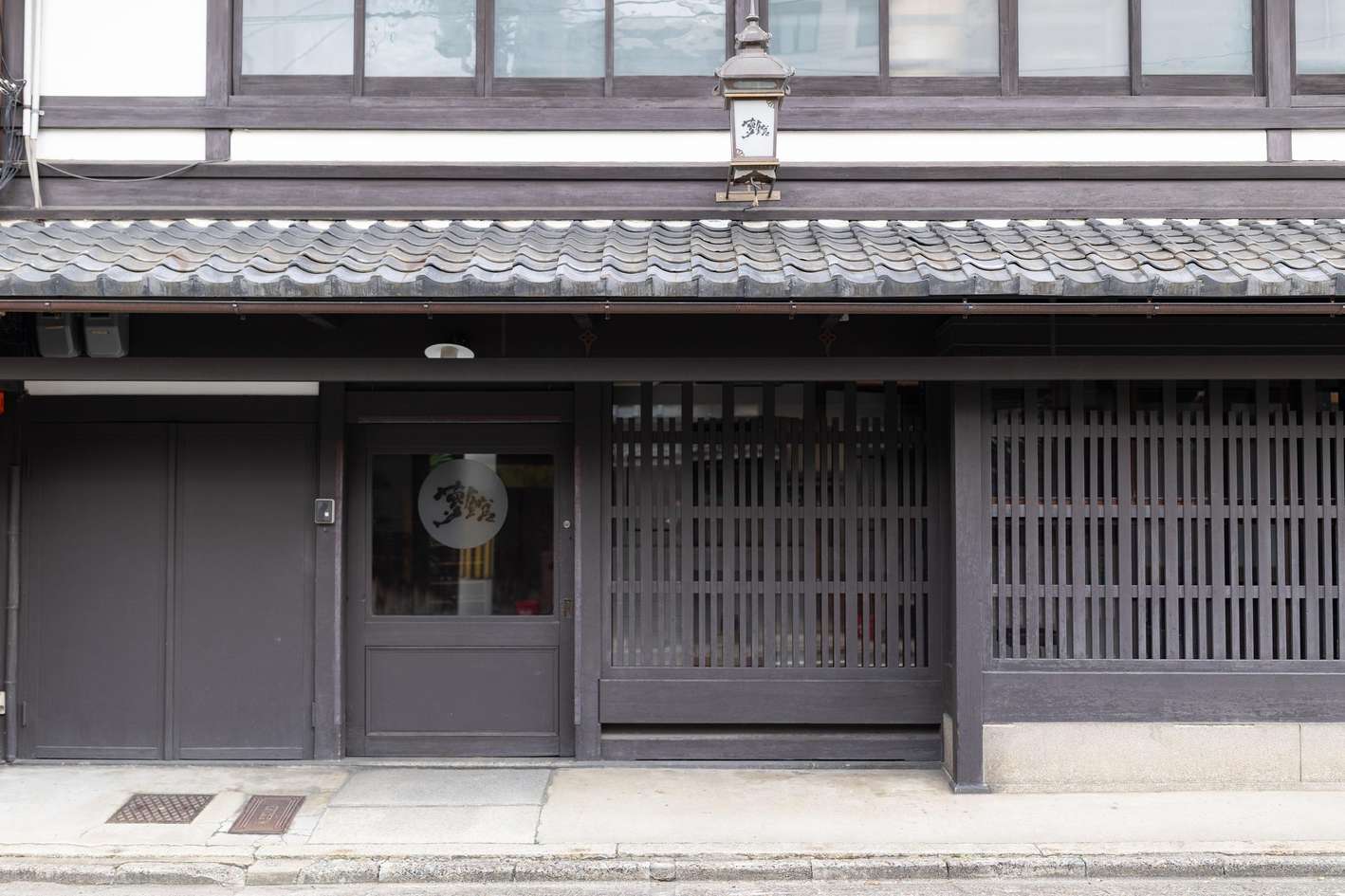
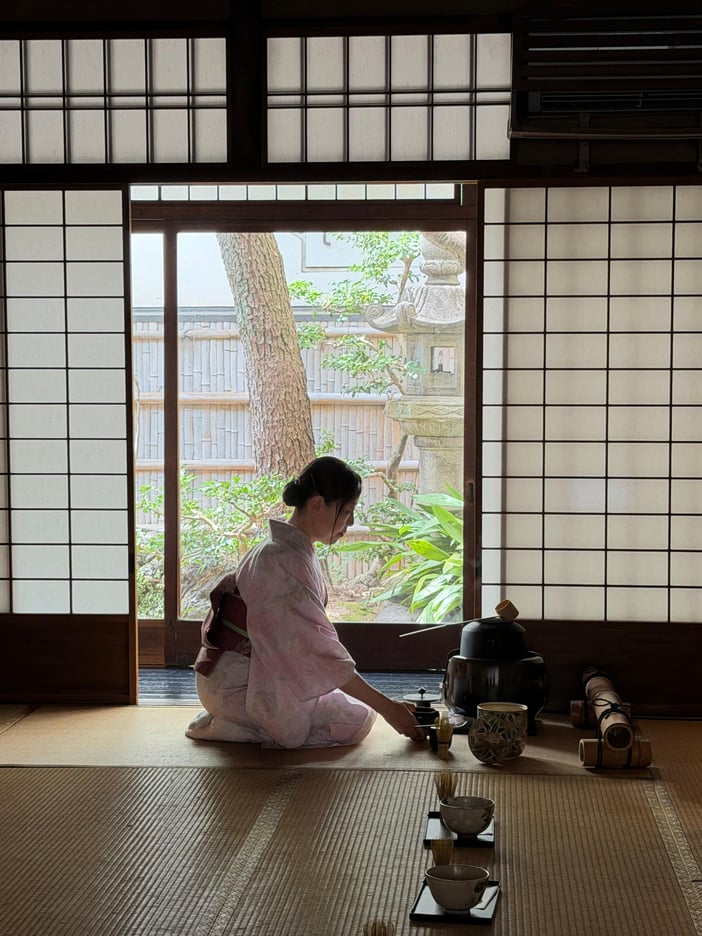
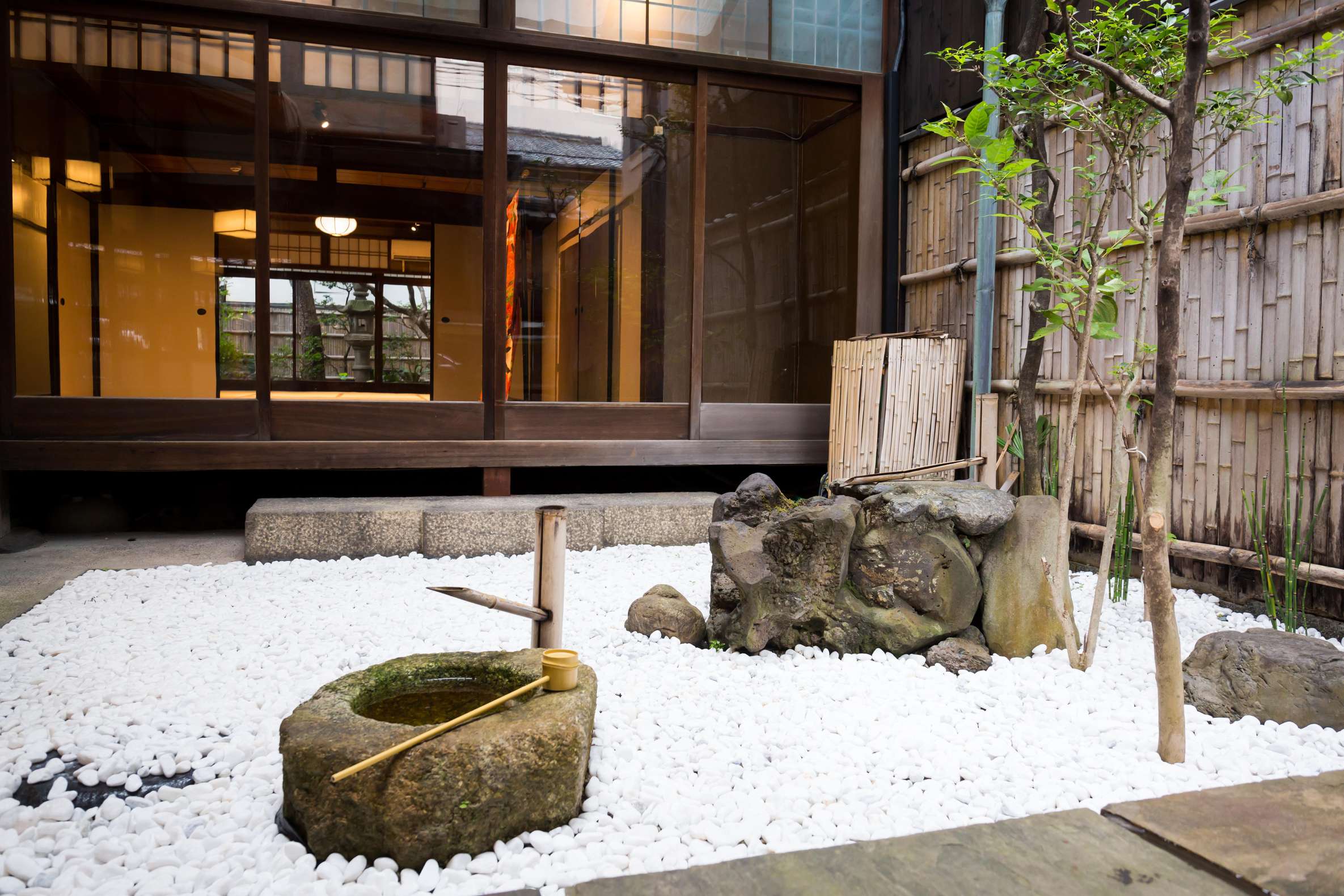
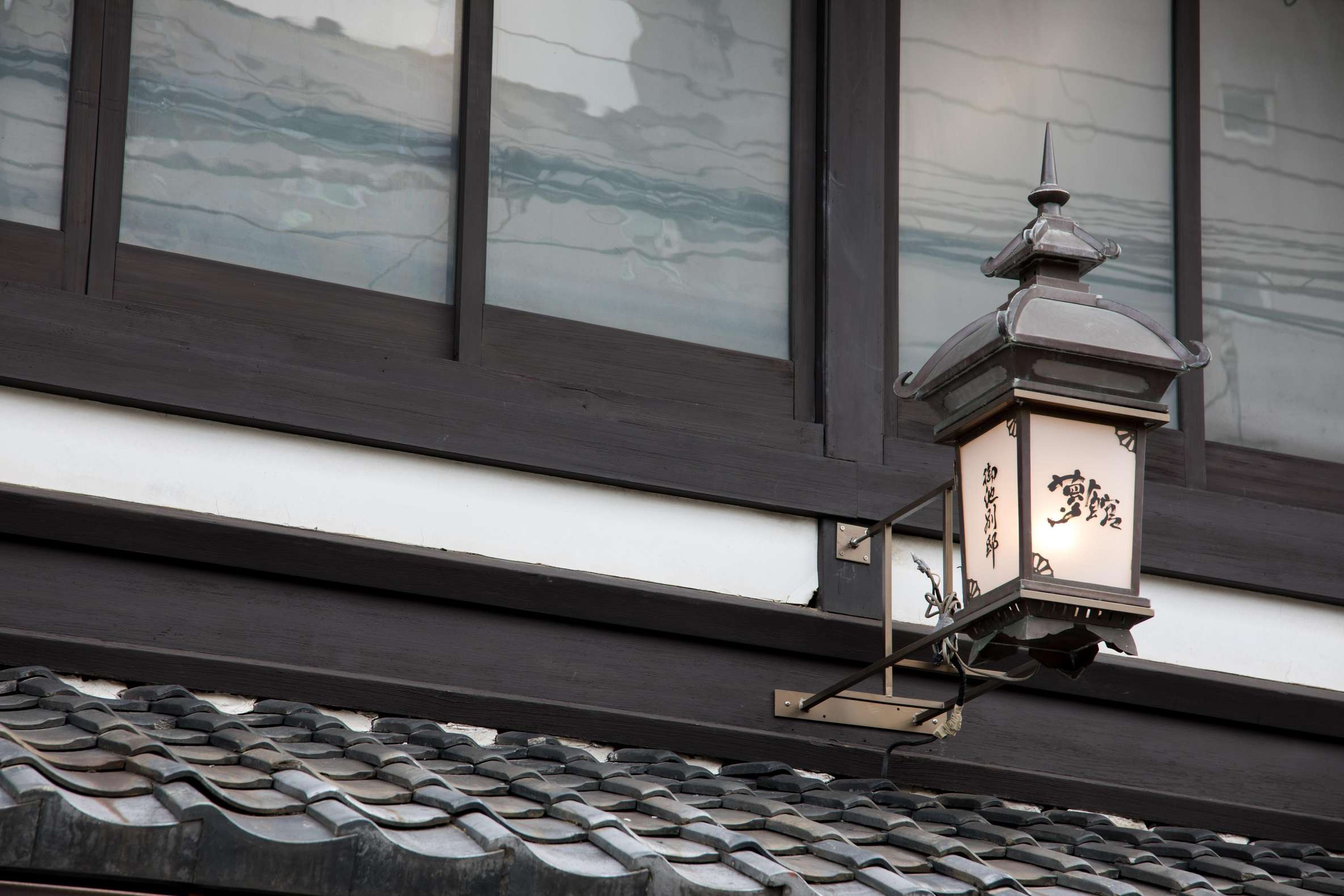
A genuine Kyo-machiya gives itself away before you step inside. Wood put up in 1950 or earlier, never taller than three stories, with degoshi lattice windows, deep tori-hisashi eaves and often an okudosan kitchen stove still in place.
Kyoto locals called these houses unagi no nedoko, the eel's bedroom, for their narrow street fronts and deep interiors. That shape matters to you, because the tea room sits at the back, past the street-facing front, where the noise stops and the house goes quiet.
The houses on this page count their years differently. One host describes his river-view machiya as 150 years old, the shared townhouse near Gojo counts 100, and the private house by Kyoto Station 125.
Different houses, same craft: every one of them is pre-1950 wooden construction, and each will read as old Kyoto the moment the door slides open.
Compare it honestly with a temple session. A temple gives you gardens and a meditative frame, and often trims parts of the formal ritual. A townhouse gives you a historic home, rooms that seat small groups, and an English-speaking host. The setting is worth choosing deliberately.
Side by side, the differences come down to four things.
Side-by-side comparison of Kyoto's machiya tea ceremony options
Shared group session
Fully private booking
Seating
Floor tatami, small chair on request
Floor tatami, pace set to you
Who else is there
8 to 12 travelers, up to 20
No one but your party
Where
Gion, Higashiyama, near Kyoto Station
9-minute walk from Kyoto Station
Extras
Sweet and matcha included
Calligraphy and kimono in the same house
Shared group session
Seating
Floor tatami, small chair on request
Who else is there
8 to 12 travelers, up to 20
Where
Gion, Higashiyama, near Kyoto Station
Extras
Sweet and matcha included
Fully private booking
Seating
Floor tatami, pace set to you
Who else is there
No one but your party
Where
9-minute walk from Kyoto Station
Extras
Calligraphy and kimono in the same house
Whichever column you land in, the shared groups stay small enough that nobody feels processed, so you can book the cheaper shared session without giving up the intimacy you came for.
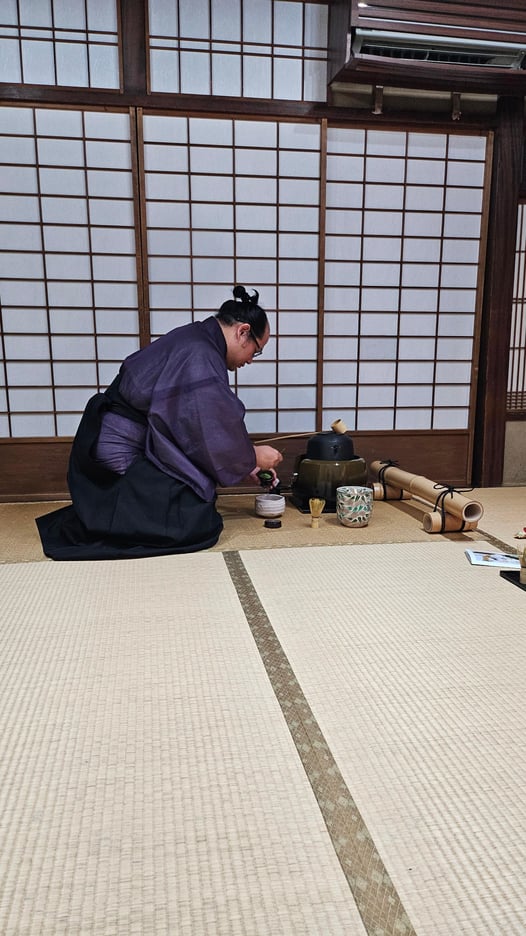
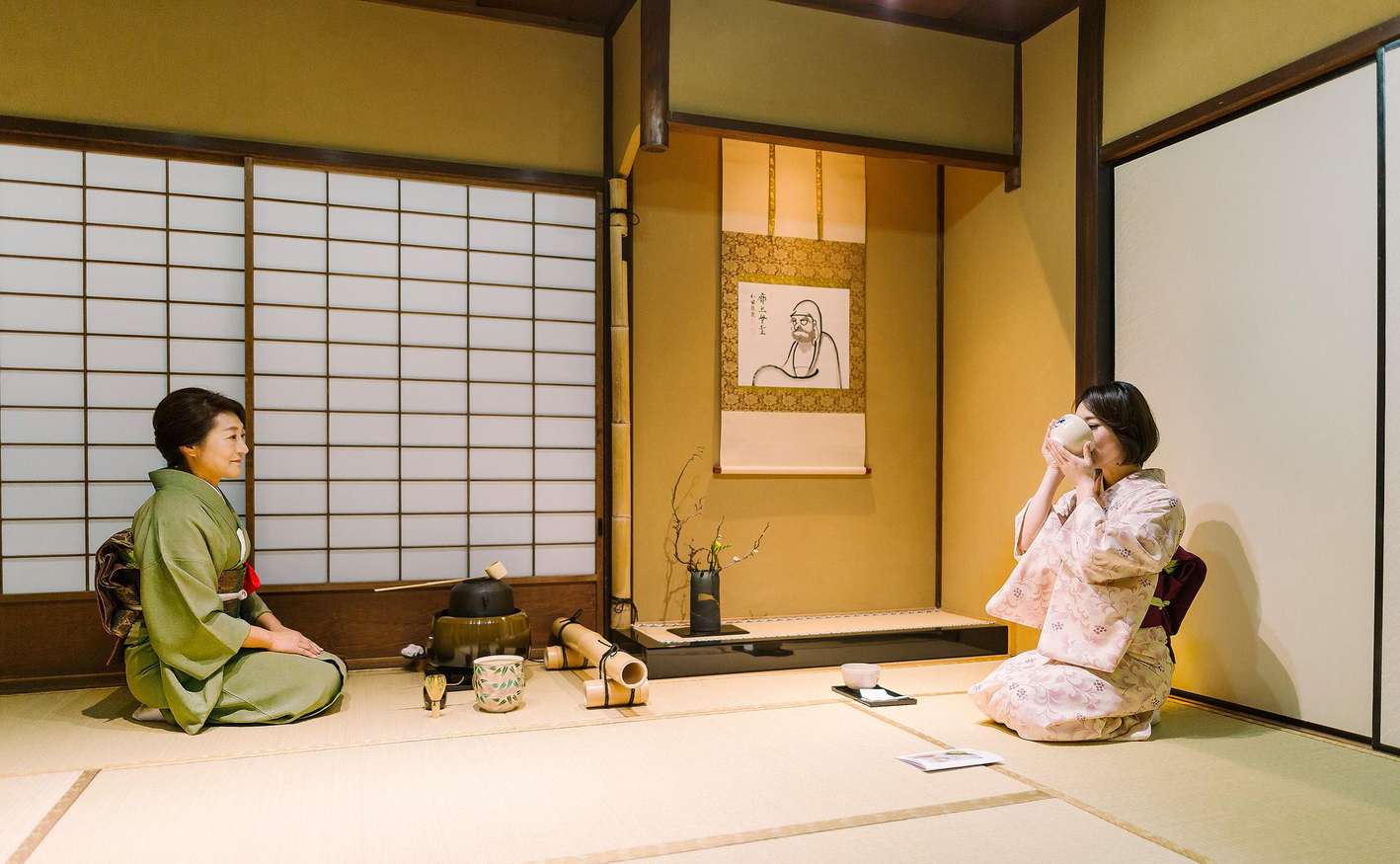
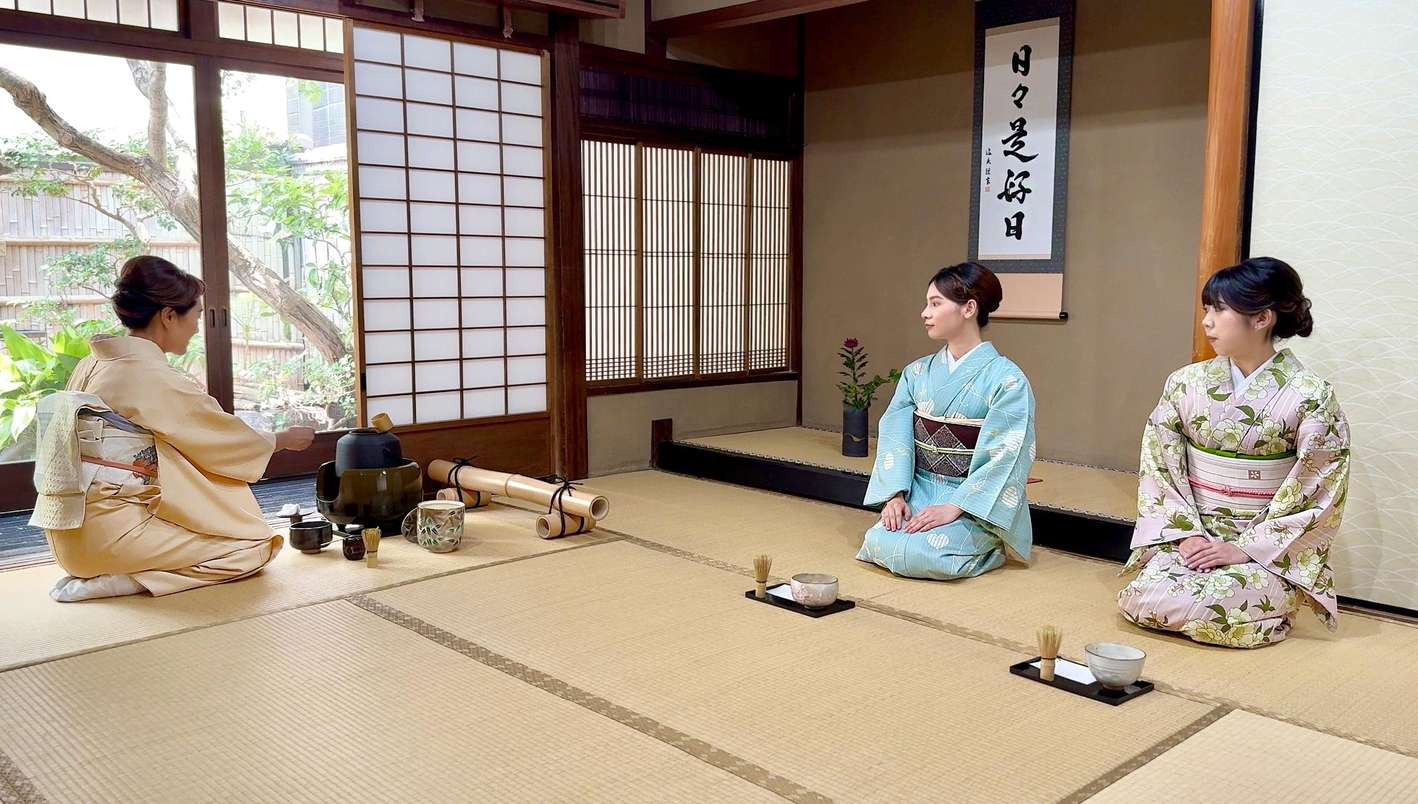
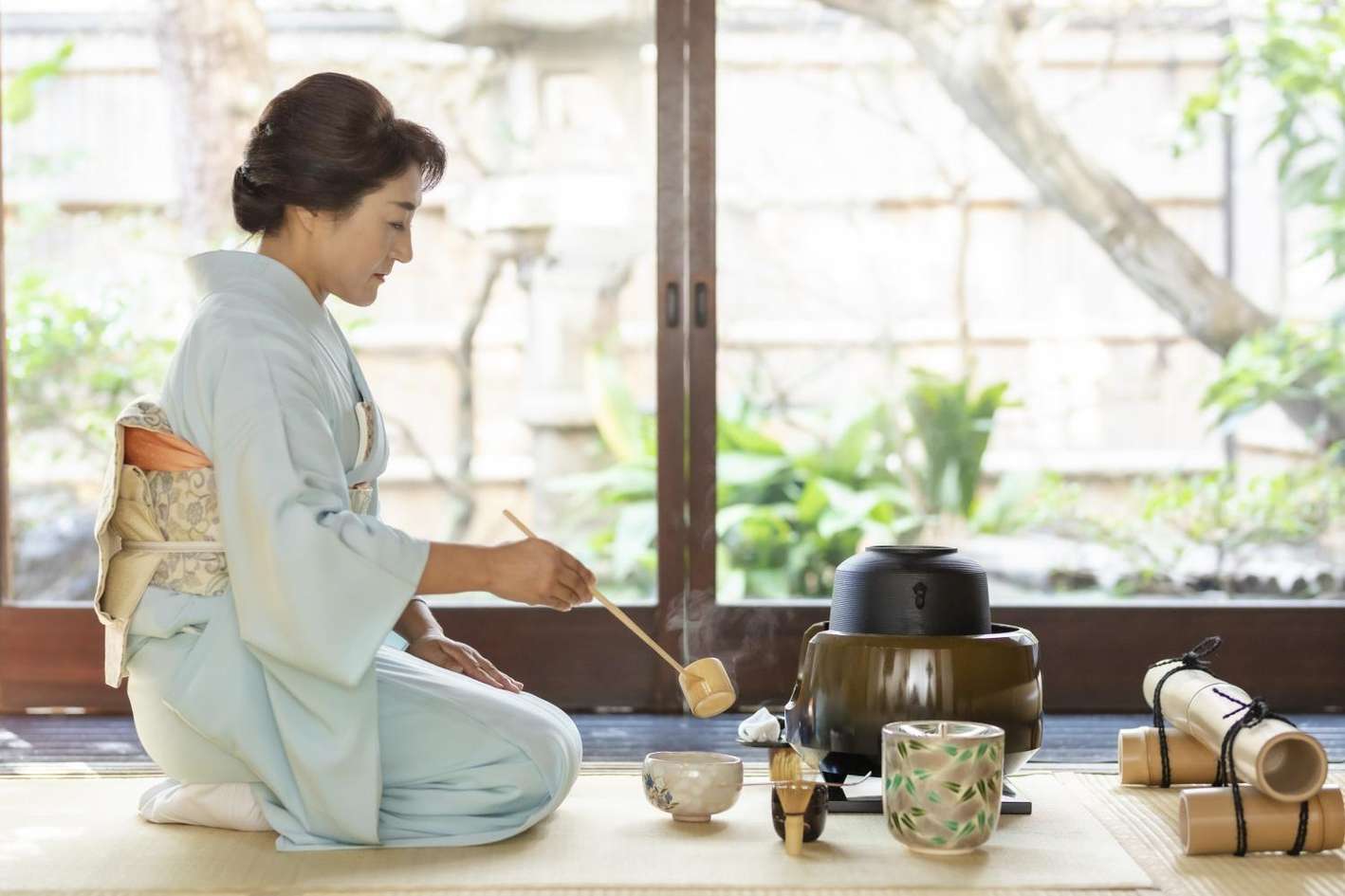
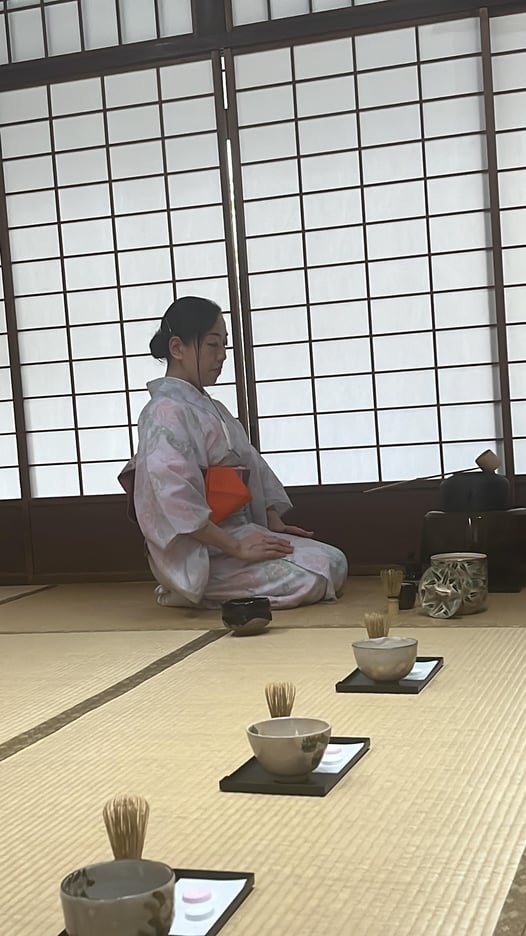
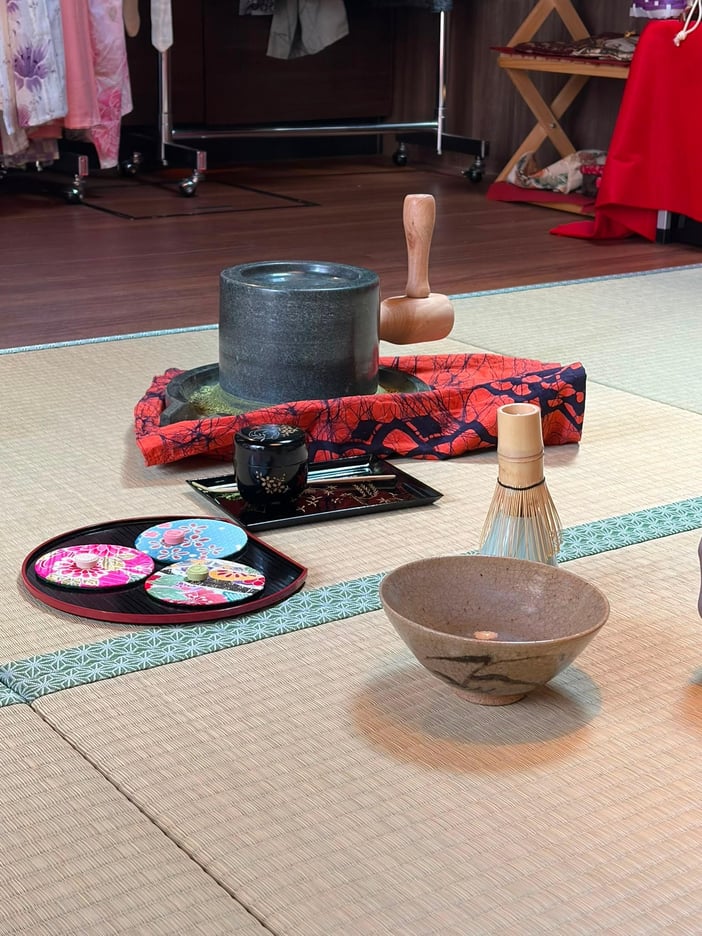
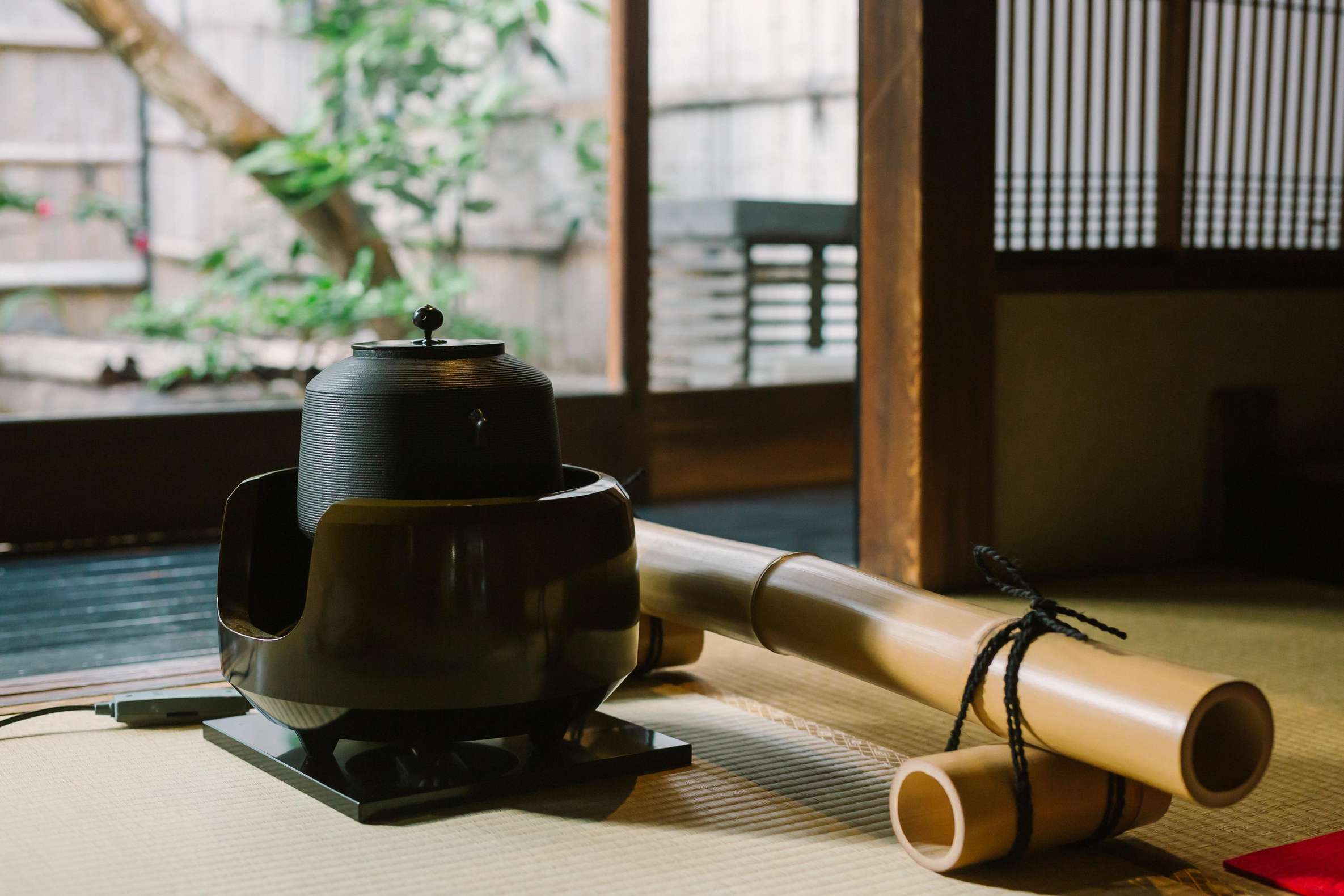
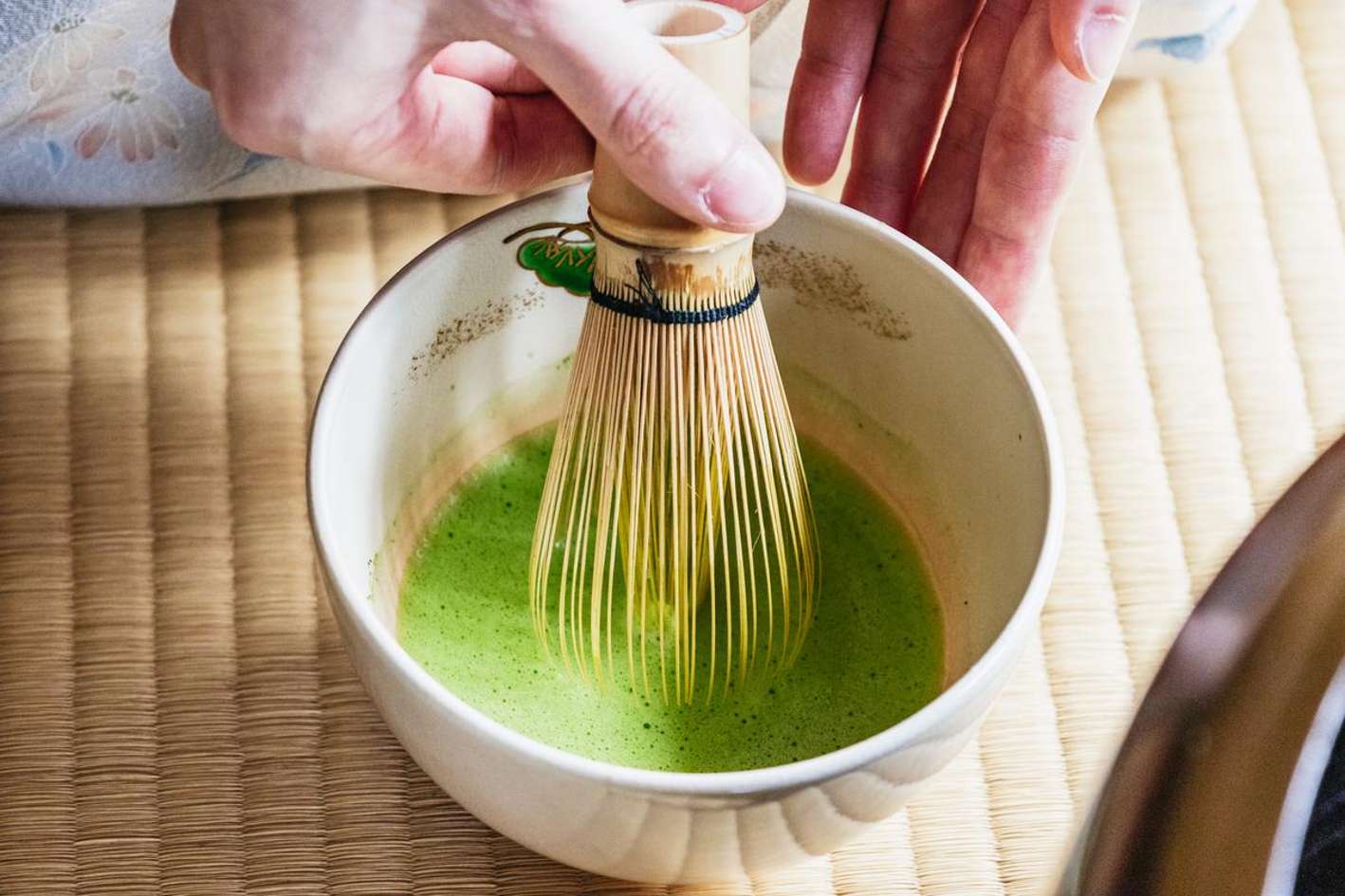
The tea master starts the hour with a demonstration, whisking in silence while you watch from the tatami. Then comes the talk: the history, the meaning of each utensil, the greetings you will use, and Sen no Rikyu's Four Rules and Seven Principles. You learn by doing, not by sitting still.
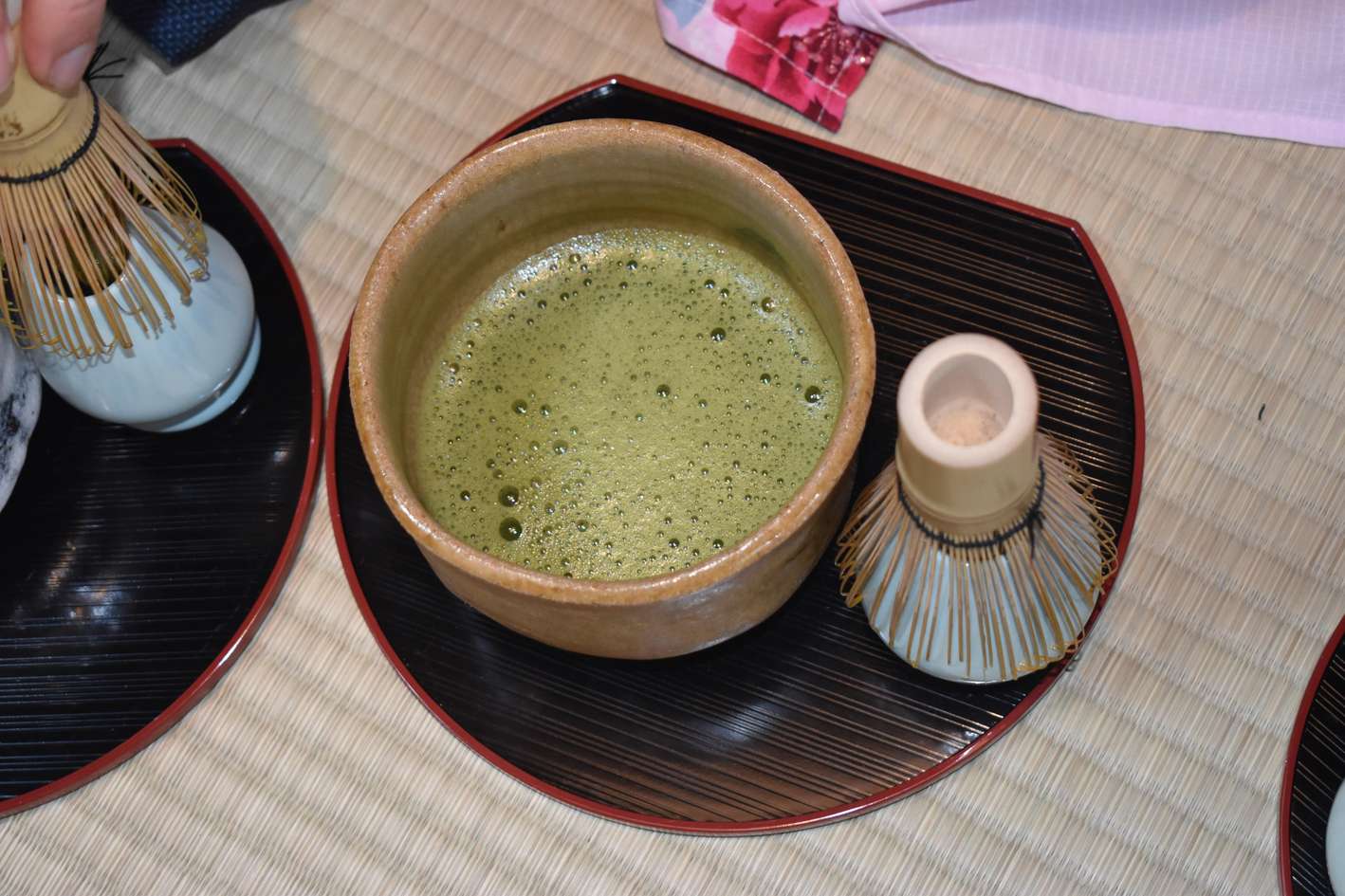
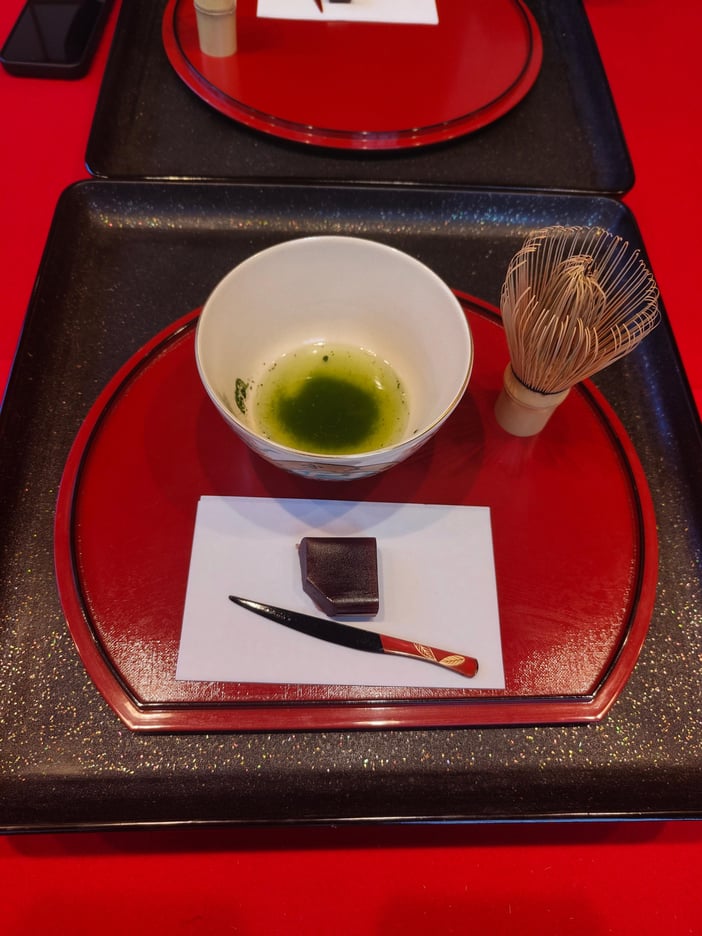
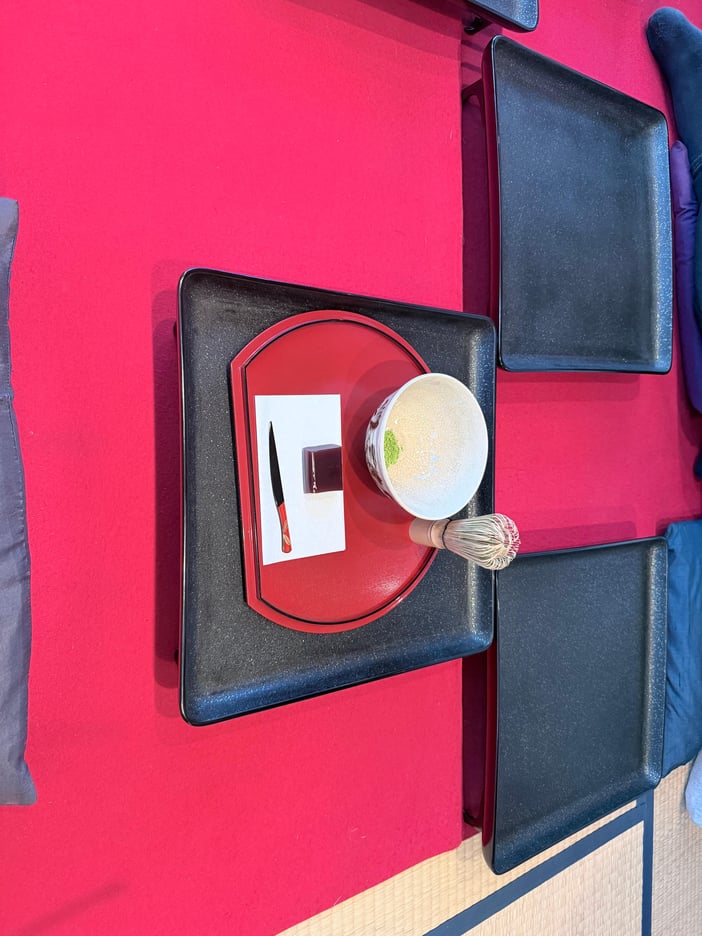
A traditional sweet arrives first, eaten before the tea, so the sugar balances the bitterness of the ceremonial matcha. The matcha itself is strong, only a few small sips in the bowl.
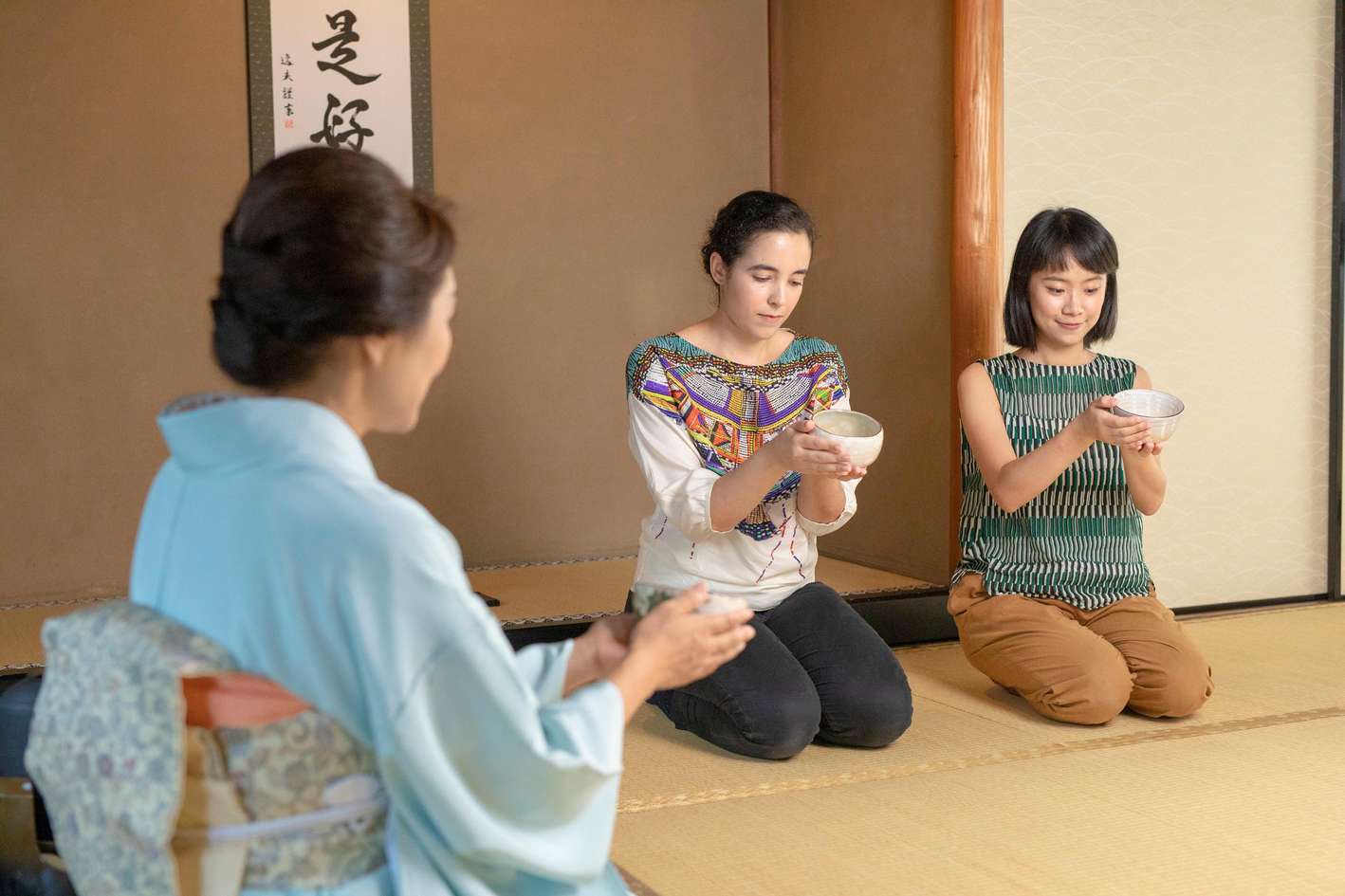
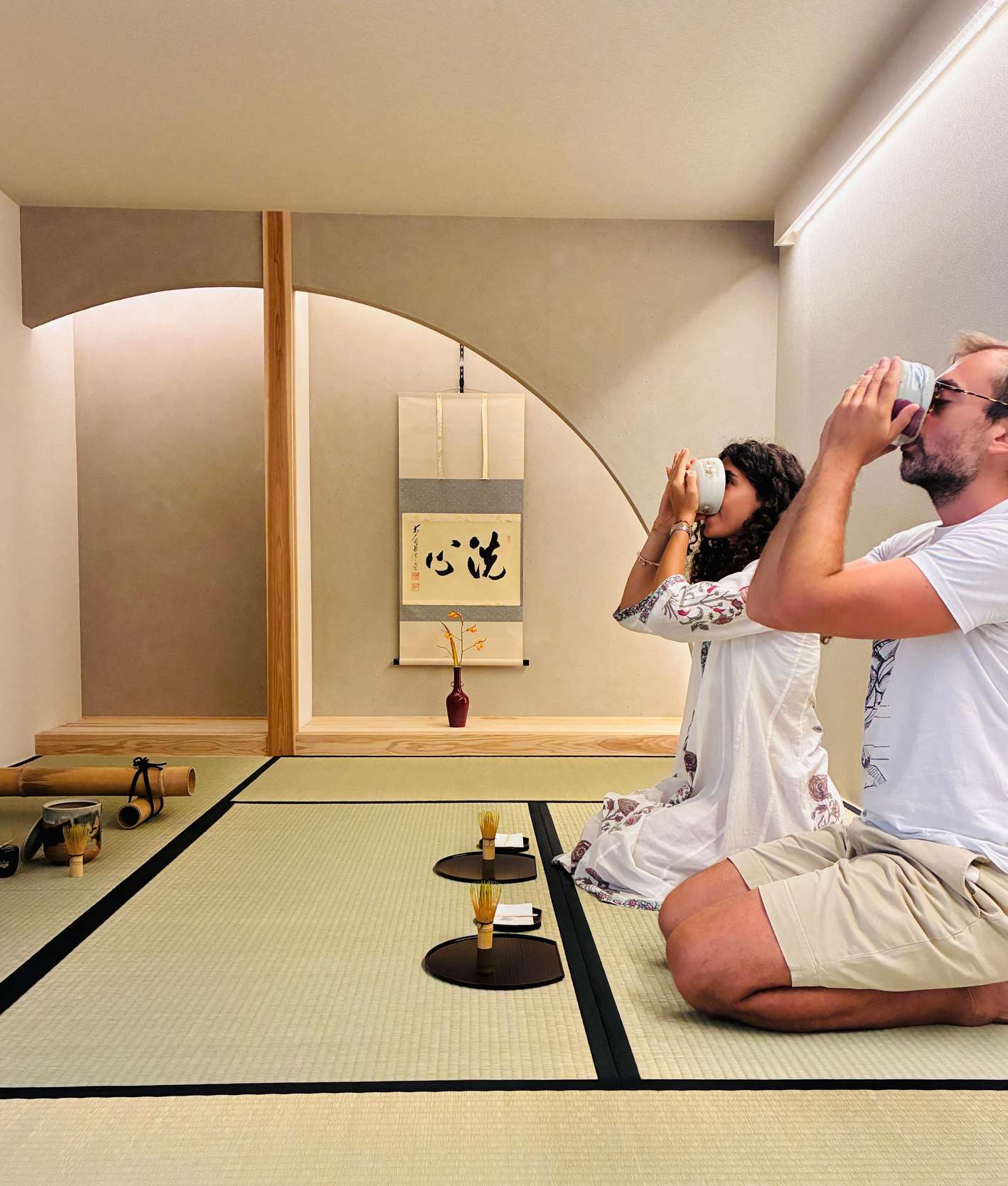
Before drinking, lift the bowl to the master, turn it 90 degrees clockwise so you do not sip from its front, then drink.
Afterwards, wipe the rim with thumb and finger and, if you like, rest your elbows on your knees to admire the glaze with the bowl held low, close to the floor. Small etiquette slips are forgiven; the turning of the bowl is the one to remember.
Standard introductory sessions run 45 to 60 minutes, and 90 minutes to two hours when kimono dressing is added. A 40-minute session can leave travelers feeling herded through, so check the duration on the listing before you book; the fuller hour gives the ritual room to breathe.
Kyoto tea ceremony durations and buffer times
45 to 60 minstandard introductory ceremony
5 to 15 minrequired arrival buffer
90 min to 2 hrsession with kimono dressing
3 to 4 hrformal chaji gathering
That 5-to-15-minute arrival buffer is the one line to plan around. Get there inside it and the hour runs exactly as described.
The Kyoto Gion: Tea Ceremony Experience in a Traditional House runs precisely this shape: a 45-minute session in a tatami room where you choose your own tea bowl, watch the demonstration and whisk your own matcha, with a traditional sweet included.
Tour for this
Kyoto Gion: Tea Ceremony Experience in a Traditional House4.8★ (255) · 45 minutes · Free cancellation
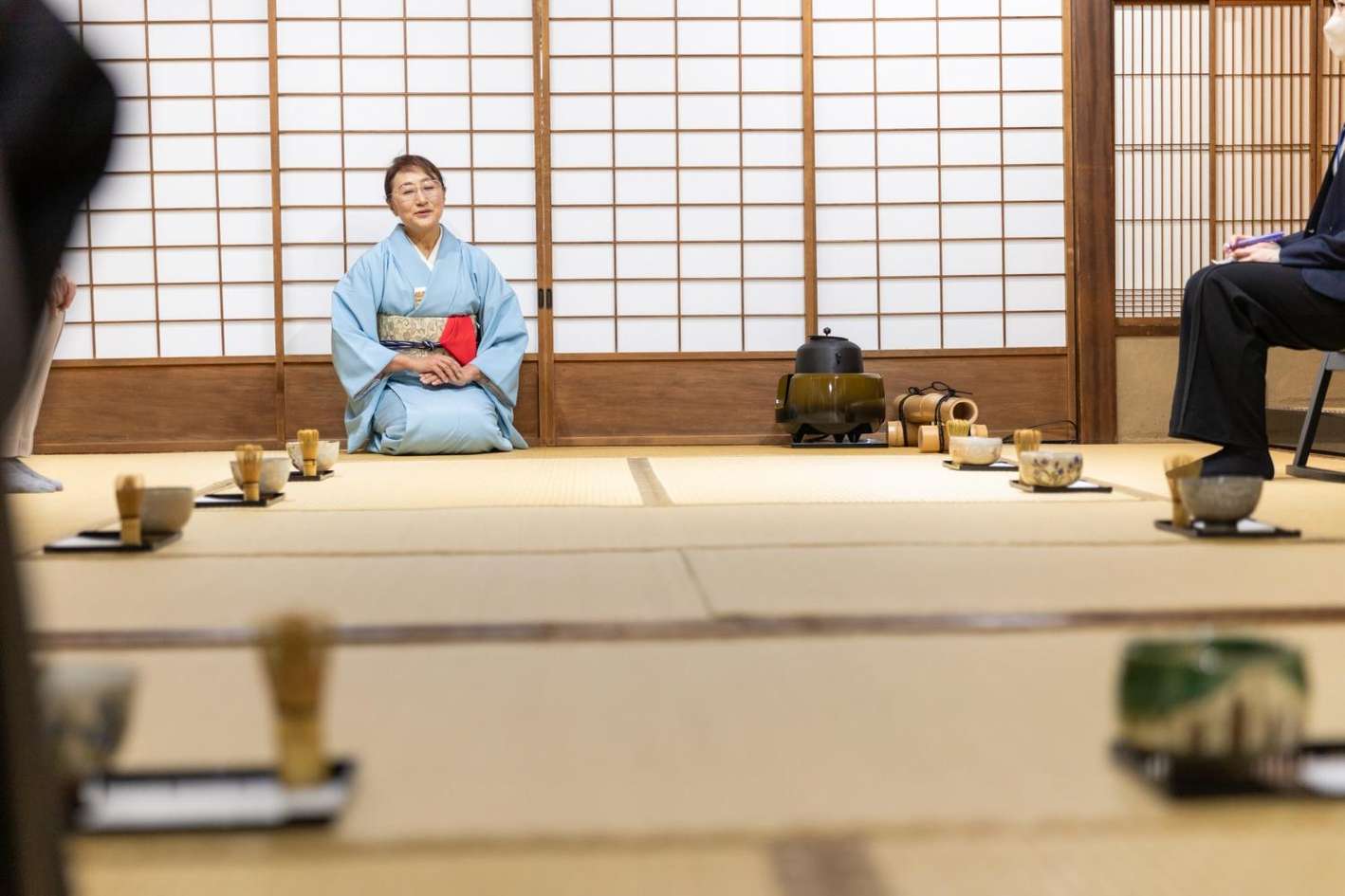
Picture the choice from inside the room. In a shared session you sit with roughly 8 to 12 other travelers in a preserved townhouse, and the size works in your favor: the room stays intimate, the English-speaking host reaches everyone, and you still get to ask about the bowls and the school behind the ritual.
You do not need a private booking to escape crowds; standard groups are kept small on purpose.
A private machiya is a different evening. The entire house is yours, no other guests, and the master adapts the pace to you.
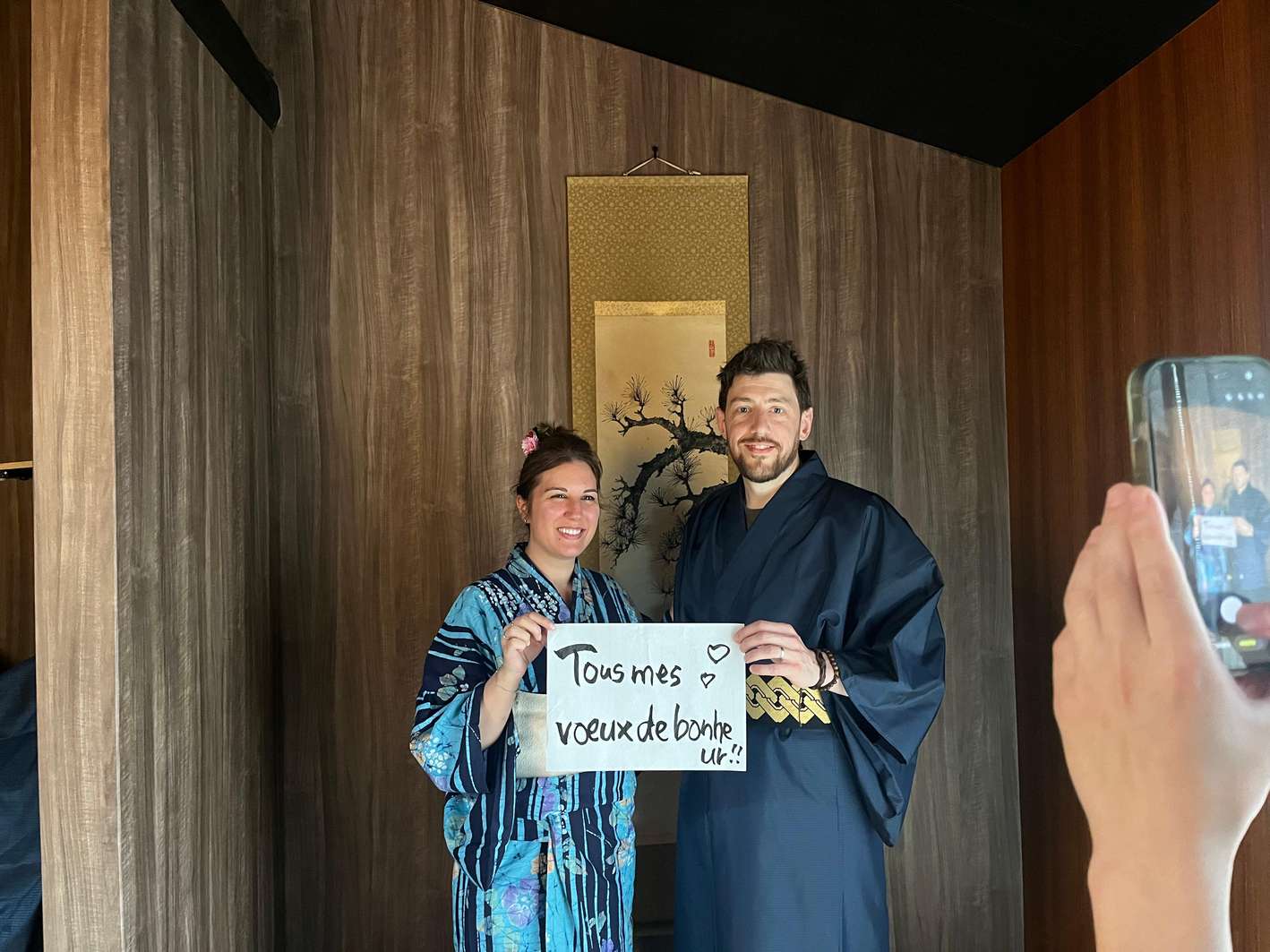
Curious about a particular bowl, the lineage of the school, the seasonal flowers in the alcove? Private sessions run long on conversation after the tea itself. Couples and solo travelers who want complete privacy book this way.
If the choice is hard to make from a listing, weigh what matters before you pay.
How to choose a machiya tea ceremony
Check
Why it matters
Our pick
Group size
Smaller rooms mean a calmer hour
Private house, one party only
Whether you whisk your own matcha
Hands-on beats watching
You whisk and drink your own bowl
Kimono included or extra
Dressing adds 50 to 60 minutes
Kimono plan available in-house
Chair seating
Saves knees on tatami
Arrange ahead
Distance from your hotel
Late arrival costs you the session
9-minute walk from Kyoto Station
For the private route, the Kyoto: 100% Private Tea Ceremony, Calligraphy, and Kimono gives you a 125-year-old house entirely to yourselves, matcha you make yourself, and calligraphy with your own name in ink. A kimono plan there runs 90 minutes; the tea and calligraphy option takes 45.
The hour decides the light. Early morning, between 9 am and 11 am, gives you the quietest streets and soft light through the shoji before day-trippers fill the lanes. Late afternoon, from 3:30 pm to 5 pm, warms the light falling on the courtyard garden.
Midday belongs to the tour groups. Plan by the hour, since the same street changes character across the day, and jet lag makes an early start easier than it sounds.
The season decides whether you get the slot at all. April, September and November are the peaks, and during cherry blossom season and the autumn foliage you should book 6 to 8 weeks ahead; walk-ups are unreliable then. Winter, from December to February, is the quiet stretch, and a few days' notice often suffices.
One thing winter changes that no listing tells you: these houses are uninsulated wood. Closed paper screens hold out little of the cold, and the tatami floor stays chilly, so wear thermal layers and thick socks.
In summer the same architecture works for you, with the courtyard pulling breezes through and the room sitting a few degrees cooler than the street.
Kyoto tea ceremony seasons, temperatures, and rainfall
April is very busy during cherry blossom season with comfortable 20°C weather and mostly dry days.
HighestApr to May, Nov
In betweenMar, Jun, Oct, Dec
LowestJan to Feb, Jul to Sep
Darker: a higher how busy it gets score, out of 5
Tap a month to read it.
August is the quietest month of summer despite 33°C heat, favoring early morning tea ceremonies.
HighestJun to Sep26.9 to 32.6 °C
In betweenApr to May, Oct to Nov16.8 to 22.8 °C
LowestDec to Mar8.2 to 14.1 °C
Darker months: higher, from 8.2 to 32.6 °C
Tap a month to read it.
August is the quietest month of summer despite 33°C heat, favoring early morning tea ceremonies.
HighestMay to Sep13 to 15.8 days
In betweenMar to Apr, Oct10.2 to 11.2 days
LowestNov to Feb6 to 8 days
Darker months: higher, from 6 to 15.8 days
Tap a month to read it.
December turns brisk with 11°C highs and quiet winter tearooms gathered around simmering kettles.
HighestNov to Jan23.2 to 24.4 days
In betweenFeb to Apr, Oct19.2 to 20.8 days
LowestMay to Sep15.2 to 18 days
Darker months: higher, from 15.2 to 24.4 days
Tap a month to read it.
Read it simply: April and November fill first and need the longest lead time, December to February are quiet but cold, and August is the month when the courtyard breeze becomes the point of the room.
Tour for this
Authentic Tea Ceremony or Calligraphy in Kyoto River View4.8★ (76) · Free cancellation
Somewhere down a blind alley, a wooden facade with lattice windows and no sign you can read. That is the last hundred meters of most machiya visits, and the map app will not save you.
Kyoto never adopted the modern address system, so land lot numbers serve as house numbers, one lot can cover several buildings, and the city has different towns with identical names. Drop the pin before you set out, from the booking confirmation.
Around Ninenzaka the approach is cobblestone slopes, 5 to 10 minutes below Kiyomizu-dera, busy at street level and quiet the moment you turn into a side alley.
For the final stretch, the way you travel matters more than the distance.
How hard each way of getting there is
TaxiDoor-to-door; hail along main streets such as Higashioji, since inside temple precincts and pedestrian parks you will wait
Easy
Train with one transferJR Nara Line to Tofukuji, Keihan Line to Gion-Shijo, about 15 minutes from Kyoto Station
Easy
City busDirect in about 20 minutes but sightseeing routes run packed most of the day
Moderate
Walking the last alleysNarrow, sometimes steep; allow the extra minutes your buffer needs
Moderate
The practical sum: the train beats the bus for reliability, and the last stretch on foot is cobblestone and slopes, so give yourself more minutes than the map suggests.
The night before, lay out the one item that decides your entry: clean socks. Bare feet never touch tatami, and sandals or flip flops are turned away at some venues, so slip-on shoes are the practical choice.
White socks are a courtesy, not a law; any hole-free pair works at temples, though some formal houses do insist on white.
Rings and watches come off before you handle the tea bowls, because metal scratches and cracks ceramics when you lift the bowl with both hands. Skip the perfume too: the scent of the matcha is part of the ceremony, and cologne drowns it.
Wear loose pants or a skirt below the knee so you can sit on the floor, and leave shorts and hiking gear for another day.
Flash photography is prohibited, video recording is barred at certain houses, and no food, drinks, smoking or pets come inside. Tattoos carry no official ban; kimono shops dress tattooed guests routinely, though keeping them discreet in a formal room is standard politeness.
If you or your children avoid caffeine or have a dietary need, tell the host well in advance, since decaf matcha does not exist here.
What to wear and remove for a tatami tea ceremony
Clean white socks or tabiWalking barefoot on tatami is strictly prohibited; clean white socks protect the fragile rush mats and symbolize purity.
Remove rings, watches, and braceletsMetal accessories must come off before entering to prevent scratching valuable handcrafted ceramic tea bowls and lacquerware.
Loose pants or below-the-knee skirtModest, flexible bottoms allow you to kneel comfortably in seiza on the tatami floor without tight fabric cutting off circulation.
No strong perfume or cologneFragrances are forbidden because they overpower the subtle natural aroma of whisked matcha and traditional tea-room incense.
Slip-on footwearShoes must be taken off at the tea house entrance before stepping onto tatami, making easy slip-on shoes the most practical choice.
Small pouch for removed jewelryStores watches, rings, and metal accessories safely in your bag during the ritual so delicate items do not get misplaced.
None of this is ceremony for ceremony's sake: the socks protect the mats, the bare wrists protect the bowls, and the quiet protects the hour for everyone in the room. Mention caffeine or allergies when you book, and the tea and sweet can be adjusted.
Seiza is not a test you must pass. In the 100-year-old Kyo-Machiya townhouse, anyone who prefers not to sit on the floor sits on a small chair instead, in the same room with the same view of the ceremony.
At Karasumashijo, bamboo chairs are available if you ask in advance. Jotokuji Temple keeps seats and stools on hand for the same reason. Ask when you book; the chairs exist, they just need to know to set one out.
Legs fall asleep anyway, even for people who sit on tatami at home. There is a discreet way to shift: move cross-legged or to one side, with your feet tucked away or pointing sideways or behind you, never toward the host or another guest. Nobody minds, nobody comments.
And here is what first-timers usually learn the hard way, so learn it here instead.
What nobody tells you
You can request a chair in advance
venues keep them, but only for guests who ask
Alternative postures are accepted
tuck your feet away from the host and shift freely
Small etiquette slips are overlooked
hosts at tourist ceremonies expect beginners and forgive them
Honesty first: the famous 100-year-old Kyo-Machiya townhouse is not suitable for wheelchair users and prohibits electric wheelchairs outright. The reason sits in the building itself: steep, narrow staircases to the upper floor and a raised genkan step at the entrance, features that century-old construction carries and no booking can remove.
The city does offer genuine alternatives in the same spirit. Washin-kan, a rebuilt traditional kyo-machiya, has a fully wheelchair-accessible first floor, an accessible restroom and a stair lift to the second floor.
Machiya Hotel Yanagi, a two-story hundred-year-old house, keeps flat floors, access ramps and an extra-large bathroom so wheelchair users can move through easily. Camellia's ground-floor group room at Flower Annex is accessible, while its tea rooms upstairs are not.
If mobility shapes your trip, match the venue to the body when you book, and confirm the specific room: access can differ from one floor to the next inside a single venue.
Age limits here are strict and worth checking line by line. The 100-year-old Kyo-Machiya townhouse session is suitable only for guests aged 10 and above, and it requires a quiet atmosphere; disruptive behavior can end the session.
Other houses set the bar younger: one operator near Kiyomizu-dera turns away children 6 and under, Ju-An at Jotokuji Temple sets its limit at 4 and under, and the Gion tea ceremony does not take children 5 and under.
The reason is not fussiness. A ceremony asks for quiet and stillness for the better part of an hour, and even in private sessions a restless toddler works against the ritual. Young children also often struggle with the bitter taste of ceremonial matcha and the texture of traditional sweets.
For the right age group it works beautifully, and hosts can help: notify them in advance and they will offer a tiny courtesy sip or plain hot water instead of the full bowl, or alternative drinks in family formats.
Families with older children who can sit still should book ahead, since family-friendly slots fill first in the busy seasons.
With children old enough to sit still, the Kyoto: Tea Ceremony in 100-year-old Kyo-Machiya Townhouse covers the hour well: 50 minutes with an experienced master, matcha you prepare under supervision, seasonal sweets and a leaflet to take home, with an early-morning option and kimono rental plans that stretch to three hours.
Tea house timekeeping is unforgiving, so build the buffer before you need it. Some venues lock their doors at the start time and refuse late entry by even a minute.
At one operator in Uji, anyone arriving more than 30 minutes after the start is denied entry, whatever the reason, including a delayed train, with no refund. Private groups arriving 10 to 15 minutes late can find their session canceled outright, and latecomers who are admitted never get the lost minutes back.
Payment runs ahead of arrival too: the townhouse ceremony near Kyoto Station charges the full amount in advance to a credit card.
Treat the booking like a theater ticket: the curtain rises on time with or without you. Leave priority cultural bookings and fine dining planned early rather than improvised, because historic venues rarely fit in a spontaneous request.
Most delays on this route come from packed buses and missed transfers, so pad the schedule and know the terms before you need them.
What happens if the day changes
If this happens
What happens then
Train runs late
past 30 minutes at some houses, entry is denied with no refund
Late by a few minutes at a strict venue
doors may already be locked and the booking void
Private group arrives late
session may be canceled, or run to its original end time with no extension
Cancel a day or more ahead
most tours on this page refund in full up to 24 hours before
A machiya ceremony sits naturally at the center of a half-day on foot.
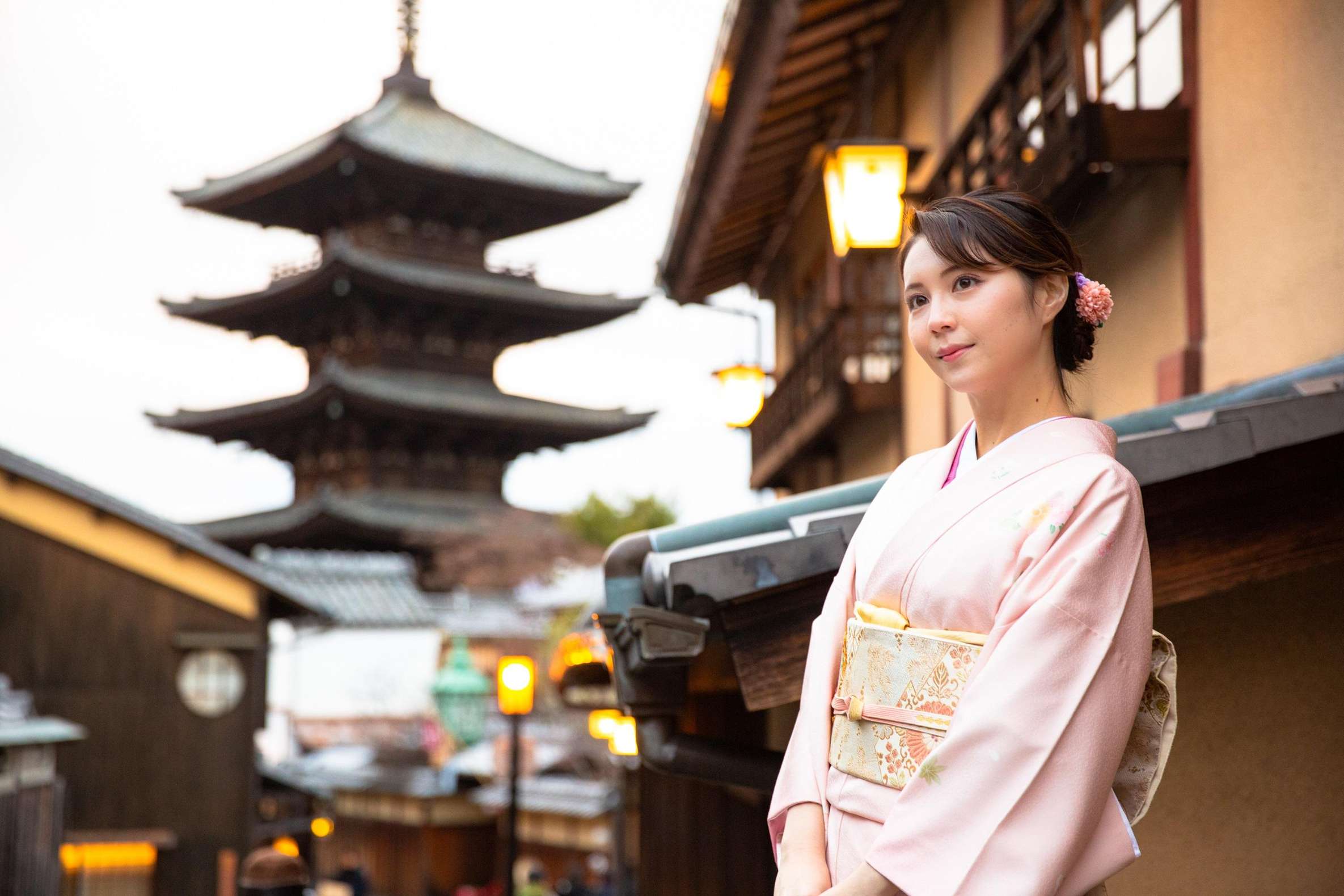
Start early at Kiyomizu-dera, come down through the stone stairs and shop-lined alleys of Sannenzaka and Ninenzaka toward the Yasaka Pagoda, pass Kodai-ji Temple about 800 meters from central Gion, and end at Kennin-ji, Kyoto's oldest Zen temple, less than a five-minute walk from the Gion tea venues.
Hanami-koji and Maruyama Park close the loop. The Shirakawa canal lane, Nene-no-michi and Ishibei-koji all sit within the same 8- to 20-minute radius of the tea houses.
If your venue is the house nine minutes from Kyoto Station, the walk changes character: temples and museums rather than lanes.
Travelers with a spare day point one direction beyond the city: Uji, where tea leaves are grown along the river and a half-day covers tea shops, lunch and a ceremony before continuing toward Nara. Whichever day you build, the ceremony anchors it. Book the slot first, then let the walking route arrange itself around it.
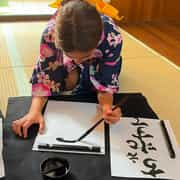
Great experience with awesome hosts. We learned the difference between green tea and matcha, the matcha was excellent. Loved dressing in kimonos and learning calligraphy in Japanese and Chinese characters. Worth doing in Kyoto!
A machiya tea ceremony is the version of the ritual where the building does half the teaching.
Book a shared session for a first visit, a private house if you want the master's full attention, and go early morning for quiet or late afternoon for the light on the courtyard. Everything else, socks, jewelry, punctuality, is preparation, not difficulty.
Go ifYou want old Kyoto's wooden houses, not a modern studioYou can sit quietly for 45 minutes or ask for a chairYou are booking at least a few weeks before April or November
Skip ifYou travel with children under 10 and will not split the partyYou need step-free access and cannot change venuesYour day has no slack and a delay would cost you the booking
Questions about your machiya tea ceremony, answered
Short answers to what travelers ask before booking tea in an old Kyoto townhouse.
Gojo, Nara2026
Sipping matcha in a hundred-year-old townhouse, the back rooms are as hushed as promised. Bring socks, and book early for autumn.
Are these really old townhouses or modern studios dressed up as traditional?
A genuine Kyo-machiya is a wooden house built in 1950 or earlier, usually no more than three stories, with lattice degoshi windows and small mushiko-mado openings.
The venues on this page fit that: the tea rooms sit inside preserved houses of 100 to 150 years old, some a short walk from Kyoto Station, others deep in Gion.
I have bad knees. Do I have to kneel on the tatami for the whole ceremony?
No. In the 100-year-old Kyo-Machiya townhouse, anyone who prefers not to sit on the floor takes a small chair instead. Bamboo chairs are available on advance request at Karasumashijo, and seats or stools can be arranged at Jotokuji Temple too.
Can I bring my children to a machiya tea ceremony?
Age rules vary by venue and matter here. Children aged 6 and under are not permitted at one operator near Kiyomizu-dera, ages 5 and under are turned away at the Gion townhouse session, and the 100-year-old Kyo-Machiya townhouse welcomes only guests aged 10 and above.
At the Ju-An temple ceremony, parents may bring a baby as long as they step out if the baby cries.
Will I feel awkward if I know nothing about Japanese etiquette?
Introductory sessions for visitors are built to be relaxed and welcoming, not rigid tests of manners. English-speaking hosts explain the history and the meaning behind each movement, and small mistakes are routinely overlooked. You learn the greetings, watch the demonstration, then whisk your own bowl.
What should I wear, and do I really need socks?
Bare feet are not allowed on tatami, so bring a clean pair of socks; white is the traditional courtesy but any hole-free pair works. Skip sandals, flip flops, shorts and heavy perfume, and leave rings and watches off, since metal can scratch the tea bowls you lift with both hands.
Can I take photos or videos during the ceremony?
It depends on the venue. Flash photography is off limits in the Kyo-Machiya townhouse, video recording is not allowed at certain Kyoto tea rooms, and some houses that host apprentice geisha permit photos during the session but ask that you not post those particular images.
Is a machiya tea room wheelchair accessible?
Century-old houses are a mixed bag. The 100-year-old Kyo-Machiya townhouse does not suit wheelchair users and bans electric wheelchairs, and steep narrow stairs plus a raised entrance step are typical in old machiya. Some rebuilt townhouses elsewhere in Kyoto offer accessible first floors and stair lifts, so check before you book.
How long does a tea ceremony in a townhouse take?
A standard introductory session runs 45 to 60 minutes. Add kimono dressing and the total reaches about 90 minutes to 2 hours, and combos with calligraphy run up to 2 hours. Many visitors find 40-minute sessions too rushed to absorb the ritual, so a full hour gives you room to breathe.
Why do I eat a sweet before drinking the matcha?
The traditional sweet goes first so it coats your palate and balances the natural bitterness of ceremonial matcha, which is far stronger than the sweetened versions sold in cafes. The portion you drink is only a few small sips, so most first-timers come away pleasantly surprised.
Will street noise ruin the quiet atmosphere?
Less than you might fear. Old townhouses stretch deep behind narrow street frontages, and while noise carries in the front shop area, the tatami rooms at the back sit in stillness. An inner tsuboniwa courtyard garden often sits beside the tea room, pulling in cool air and framing the ceremony with greenery.
Why should I not lean on the paper screens or step on the tatami edges?
Shoji screens are fragile paper over a light frame, and they tear easily under a person's weight. The cloth borders of tatami mats also wear quickly, and stepping on them is avoided out of old respect, since those borders once carried family crests and marked the line between everyday ground and sacred space.
I have a serious allergy. Is the wagashi safe for me?
Do not assume so. Wagashi can contain wheat, soy or nuts, and kyo-gashi sweets are often kneaded with wheat flour. Tell your host well in advance and check the ingredients before you eat.