
Likely to sell out
45 minutes - 1.5 hours·English, Japanese
5.0(283)
Kyoto: 100% Private Tea Ceremony, Calligraphy, and Kimono
Free cancellationTea CeremonyJapanese Calligraphy

Find your ceremony where it belongs - in a garden tea house below Kiyomizu-dera, a temple hall, or a hundred-year-old townhouse. Whisk your own matcha with an English-speaking tea master, sit on a chair if the tatami worries you, and book a place on your walking route in minutes.
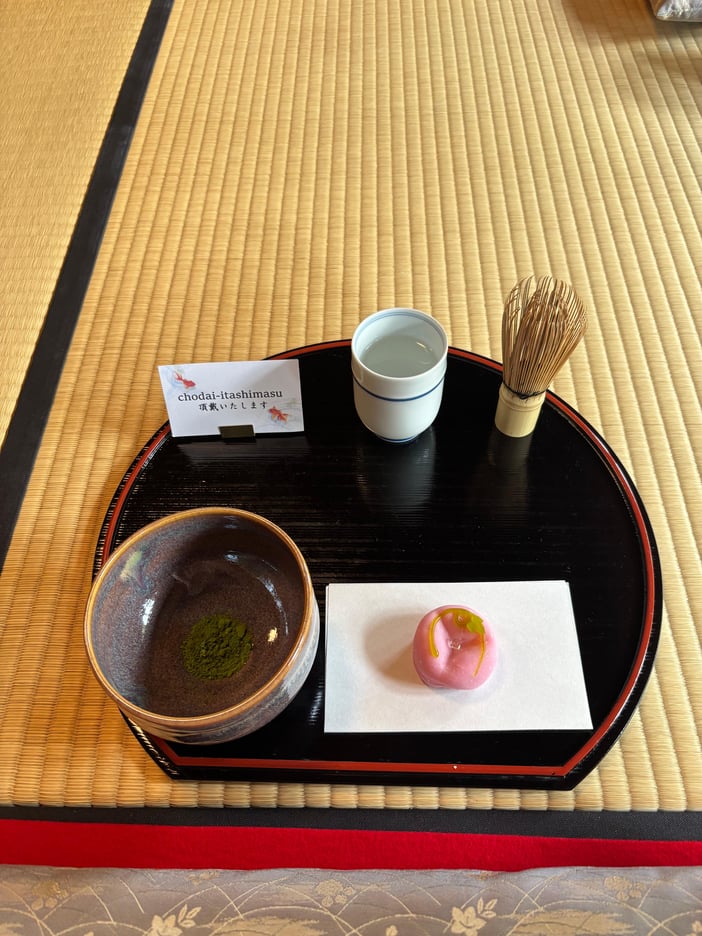
"They explained every step really well and took photos of us and with us, which was a nice touch. Would recommend!"
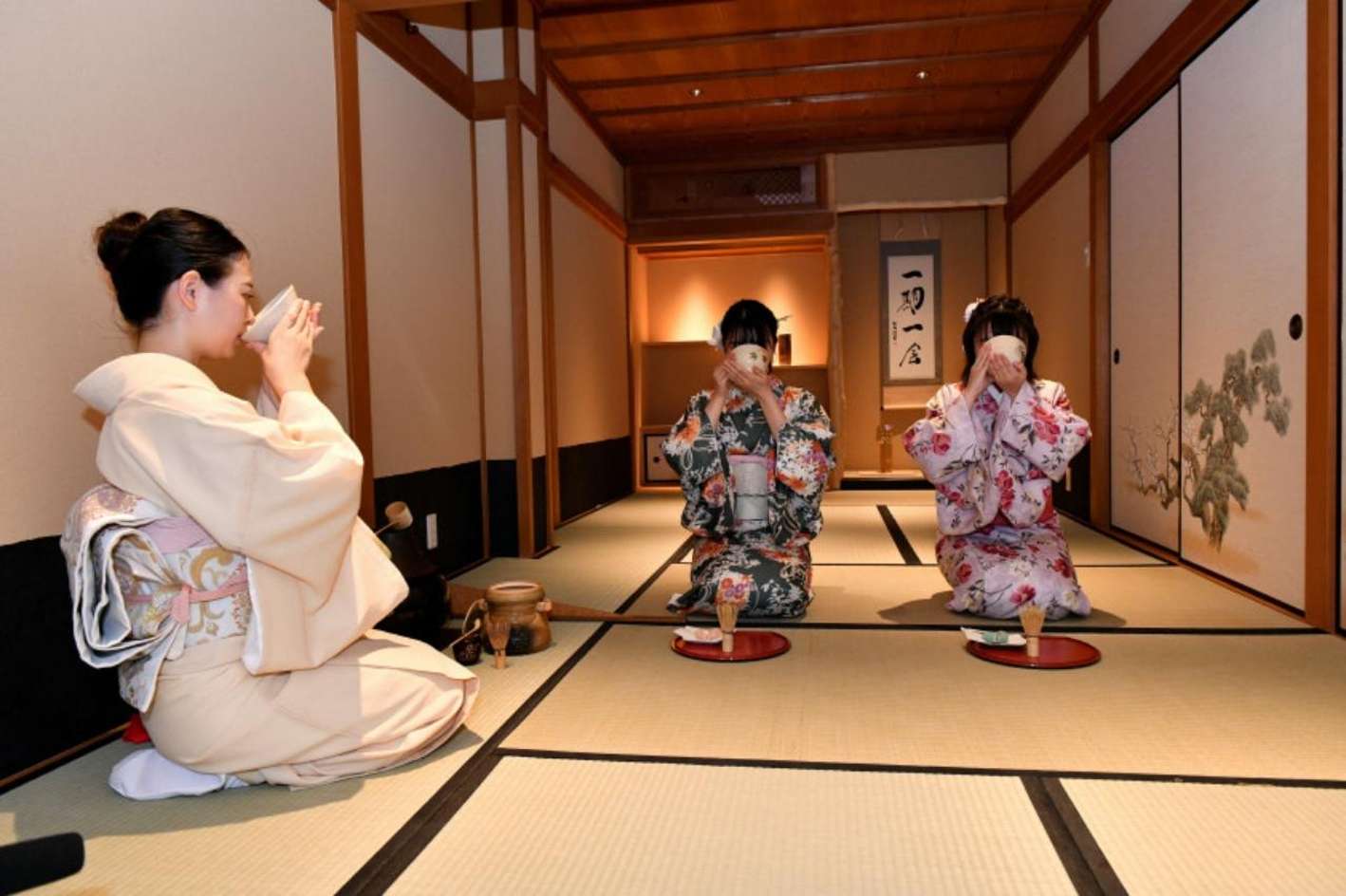
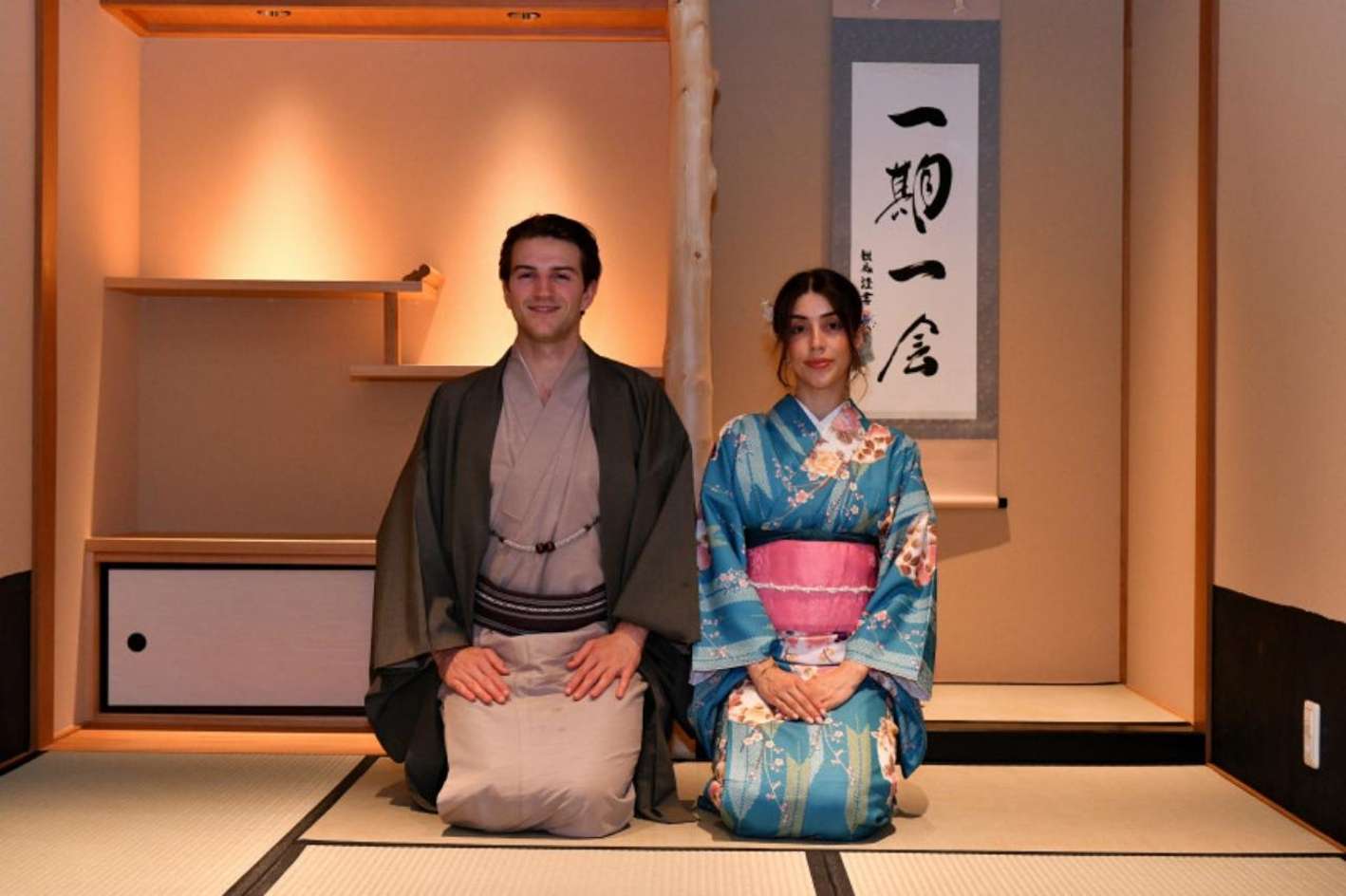
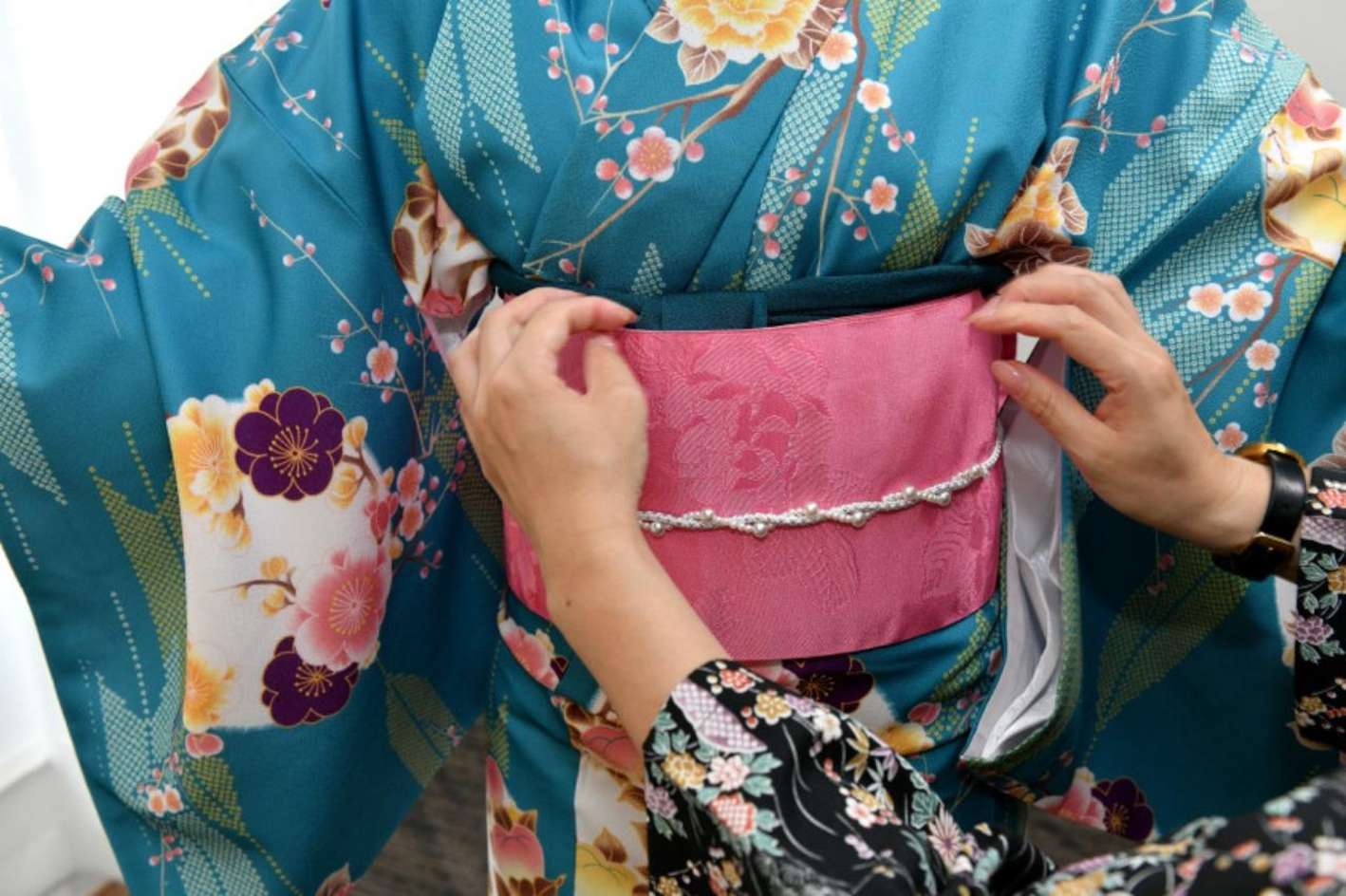
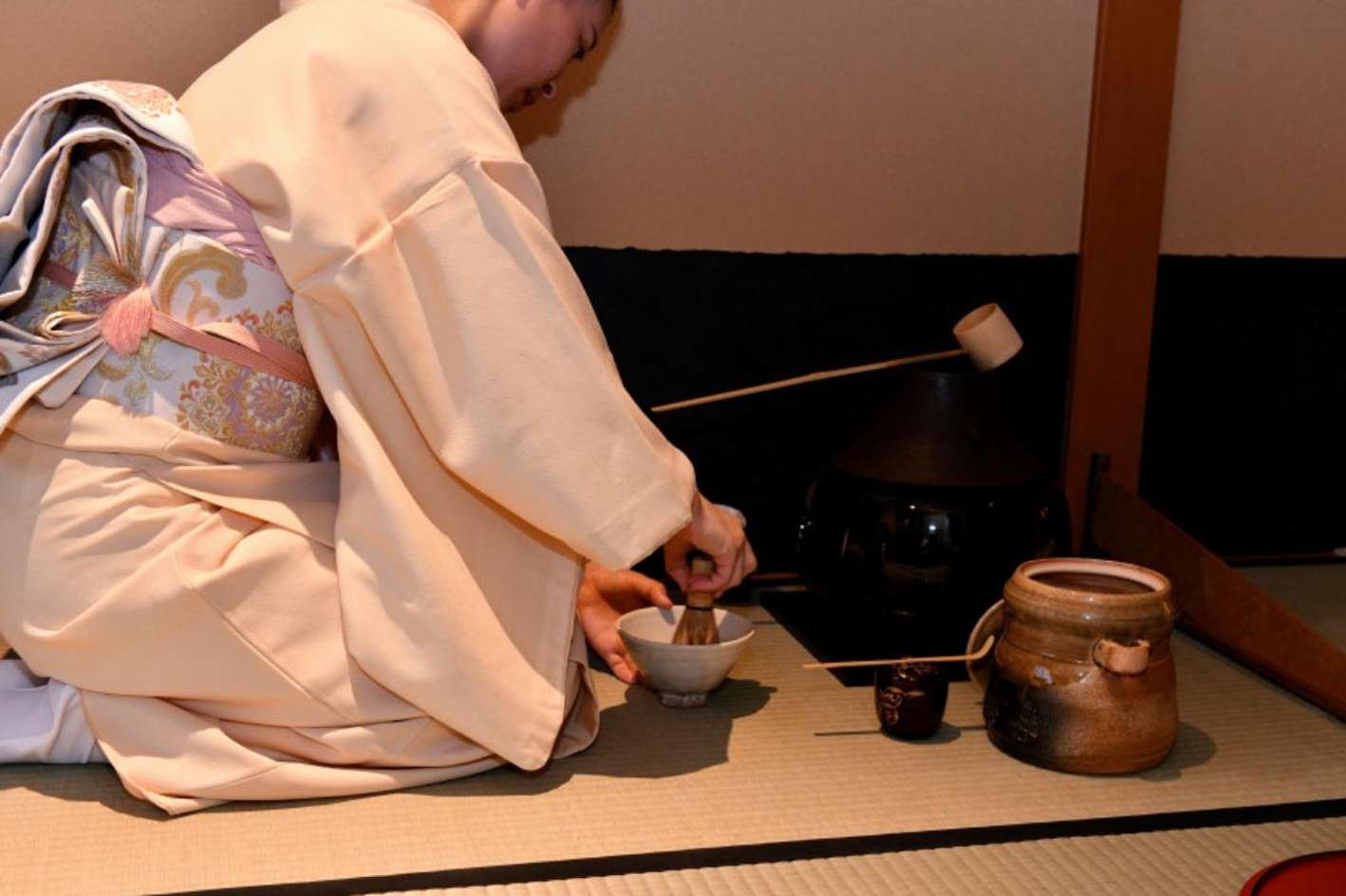
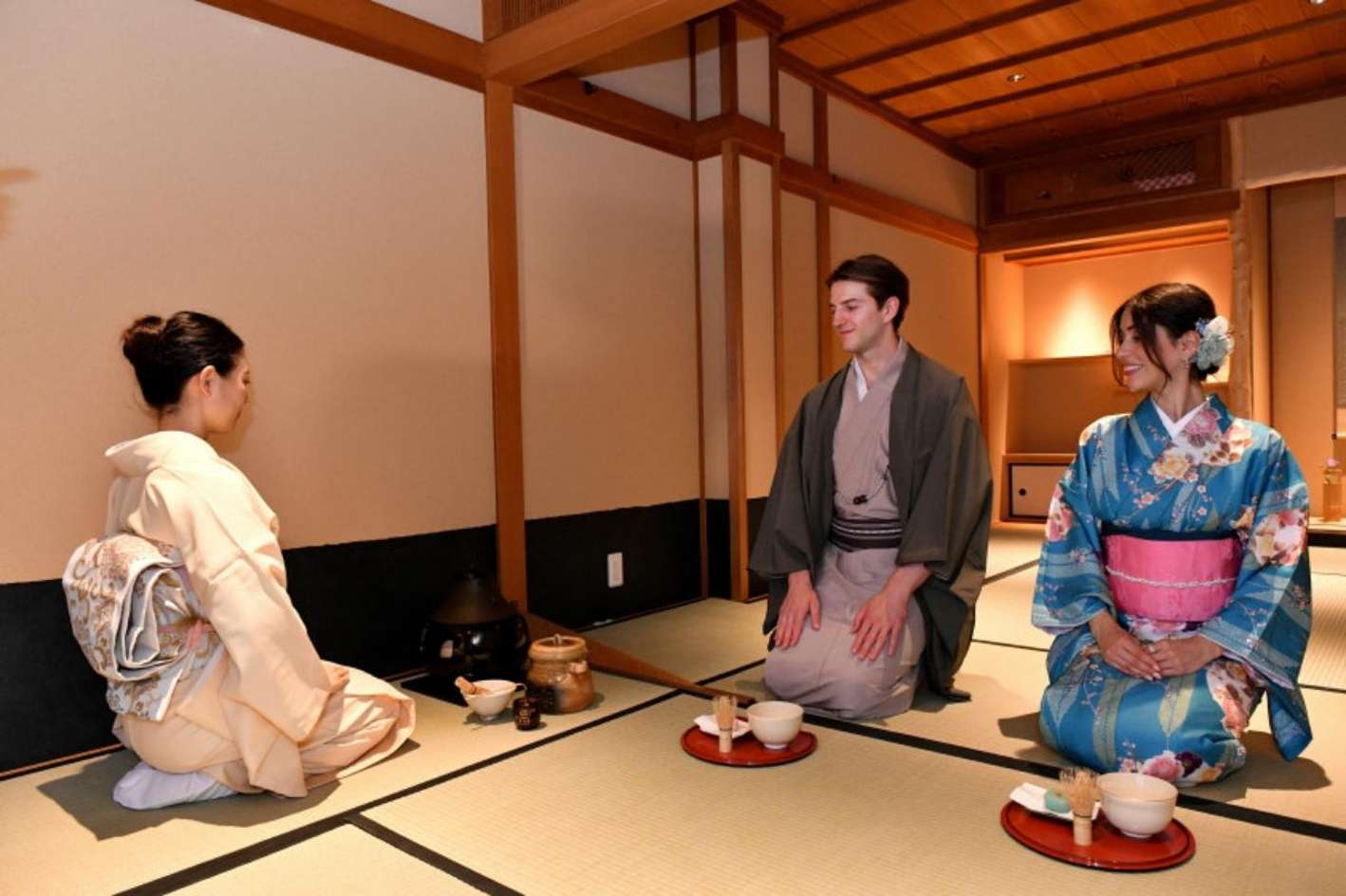
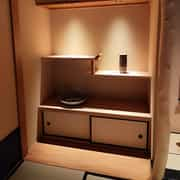

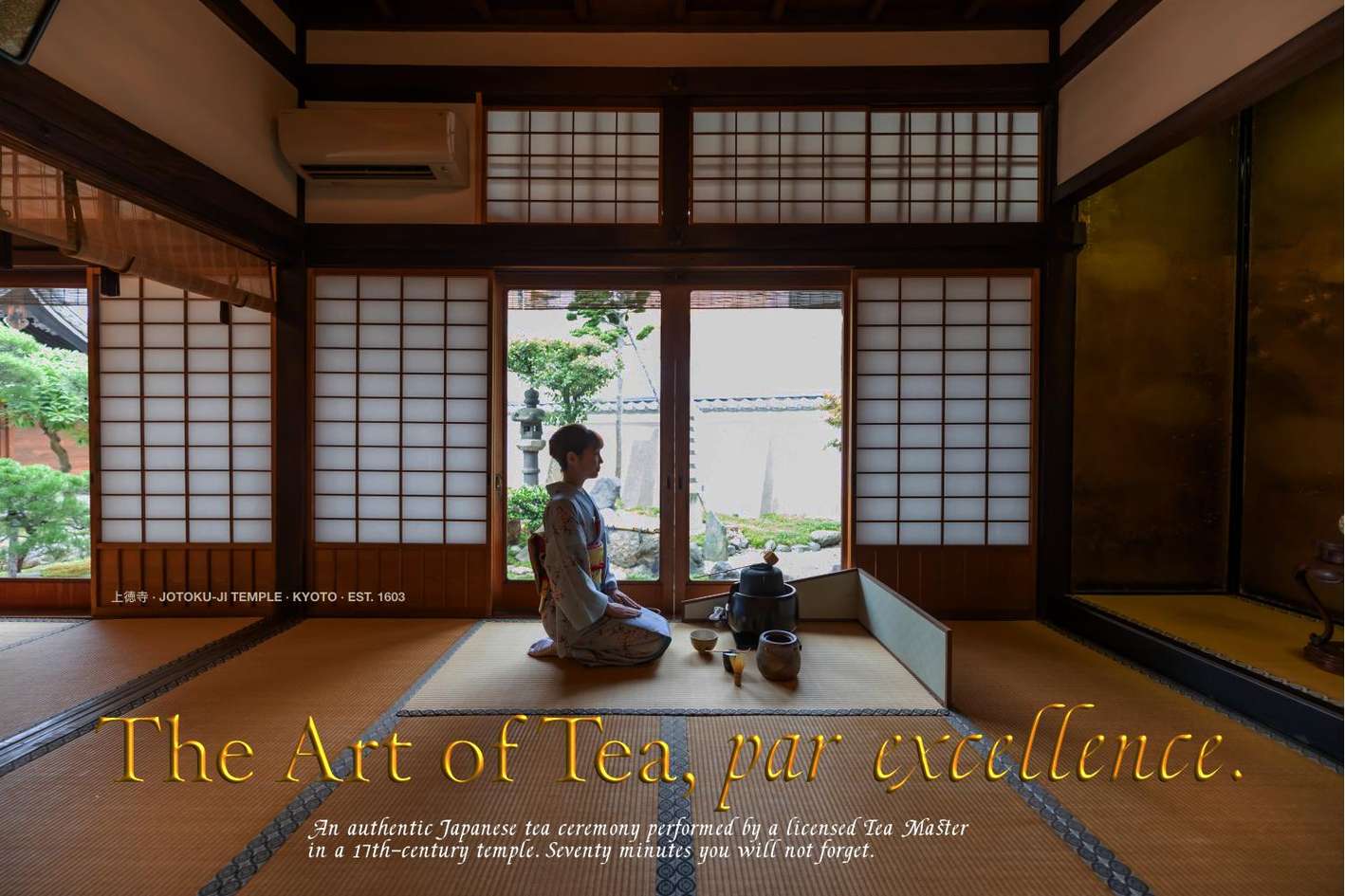


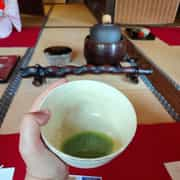
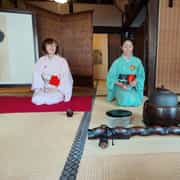
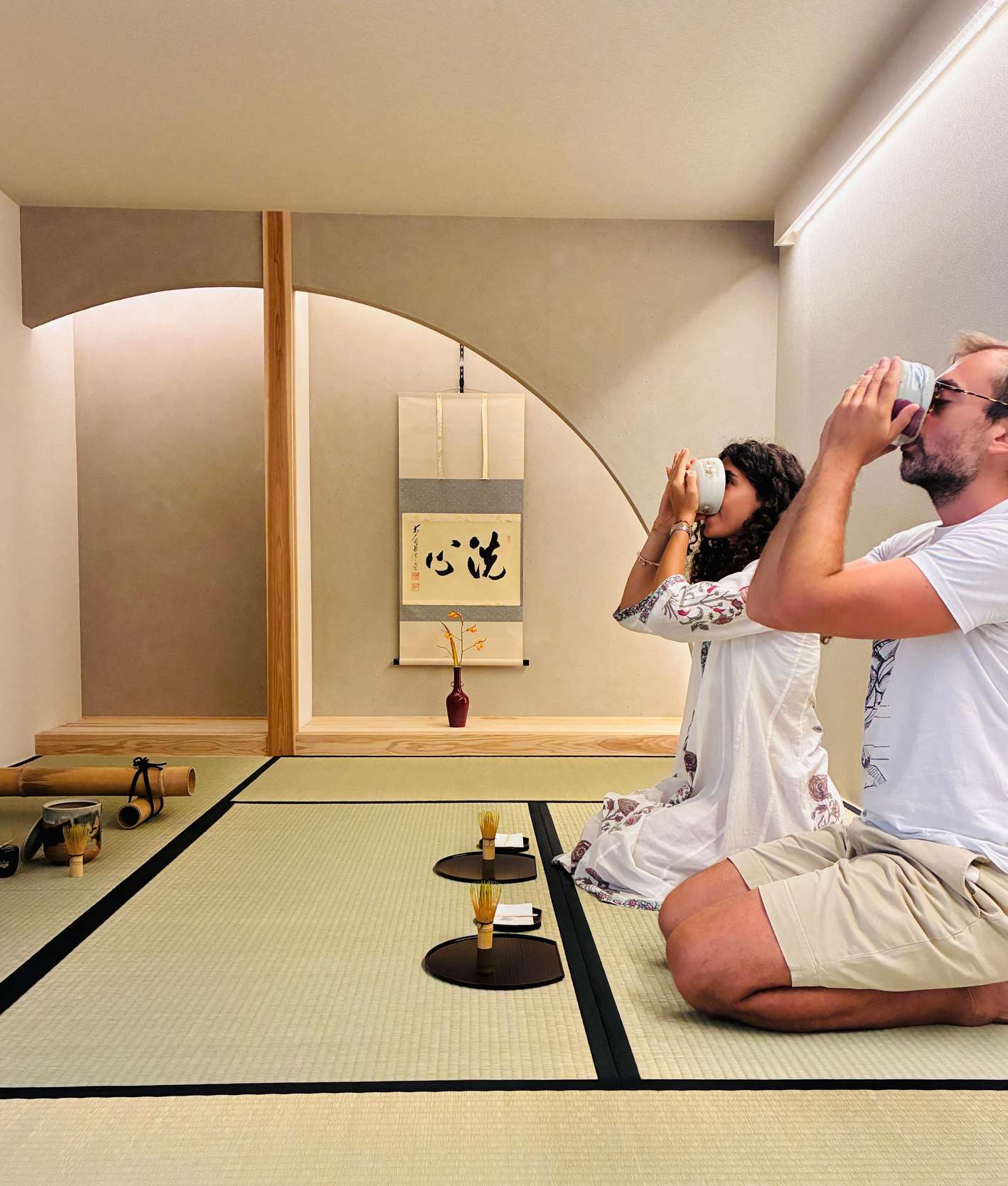
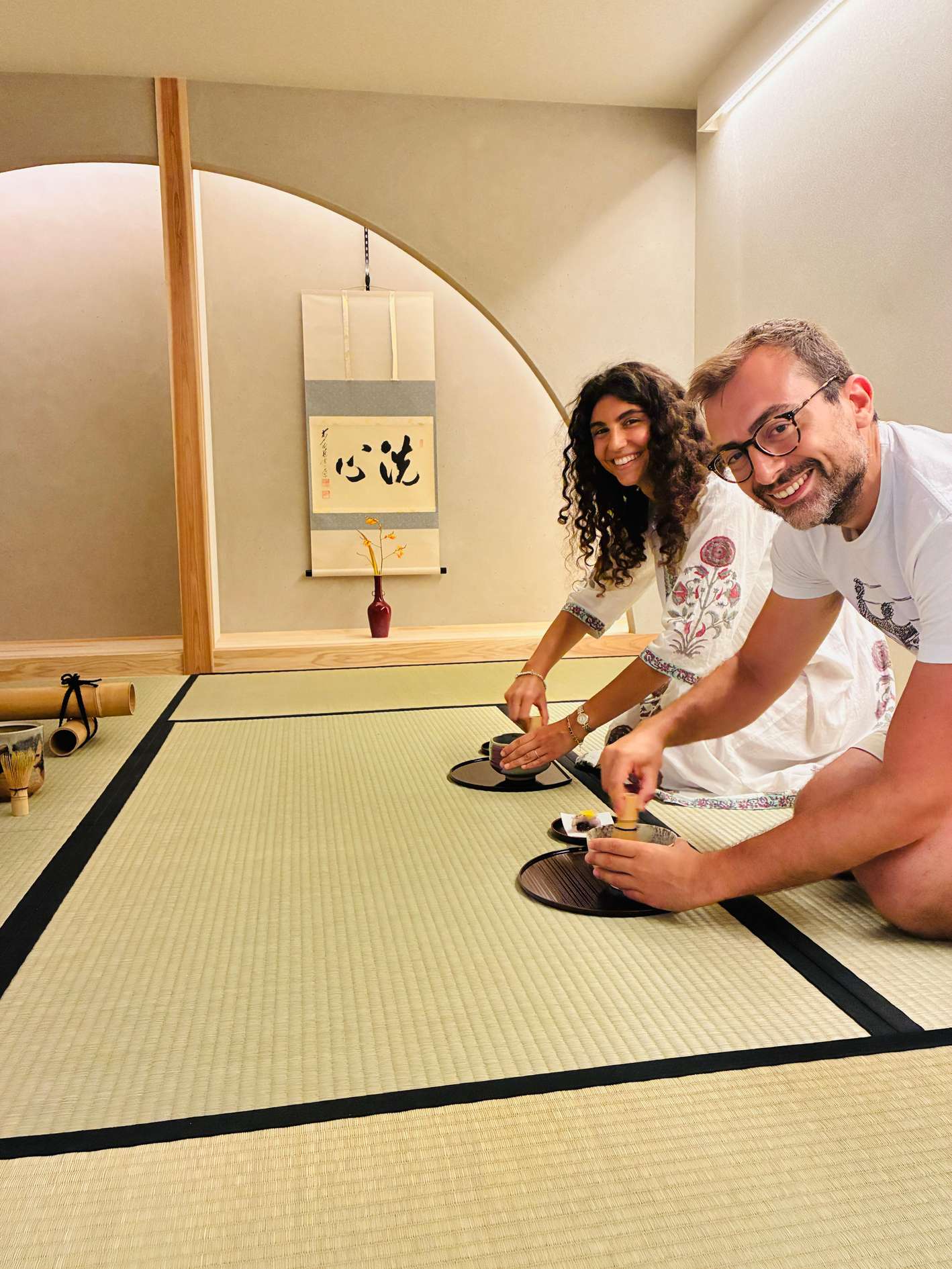
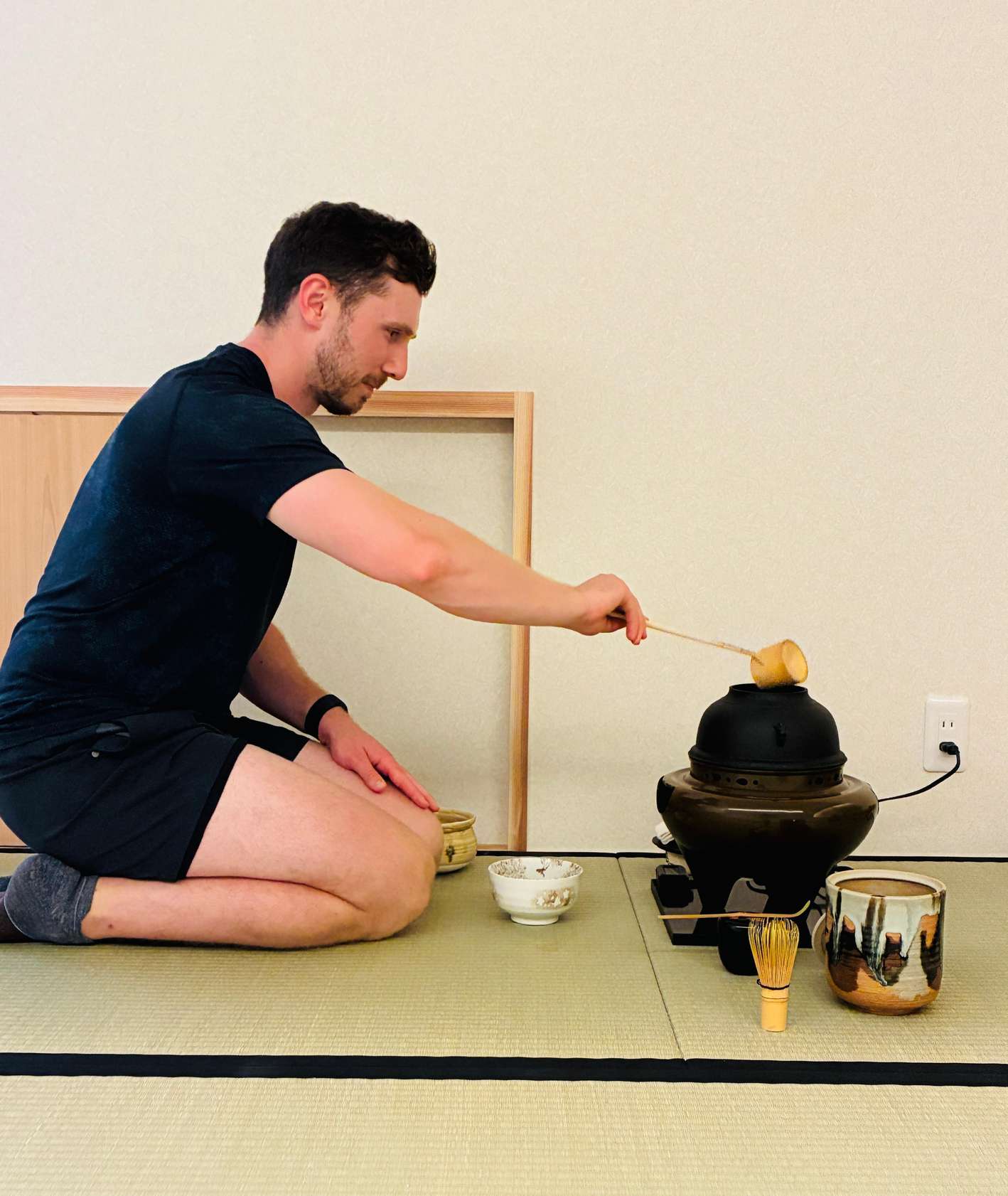
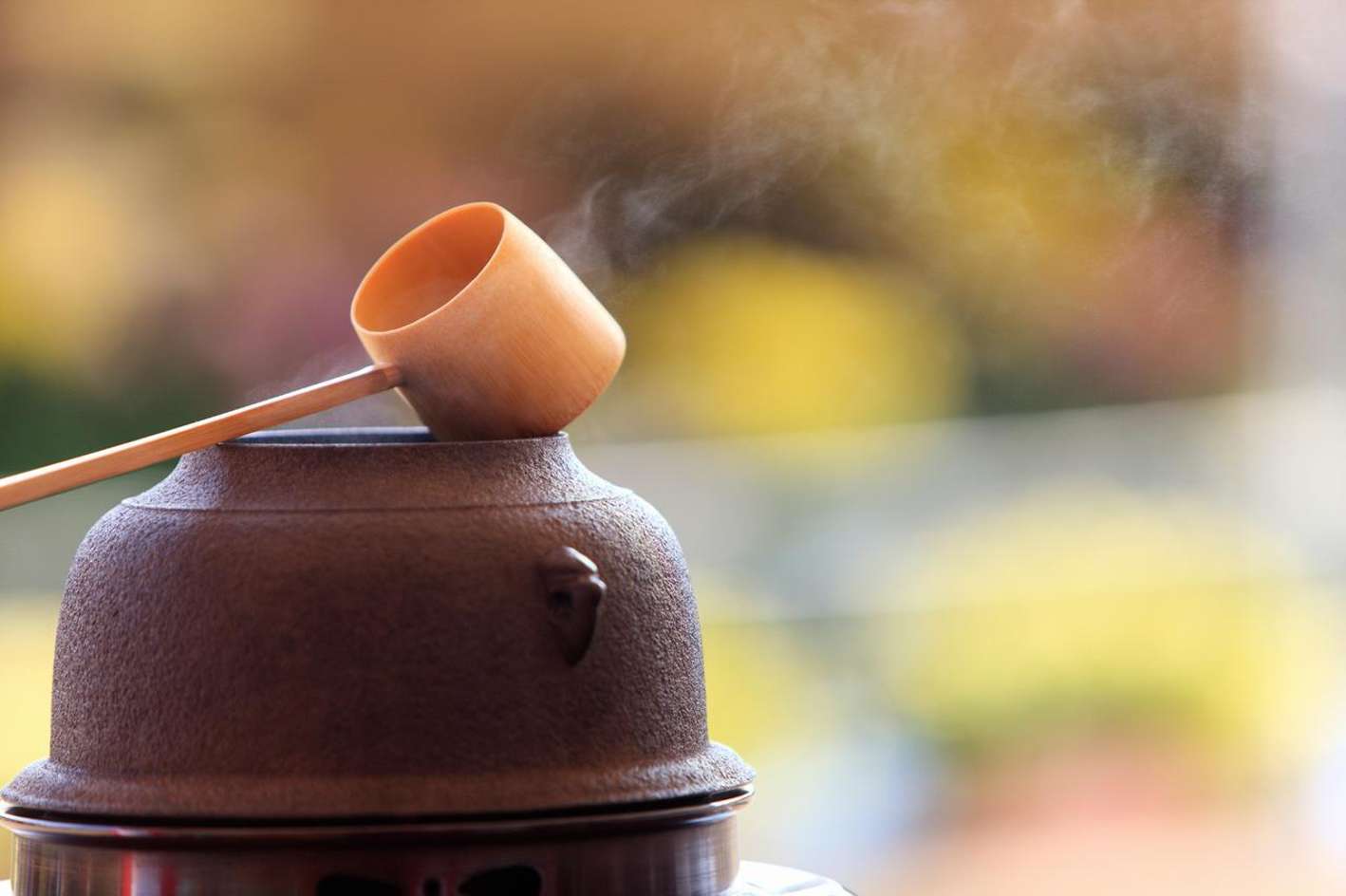
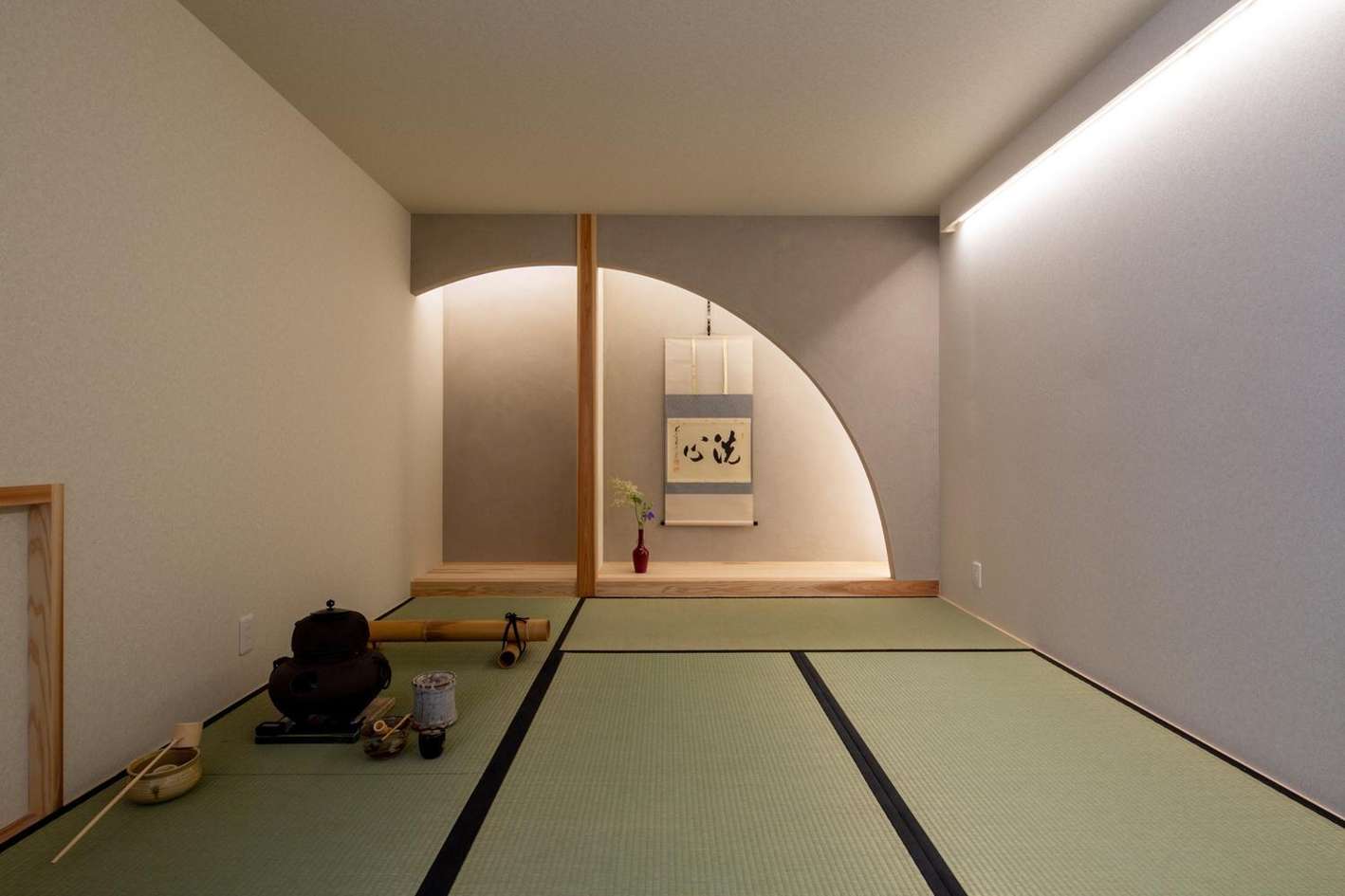
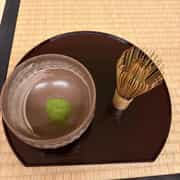
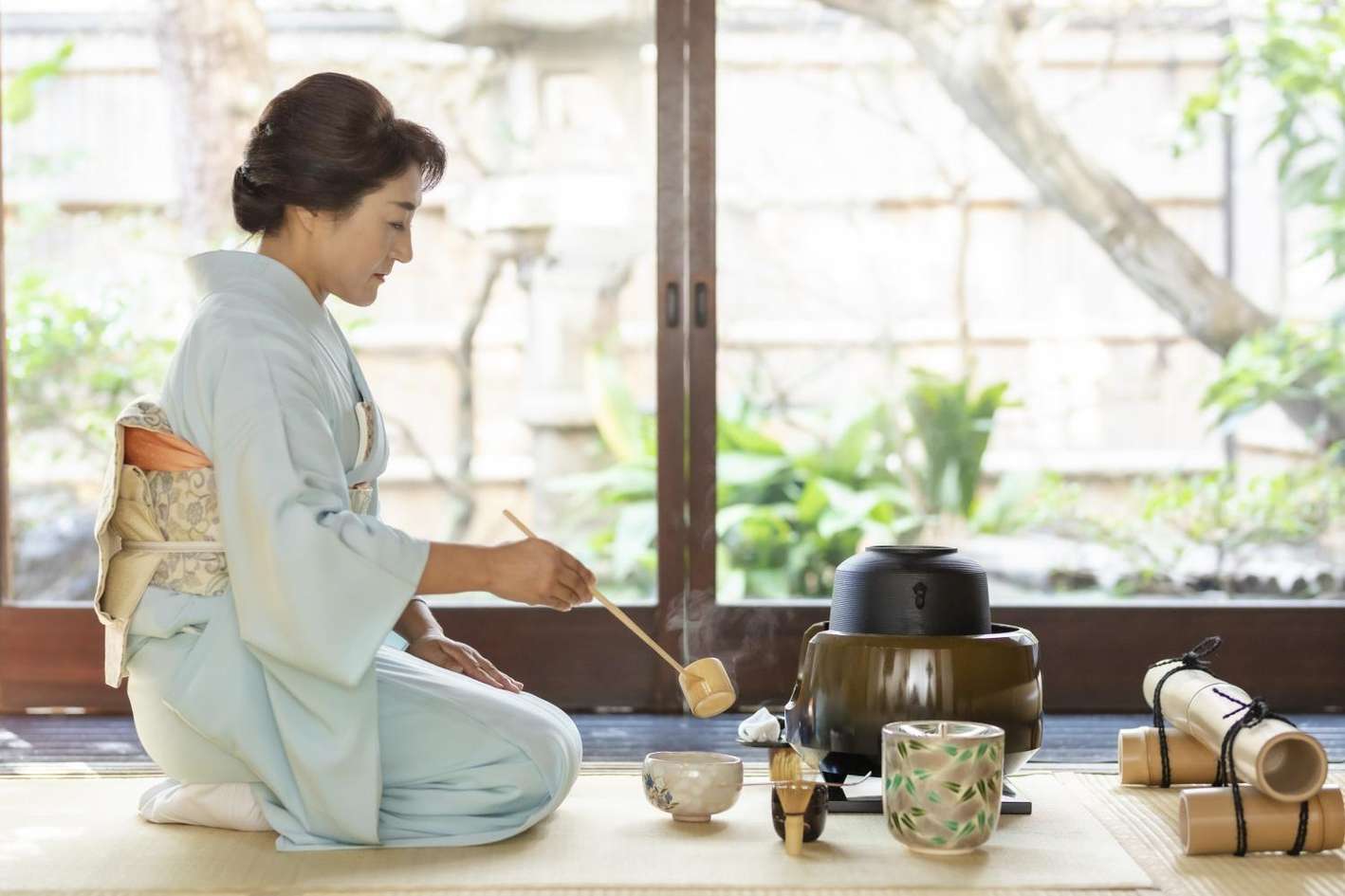
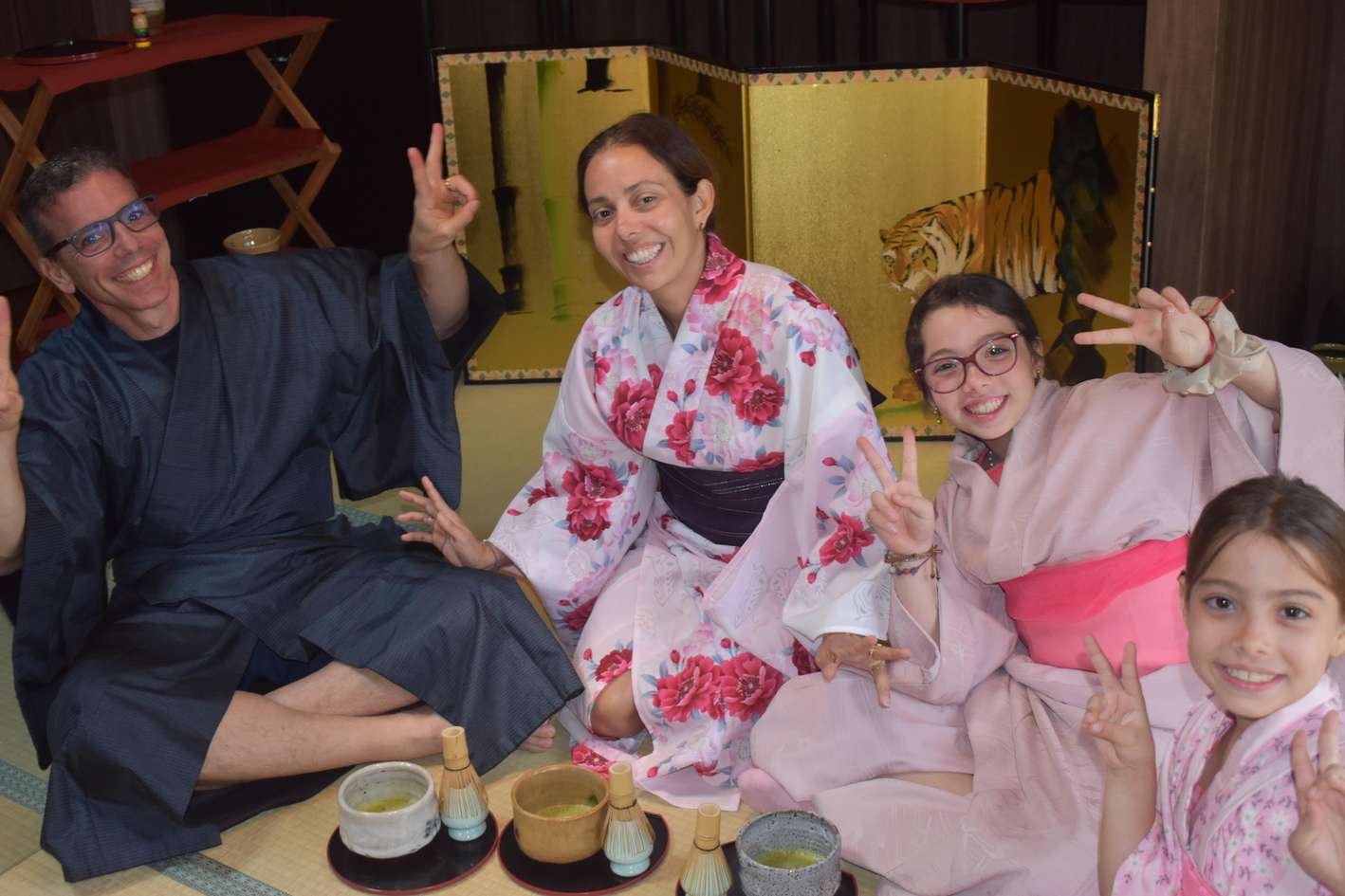
Drink your matcha in a genuine 100-year-old Kyoto home, where the tatami rooms at the back stay cool and quiet.
Read the guideWalk through the temple grounds, then take a 70-minute ceremony in a wooden tearoom that tourists rarely see.
Read the guide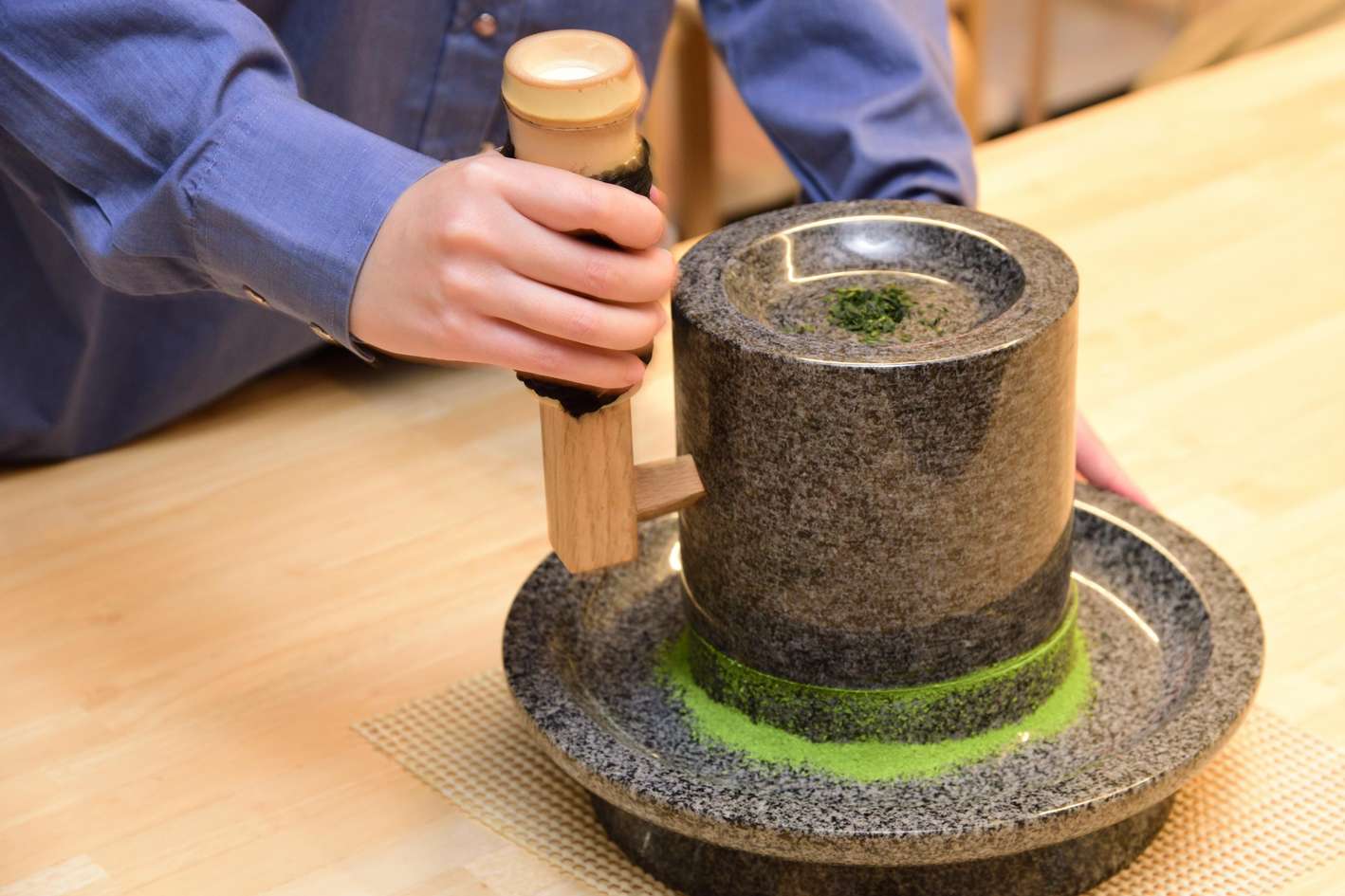
Ride to Uji and grind matcha from a stone mill with tea fields and gardens in view.
Read the guideEach setting gives you a different side of the tea tradition, and each suits a different kind of day.
Tea inside a preserved wooden townhouse, with sliding screens and quiet back rooms
The first thing you notice is the building itself: lattice windows, exposed wooden pillars, sliding paper screens. A genuine Kyo-machiya is a wooden house built in 1950 or earlier, and several of these ceremonies take place in homes a century old.
The front room facing the street carries the noise of the lane; the tatami rooms at the back go quiet.
45 minutes - 1.5 hours · ★ 5.0 (283)Kyoto: 100% Private Tea Ceremony, Calligraphy, and KimonoFrom $63 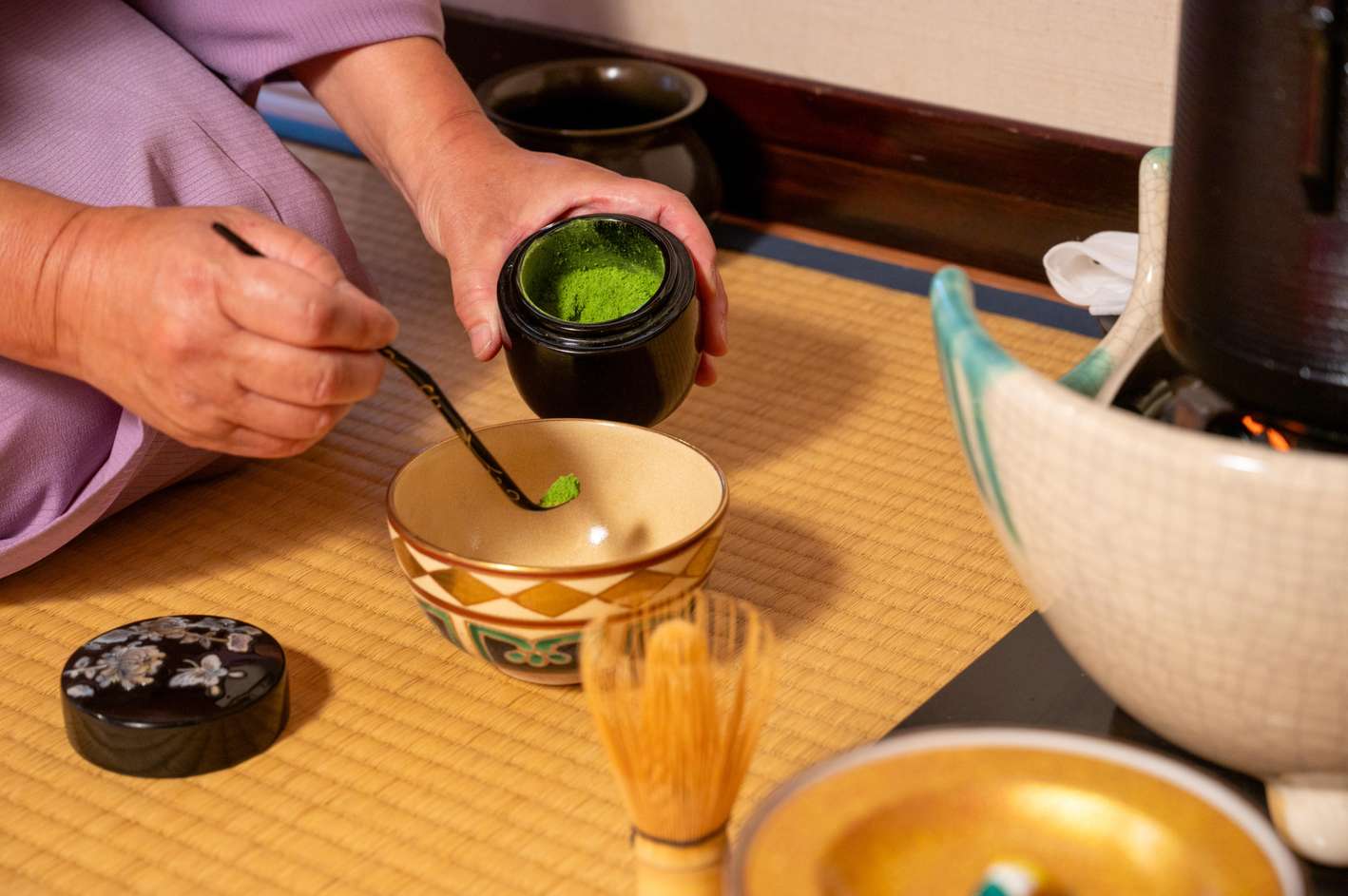 45 minutes · ★ 4.8 (255)Kyoto Gion: Tea Ceremony Experience in a Traditional HouseFrom $28 50 minutes - 3 hours · ★ 4.8 (988)Kyoto: Tea Ceremony in 100-year-old Kyo-Machiya TownhouseFrom $33 ★ 4.8 (76)Authentic Tea Ceremony or Calligraphy in Kyoto River ViewFrom $42
Ceremonies on consecrated temple grounds, with gardens and sacred architecture around you
At the Ju-An ceremony, your session starts with a walk through the temple itself: the purification fountain, the halls, the architecture. Only then do you enter the tearoom. Inside, the sound of the boiling kettle does the rest, and the city outside goes quiet.
Grind your own matcha by stone mill where the tea is actually grown
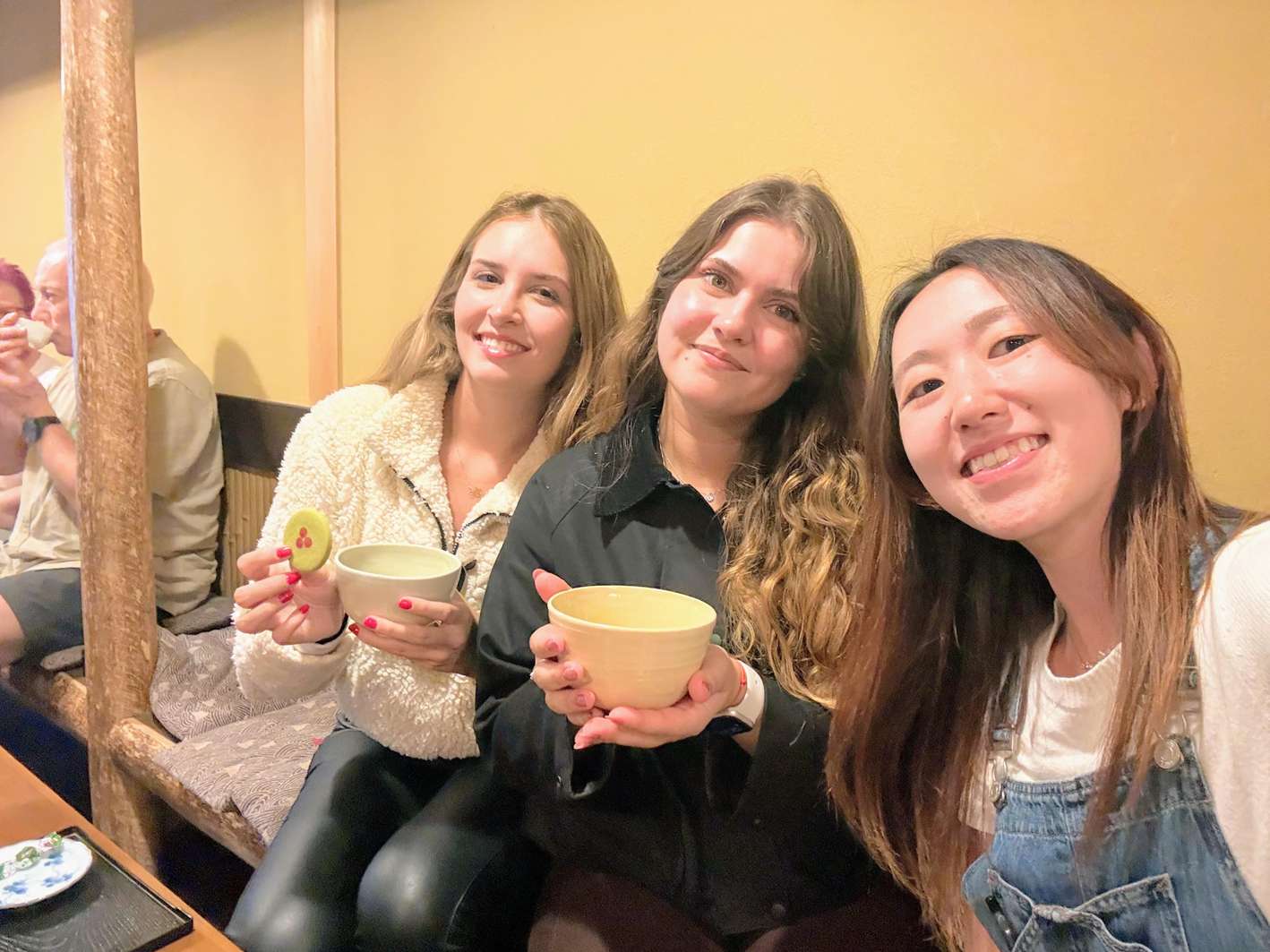
Uji is where the tea comes from. Leaves grow along the river here, and at the tea museum you drop tencha leaves into a granite mill and turn it slowly, one turn per second, until bright green powder comes out. You whisk it yourself and drink it with a sweet, looking at the fields.
A few walkable districts hold nearly all of Kyoto's tea rooms, and each one changes what your ceremony feels like. Which district lands on your route decides the day.
Kyoto is the city for a first-time ceremony: the tea culture runs deepest here, and English-speaking sessions are everywhere.
Gion sits on Hanamikoji Street, with Kennin-ji Temple 400 meters away and Yasaka Shrine a 5-minute walk east.
Sessions near Kiyomizu-dera run about 45 minutes in groups capped at 8, tucked into side alleys off Ninenzaka.
Chair seating exists: the Gion session uses chairs for everyone, and stools or small chairs can be requested at Jotokuji, the machiya, and Karasumashijo.
Book 6 to 8 weeks ahead for cherry blossom and November foliage; December to February is quiet enough for a few days' notice.
Plan to arrive 10 to 15 minutes before your booking, since some venues deny entry after 10 or 15 minutes and none extend the session for latecomers. Leave buffer time for transit, especially if the kimono option adds a stop at a separate rental shop before the ceremony.
Tea rooms cluster tight in Kyoto, and the whole city fits on one mental map. Jotokuji Temple holds the Ju-An ceremony on Gojo-sagaru, Tominokoji Dori, in the quieter streets of Shimogyo-ku. Down Sanneizaka, below Kiyomizu-dera, a garden tea house waits behind a large gate.
Gion has two: a traditional house about 2 minutes from Yasaka Shrine, and a kimono venue that also runs a Nishiki branch. Karasumashijo keeps its own tatami room at 220 Itoyacho, and a 125-year-old townhouse sits a 9-minute walk from Kyoto Station.
Kyoto is the city first-timers should pick, and few people who know tea argue the point. The culture runs deepest here, and the number of sessions explained in English shows it.
A venue chosen for the sights around it folds into the day; a venue chosen for its write-up adds an hour of transit you never planned.
Reserve ahead whatever the season. Sessions book out completely at peak times, and a few venues open their calendars only weeks in advance.
Higashiyama puts tea on a cobblestone slope. Venues around Ninenzaka and Kiyomizu-dera sit 5 to 10 minutes below the temple, down pedestrian-only lanes lined with restored wooden townhouses. The main streets bustle; the tea rooms hide in side alleys, and the noise drops at the door.
Downtown trades atmosphere for convenience. Near Karasuma-Shijo or Karasuma-Oike stations, you can walk from the subway in minutes, and some rooms hide a courtyard garden at the back of a modern building.
| Walking-route fit | Garden or roji setting | Chair seating options | Session pace and size | Peak booking pressure | |
|---|---|---|---|---|---|
| Gion | Hanamikoji stroll; Kennin-ji 400 m | Second-floor tatami over Hanamikoji | No; historic ochaya, not chashitsu | not known | not known |
| Higashiyama & Kiyomizu-dera | Cobblestone slopes 5-10 min below | Garden teahouse behind large gate | Limited chairs at Camellia | 45 min, 8-14 guests | not known |
| Karasuma & Nishiki | Beside Karasuma subway stations | Tea rooms with courtyard gardens | Bamboo chairs on advance request | not known | Openings on short notice |
| Machiya townhouses | Quiet back rooms past streetfront | Tsuboniwa inner courtyard garden | Small chairs available | not known | not known |
| Zen temples | Temples within 15-min walk | Roji and moss garden paths | Stools at Jotokuji | 70 min with temple walkthrough | Often no reservation needed |
| Uji | 17-20 min direct train | Riverside teahouse by Uji River | not known | not known | not known |
Families face one more filter: age floors, and each venue draws its own line. Under-5s cannot enter Ju-An at Jotokuji, and the 100-year-old machiya takes guests 10 and up only. Karasuma and Nishiki venues tend to have openings on short notice when Gion is full, which makes downtown the fallback as well as the shortcut.
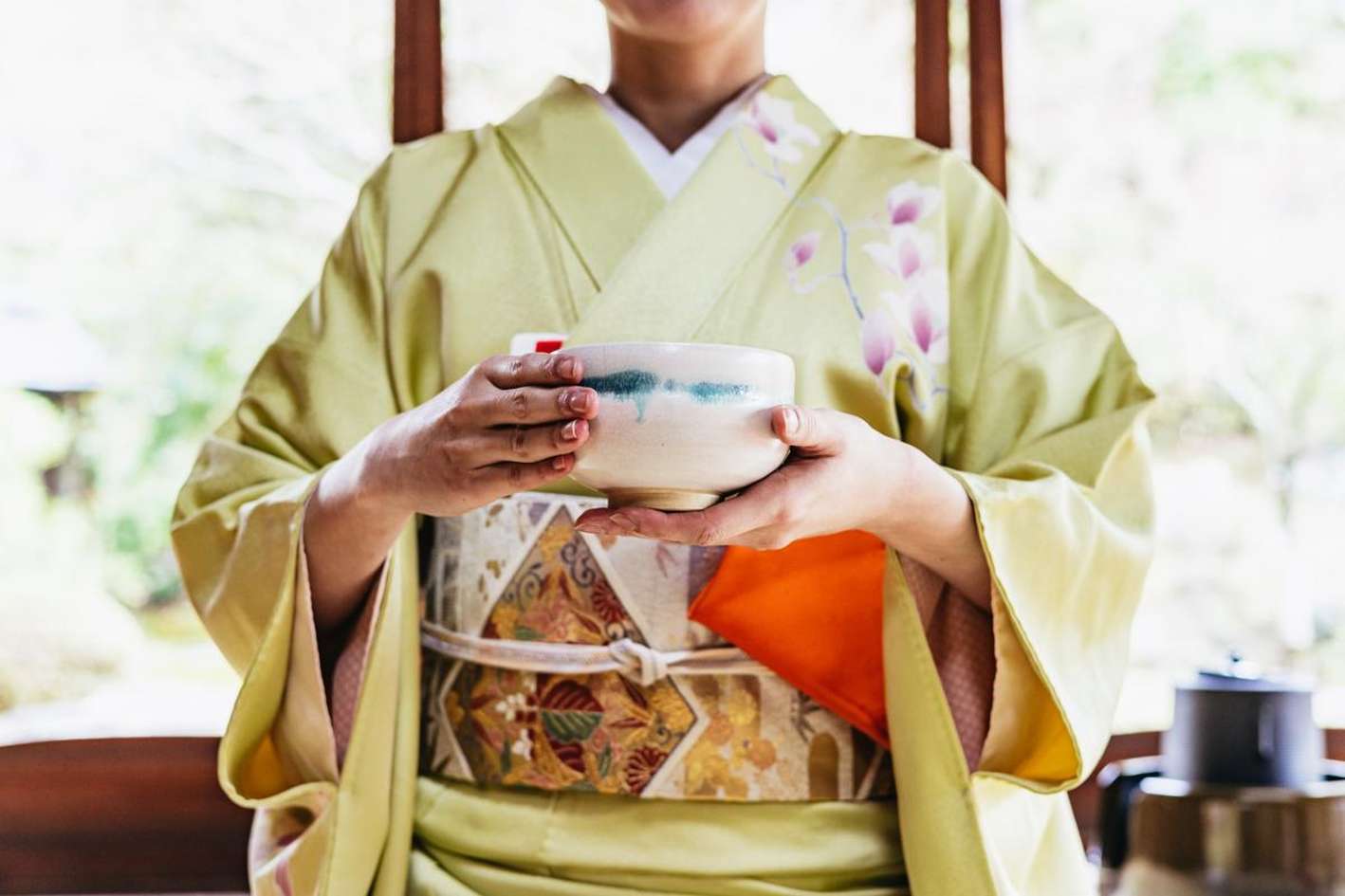
Hanamikoji Street is Gion's spine: stone paving, wooden machiya facades, and the historic teahouses people photograph all day. One clarification saves confusion.
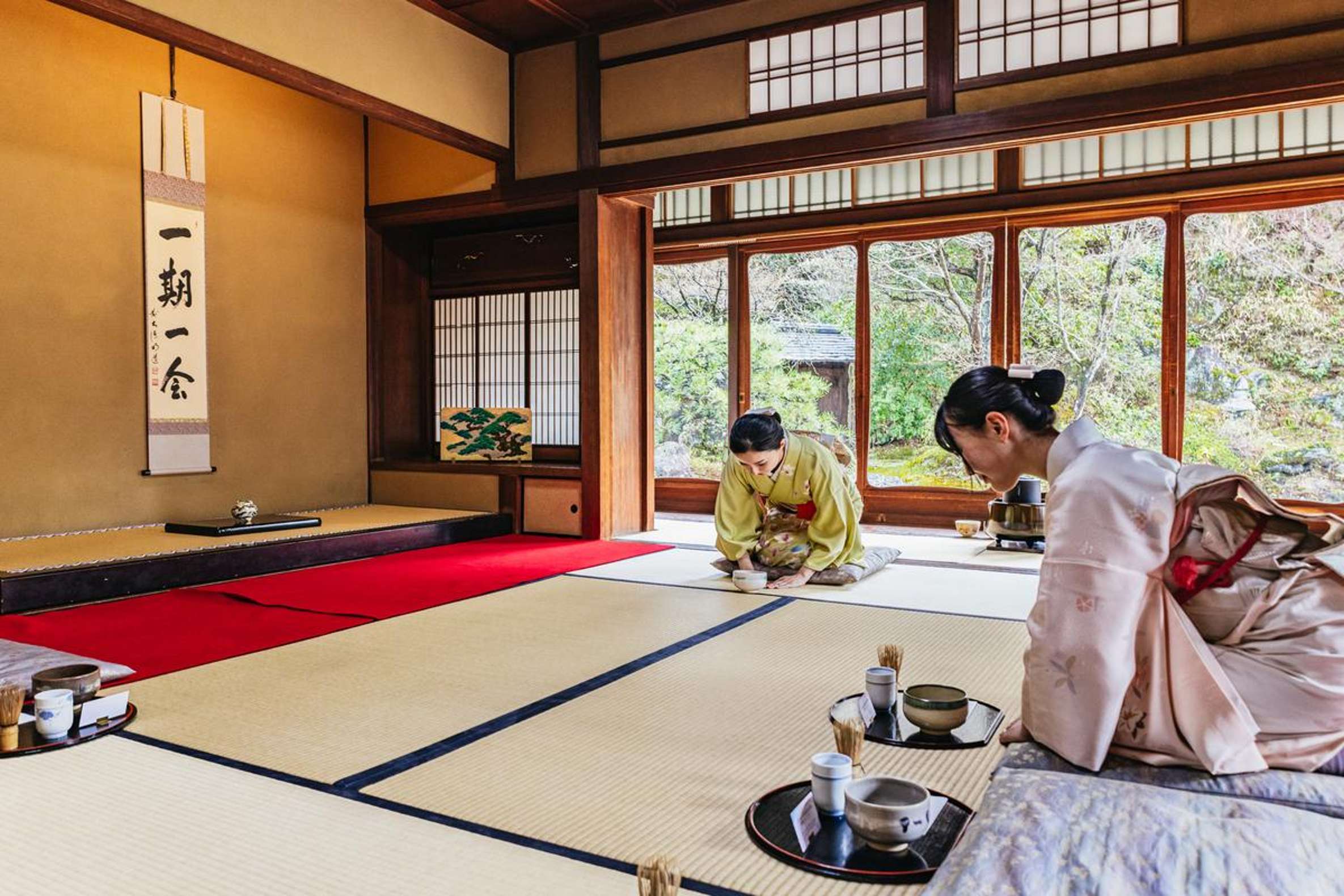
The famous ochaya along the lane host geisha entertainment; ceremony rooms sit elsewhere in the district, often inside a century-old machiya in a second-floor tatami room with wooden beams overhead and the lane below the window.
Gion pairs with your temple walk better than any other district. Kennin-ji, Kyoto's oldest Zen temple and the work of the monk who brought Zen tea culture to Japan, sits 400 meters from the tea venues.
Yasaka Shrine, the spiritual hub the district grew from, is another 400 meters east on Shijo, with Maruyama Park behind it.
The session worth booking here is the Kyoto: Traditional Tea Ceremony with Matcha & Sweets in Gion, an hour seated in chairs, which matters if kneeling worries you. You watch the master, then whisk your own bowl, and the kimono option adds dressing and a stroll afterward.
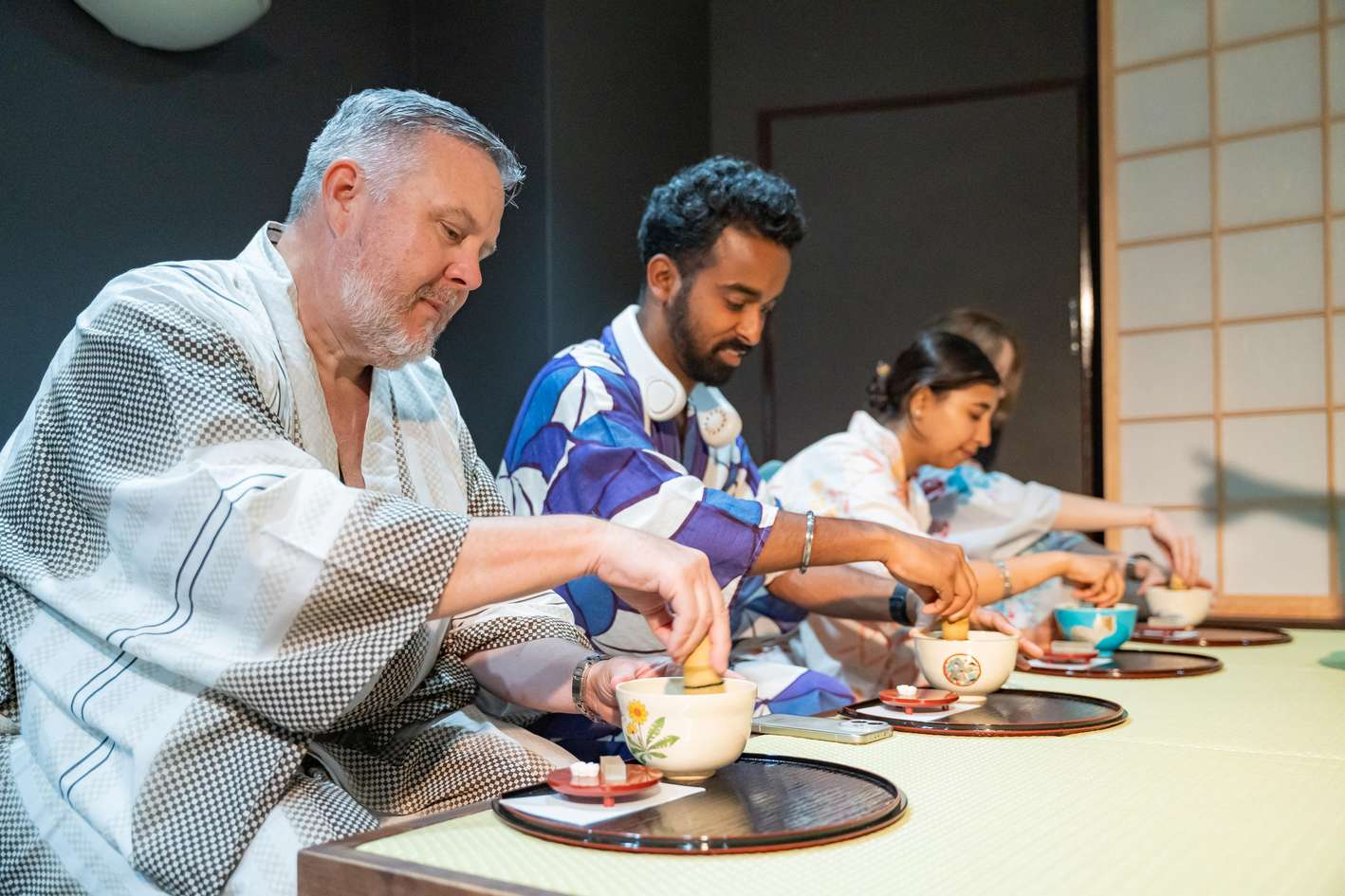
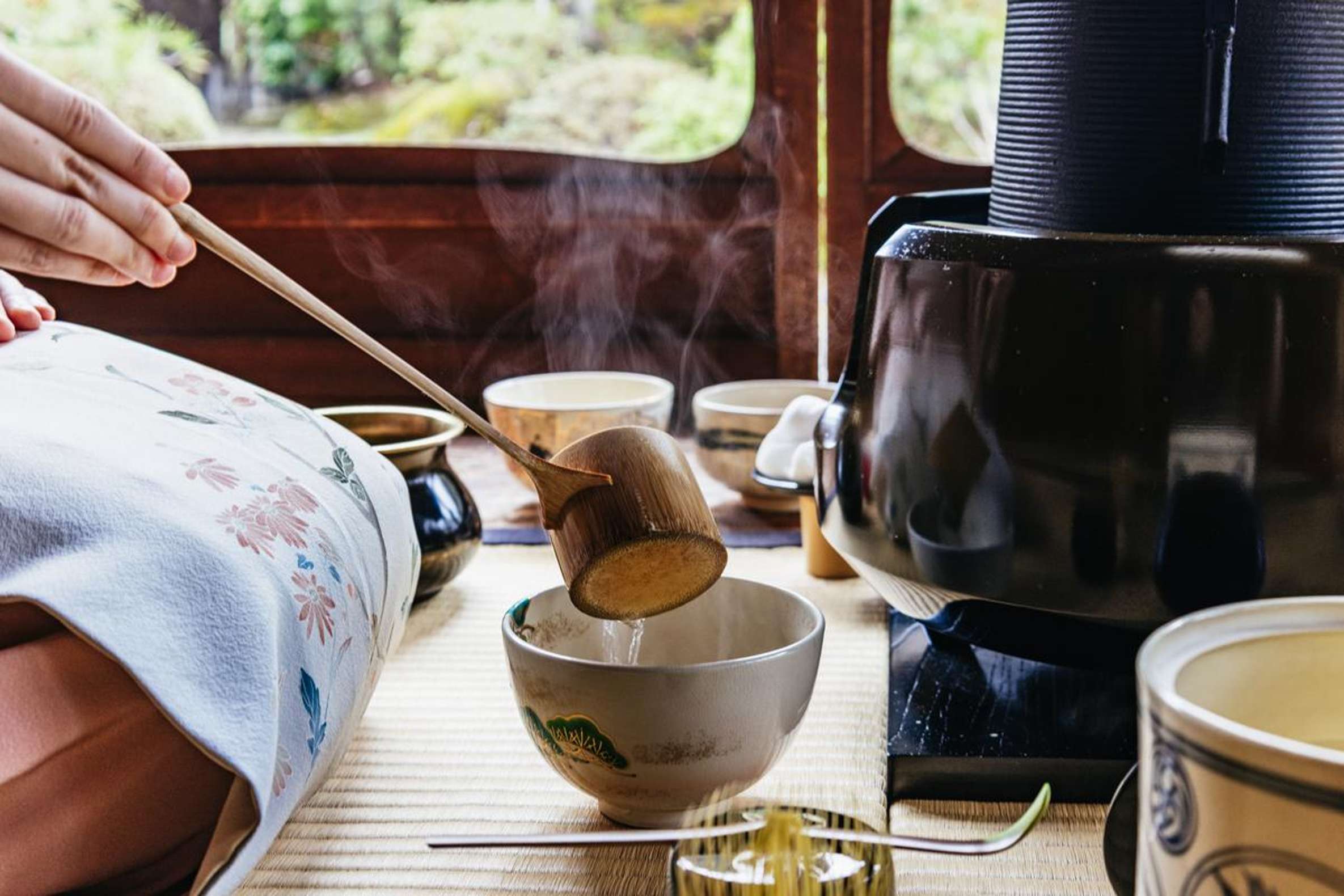
The lanes below Kiyomizu-dera move at tourist pace, all shops and kimono strolls, and then a side alley goes quiet. This is Higashiyama's own tea cluster, and sessions here run shorter and smaller than elsewhere: typically 45 minutes, in groups of about 8, though some tea houses take up to 14.
The pick of the venues is a tea house down Sanneizaka, entered through a large gate, with a Japanese garden visible from the entrance and a design by Ogawa Jihei VII, the garden maker who shaped so much of Kyoto.
The Kyoto: Tea Ceremony in a Garden Tea House near Kiyomizu-dera gives you 45 minutes there: the master's demonstration, a sweet, one cup he makes and one you make yourself, and a photo to take home.
Its own floor is 7, so children 7 and under are not admitted; other venues draw the line elsewhere, and the listing for each one states it.
That length is a feature if your day is packed, since the session ends with the whole southern Higashiyama walk still ahead of you.
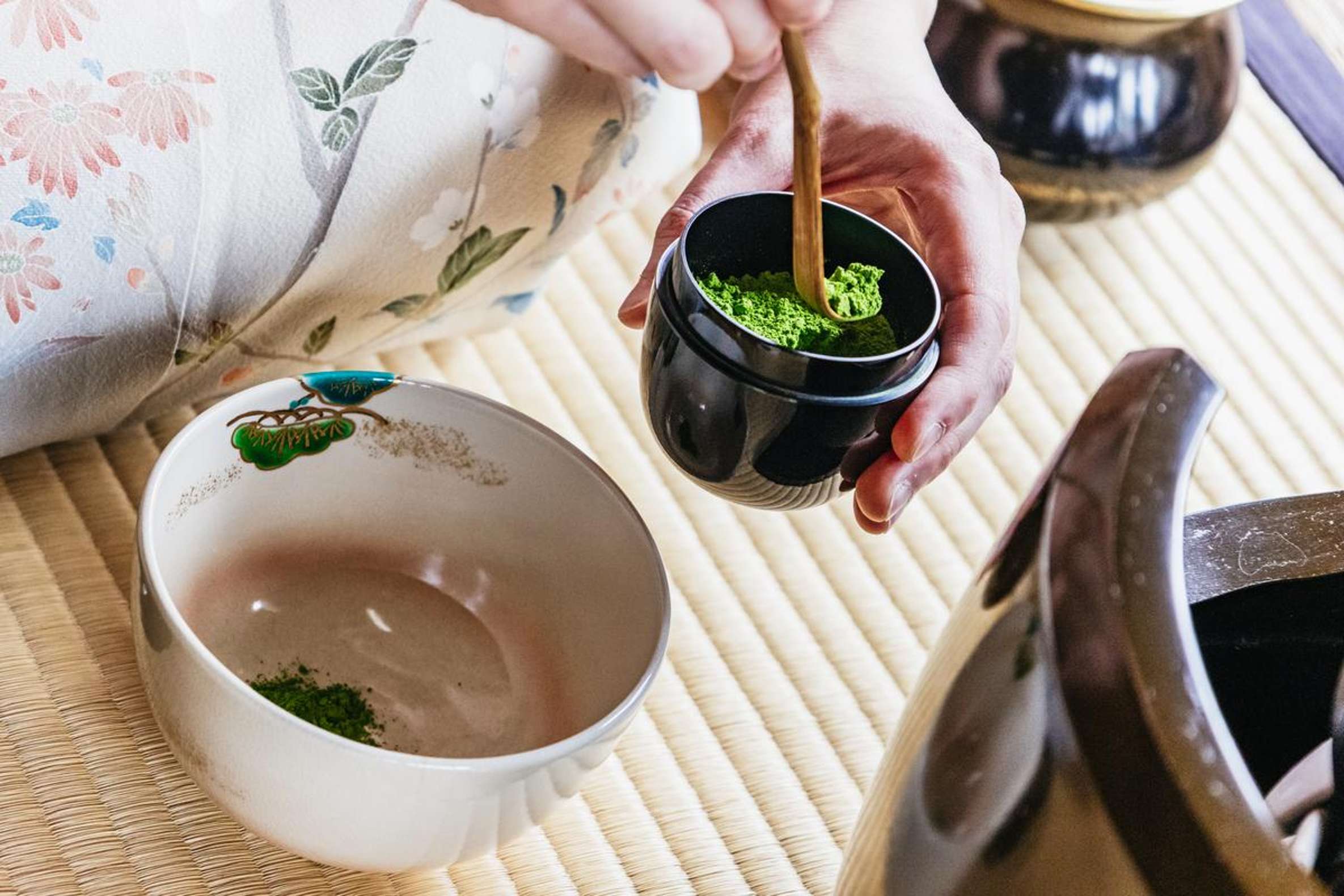
For travelers sleeping near Shijo or Oike, downtown is the sensible tea option. The Karasuma-Shijo and Karasuma-Oike stations put you within walking distance of several venues, and the Nishiki branch of the kimono tea schools often has openings on short notice when Gion fills up.
Bamboo chairs can be requested in advance at the Shijo-Karasuma room, and chairs are standard for guests who find the floor difficult near Karasuma Oike.
One kimono plan near Karasuma Oike splits across two shops: dressing happens at a separate Gojo shop, you cover your own transit between the two, and the full fee is charged to a credit card in advance. Budget the extra hour before deciding it is worth it.
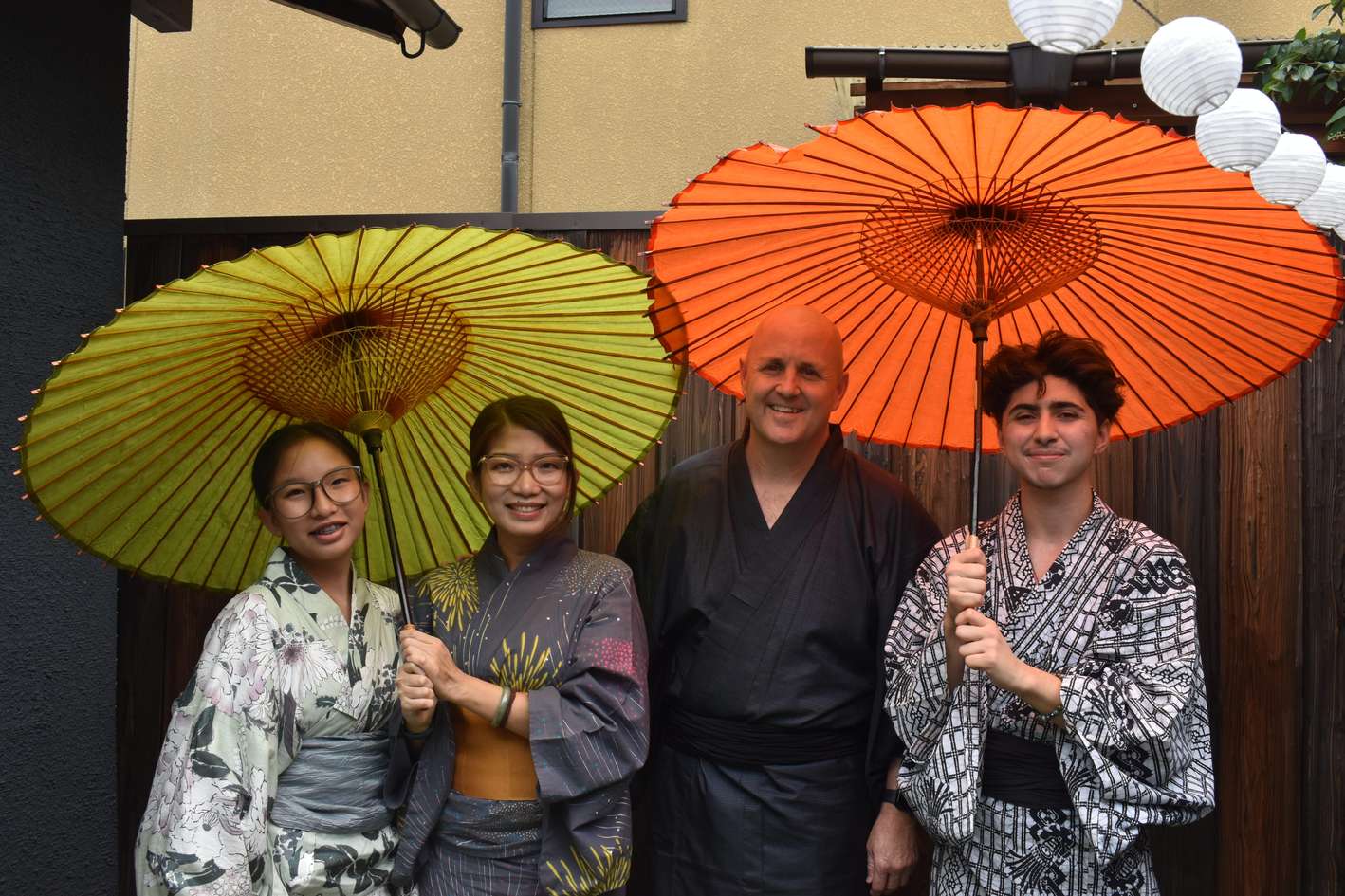
The simpler downtown choice is the Kyoto: Kimono, Tea Ceremony with Japanese Garden and Studio, where the shop holds a Japanese-style room and garden under one roof, with English, Vietnamese, and Thai spoken. A 40-minute tea-only session, or a full day of kimono with the tea folded in.
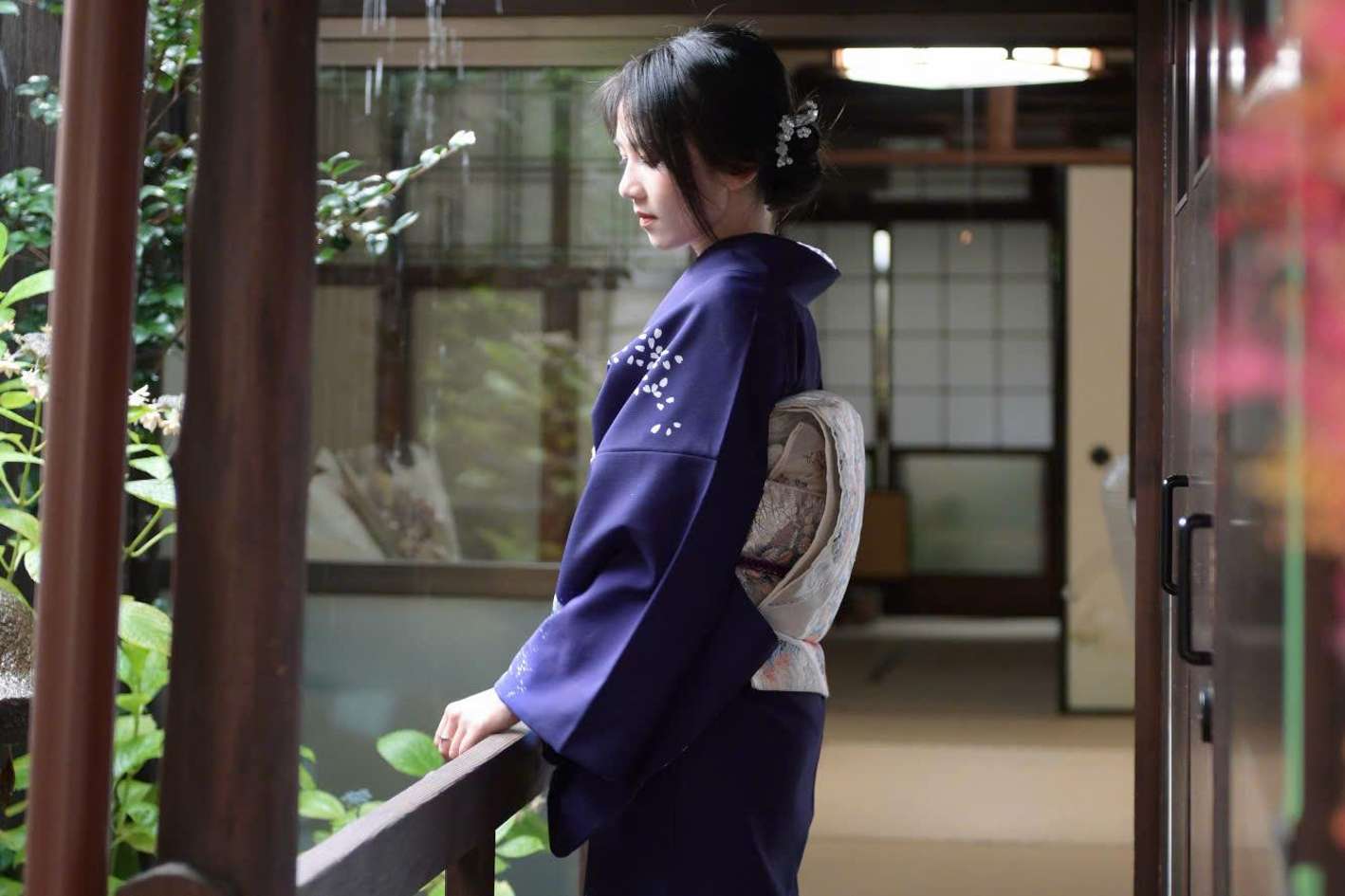
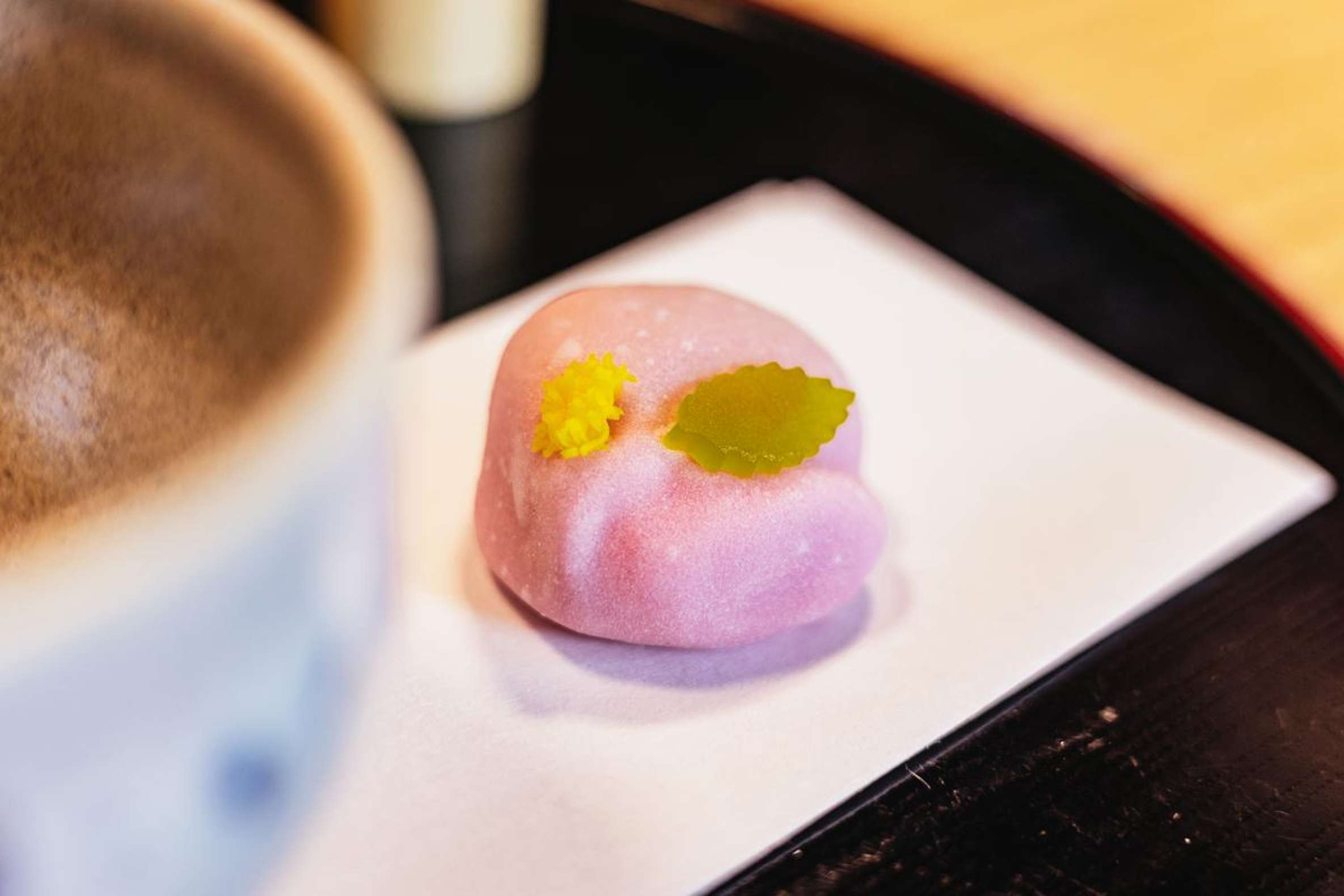
The building tells you first. A genuine Kyo-machiya is wooden, built in 1950 or earlier, no more than three stories, with degoshi lattice windows, tori-hisashi eaves, and an old okudosan kitchen stove at the back. Several of Kyoto's tea venues are homes a century old, and the full machiya guide covers what makes them special.
Inside, the layout does the work. Street noise lives in the front shop facing the lane; walk through to the back tatami rooms and the city stops.
Between rooms, a tsuboniwa courtyard garden pulls in air and light, and in Kyoto's humid summers it cools the interior by up to 5 degrees. In winter the closed paper screens hold in a room centered on a sunken hearth and steaming kettle.
The session is the fullest teaching format in the city. You watch the master prepare tea, learn the greetings and how to drink, then pair up with another guest to serve and taste each other's matcha, while Sen no Rikyu's Four Rules and Seven Principles get explained.
Shared sessions seat 8 to 12, private bookings take the whole house, and 45 to 60 minutes is standard.
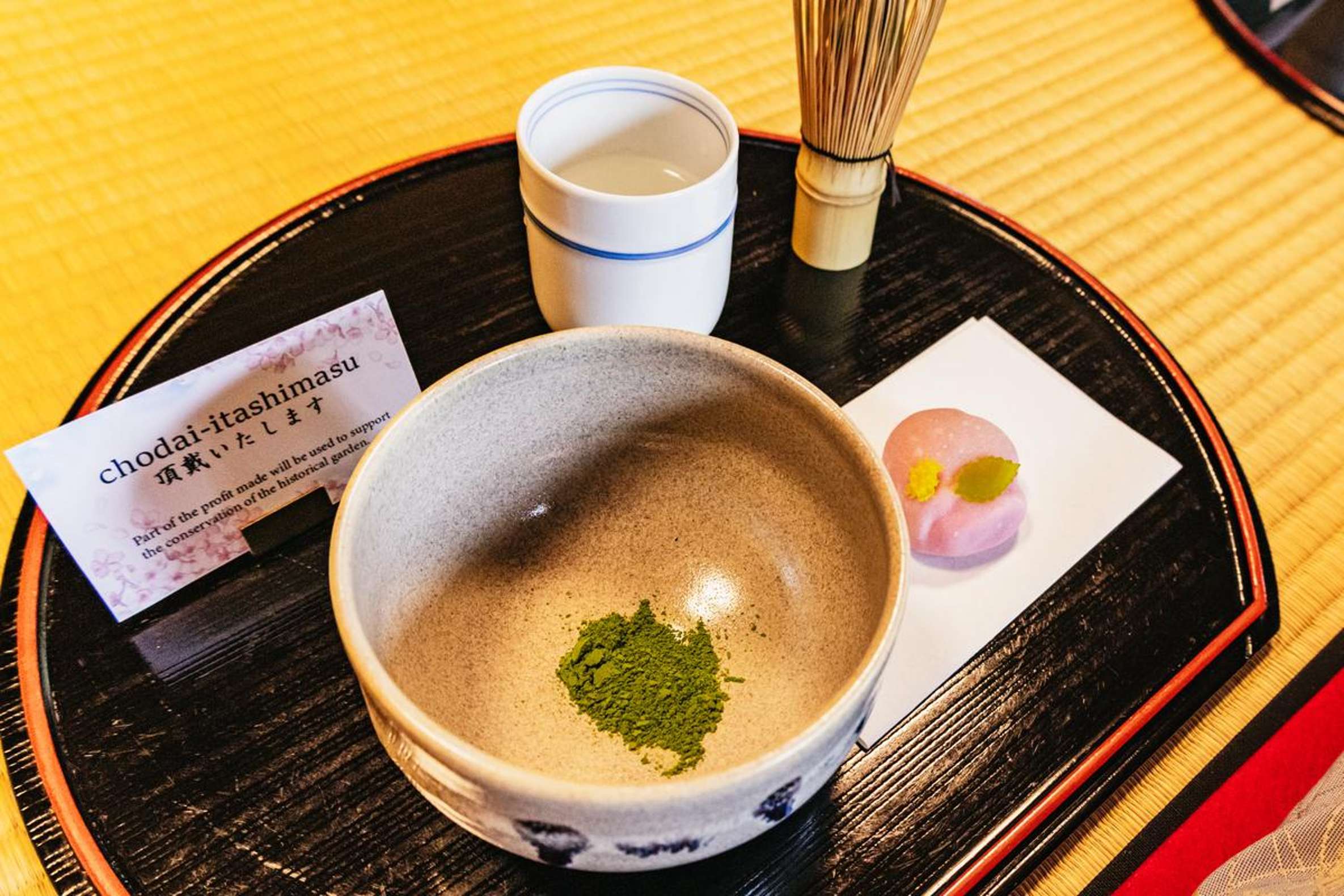
A temple session starts before the tea does. At Ju-An on the grounds of Jotokuji, you walk in through the main gates, past the purification fountain and the halls, and only then take off your shoes at the tearoom. The full temple guide walks that sequence in detail.
This is the setting connoisseurs mean when they talk about authenticity. Traditional ceremonies pass along a roji garden path and sit beneath a scroll chosen for the season; bowls carry documented makers.
In an authentic garden tea house you may even meet a nijiriguchi, the crawl-in doorway built low so that everyone, samurai included, bows to enter and enters as an equal.
Temples buffer the city best. Inside the tea room the kettle boils, guests keep silence, and the tourist crowds outside stop mattering. Budget 90 to 120 minutes in total: arrive 10 to 15 minutes early, spend about 70 inside on the walkthrough and ceremony, and keep 20 to 30 minutes for the gardens.
Facing the Main Hall at Jotokuji, a few steps on the left lead to the tea room. Kimono is not included but rents separately nearby, and children under 5 cannot join.
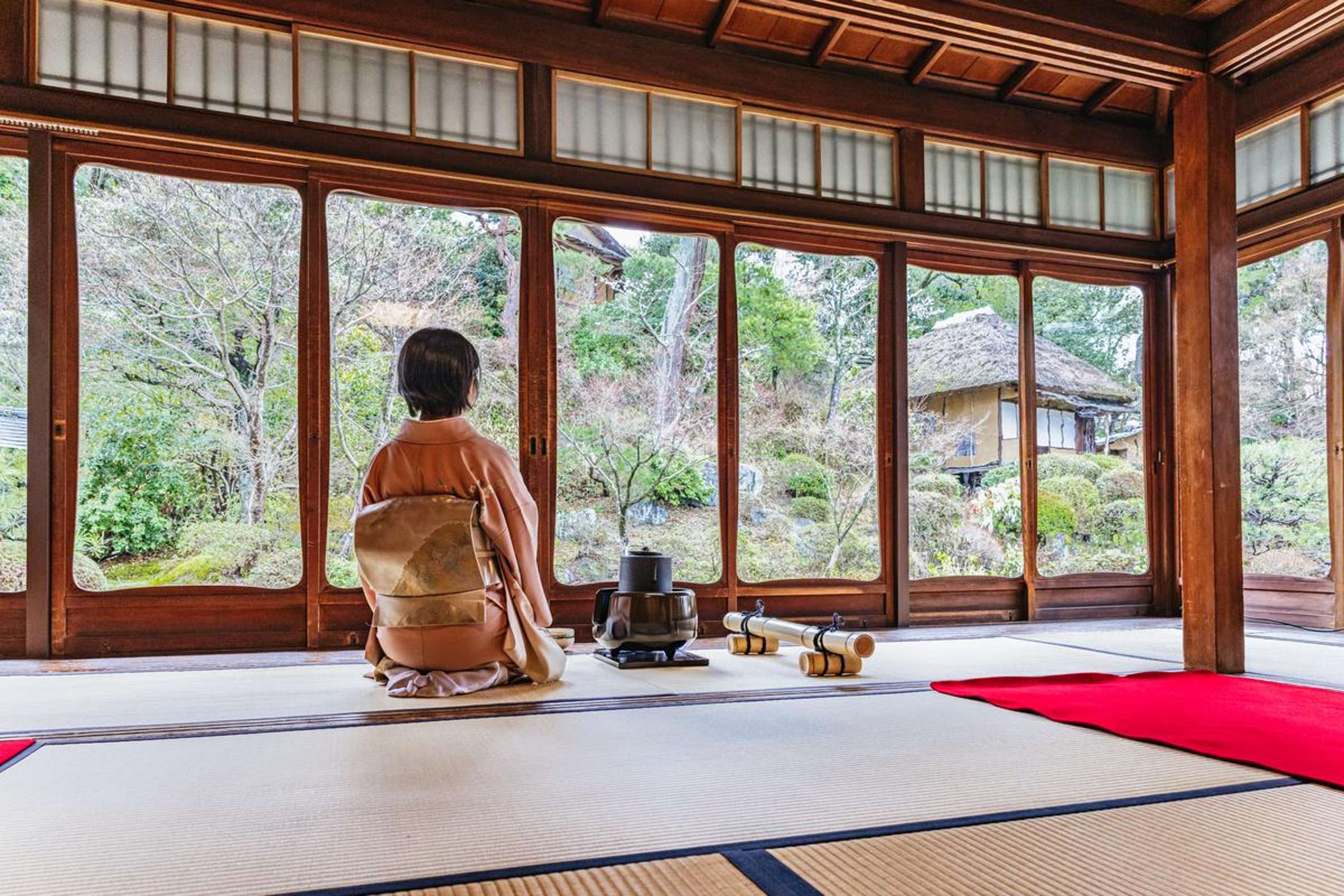
Kyoto teaches the ceremony; Uji grows the tea. The city sits 17 to 20 minutes from Kyoto Station on a direct JR Nara Line rapid train, no transfers, and the full Uji guide lays out the half day.
Leaves grow along the river here, shade cultivation was developed in these hills in the 16th century, and much of the matcha whisked in town is ground locally.
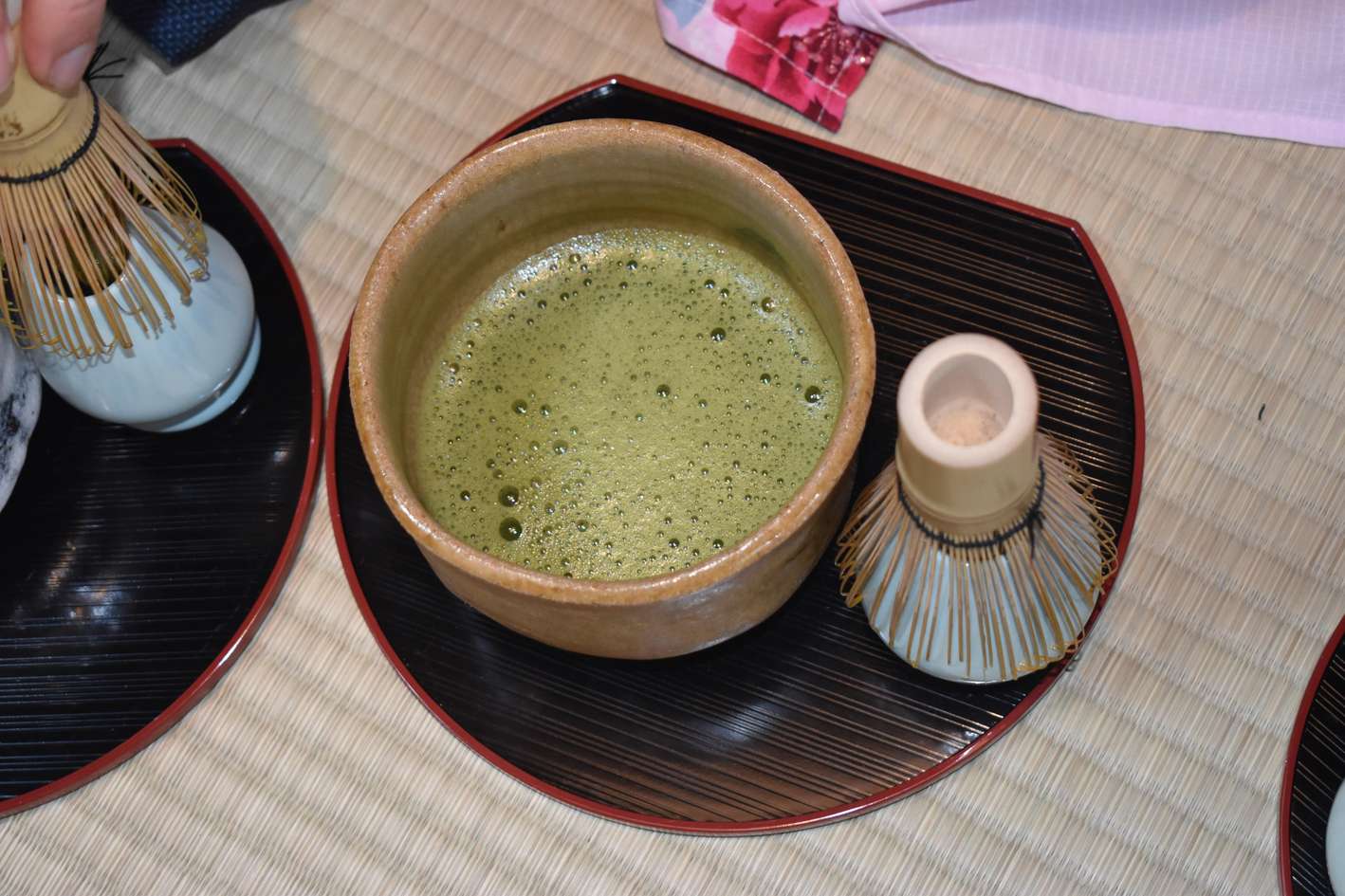
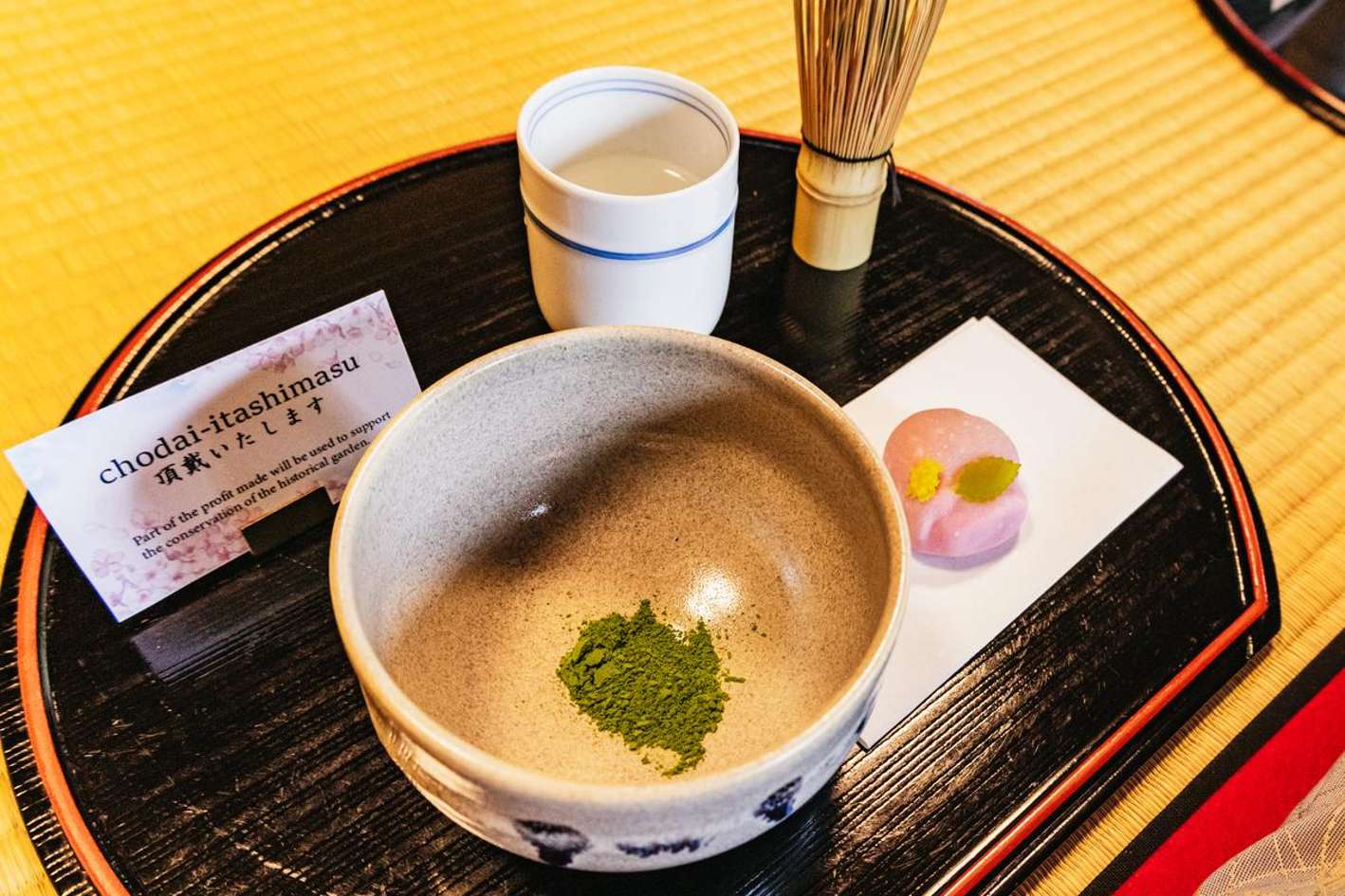
The hands-on version is the stone mill. You drop tencha leaves into a hole at the top of a granite mill, turn it counterclockwise at about one turn per second, and bright green powder works out through the grooves. Then you whisk it in an m-shaped motion and drink it with a sweet.
Uji trades formality for the source. Taiho-an, the municipal tea house by the river, takes walk-ins for tea without a reservation, though hands-on preparation needs one three days ahead. Some houses also serve sencha or gyokuro, leaf teas brewed in the pot, which you rarely meet in Kyoto.
A half day door to door runs four to five hours, and the Byodoin Temple and the Tale of Genji Museum sit within a 15-minute walk of the tea shops. Late April to late May brings the shincha first-flush harvest.
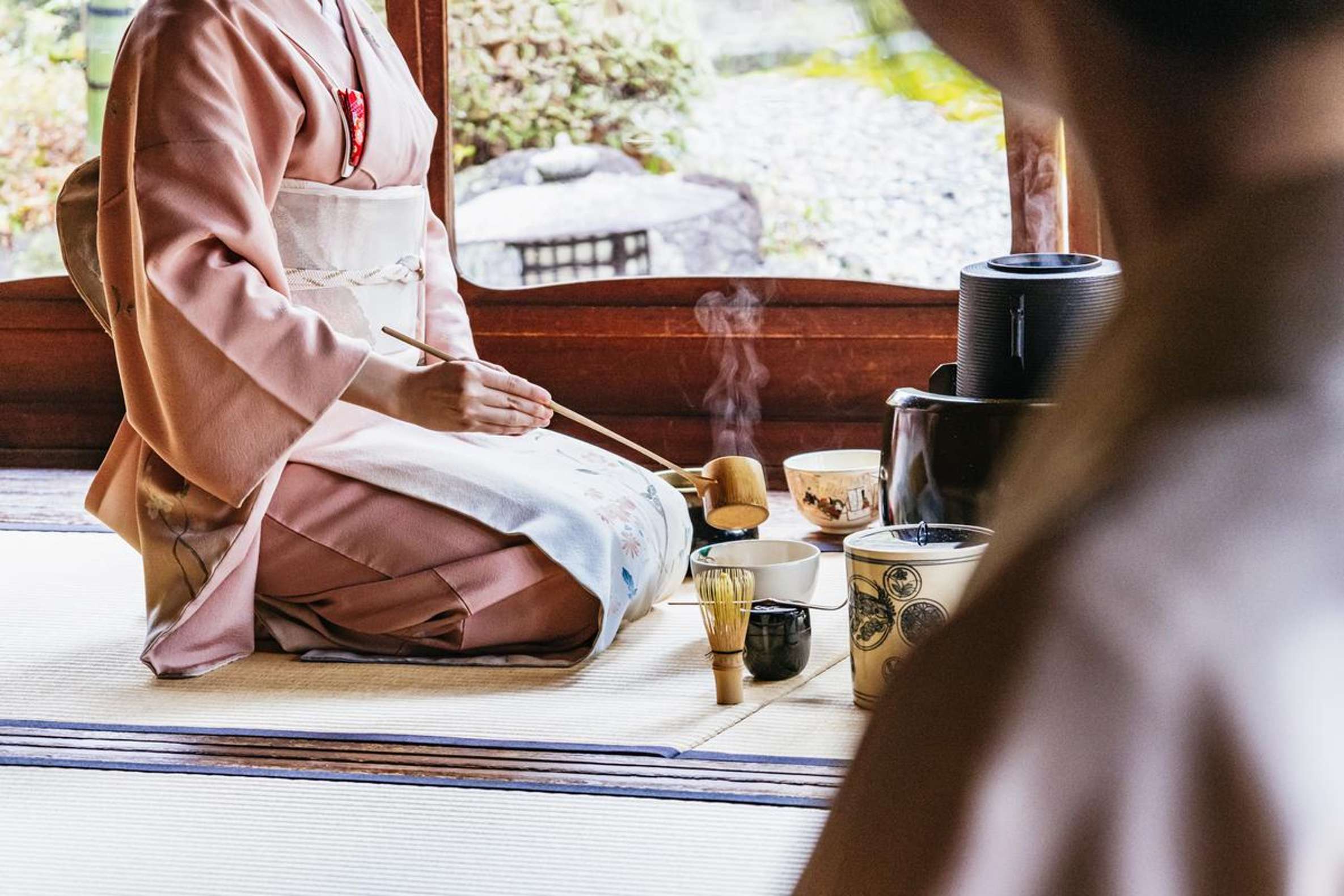
Two fears keep people from booking, and both have fixes. First, kneeling. Seiza on tatami for an hour sounds like a test, but venues have adapted.
Jotokuji Temple provides seats and stools, the machiya townhouse keeps small chairs for anyone who prefers them, Karasumashijo offers bamboo chairs on advance request, and the Gion session runs in chairs for everyone.
If your legs go numb on the floor anyway, shift to cross-legged or side-sitting with your feet tucked away or pointing aside, never toward the host.
Second, the conveyor belt. Budget demonstrations near big temples move groups in and out in 40 minutes, which travelers describe as rushed and commercialized. A formal chaji, by contrast, runs four hours with a kaiseki meal; the tourist middle ground is 45 to 70 minutes.
The listing tells you which one you are buying if you read it for group size, duration, and whether you whisk your own matcha.
| Check | Why it matters | Our pick |
|---|---|---|
| Group size | Small groups let the master answer questions | About 8 to 12 guests in shared sessions |
| Session length | Short sessions skip the teaching | An hour standard, 2.5 hours with kimono |
| Whisking your own matcha | Watching only misses the skill | The master demonstrates, then you whisk your own bowl |
| Chair seating | Kneeling for an hour is hard on most knees | Chairs for every guest, no floor sitting needed |
One more note from people who go often: the venues with the most detailed step-by-step explanations tend to seat the largest groups, so if intimacy is what you want, a private session is worth the extra cost.
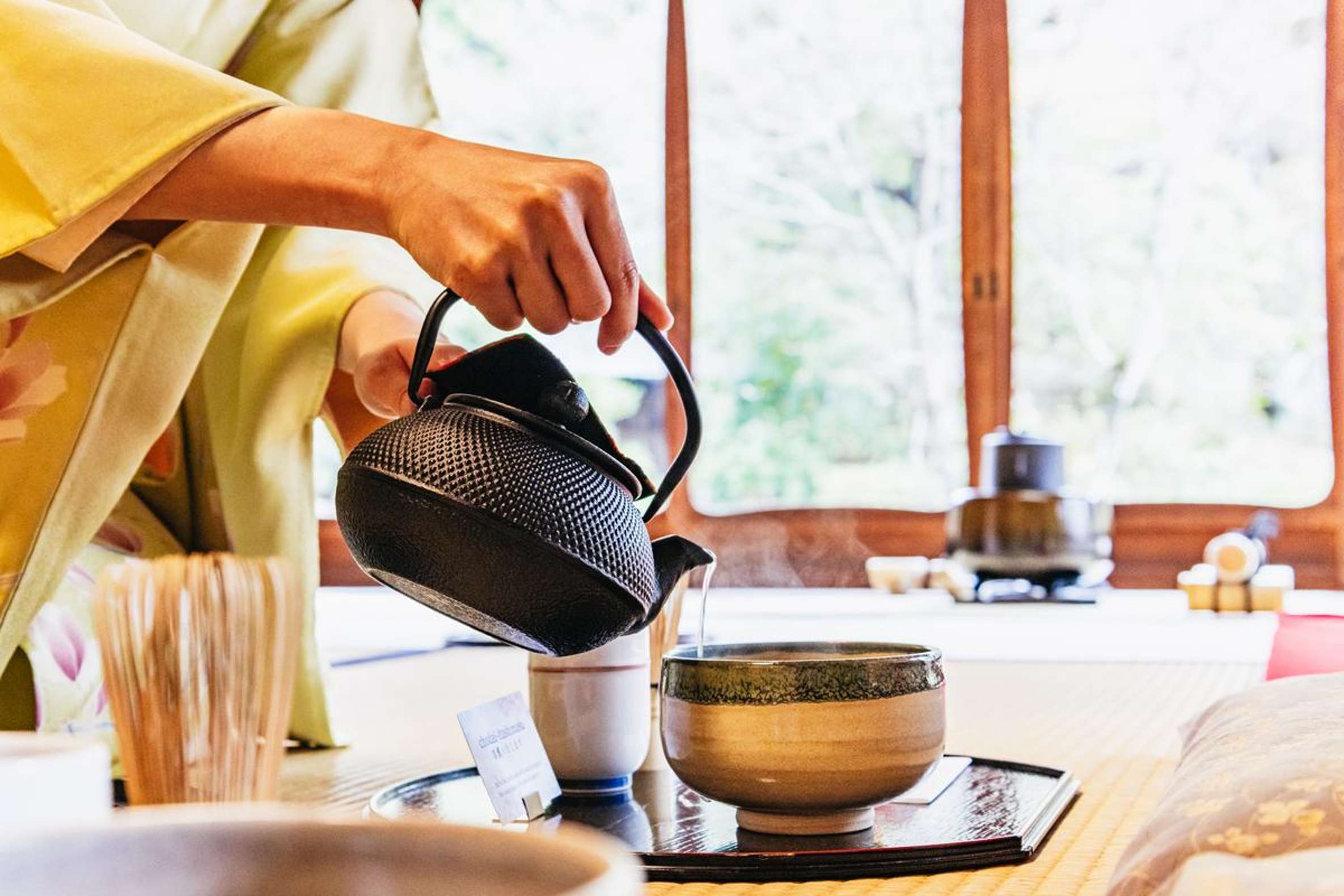
Kyoto's tea calendar has two humps and a trough. Cherry blossom from late March into April and the November foliage season are the peaks, with September running nearly as hot, and in those months a walk-up booking is a gamble.
Across Japan, tea ceremonies want 6 to 8 weeks of advance booking during the blossom and foliage peaks.
May experiences high tour traffic and mild weather, making advance booking several weeks ahead strongly recommended.
Tap a month to read it.
November is the busiest month of the year for autumn foliage, with group tea ceremony slots booking out two to four weeks ahead and private sessions filling mon….
Tap a month to read it.
The quiet stretch runs from December through February, when sessions go unfilled and a few days' notice usually secures a spot. Book earlier still for hands-on workshops in Uji, where peak-season spots fill two to three weeks out.
If you add kimono to the booking, an earlier morning session pays off twice: you dress, take the tea, and still have the afternoon to walk Gion or the Ninenzaka slopes in the rental before returning it by 5:30 pm.
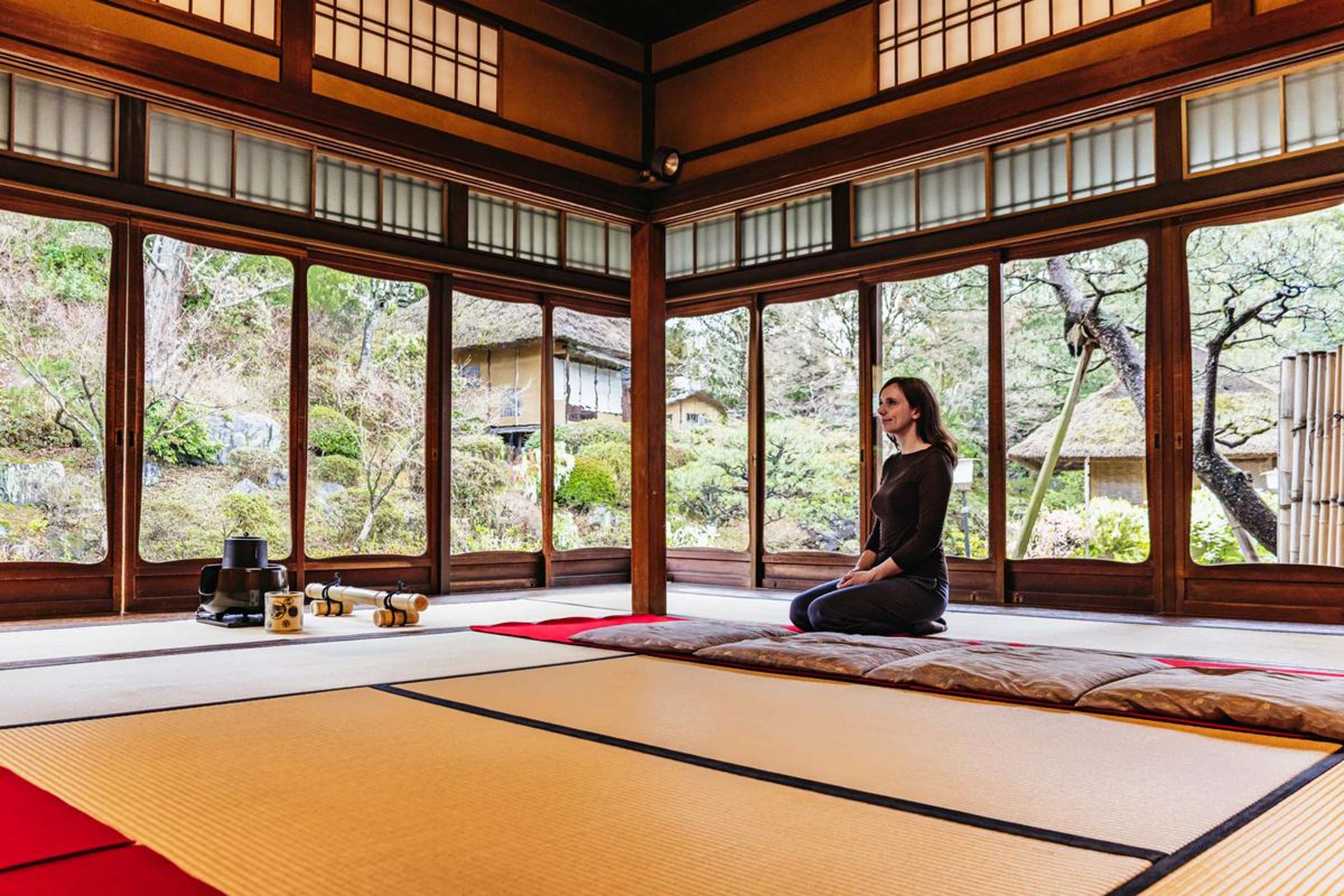
Whatever venue you chose, the same small rules apply, and none of them is hard. Shoes come off at the entrance, and bare feet never touch tatami, so socks are required; a fresh clean pair, white if you want to honor the tradition, slipped on just before the room.
Watches, rings, and bracelets come off too, because metal scratches the ceramic bowls when you lift them with both hands. Skip strong perfume, which covers the aroma the tea is meant to give.
Cameras have limits. Flash photography is prohibited everywhere, video recording is banned at several Kyoto venues, and at Uji's Taiho-an no photos are taken inside the tea room at all. Some sessions let you shoot during the demonstration but ask that those images stay off social media.
Lateness is the rule with teeth. At the Gion session you must arrive 5 minutes before the start; once it begins, the door stays shut and no refund follows. Other venues deny entry past 10 to 15 minutes, and one Uji operator cuts people off at 30 minutes for any reason, trains included.
Inside, etiquette is gentle. Turn the bowl 90 degrees clockwise before you drink, wipe the rim with thumb and finger when you finish, and keep off the shoji screens and the cloth borders of the tatami. Sandals, shorts, food, drinks, and indoor smoking are all out.
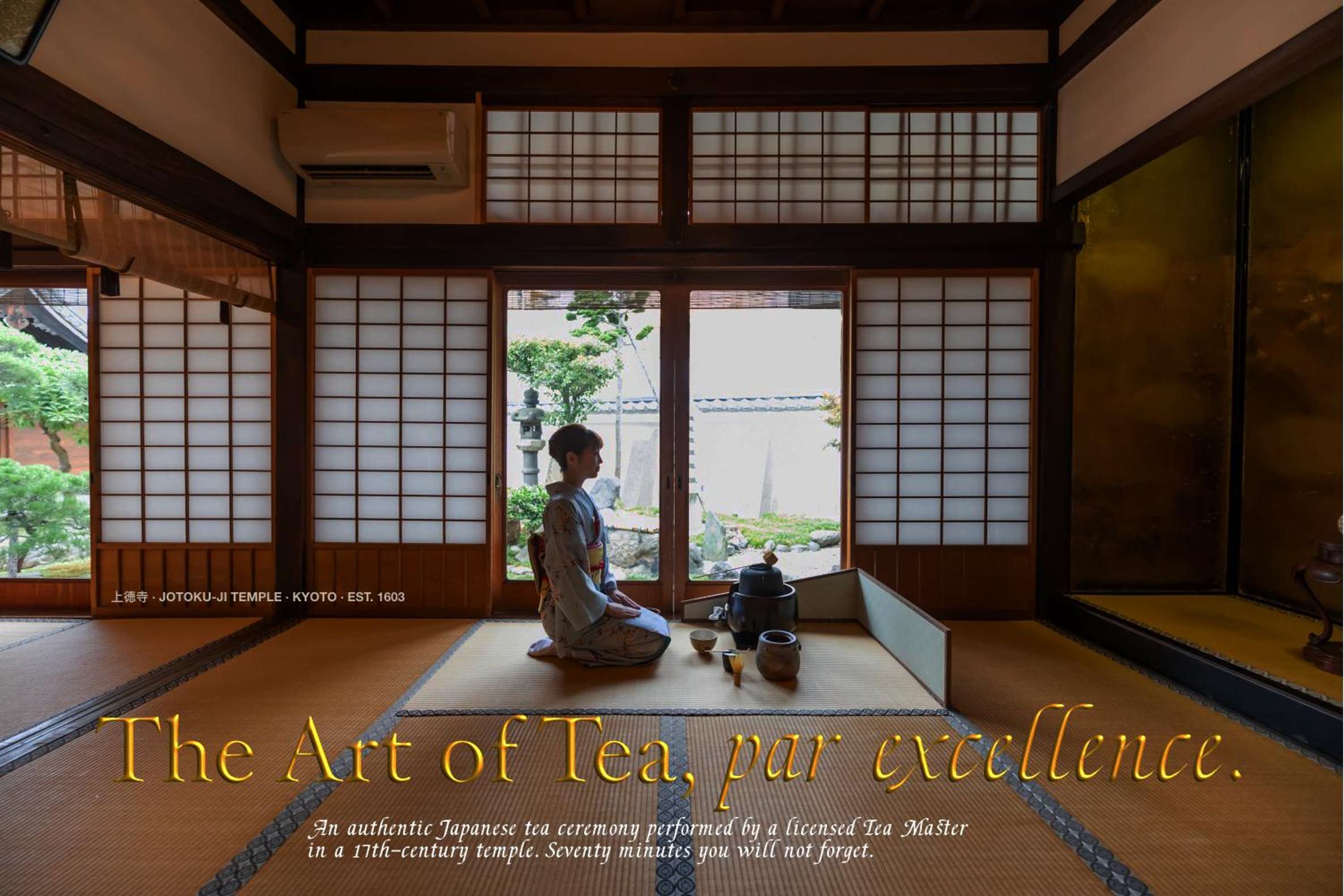
Each venue comes with a walk attached. From Jotokuji, Shosei-en Garden sits about a 6-minute walk south and the wide grounds of Higashi Hongan-ji under 10 minutes, with the temples Byodo-ji and Bukko-ji just north.
In Uji, Byodoin Temple, Ujigami Shrine, Koshoji, and the Tale of Genji Museum all fall within 600 meters of the tea shops.
In Gion, the pairing is Kennin-ji and Maruyama Park, as covered earlier, with the preserved lanes of Ninenzaka and Sannenzaka running south toward Kiyomizu-dera.
Timing decides the mood of that walk. Between 9 and 11 am the historic streets are calmest, before the day-trippers arrive; between 3:30 pm and 5 pm the light turns soft and warm, the best hours for garden photographs. An early tea followed by an afternoon temple fits both windows.
Other bookable activities around each venue, from calligraphy to maiko sessions, appear in the live box below.

All of Kyoto's visitor ceremonies include matcha and a sweet, so the choice is about setting and pace. Gion fits a Hanamikoji day and everyone sits in chairs. The garden tea house below Kiyomizu-dera fits a short Higashiyama stop.
A machiya or temple suits travelers who want depth, and Uji suits anyone who loves the tea more than the ritual. Book early in April and November; winter forgives late planners.
Short answers to what travelers ask most before picking a venue and a time slot.
 Kyoto2026
Sessions take place across the city: in Gion a short walk from Yasaka Shrine, in a garden tea house down Sanneizaka near Kiyomizu-dera, inside Jotokuji Temple, in a 100-year-old machiya townhouse near Karasuma Oike, and near Karasumashijo and Nishiki Market. You can usually pick a venue that sits directly along your sightseeing route.
Book as early as you can. Tea ceremonies in Kyoto frequently sell out completely during the cherry blossom and autumn foliage seasons, when popular time slots fill up well ahead and walk-in spots are unreliable. Winter, from December to February, stays quietest and is easier to arrange on short notice.
It depends on the venue, and some rules are strict. At several tea houses, late arrivals cannot join once the session has begun, and no refund is given. One operator denies entry to anyone more than 30 minutes past the start time, whatever the reason, including train delays. Plan to arrive a few minutes early.
You take off outdoor shoes at the entrance, so wear or carry socks, since bare feet are not allowed on tatami mats.
Clean socks of any color are accepted at most temples, though white remains the traditional courtesy. Skip sandals and flip flops at certain venues, and choose comfortable clothing that lets you sit on the floor.
Yes. Chairs are standard at one Gion venue, and stools and seats can be provided at the Jotokuji Temple ceremony. The machiya townhouse session offers small chairs for anyone who prefers not to sit on the floor, and bamboo chairs are available on advance request at the Karasumashijo tea room.
No. Introductory sessions for visitors are relaxed and welcoming, built around cultural lessons and the meaning behind the utensils. Small mistakes in etiquette are routinely overlooked, and hosts explain each step in English, so first-time visitors can follow along with confidence.
Photography rules vary by venue. Flash is prohibited during the townhouse ceremony, video recording is not allowed at certain tea houses, and some sessions let you take photos but ask that specific images stay off social media. Check the rules on your booking page before you arrive.
Pure ceremonial matcha is strong compared with the sweetened drinks many visitors know, but a sweet is served first to balance the bitterness on your palate. The portion is only a few small sips, so you taste it without committing to a full bowl.
A ceremony alone runs about 45 to 70 minutes. Add kimono dressing and the total grows to roughly 90 minutes to 2.5 hours, depending on whether dressing and the tea room sit under one roof or at separate addresses. If the shops are apart, you travel between them on your own in traditional footwear.
Age limits differ by venue, so check before booking. Children under 5 are not admitted at the temple ceremony and one Gion house, the garden tea house near Kiyomizu-dera requires guests to be 7 or older, and the 100-year-old townhouse session suits ages 10 and up.
Quiet is expected everywhere, and disruptive guests may be asked to leave.
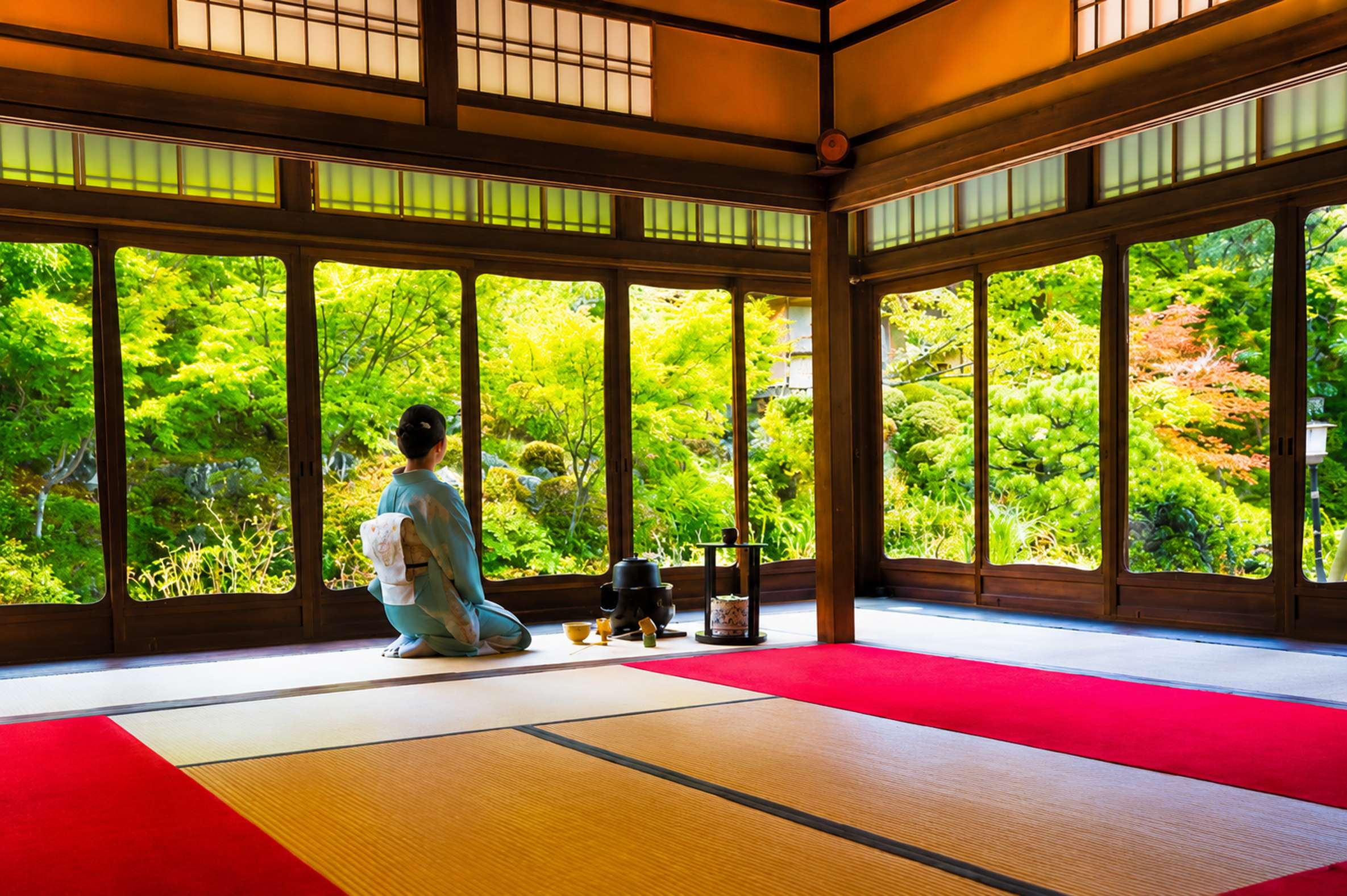
Watch a tea master in a tea house overlooking a designed garden, then whisk your own bowl, with free cancellation up to 24 hours ahead.