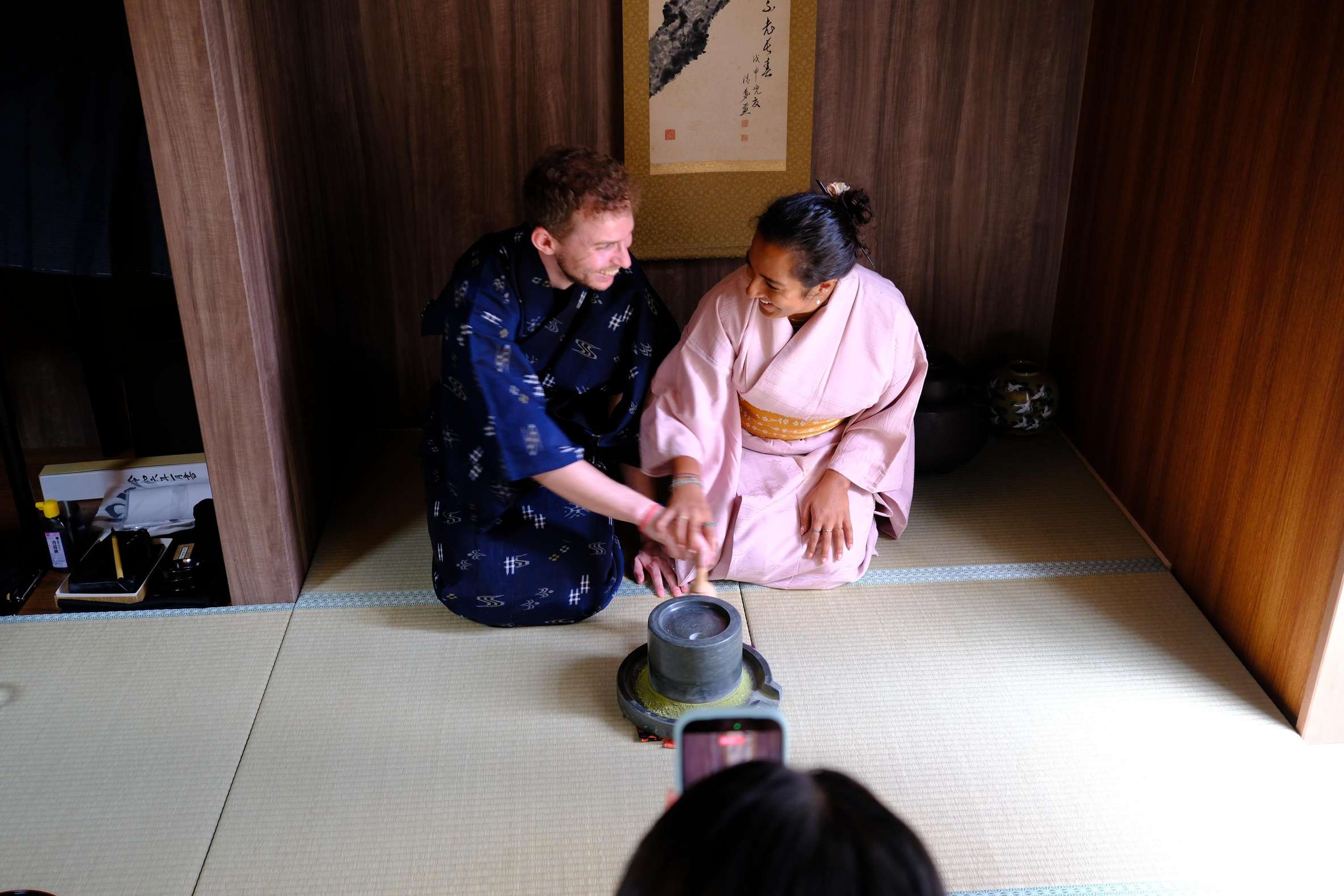
4.91,465 guests whisked matcha in a private townhouse
Private Tea Ceremony in Kyoto Hidden Townhouse Experience
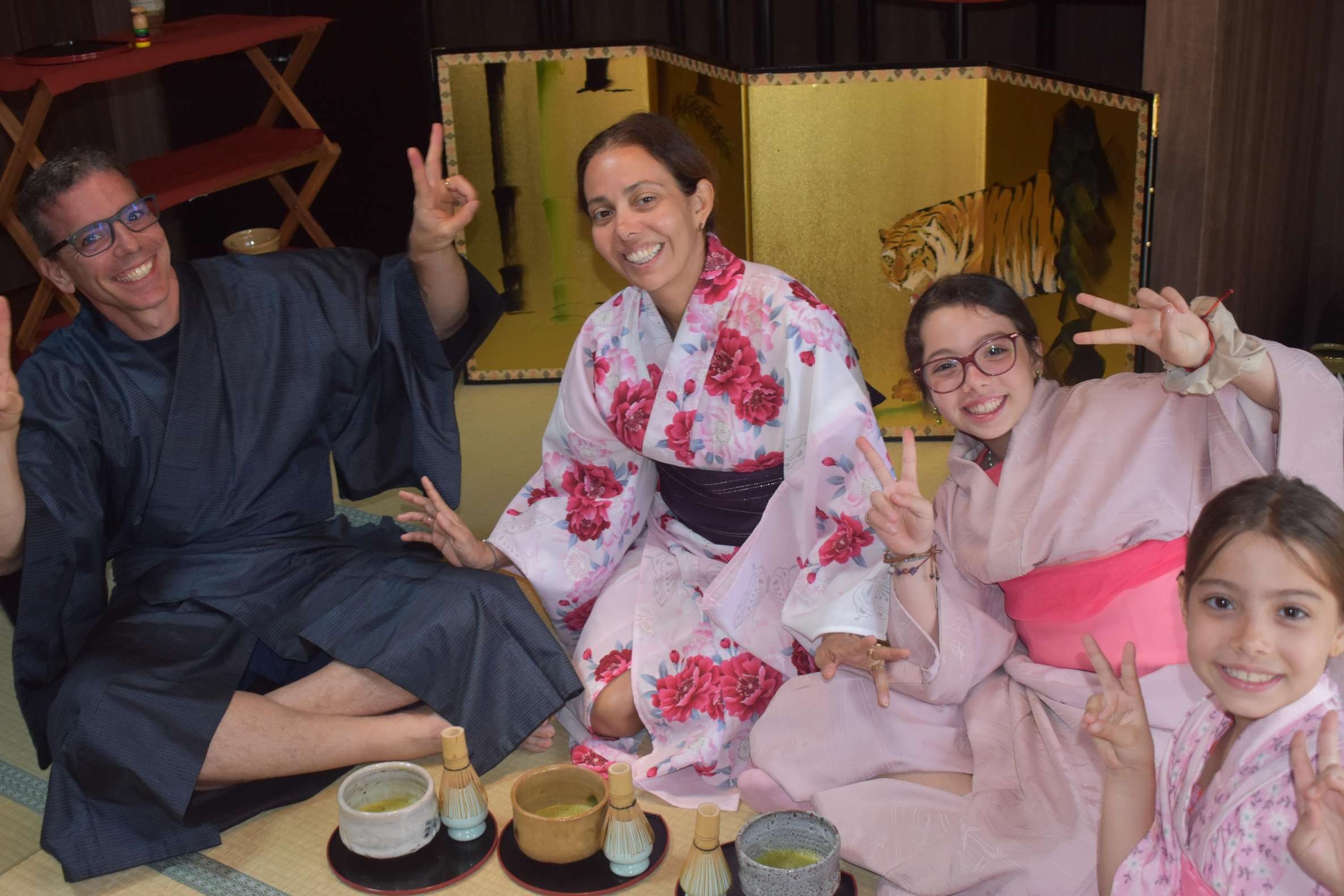
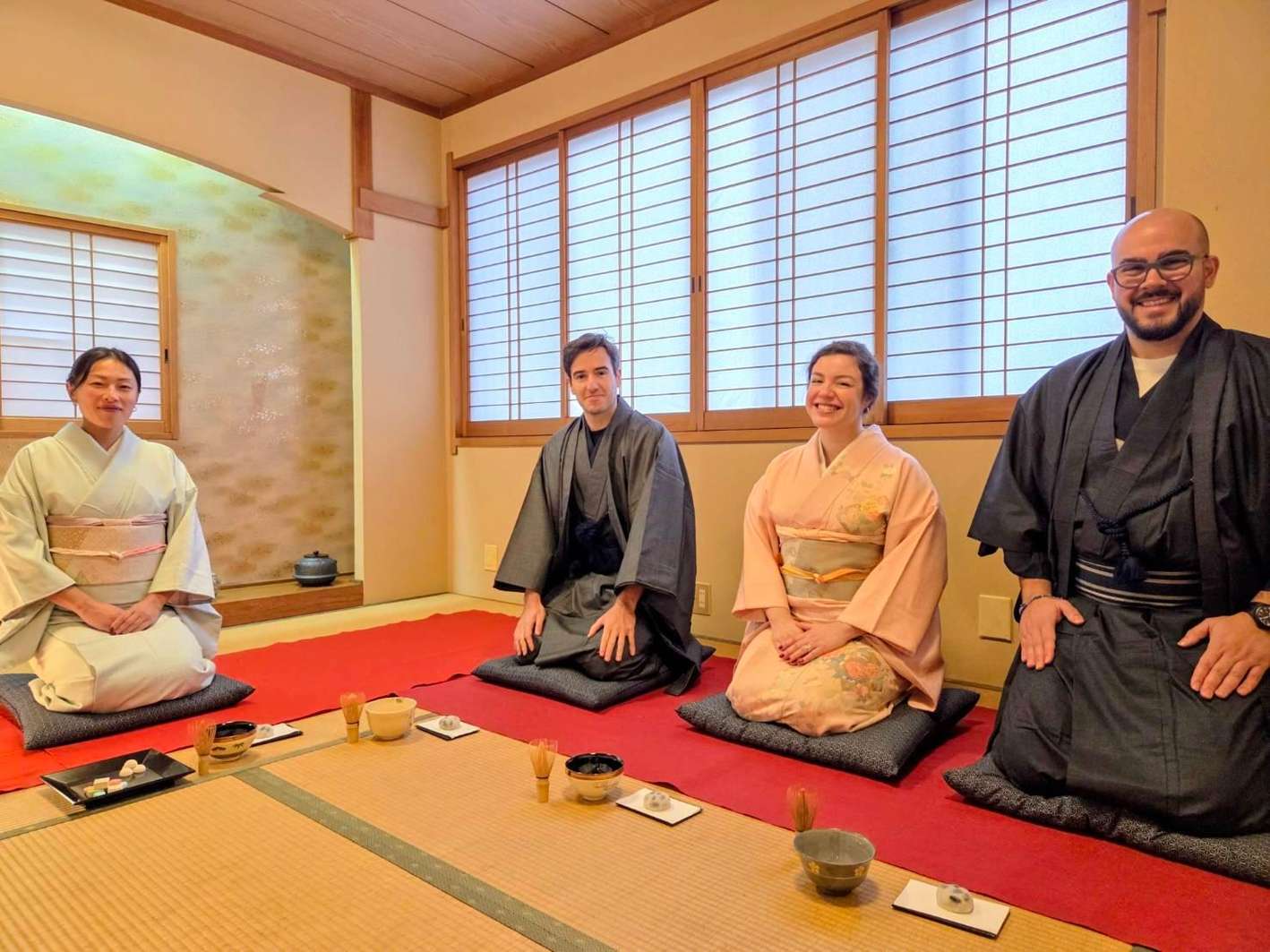
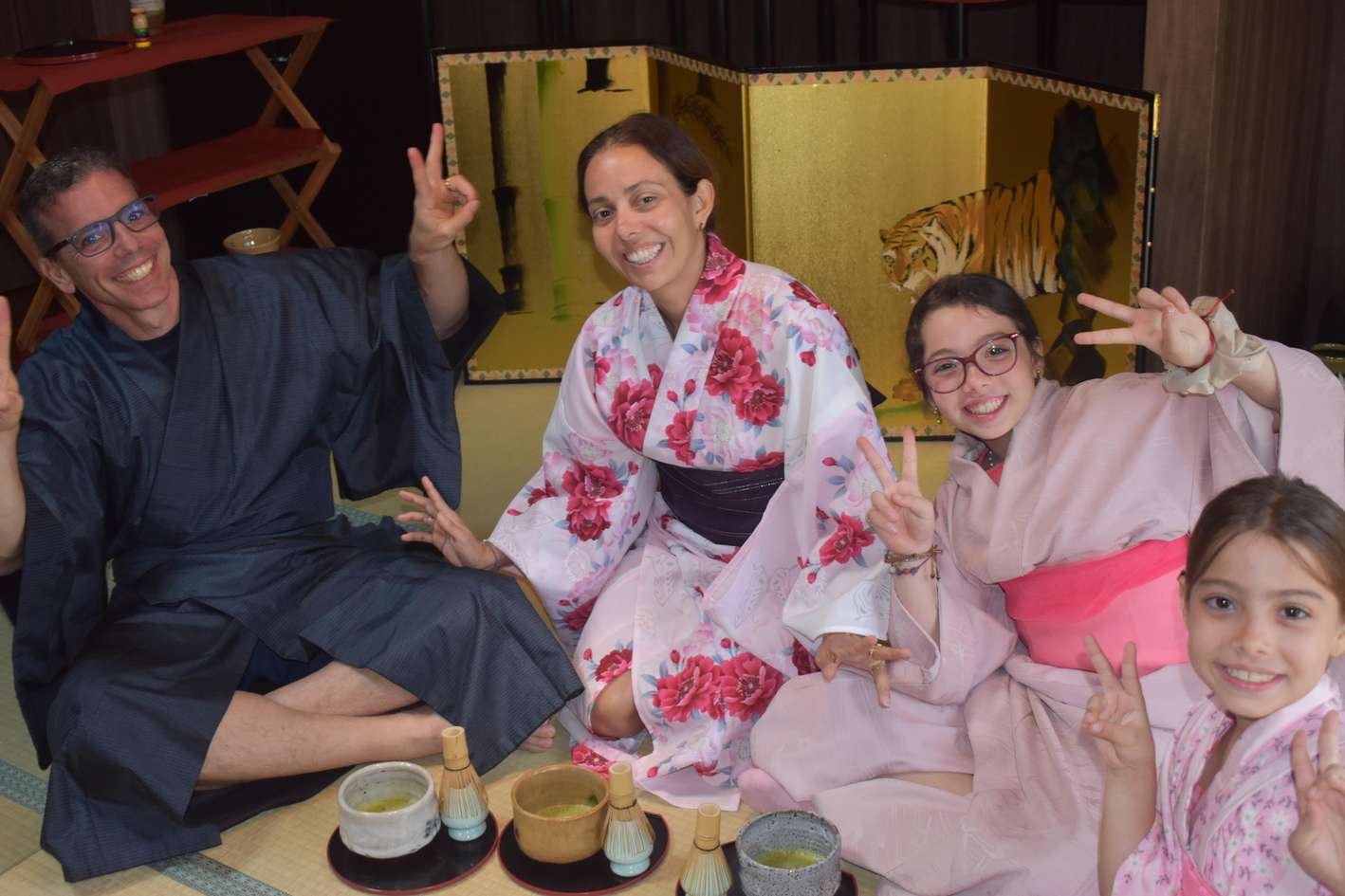
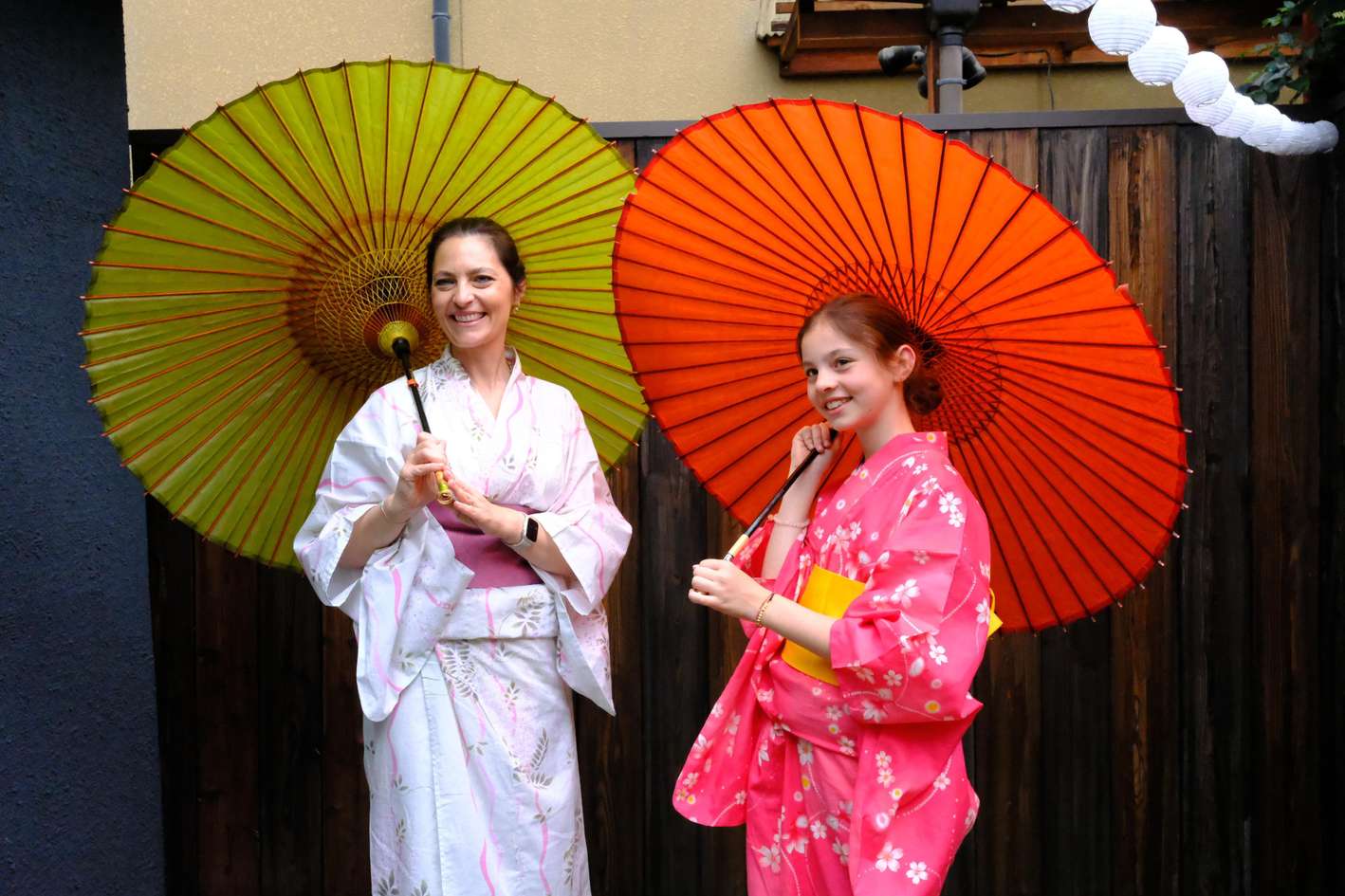
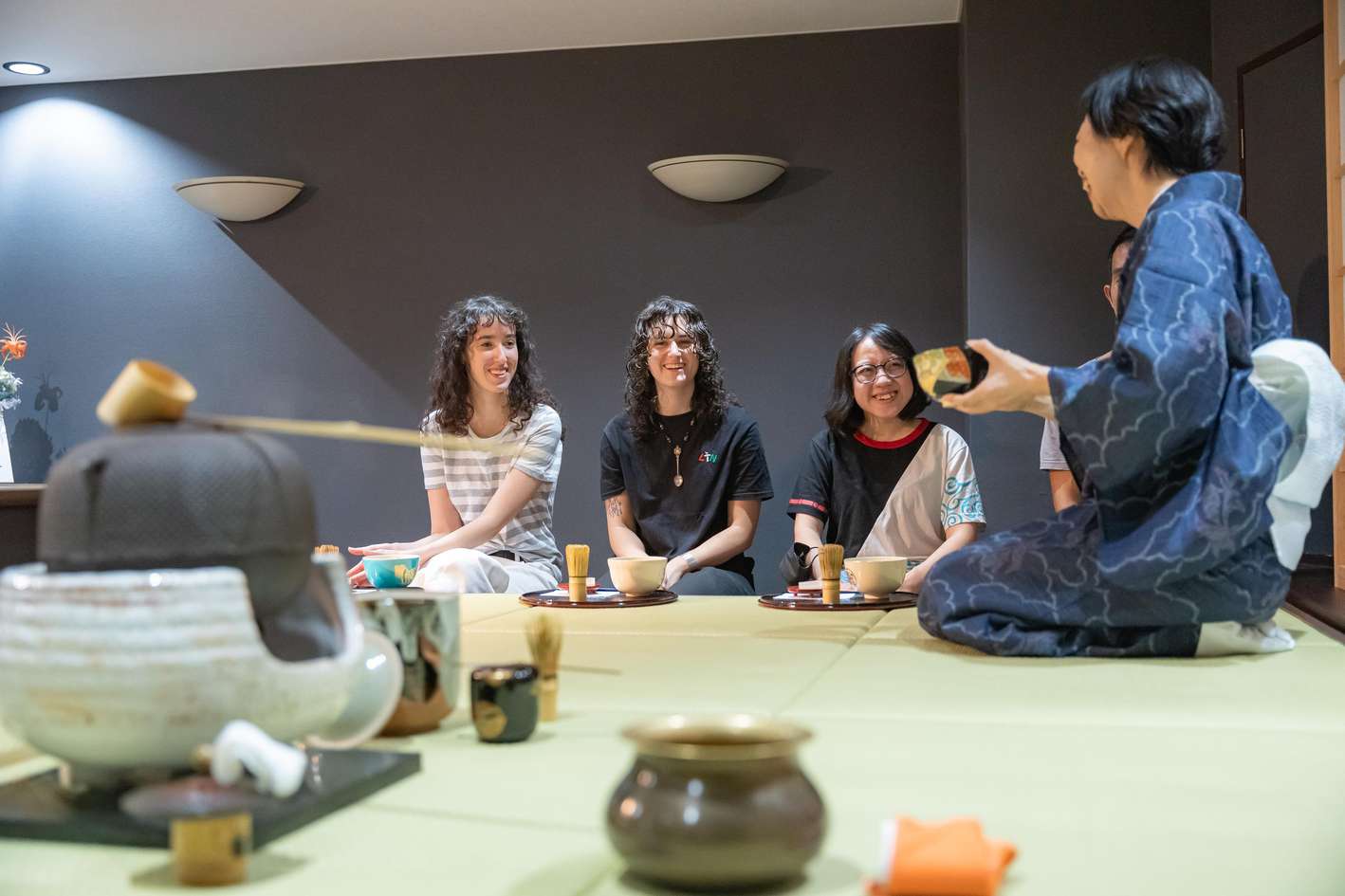
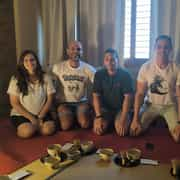
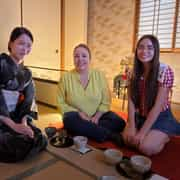
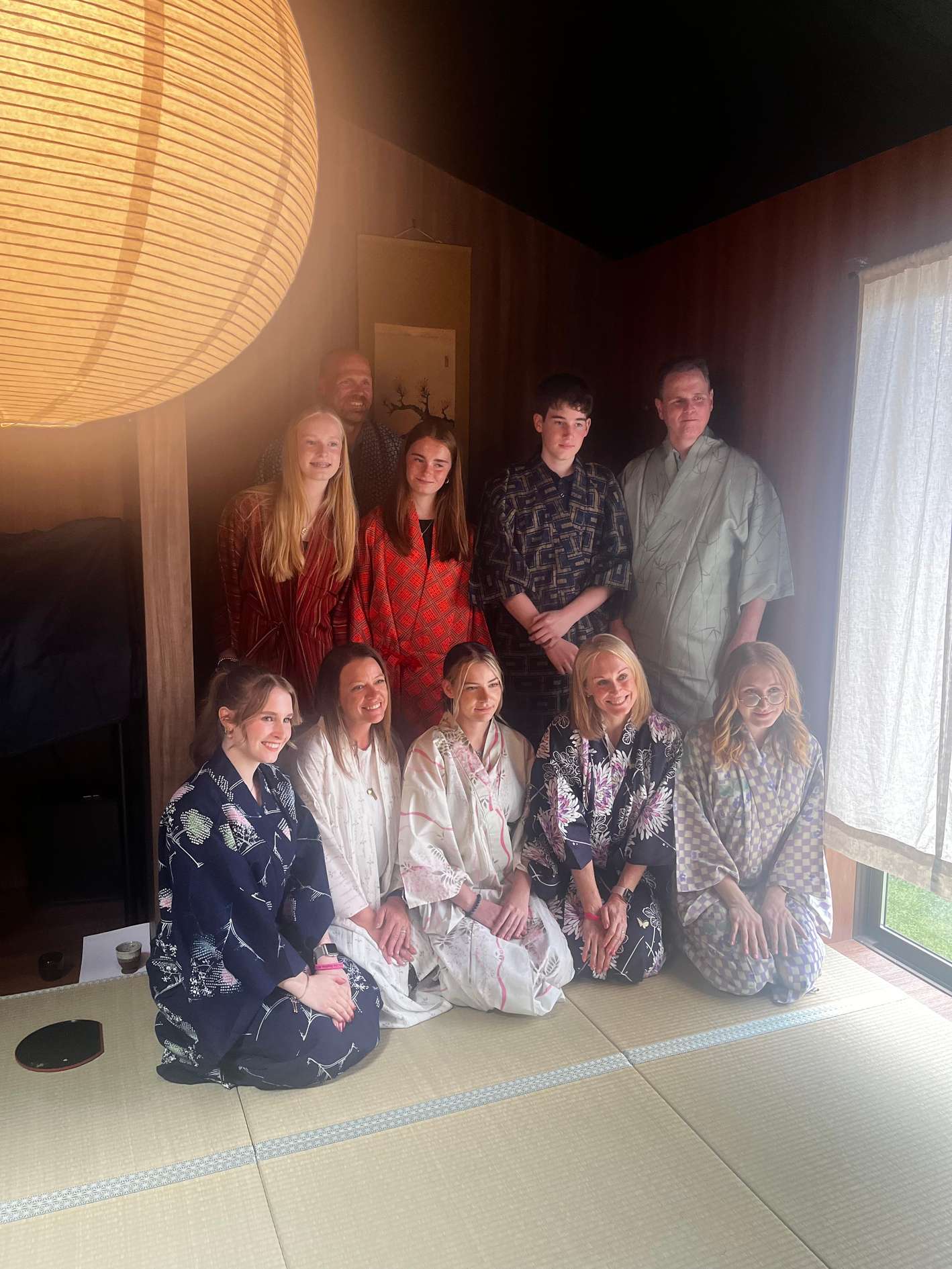
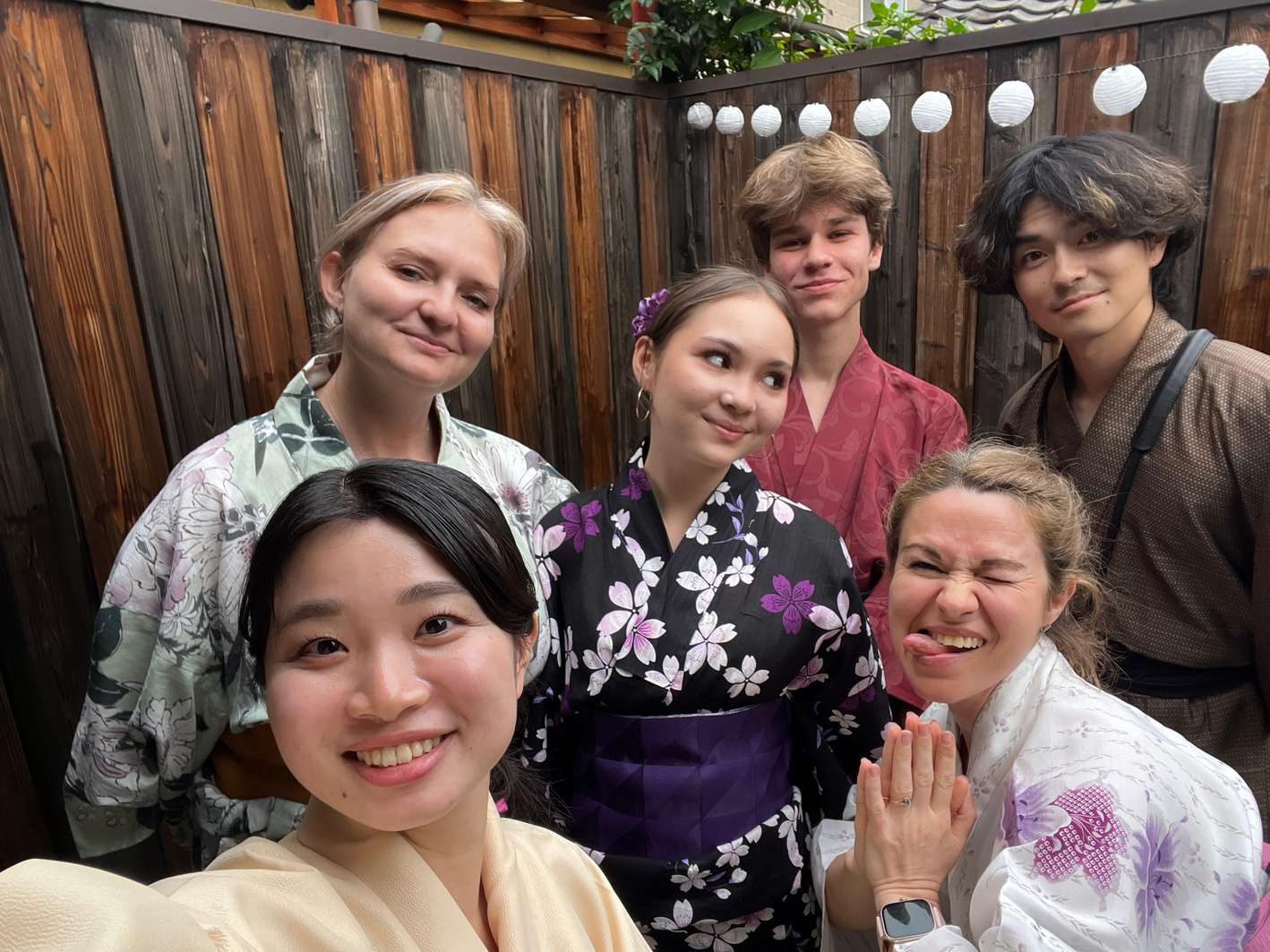
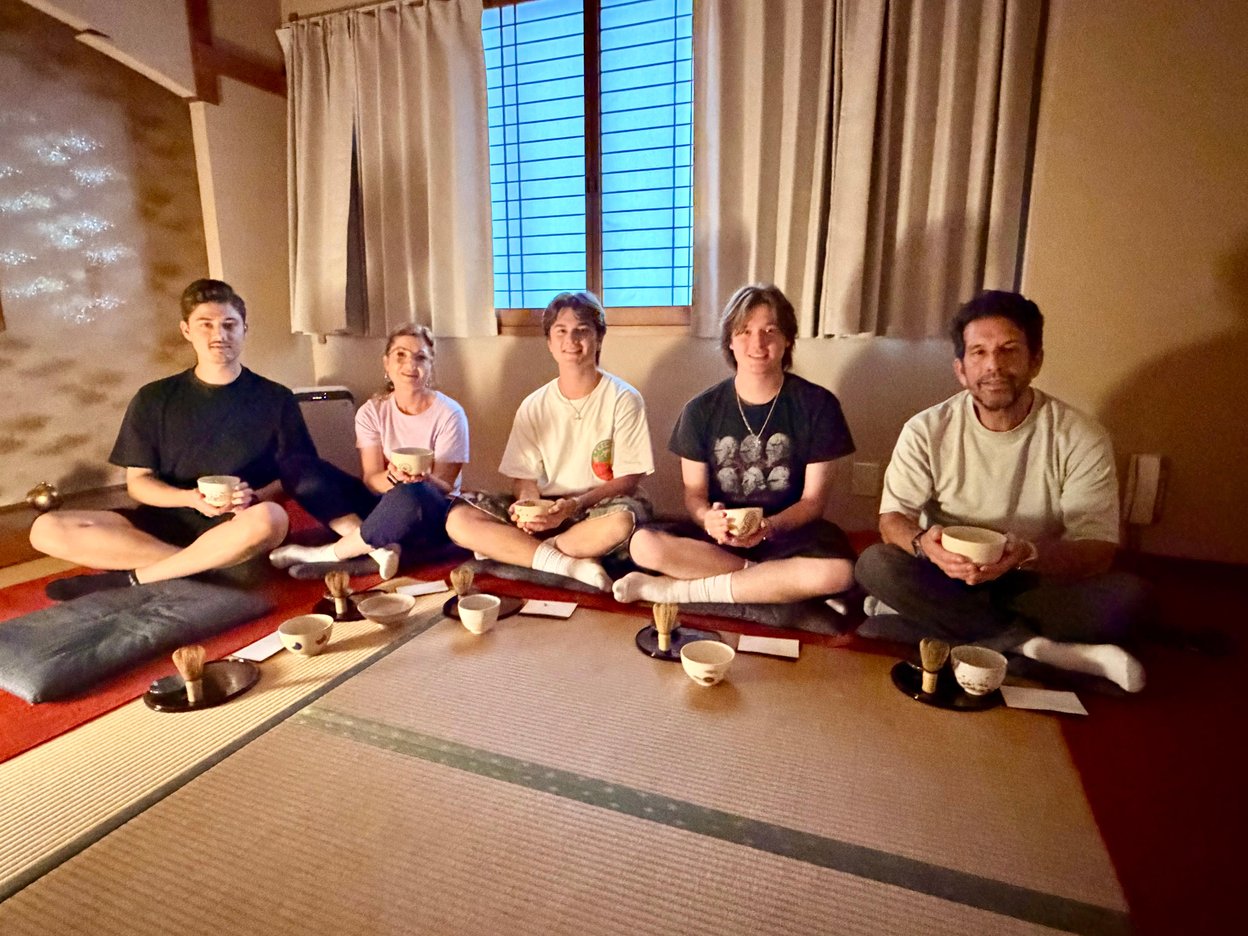
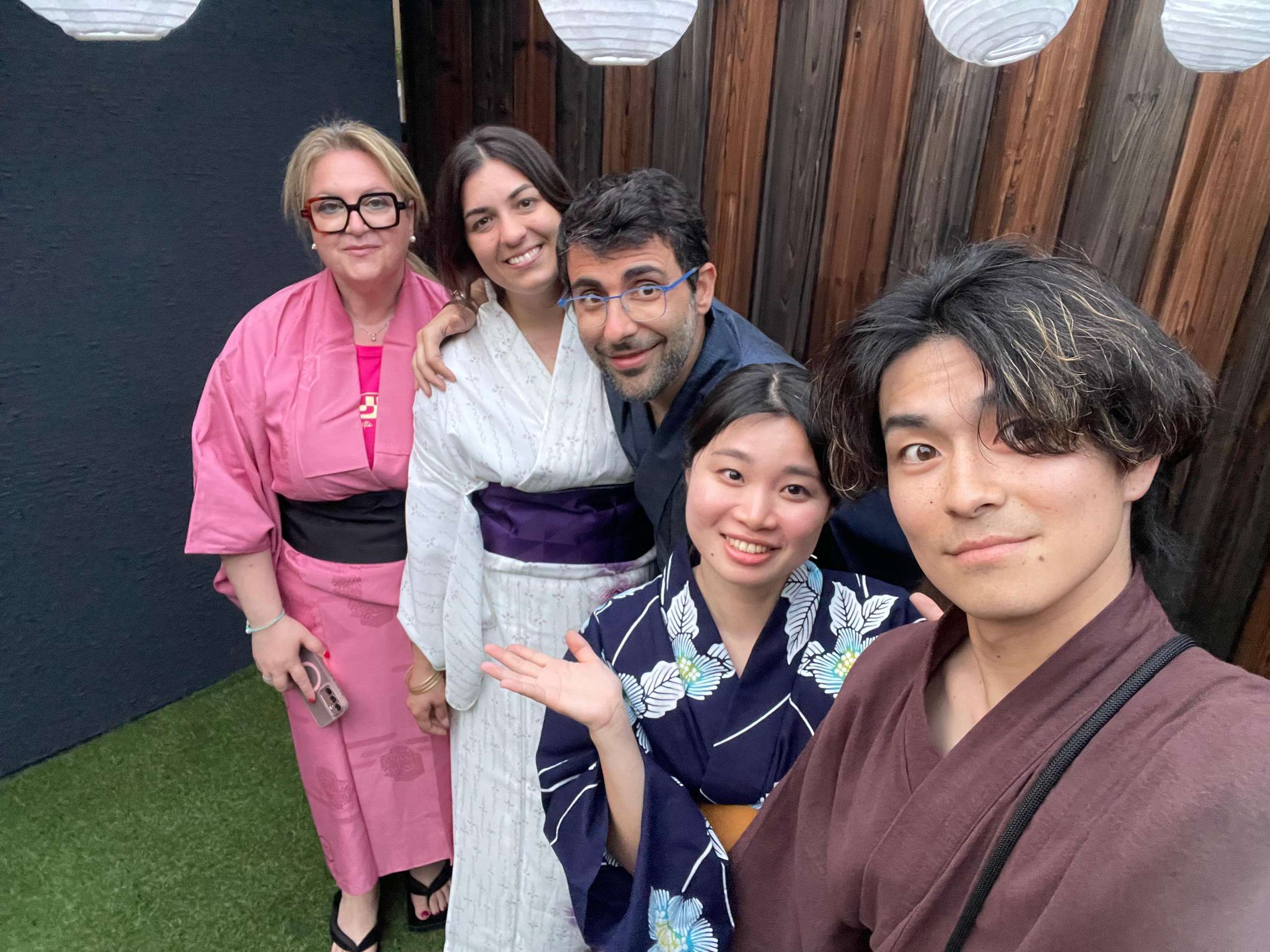
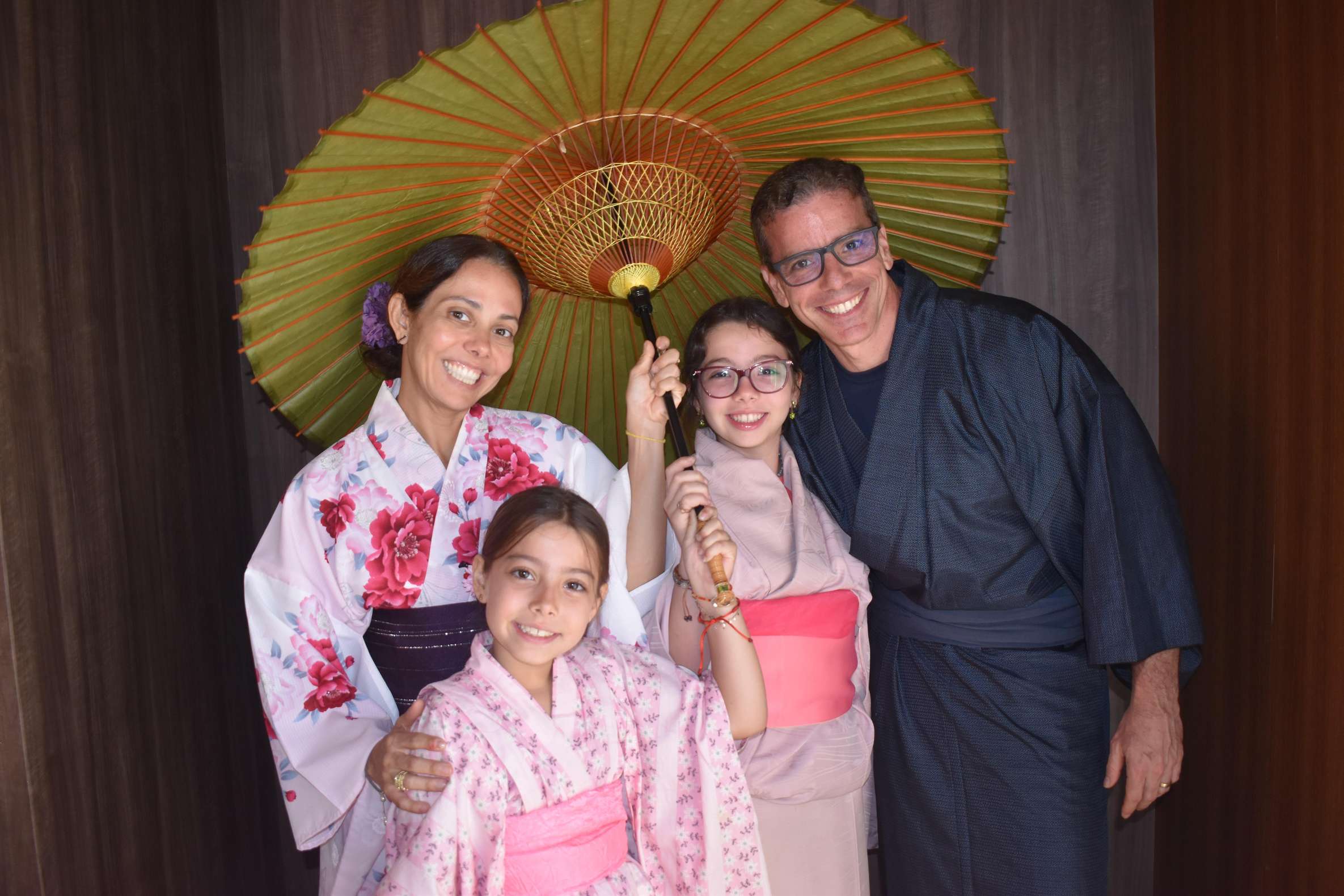
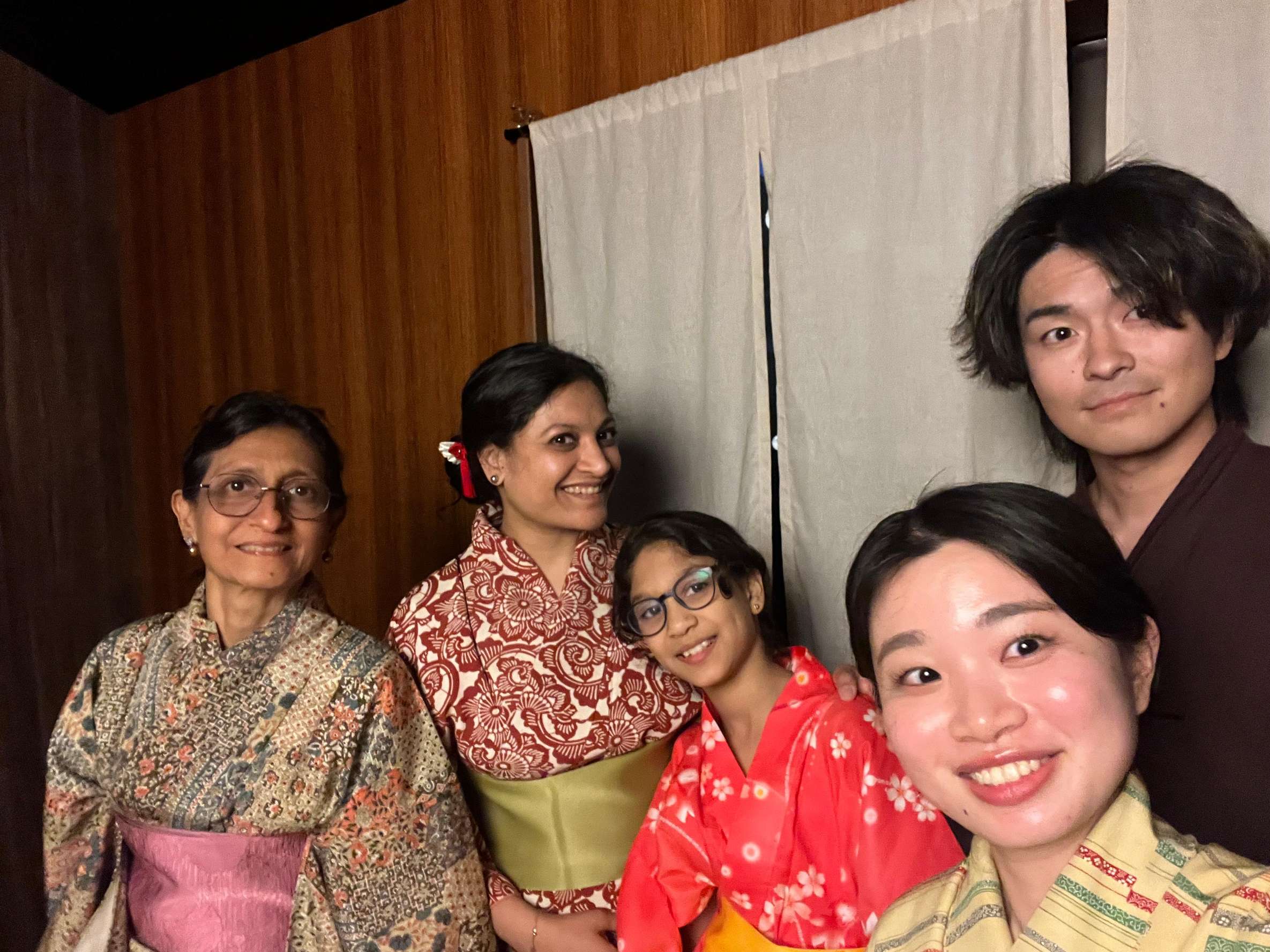
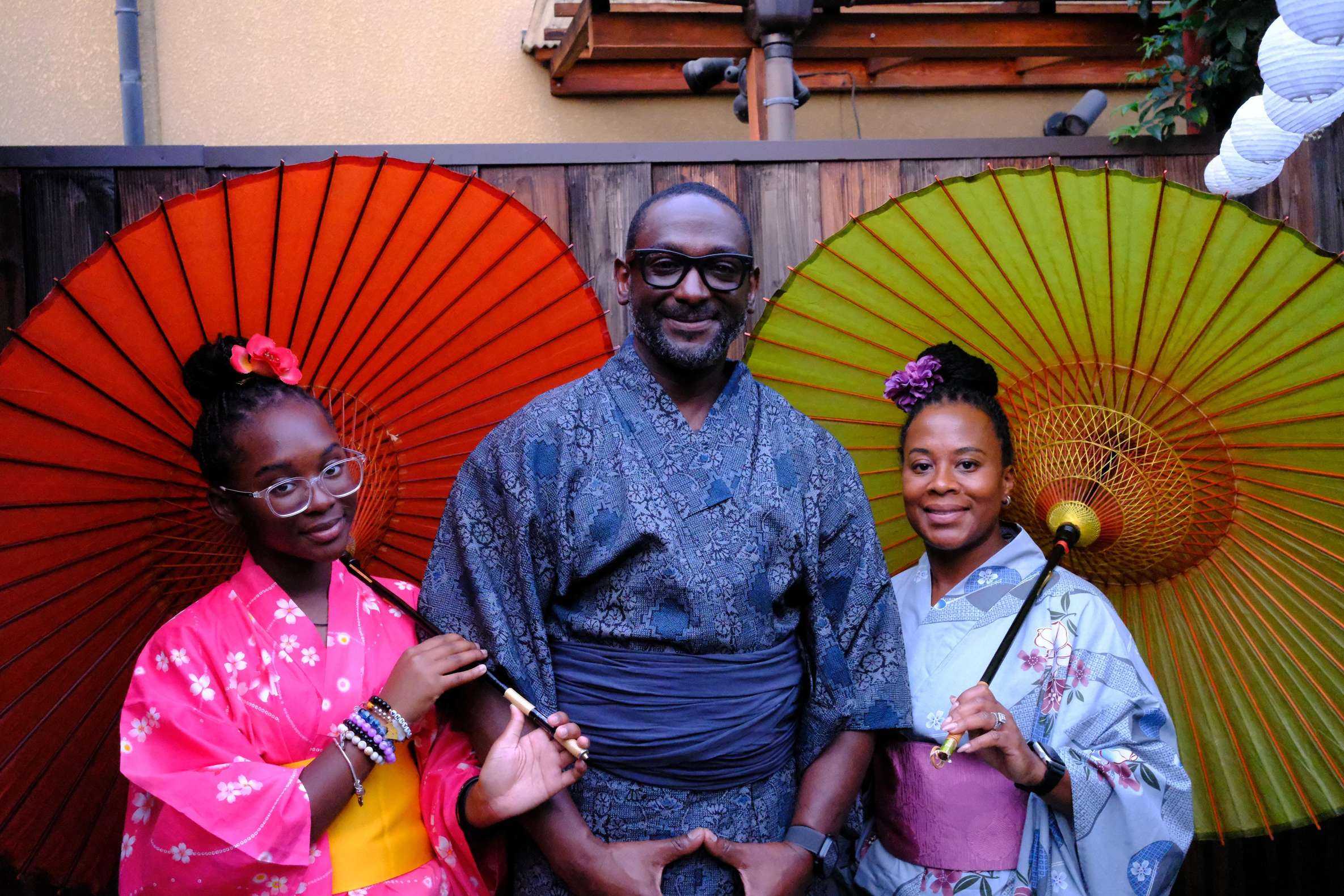
Book a private tea ceremony in Kyoto and whisk your own bowl of matcha with no strangers watching. An entire 125-year-old townhouse reserved just for your group, with kimono dressing and calligraphy in the same visit. Kids can wiggle, guests can ask every question, and your host guides each step in English.
"Airi and Yu gave us such a gorgeous tea ceremony demonstration and even wrote our names in calligraphy. My husband and I were blown away. Beautiful experience, highly recommend!"
4.9★average rating1,465traveler reviews100%free cancellation38countries travelers came from
Picking your private tea ceremony in Kyoto
Three kinds of private booking sit side by side here: a Gion tea room held for your party alone, a whole machiya townhouse with calligraphy and kimono added, and a compact tatami session you can upgrade to private. Every one of them has you whisking your own matcha, so the real choice is space, add-ons and how much time you have.
SocksWear a clean pair, because bare feet are not allowed on tatami; white is the traditional courtesy.
Late arrivalDoors lock at the start time at many Kyoto tea houses, so arriving late can mean no entry and no refund.
ChildrenAge minimums vary by venue, and the hundred-year-old machiya admits guests aged ten and up.
SeatingAsk ahead for a chair if kneeling on tatami is hard on your knees or back; several venues provide one.
JewelryTake off rings and watches, since metal scratches the tea bowls you lift and inspect.
PerfumeSkip strong scent, which covers up the aroma of the matcha.
SweetsEat the wagashi before your first sip, so the sweetness balances the bitterness of pure matcha.
CaffeineThere is no decaf matcha; pregnant or caffeine-sensitive guests can tell the host in advance and take a courtesy sip or plain hot water.
AllergiesWagashi can contain wheat, soy or nuts, so flag serious allergies with the host well before the session.
BookingReserve six to eight weeks ahead for cherry blossom season and November, when slots fill first.
accessChildren aged 5 and under are not permitted at the Gion tea ceremony venue, and many Kyoto tea houses set minimum ages of 4 or 7 for their sessions.
Check the minimum age on the session you book before paying, especially with a toddler in your group. Every child counts as a guest on the reservation, even one too young to whisk tea, so include all of them in your headcount when you reserve.
Best private tea ceremony in Kyoto, compared
100% private machiya
45 minutes - 1.5 hours·English, Japanese
5.0(283)
Kyoto: 100% Private Tea Ceremony, Calligraphy, and Kimono
The whole 125-year-old townhouse is yours alone, 9 minutes' walk from Kyoto Station, with calligraphy and kimono as add-ons.
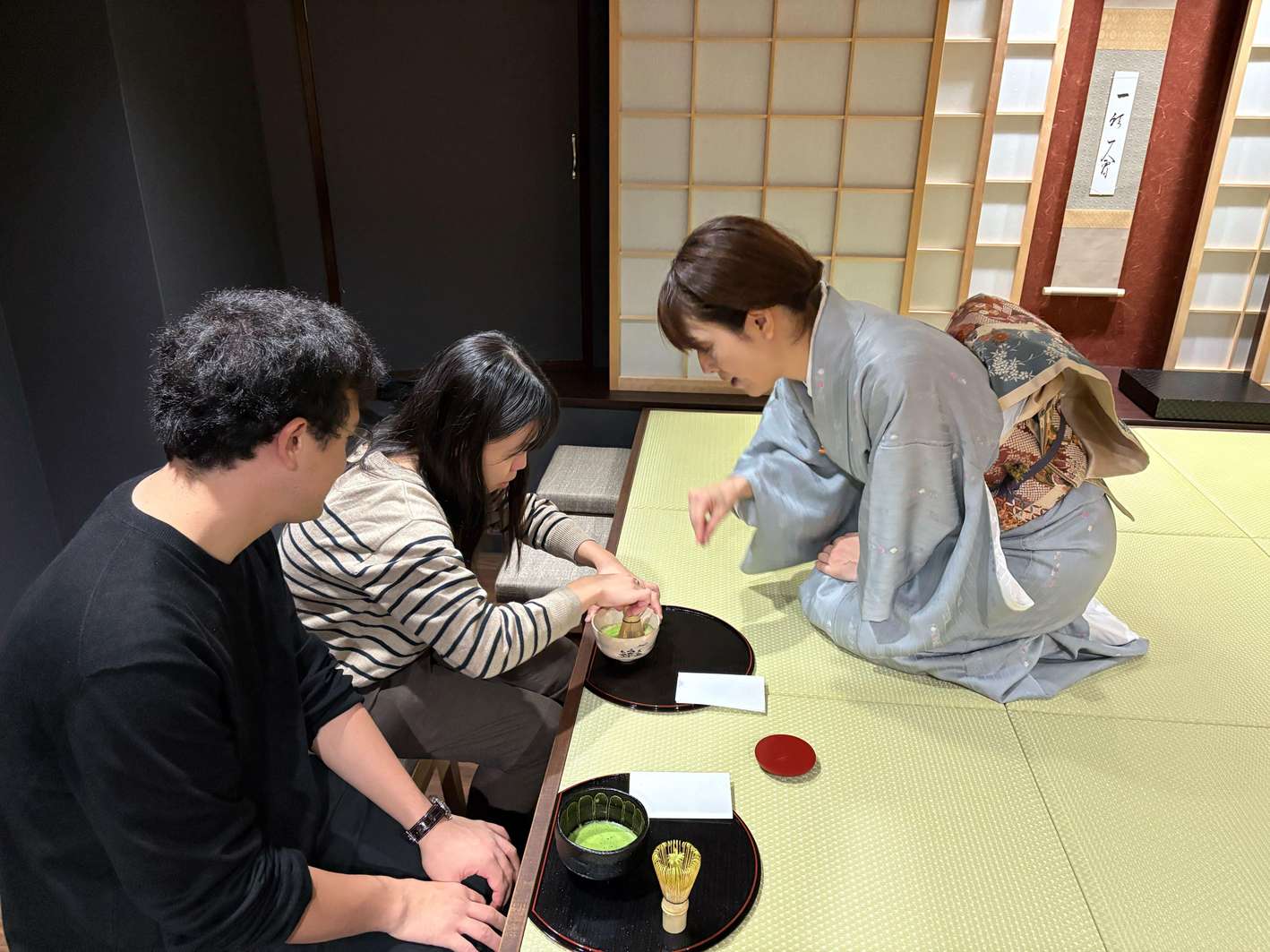
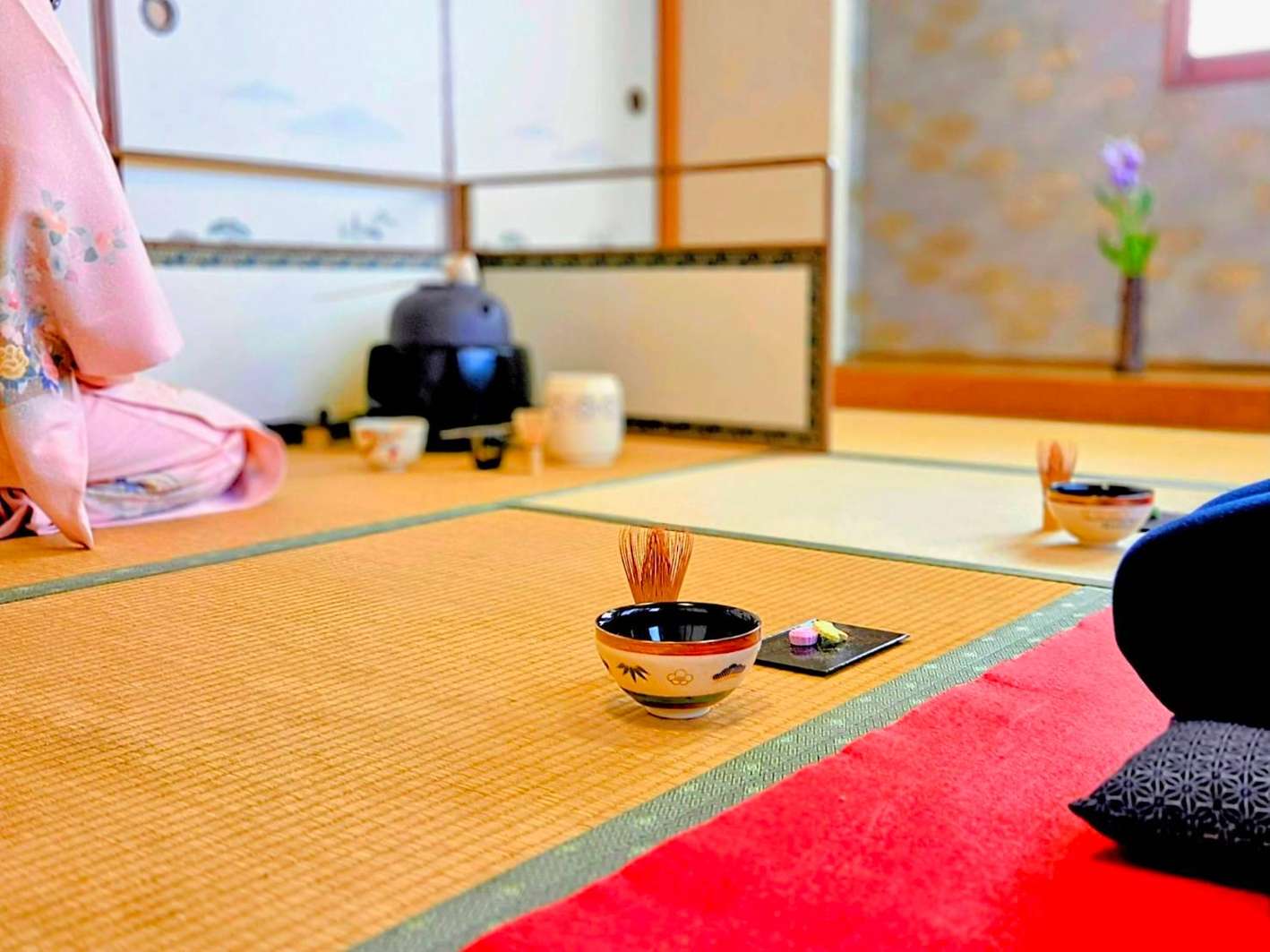
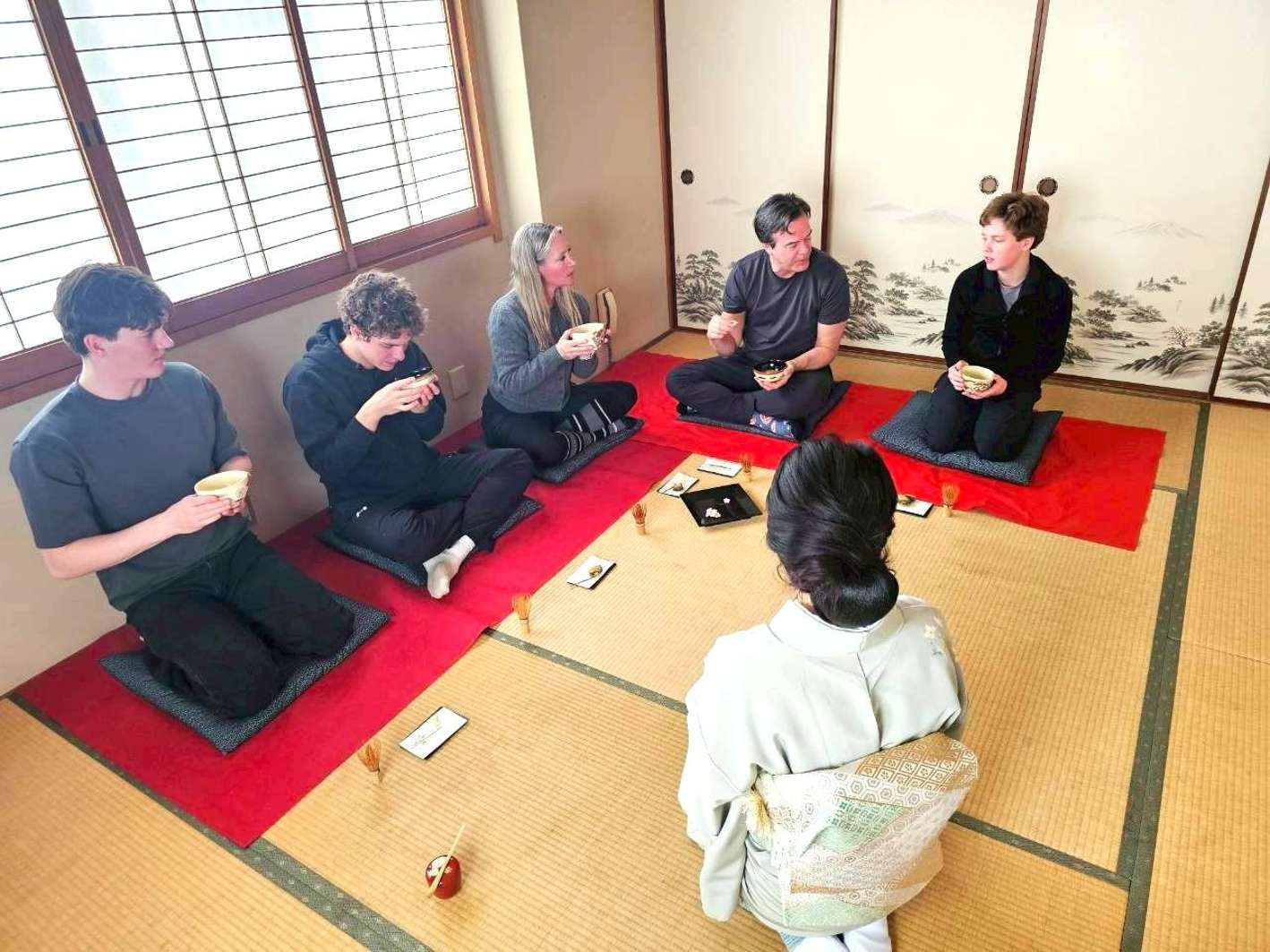
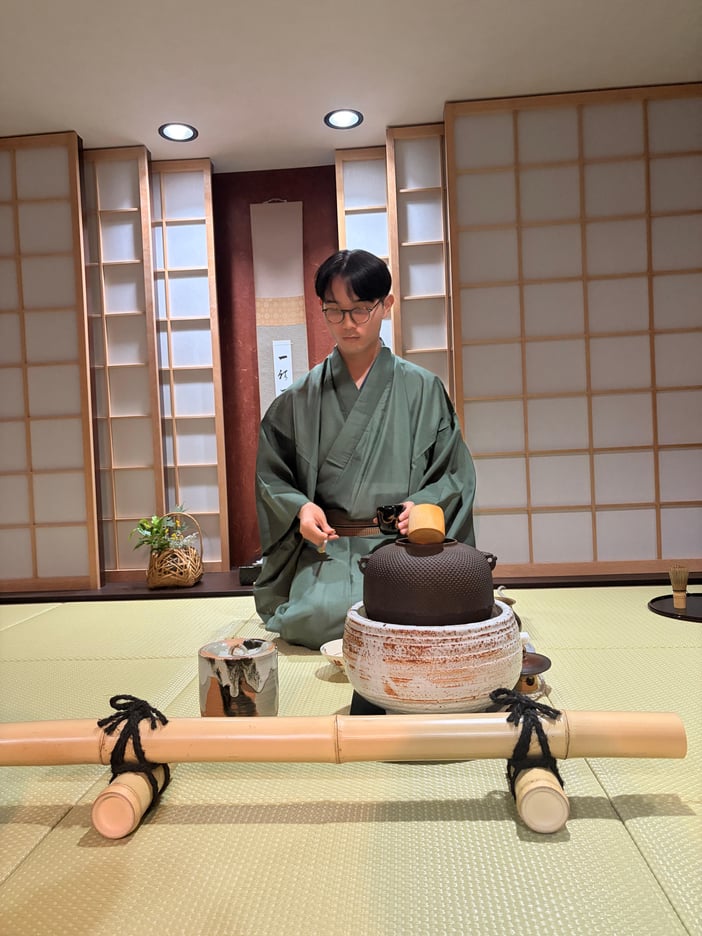
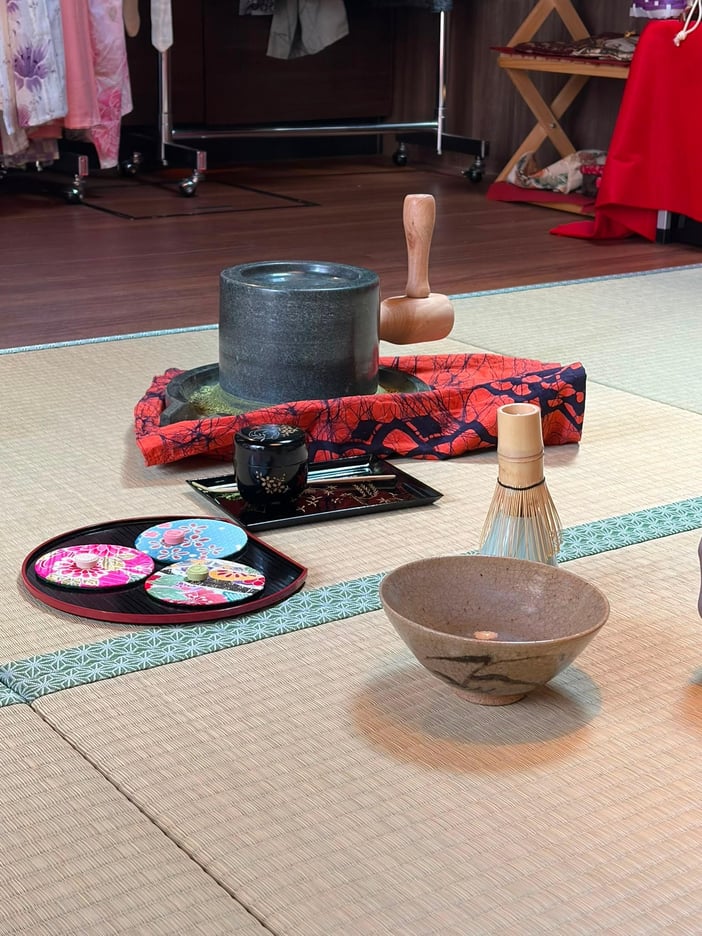
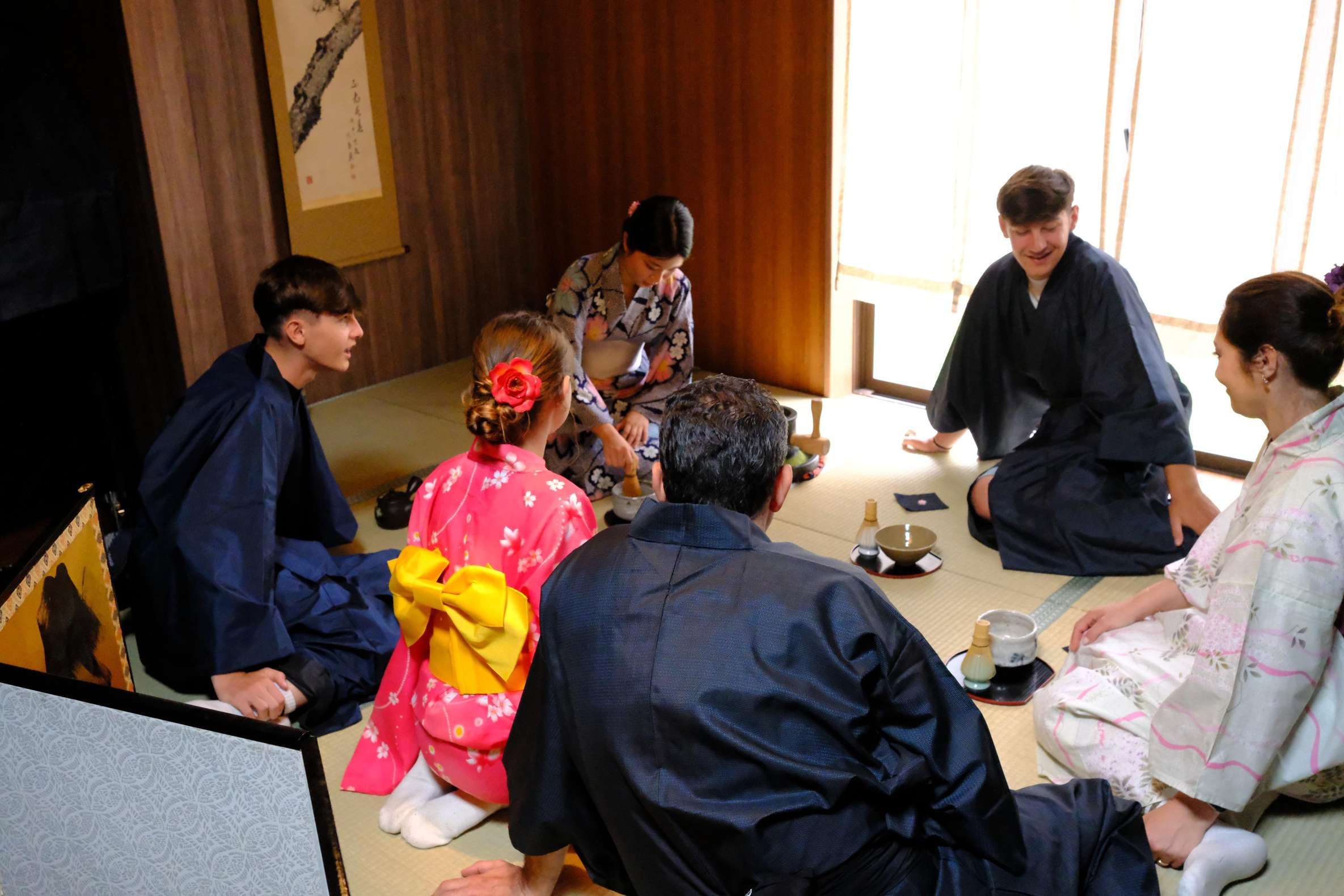
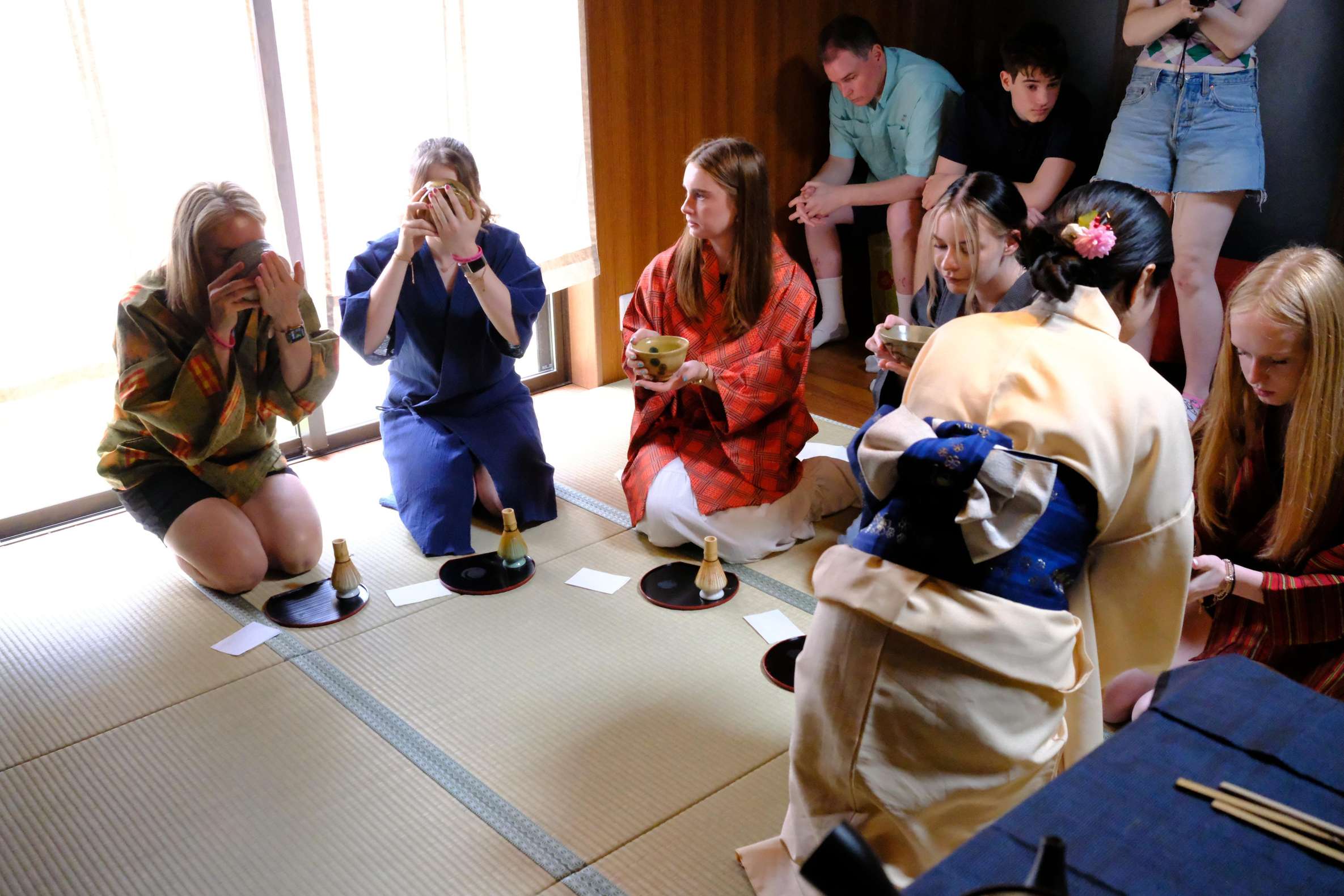
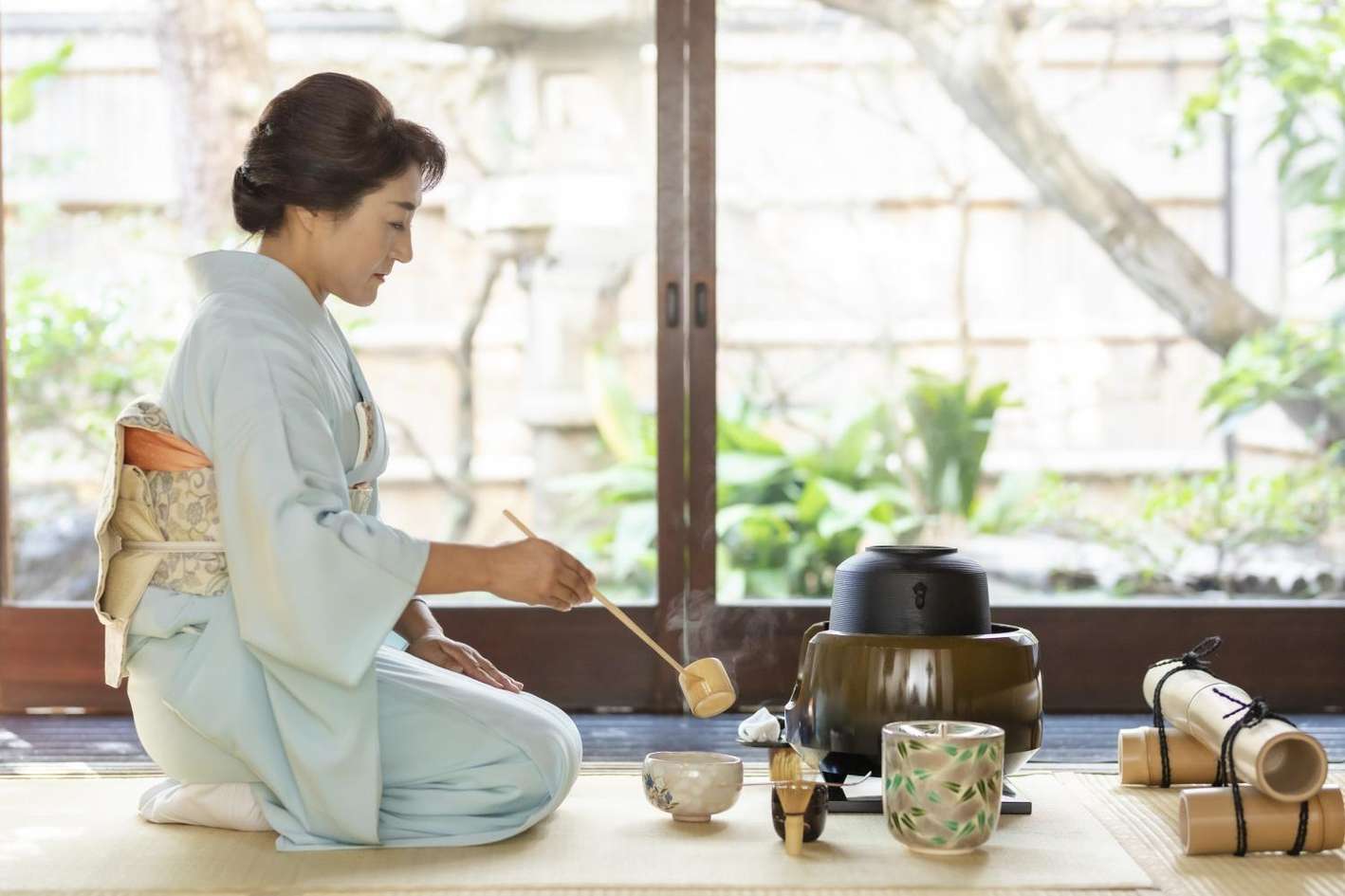
The house comes first: a 125-year-old machiya, all of it reserved for your party with no other guests inside. Your host opens the session with a demonstration, whisking matcha on tatami while explaining the history and meaning behind each movement.
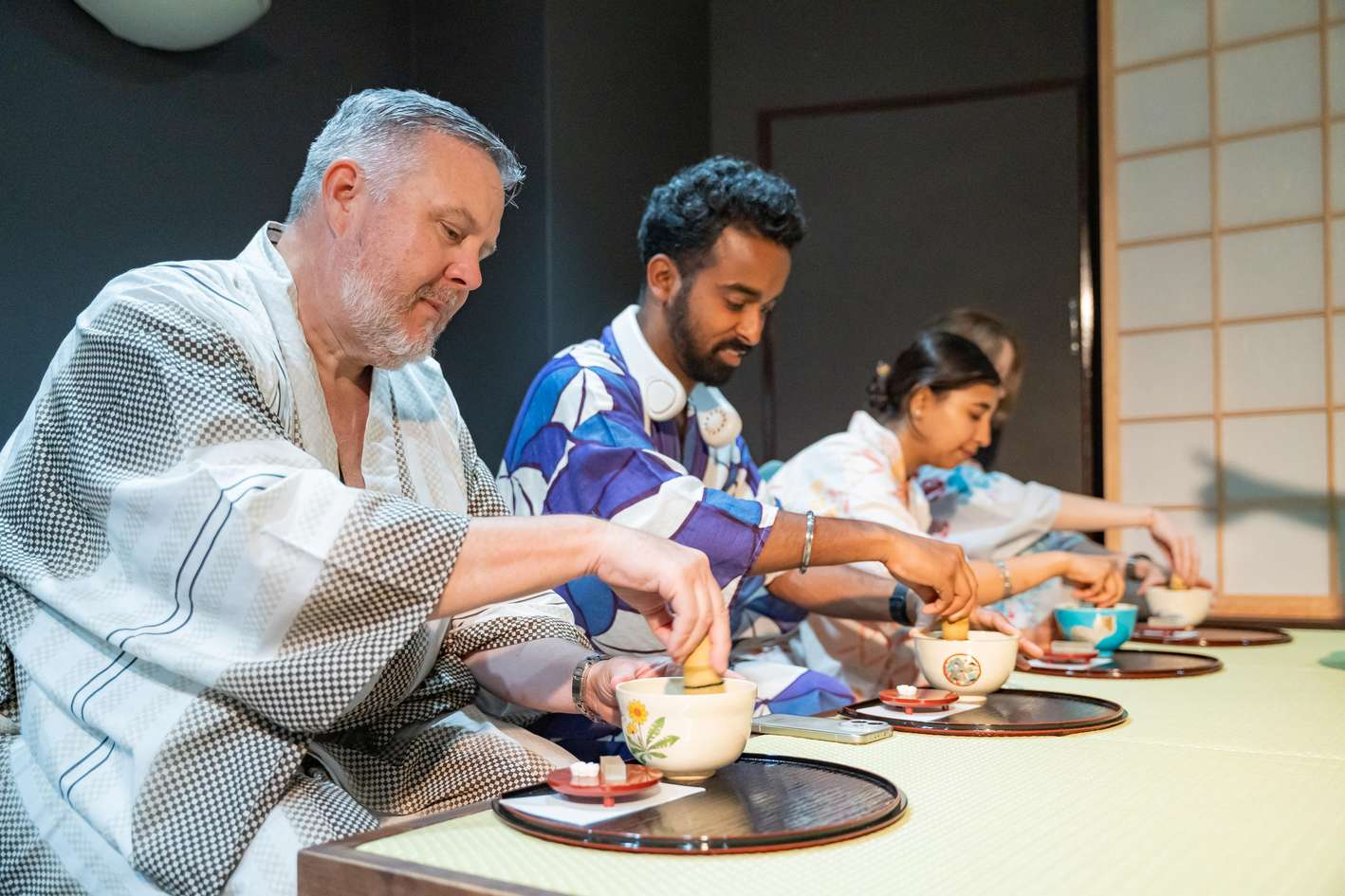
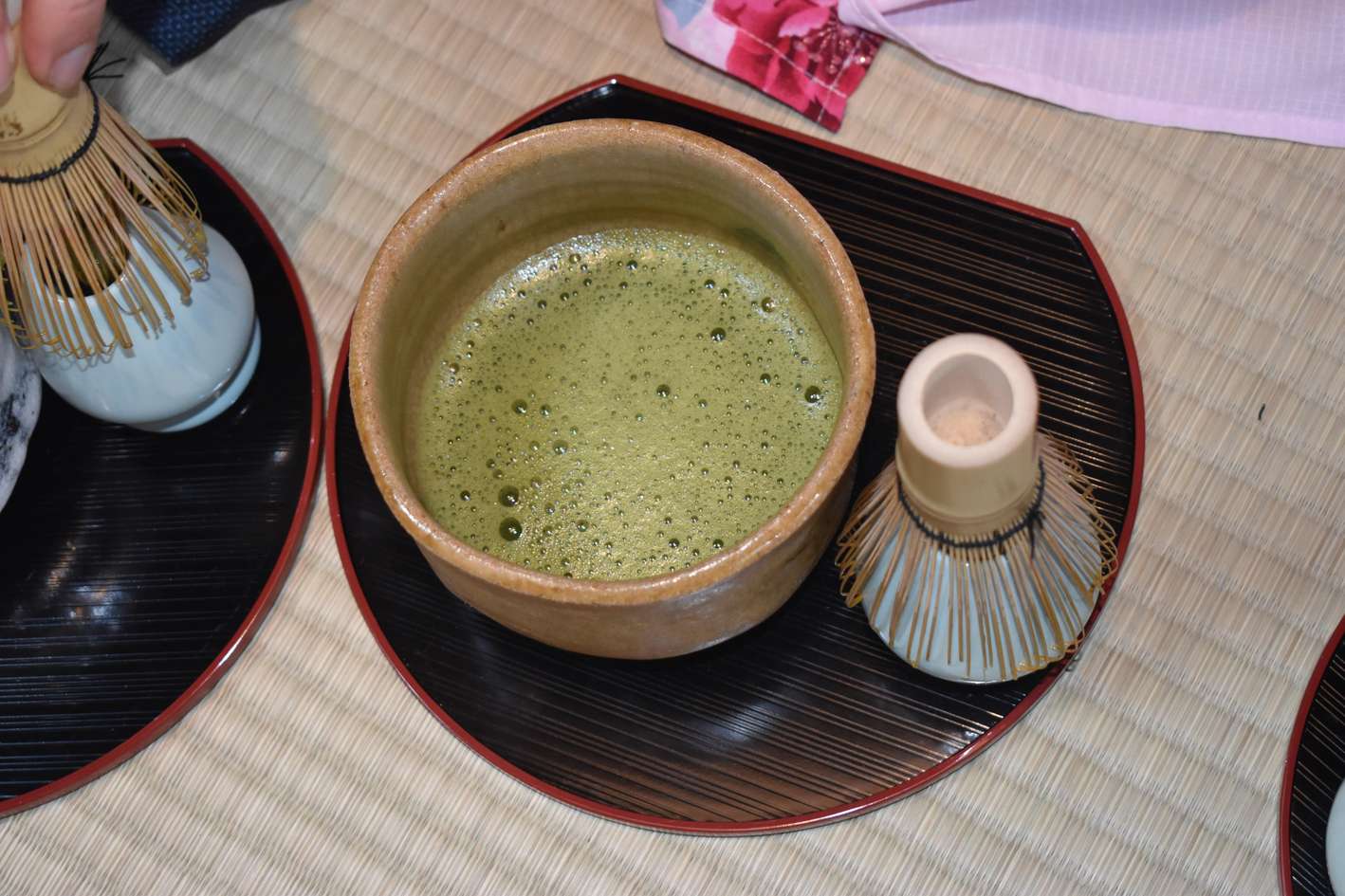
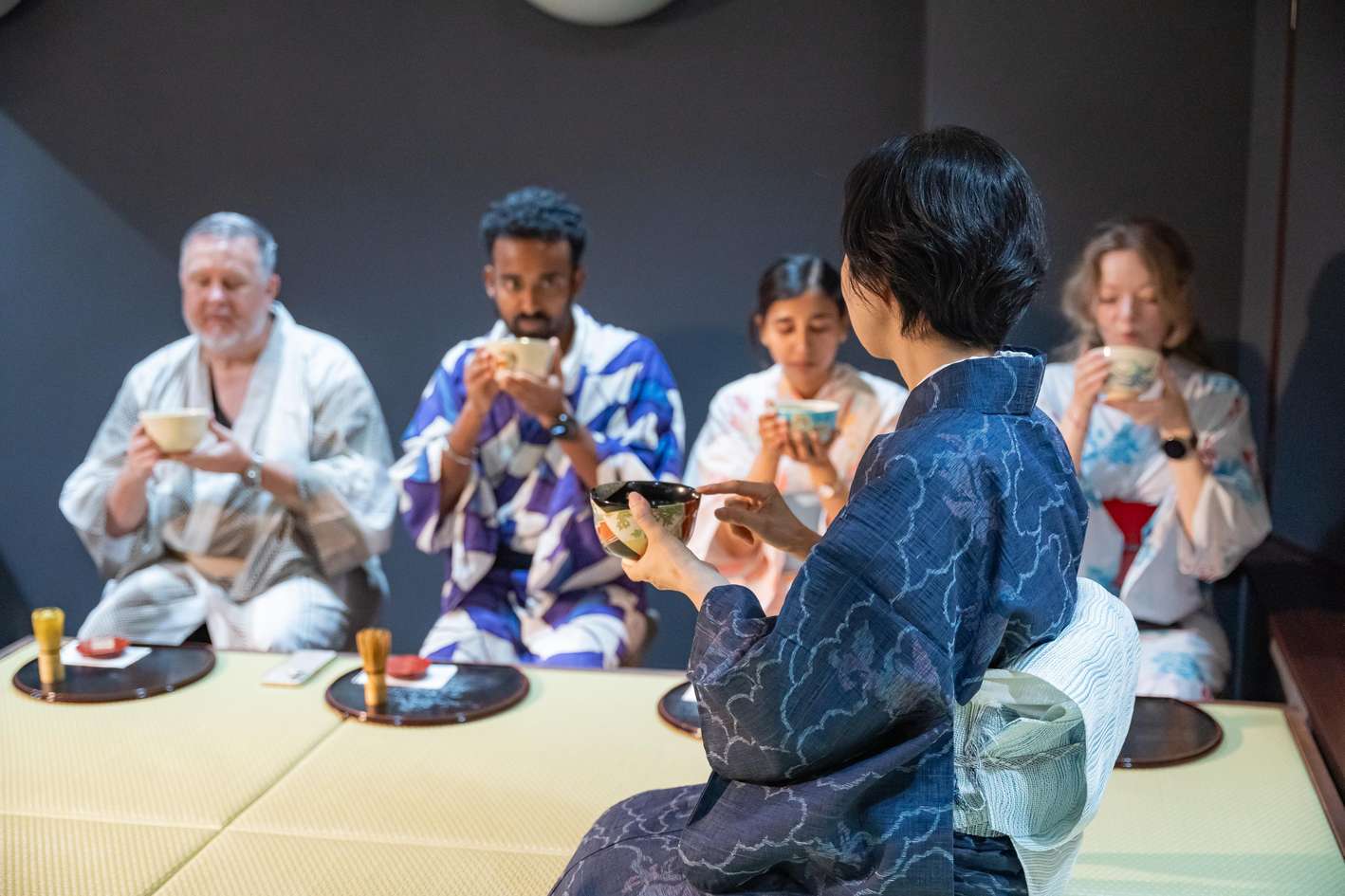
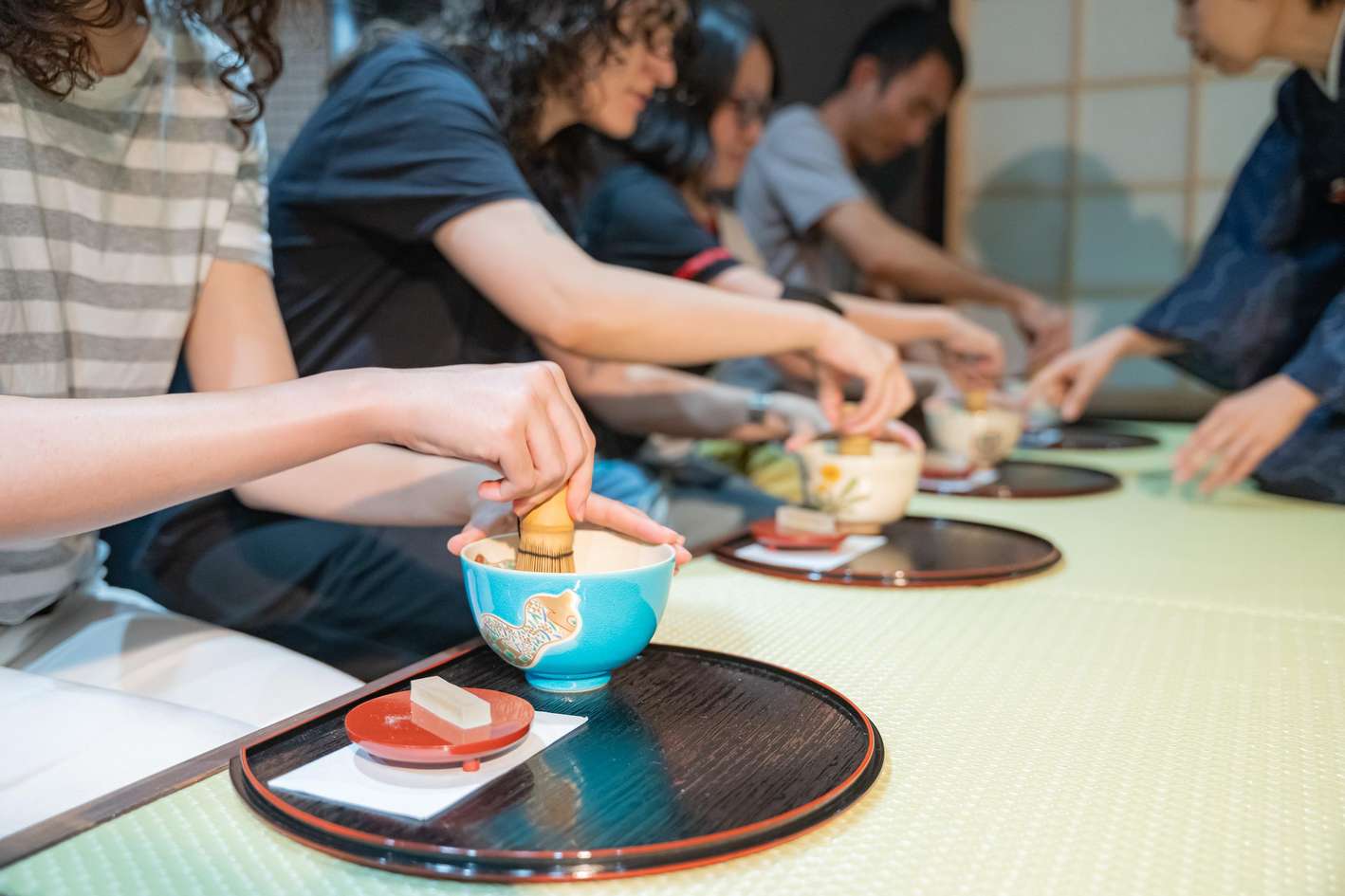
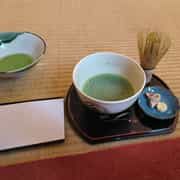
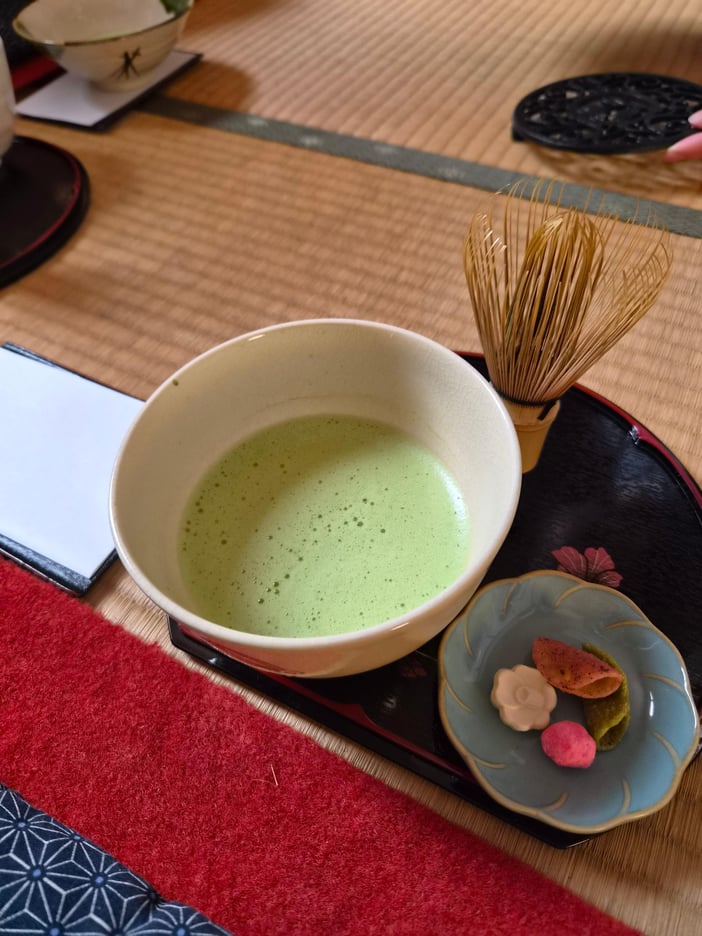
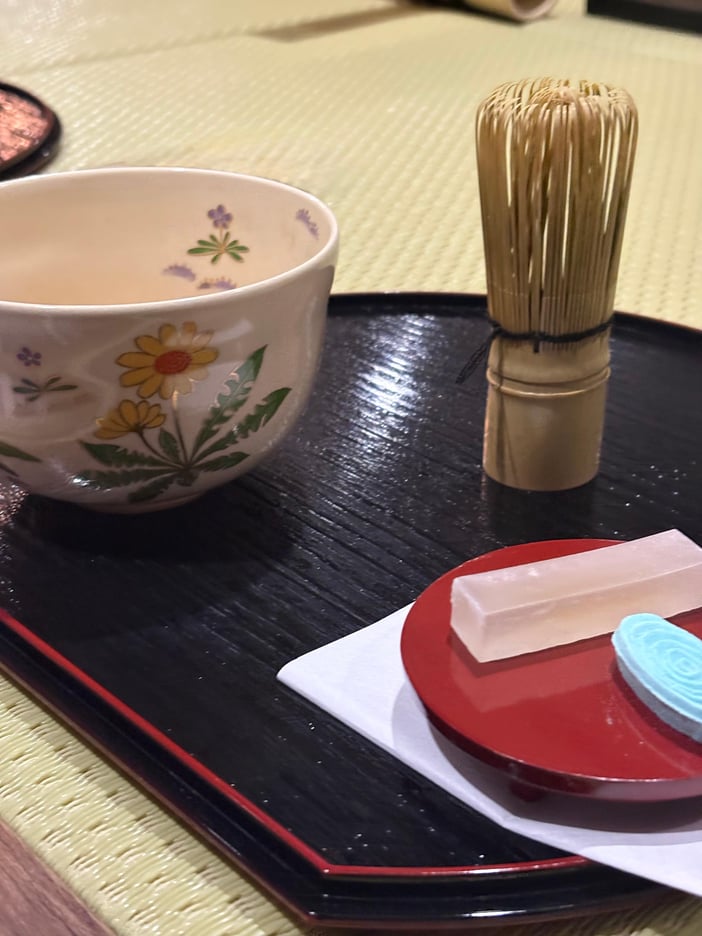
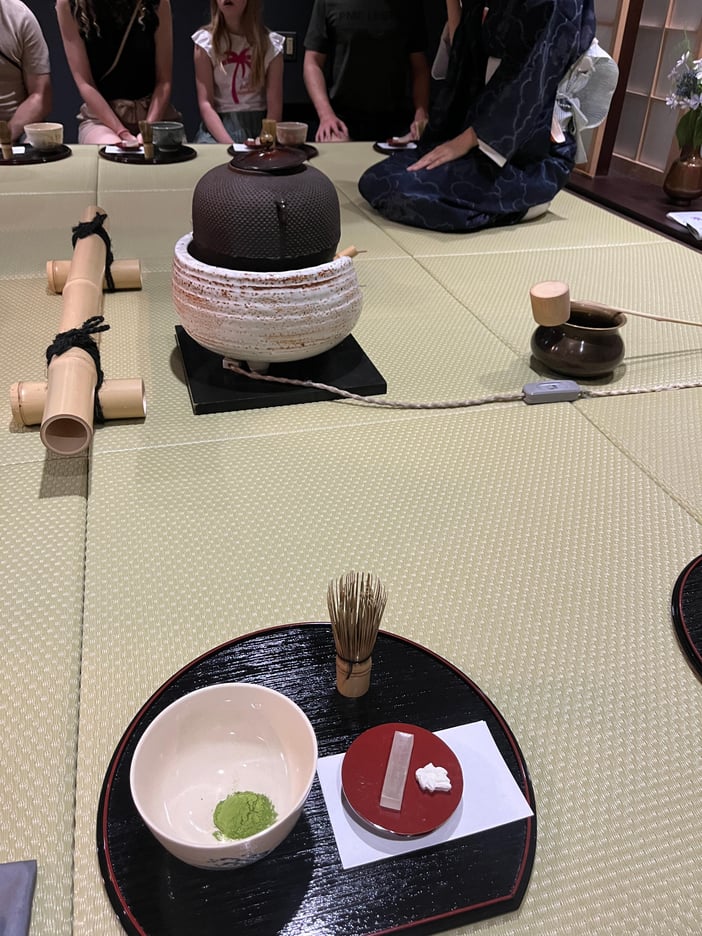
A seasonal sweet arrives first, the traditional way to soften matcha's bitterness. Then the tools pass to you, and you whisk your own bowl under step-by-step guidance.
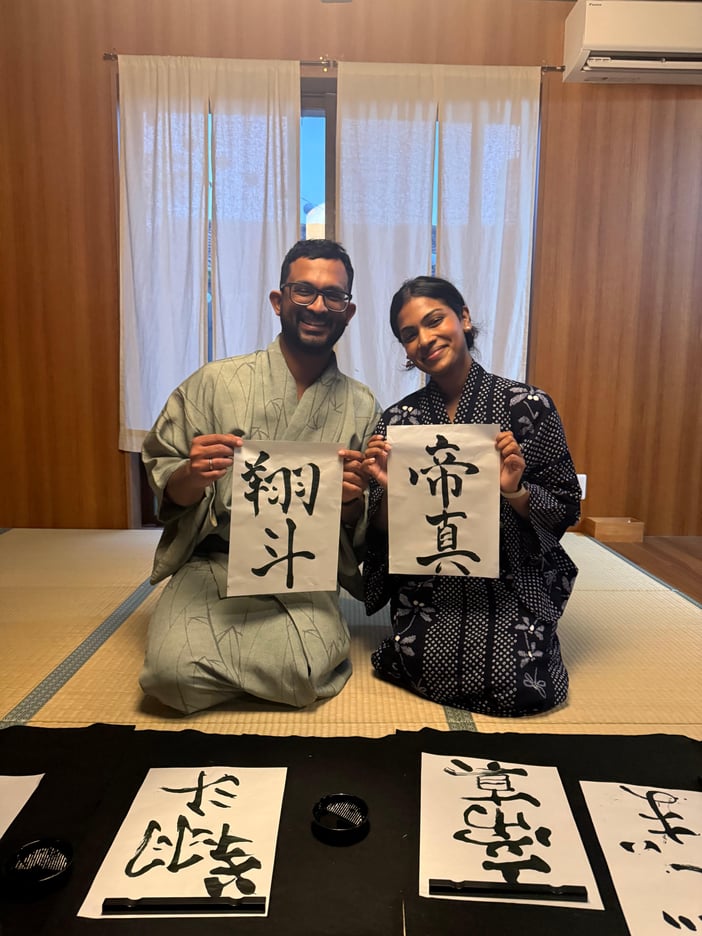
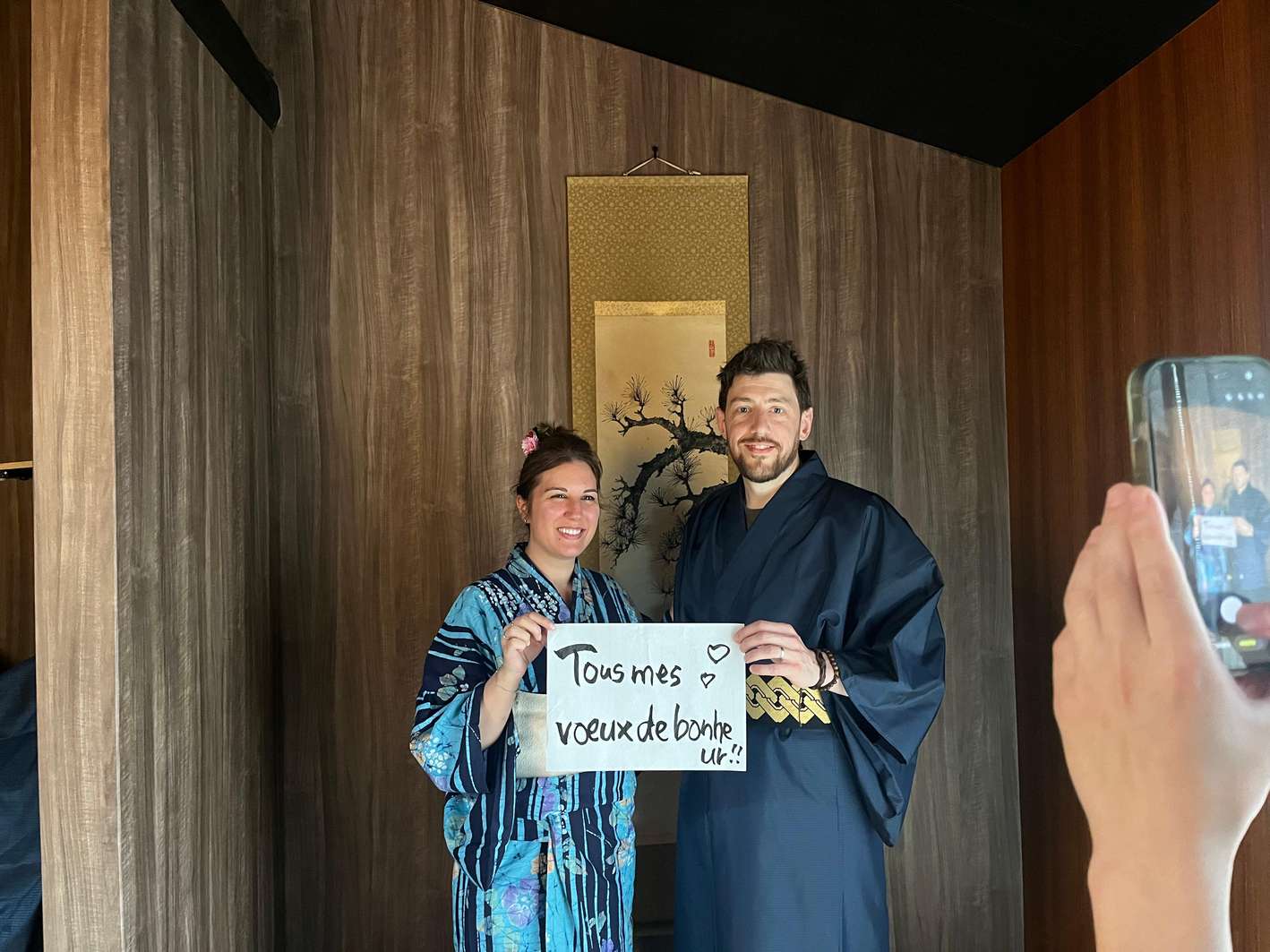
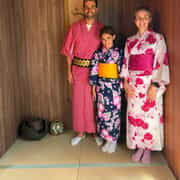
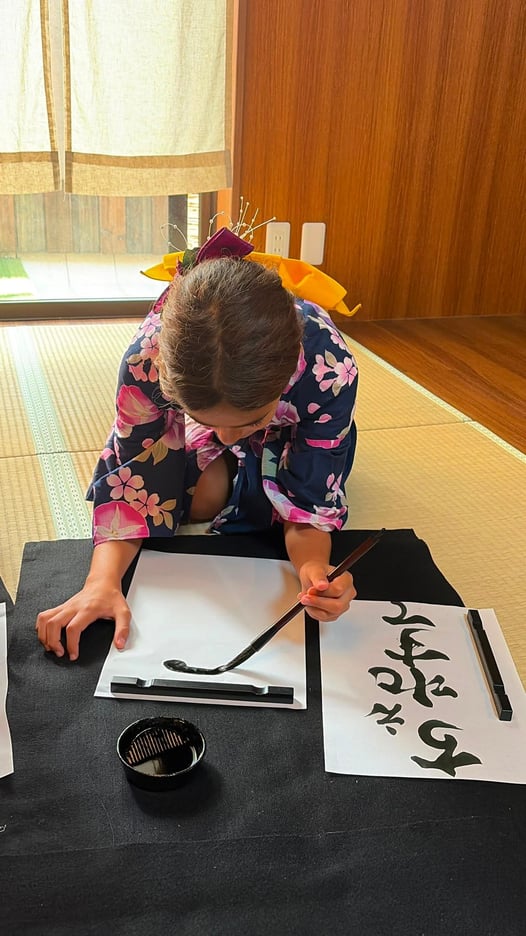
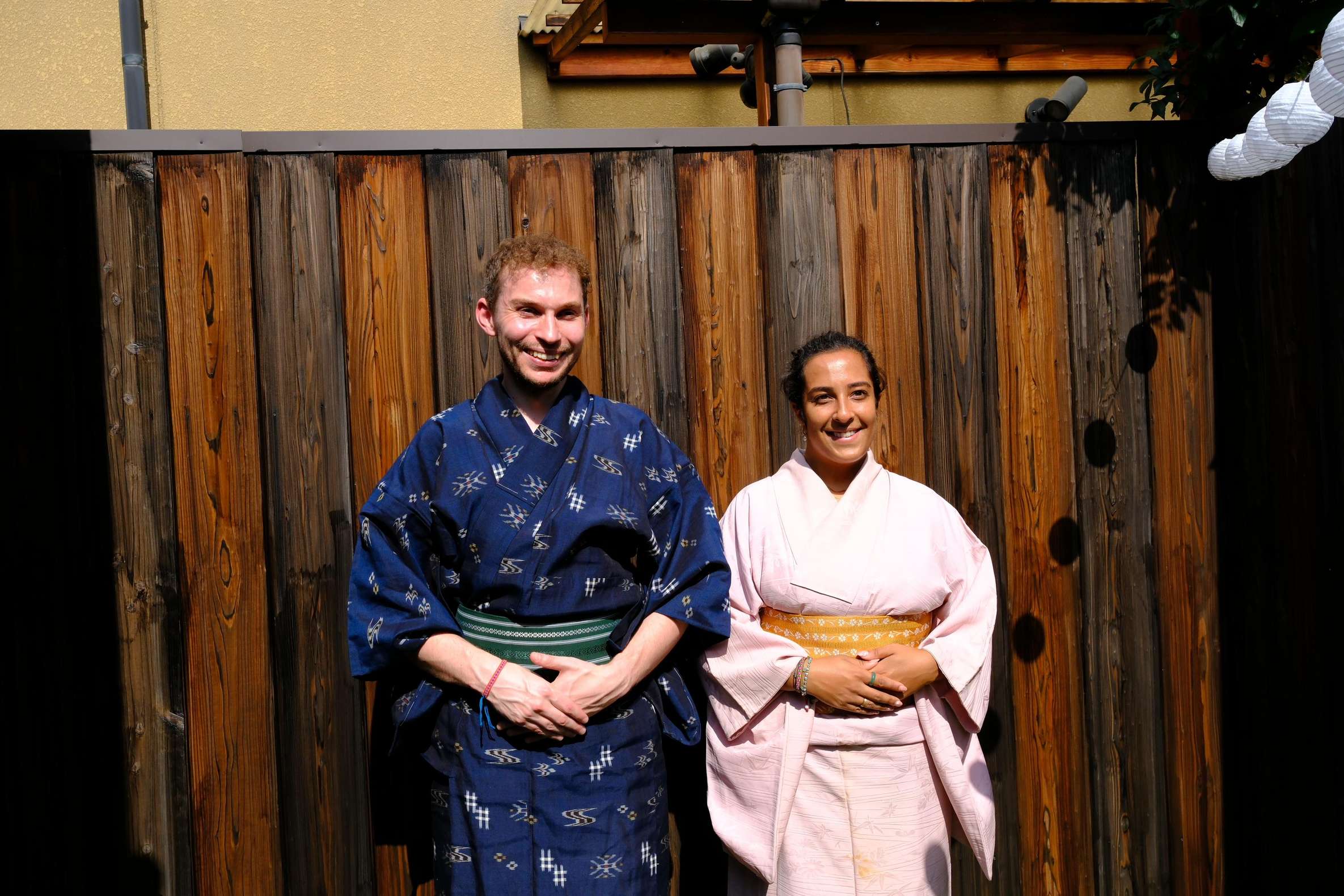
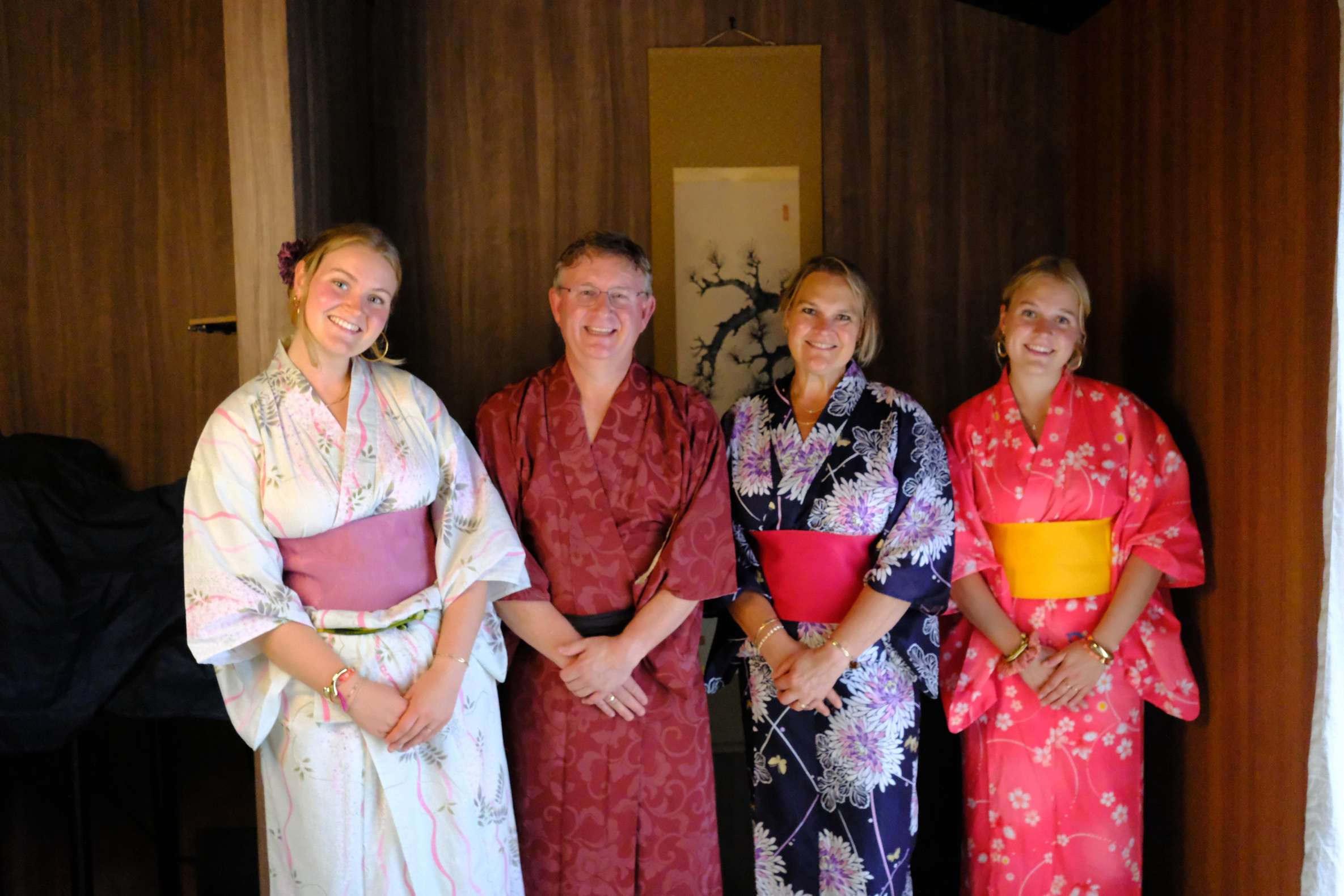
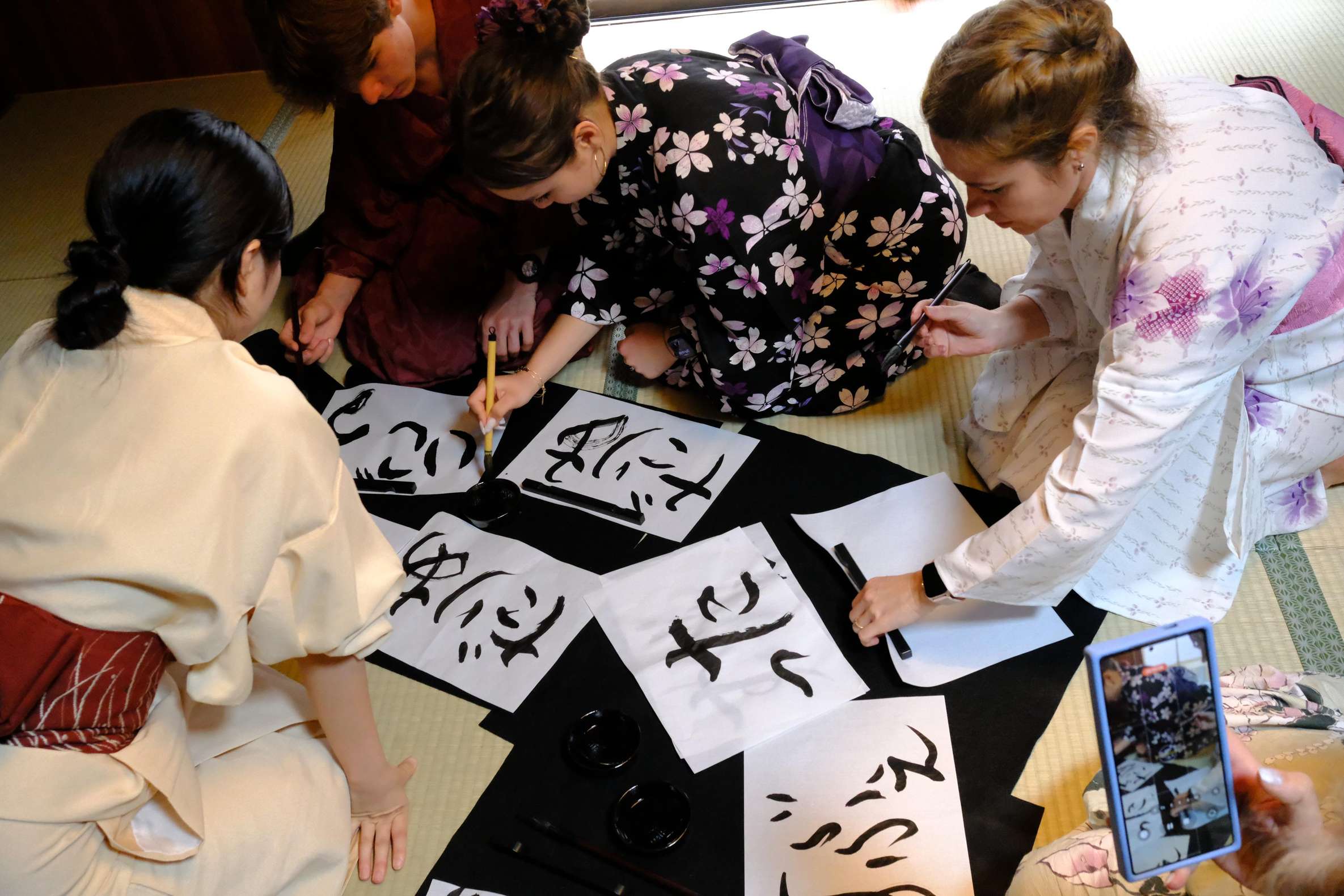
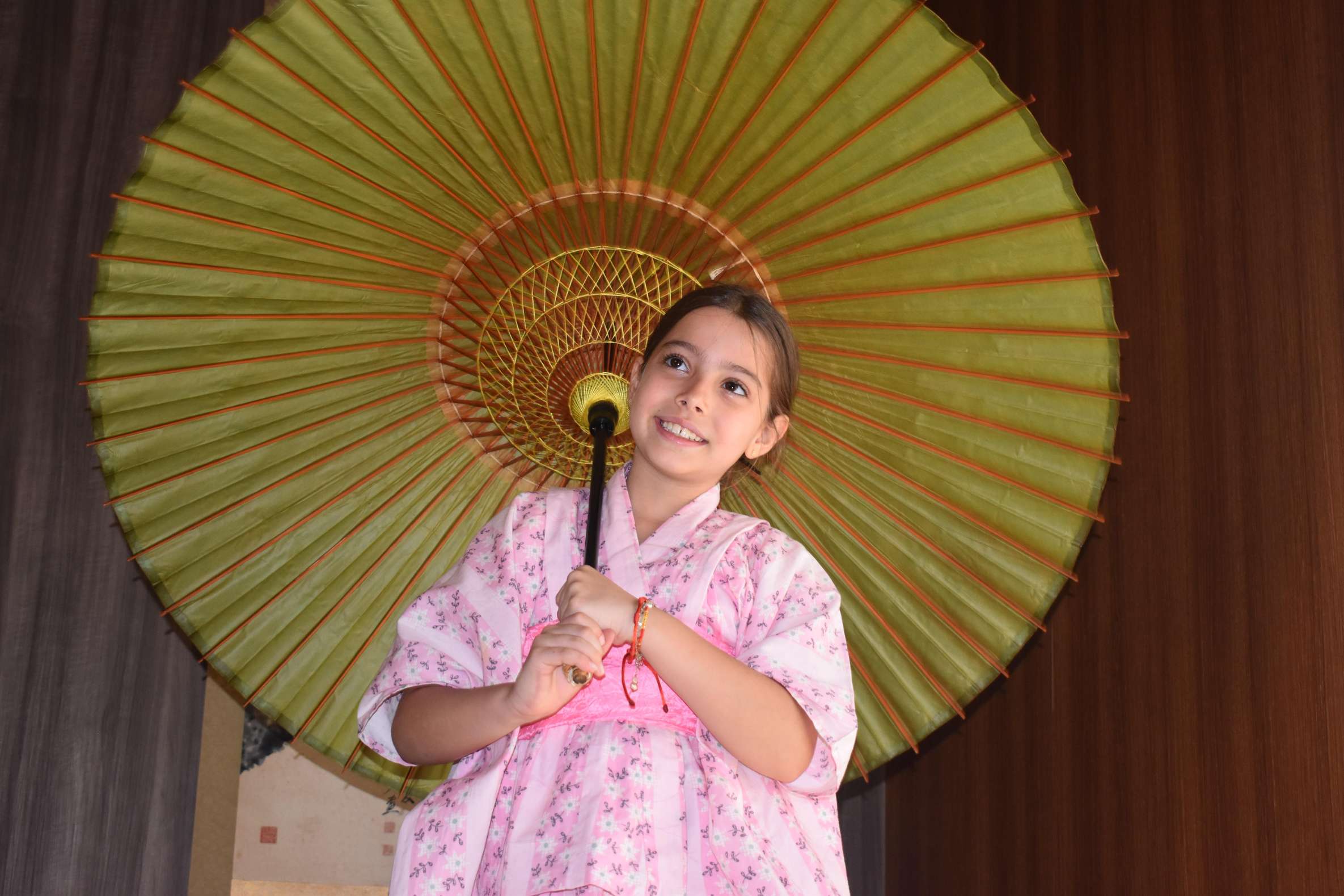
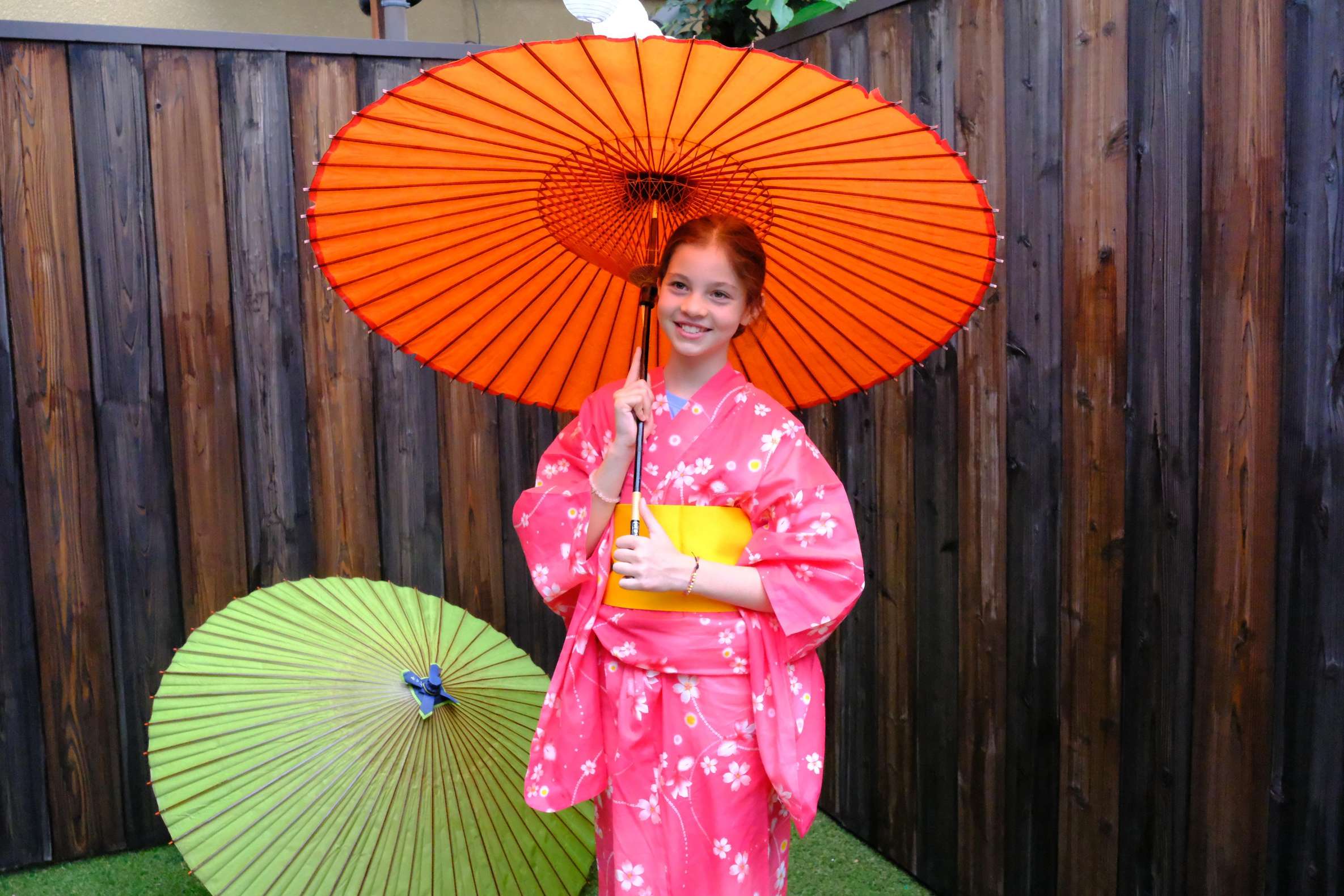
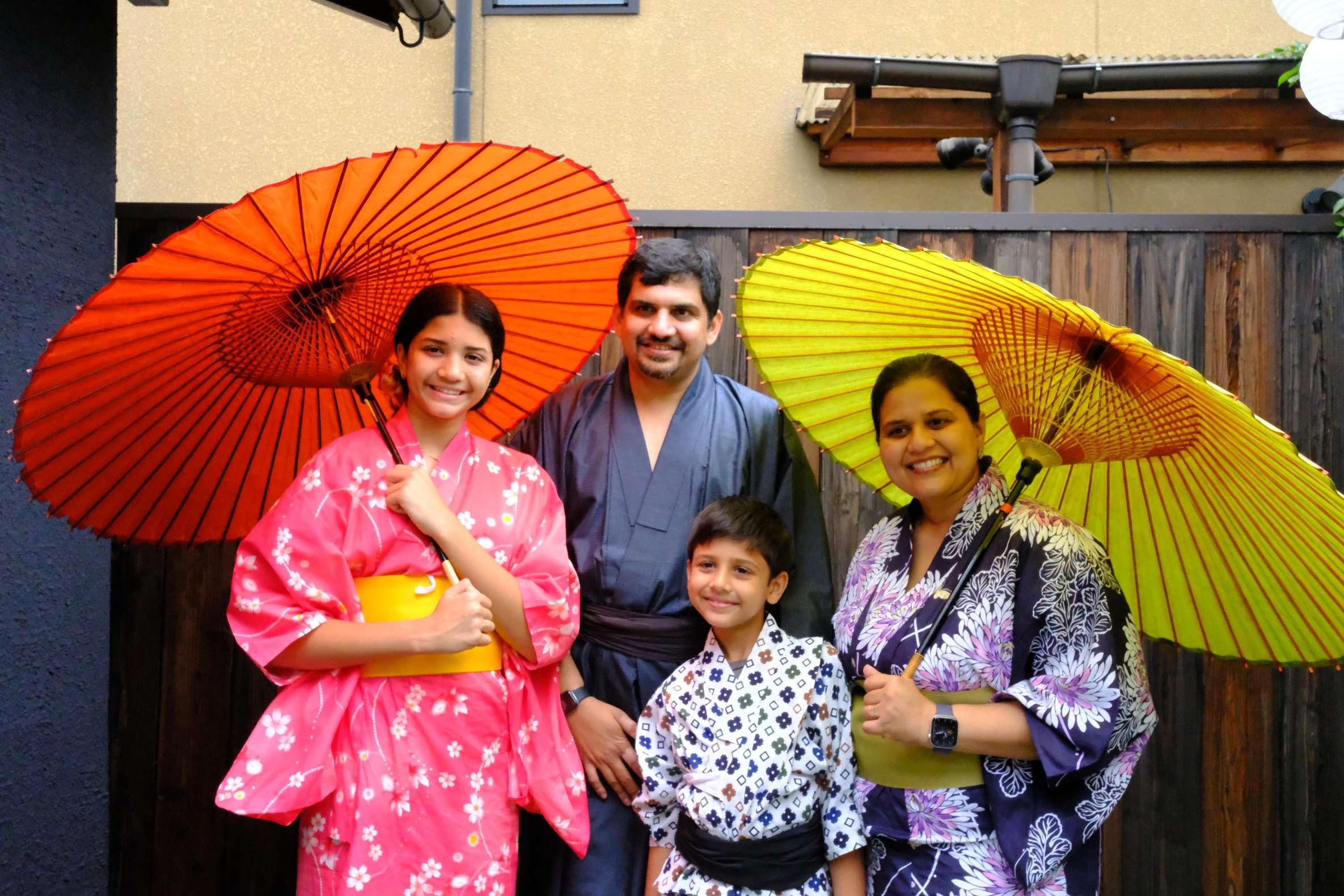
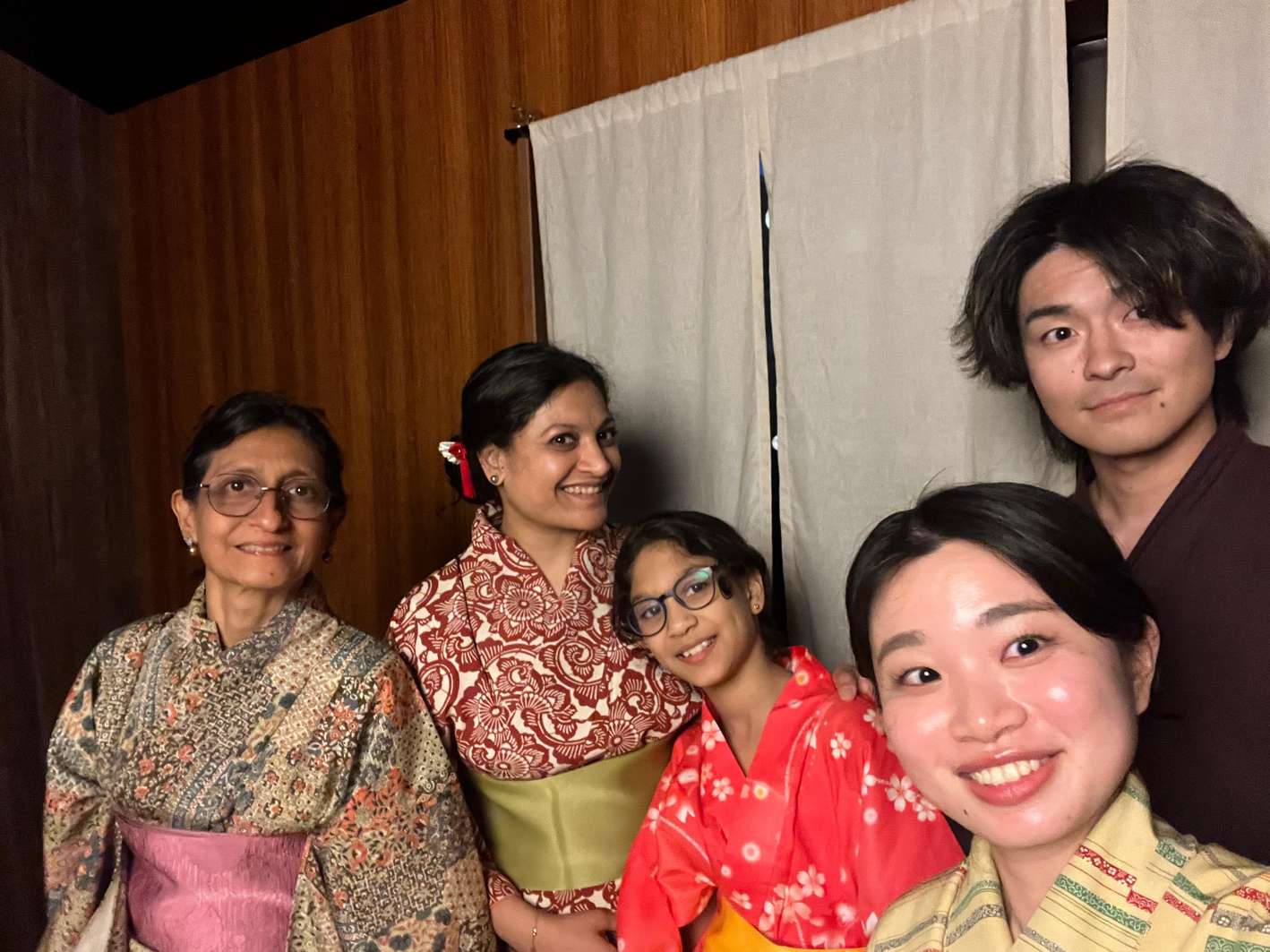
Calligraphy follows the tea. Brush, ink and paper come out next, and you write your own name in Japanese script; the finished piece goes home with you. Kimono plans begin with dressing by the hosts before the ceremony, and the video plan adds a photographer for the whole session.
Meeting point2 places, depending on your optionThe session ends back at the house with your calligraphy piece, signed with your own name, rolled and ready to carry home.Street View2Kyoto Station· 90 minThe landmark for finding the venue: the machiya sits a nine-minute walk from the station, an easy walk most guests make on foot before and after the session.Street ViewDrop-off2 places, depending on your optionThe session ends back at the house with your calligraphy piece, signed with your own name, rolled and ready to carry home.Street View
Where the other tours go
Kyoto: Traditional Tea Ceremony with Matcha & Sweets in Gion
Tea CeremonyJapanese CalligraphyKimono Experience (Only included in Kimono Plan)Professional photography (Souvenir Video Plan only)Video shooting (Souvenir Video Plan only)Edited souvenir video delivery (Souvenir Video Plan only)
Not included
SouvenirTips
What travelers loved about their private tea ceremony in a hidden Kyoto townhouse
Most reviewers praise warm, welcoming hosts who explained every step in clear English.
Best surprise
Many loved how completely private the session was, with plenty of time to ask anything.
Most common wish
A few families wished the quiet hour had lasted longer once the ceremony ended.
How to book a private tea ceremony in Kyoto
01
Pick a date and time slot
Pick your date first, then a start time. Sessions run through the day, and private slots go first. In cherry blossom season and November foliage, book six to eight weeks ahead.
Common mistakeWaiting until you land in Kyoto to book; peak-season slots go weeks ahead
02
Choose what the hour includes
Decide what the hour includes. The townhouse near Kyoto Station offers a 45-minute tea with calligraphy, or 90 minutes adding kimono. The Gion session runs a private one-hour ceremony.
ImportantChildren under five cannot join the Gion session, so check ages before you book
03
Pay and watch for confirmation
Pay with a card, then check your inbox. Confirmation and host messages arrive by email, so read them for start times and updates. Cancel up to 24 hours ahead for a full refund.
Pro tipCancel as soon as plans shift, since cancelling more than 24 hours ahead returns the full cost
04
Save the voucher and find the venue
Open the voucher and save the venue pin. The private townhouse is a nine-minute walk from Kyoto Station, which makes it easy to pair with an arrival day.
Pro tipKyoto addresses use land lot numbers and map apps often miss them, so navigate with the pin in your voucher
05
Arrive early on the day
Aim to be there five minutes early. Doors lock once a session starts and late arrivals lose their slot. With kimono, dress at the rental shop first; your ceremony time follows your kimono start.
RecommendedBook between 9 am and 11 am for quiet streets, or after 3:30 pm for softer afternoon light
What to know before booking a private tea ceremony in Kyoto
Can stop the dayGood to knowGood news
01
ChoosingWhat it is, who it suits, when to go
8
Tipping
No tip is expected after the ceremony, and the host will not ask for one. A simple thank you at the door is the custom in Japan, and the listed price is the full cost.
Jewelry
Take off rings and watches before the ceremony begins. Metal can scratch or crack the ceramic tea bowls when you lift them with both hands, and the bowls are often valuable pieces.
AllergiesCan stop the day
Wagashi sweets are not automatically free of wheat, soy, or nuts, and shared equipment adds cross-contact risk. Tell the host about a serious allergy when you book, and check the ingredients before you eat.
Who counts
Every guest in the room counts as a participant, including young children, so book a place for each person. At the small-group venue, anyone not taking part cannot enter or wait inside during the session.
Questions
A private session means you can ask the host anything without an audience waiting. The host can also tailor the sweet, the tea bowls, or the pace to your group, and there is real time for questions.
Kimono timing
If you add the kimono option in Gion, you dress first at the rental shop a two-minute walk from the meeting point, and your ceremony time is fixed to your kimono slot. The kimono goes back by 5:30 pm.
Seating
The Gion session seats everyone in chairs, which suits sore knees and anyone who finds floor sitting hard. Other venues use tatami, where shifting your posture is fine as long as your feet stay tucked away from the host.
Tipping
No tips in Japan, and that includes tea ceremonies. The listed price covers the whole experience, and a simple thank you to your host at the end is all the custom asks.
02
BookingHow far ahead, and what happens if plans change
2
Late arrivalCan stop the day
Arrive five minutes early, as the Gion session asks. Doors lock when a session begins, and latecomers are turned away without a refund, even when a train delay is the reason. Build in slack for finding the entrance in a narrow alley.
Cancellation
You can cancel any of these private sessions free of charge up to 24 hours before it starts. A plan that slips costs you nothing, so booking early does not lock you in.
03
Before you goPapers, health, what to bring
1
Socks
You take off outdoor shoes at the entrance, so wear socks, because bare feet are not allowed on tatami. Clean socks of any color are accepted, though white is the traditional courtesy. Slip-on shoes make the change quick.
04
During the tourWhat is expected of you
1
Photos
Still photos are welcome at most sessions. Video recording is not allowed at the Gion venue, and flash photography is barred in some townhouse rooms, so keep the camera steady and the flash off.
The traveler's guide to your private tea ceremony in Kyoto
A private tea room means no strangers to fumble in front of, and no next group waiting at the door. Whether it earns its cost comes down to three numbers: the session length, the arrival buffer, and the age of the youngest guest.
Kyoto· 34.98° N, 135.75° E
If you only remember three things
1
Book 45 to 60 minutes at minimum; tourist sessions of 40 minutes feel rushed.
2
Arrive 10 to 15 minutes early: doors lock at start time and latecomers are turned away with no refund.
3
Wear or carry clean socks, because bare feet never touch the tatami.
Is a private tea ceremony in Kyoto worth the extra cost?
The tea room is yours before anyone else arrives. In a private session the host can slow the pace for older guests or children, choose the scroll, the sweet and the bowls for your party, and add a thicker tea, flowers or a meal if you ask when booking.
In a group of eight to twelve, those choices follow a script set for the room.
The difference shows up in conversation. Questions during the host's introduction to the history and the utensils often get cut short in shared sessions of eight to twelve, because the demonstration has to move on. In a private room the answer comes while the whisk is still wet.
Side-by-side comparison of Kyoto's private tea ceremony experiences
Private machiya townhouse
Private Gion tearoom
Small-group tatami room
Privacy
The entire house to your party, no other guests
A room reserved for you alone, chairs instead of tatami
Shared with up to a dozen travelers
What you do
Whisk matcha, write calligraphy, add kimono on some plans
Watch the master, then whisk your own bowl
Demonstration first, then your own bowl
Best for
Couples and families who want the house to themselves
Anyone who dreads kneeling or travels with small children
Travelers happy to share the hour
Private machiya townhouse
Privacy
The entire house to your party, no other guests
What you do
Whisk matcha, write calligraphy, add kimono on some plans
Best for
Couples and families who want the house to themselves
Private Gion tearoom
Privacy
A room reserved for you alone, chairs instead of tatami
What you do
Watch the master, then whisk your own bowl
Best for
Anyone who dreads kneeling or travels with small children
Small-group tatami room
Privacy
Shared with up to a dozen travelers
What you do
Demonstration first, then your own bowl
Best for
Travelers happy to share the hour
Match the option to the party and the choice settles itself: a couple after quiet does well in the townhouse, a family with a grandparent does better in the Gion tearoom, where chairs take the place of the floor, and travelers happy to share the hour do fine in the shared tatami room.
Privacy is still not the only good hour. Shared sessions in Kyoto's townhouses are kept small, so travelers who simply want to taste matcha and watch the movements do well in a group class.
Authentic Kyoto Tea Ceremony - Small Group Experience runs 45 minutes in a traditional tatami room, with a demonstration, your own whisked bowl, seasonal sweets and English explanations throughout.
The room announces itself through a doorway built too small to walk through. This crawl-in entrance, the nijiriguchi, makes every guest bow on the way in; samurai once had to leave their swords outside, and Sen no Rikyu sized the opening so a window could sit above it.
Kyoto locals call these long, narrow townhouses unagi no nedoko, beds for eels, after the narrow street frontage and the deep interiors.
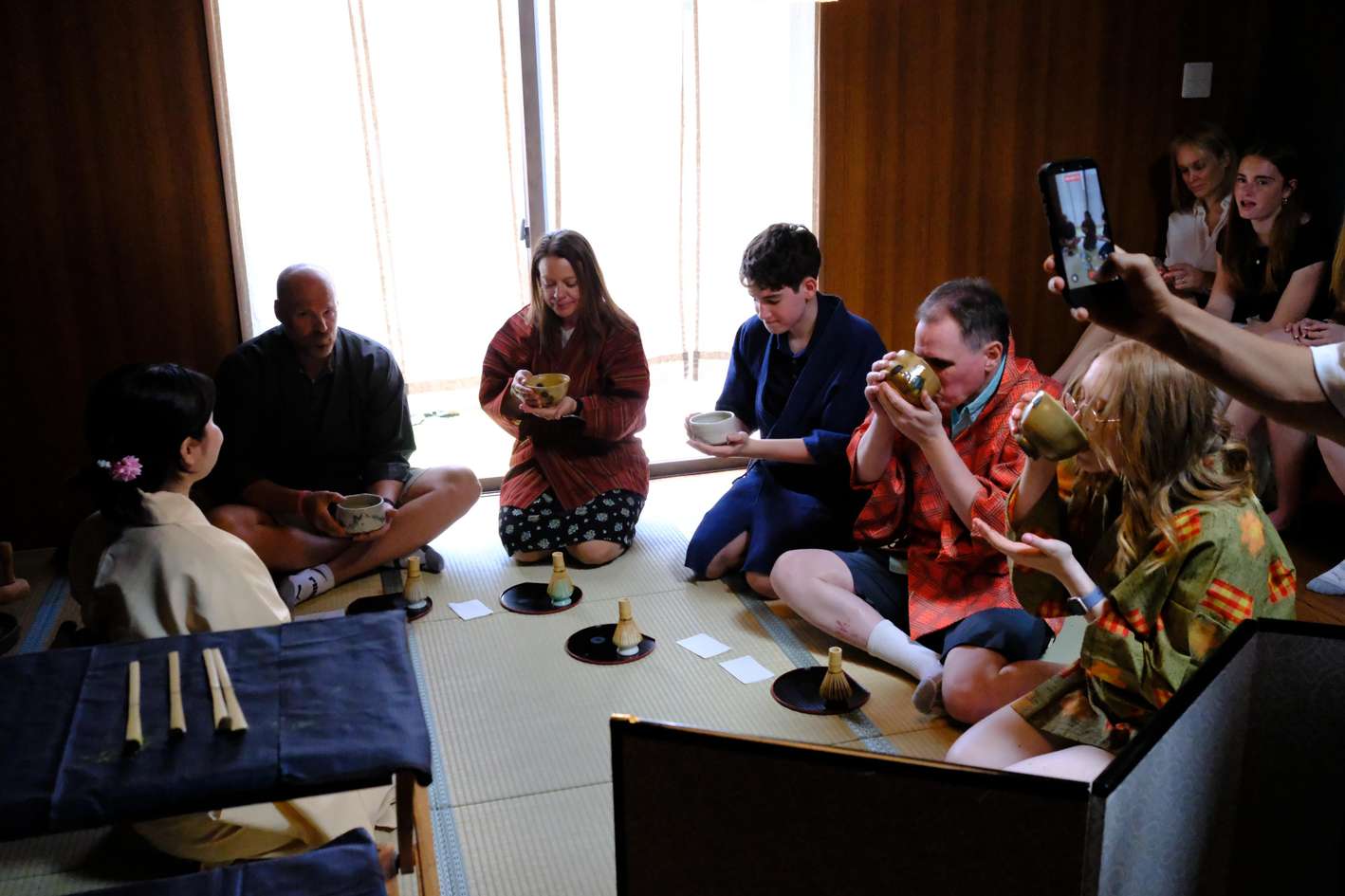
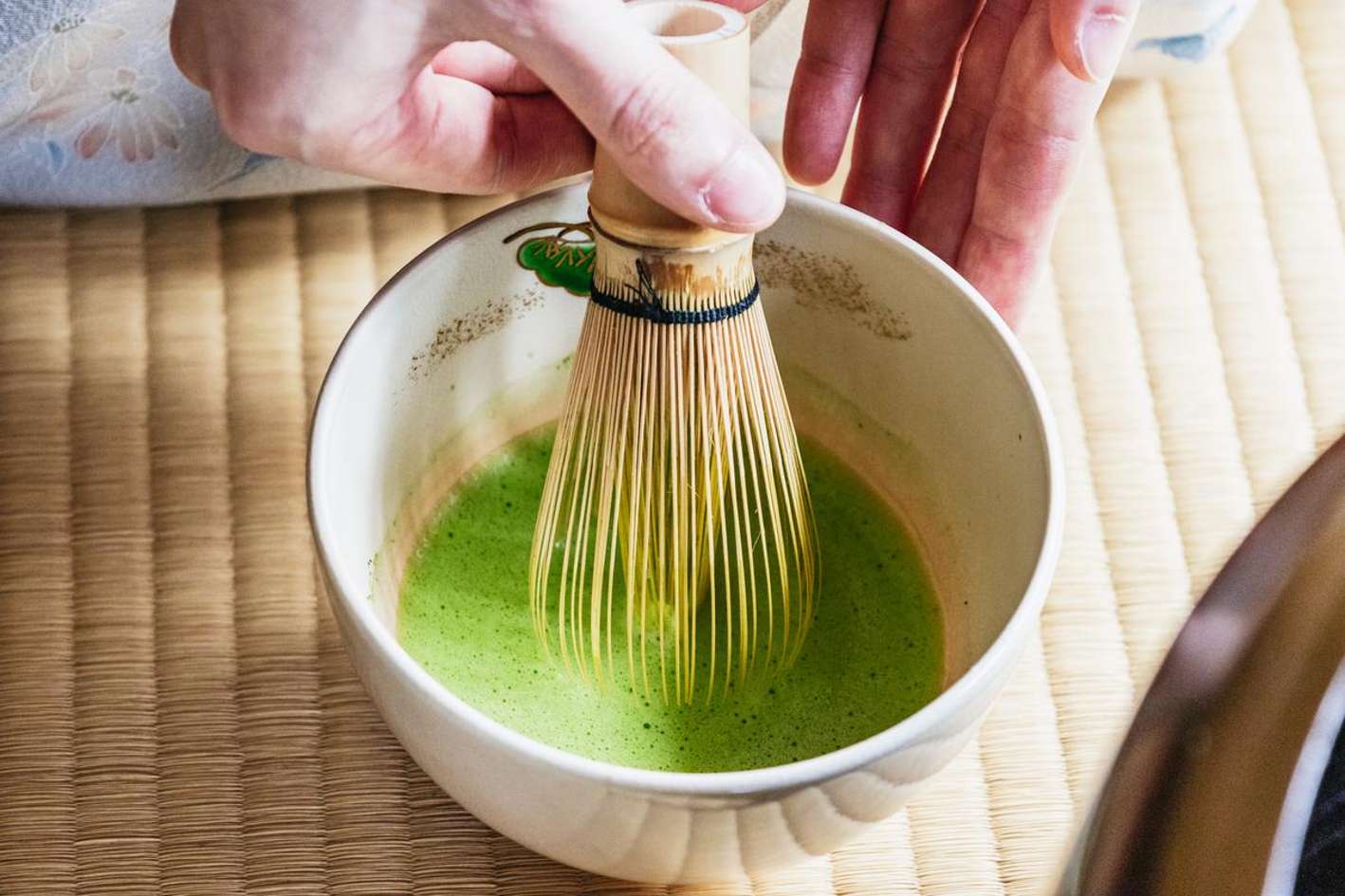
Inside, the order is fixed and gentle. Your host walks the party through the history and the meaning of each utensil, then whisks the first bowl while you watch the wrist: fast zigzag strokes, never circles, and never a stiff arm driving from the shoulder. Then it is your turn.
How a private tea session unfolds
1
Arrival
Hands are washed and the mouth rinsed at the stone basin
Shoes come off before the waiting room
2
Introduction
The host explains the history and what each utensil means
Ask as you go; nothing gets cut short
3
Demonstration
The tea master whisks the first bowl
Quick zigzag strokes, never circles
4
Your turn
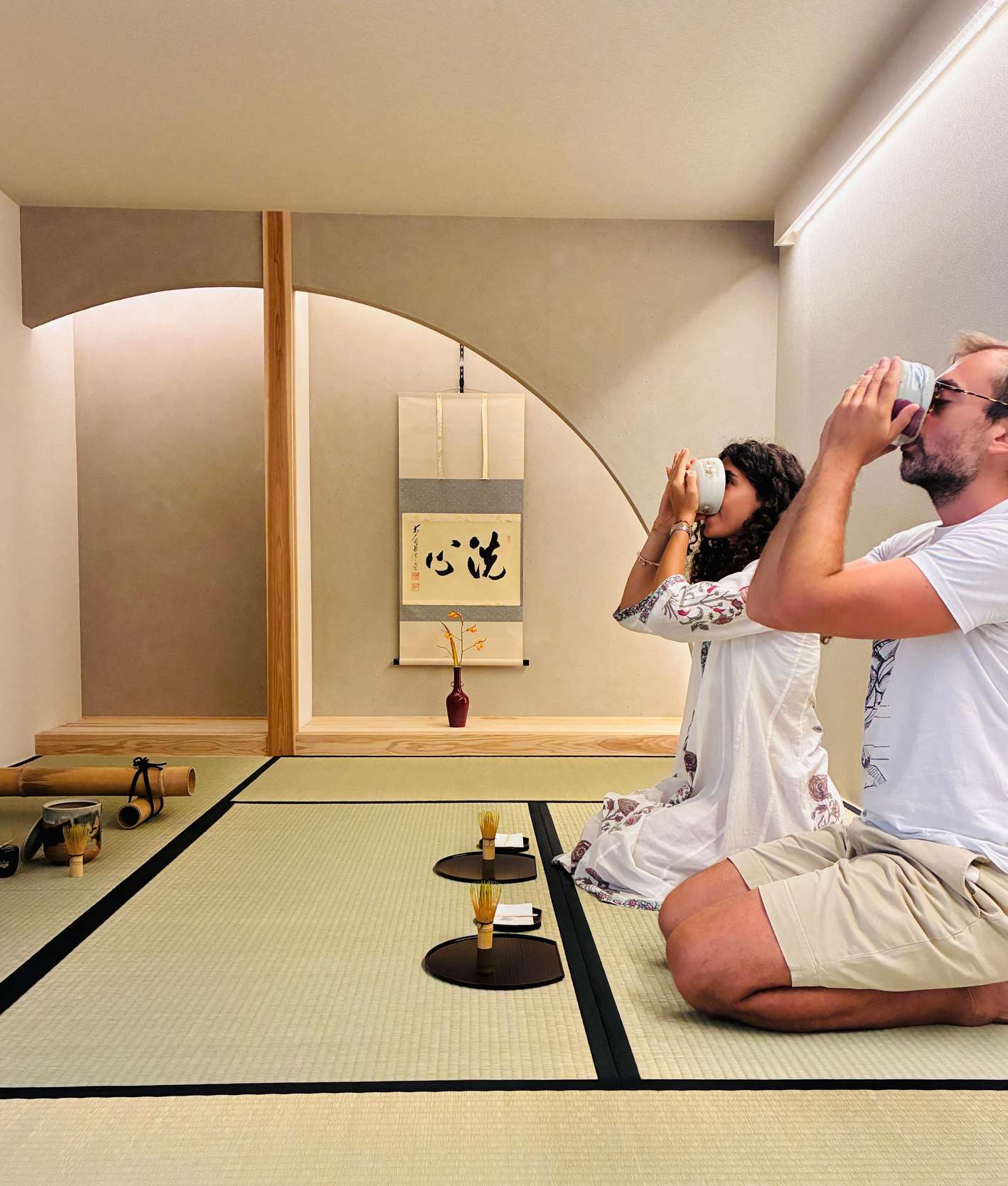
You whisk your own bowl and drink it
The sweet comes first; the matcha is a few small sips
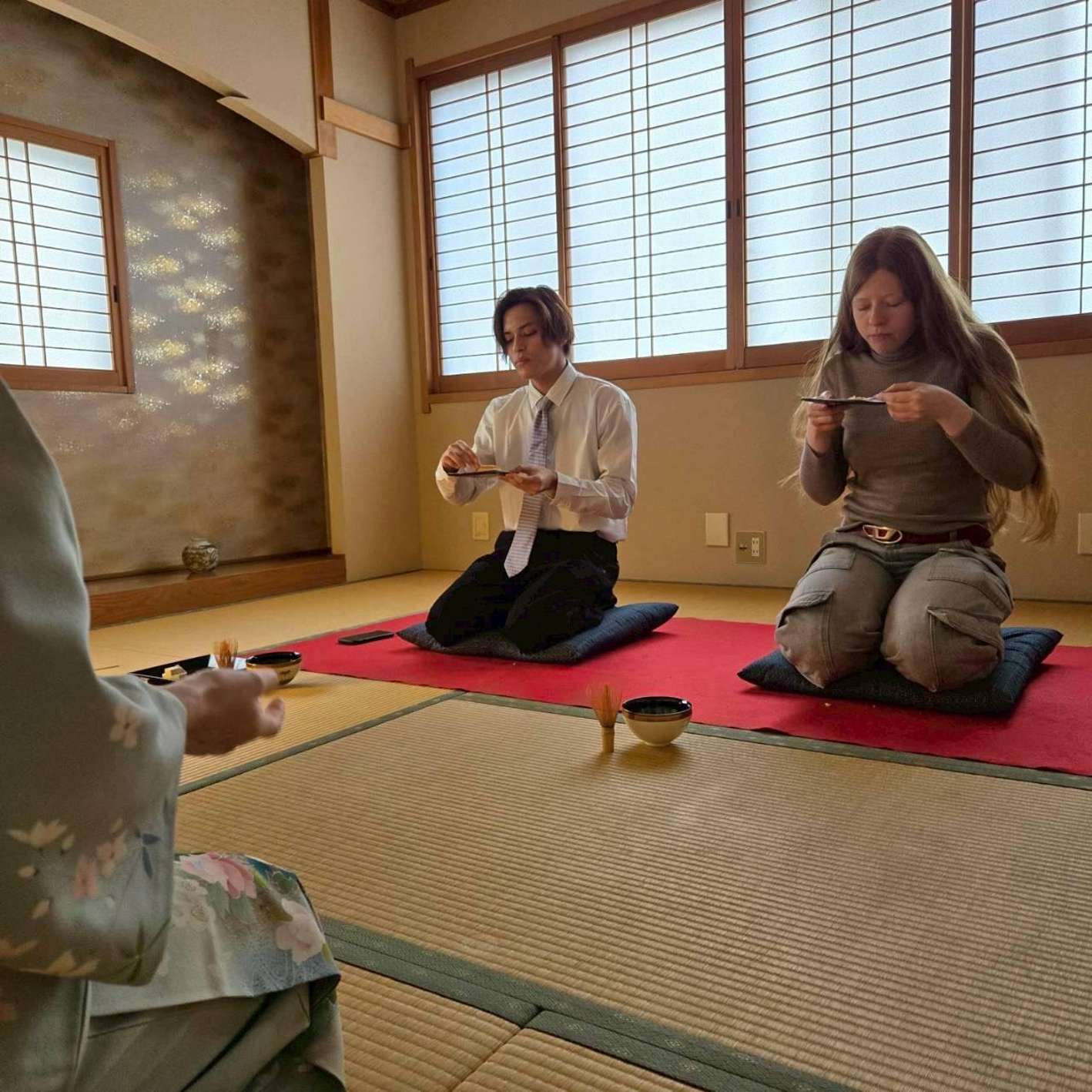
The sweet always precedes the tea, and it matters: ceremonial matcha is strong and bitter next to the sweetened versions in Western cafes, and the wagashi balances it on the palate.
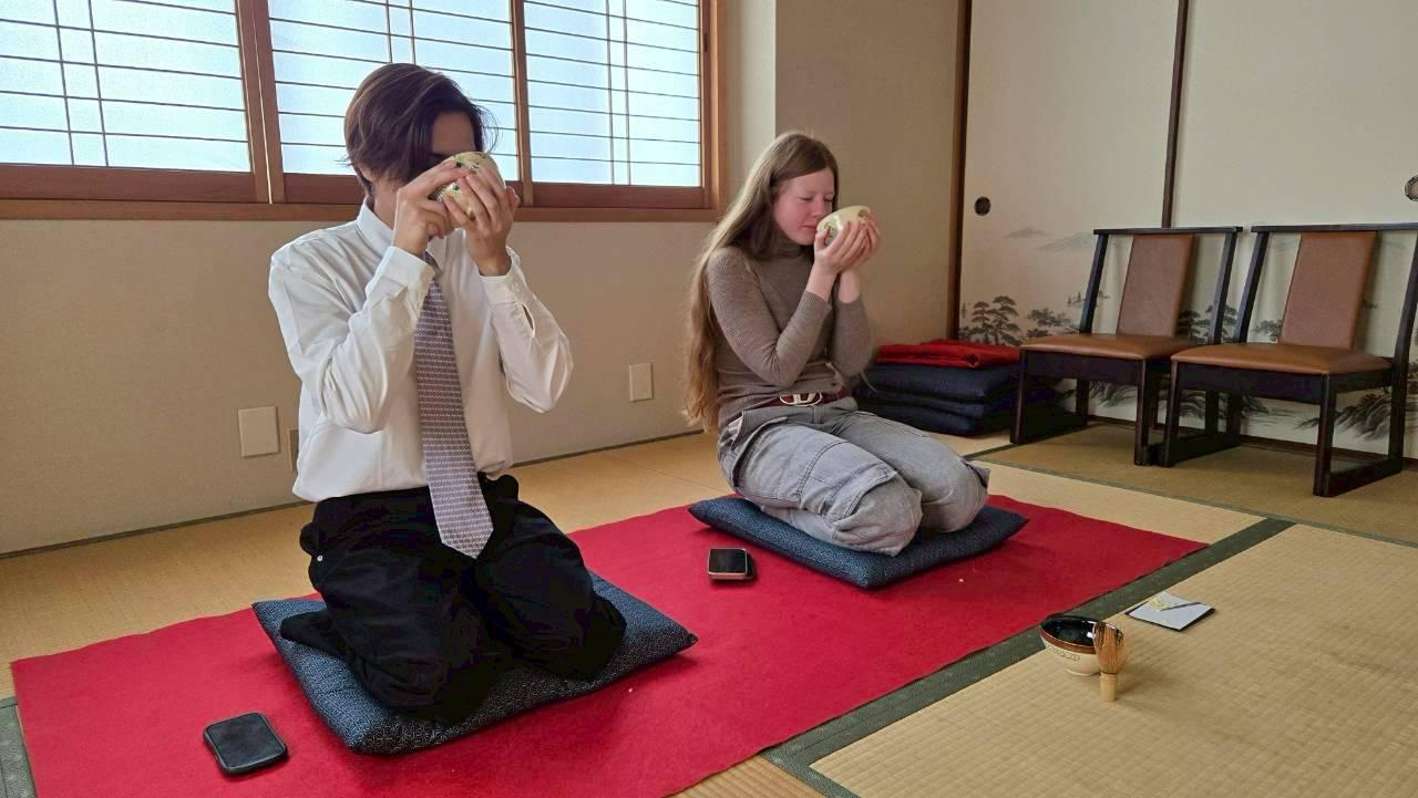
Drink the bowl while it is fresh, in small sips. In a private session there is time to ask why the bowl turns before the first sip, and the host answers while the tea is still warm.
Tour for this
Kyoto: Traditional Tea Ceremony with Matcha & Sweets in Gion4.8★ (778) · 1 - 2.5 hours · Free cancellation
The clock is the first decision to make. Sessions of 40 minutes push a line of guests through the room, and travelers describe them as rushed and over-commercialized, too short to absorb the steps and the symbolism.
The honest minimum for an introductory session with a demonstration and your own whisked bowl is 45 to 60 minutes.
Kyoto tea ceremony durations and buffer times
45 to 60 minstandard introductory ceremony
5 to 15 minrequired arrival buffer
90 min to 2 hrsession with kimono dressing
3 to 4 hrformal chaji gathering
A first private ceremony sits in the middle range for most parties. Add a kimono and the window grows with it, so the longer slot earns its place in the day when dressing is part of the plan.
Build the buffer before you build the itinerary. Sessions start on time, and the smallest delay eats into an hour that cannot be extended.
One more detail to know going in: every procedure in the way of tea, from wiping the scoop to whisking, is performed right-handed, whichever hand you favor, and your host sets your grip accordingly.
Tour for this
Authentic Kyoto Tea Ceremony - Small Group Experience4.9★ (404) · 45 minutes · Free cancellation
When to book your private tea ceremony, and how far ahead
April and November are the months the whole city wants a tea room. Bookings peak with the cherry blossoms and the autumn foliage, and during those peaks sessions need reserving six to eight weeks ahead.
Winter runs the other way: from December through February the rooms are quietest, and a few days' notice is often enough.
Kyoto tea ceremony seasons, temperatures, and rainfall
April is very busy during cherry blossom season with comfortable 20°C weather and mostly dry days.
HighestApr to May, Nov
In betweenMar, Jun, Oct, Dec
LowestJan to Feb, Jul to Sep
Darker: a higher how busy it gets score, out of 5
Tap a month to read it.
August is the quietest month of summer despite 33°C heat, favoring early morning tea ceremonies.
HighestJun to Sep26.9 to 32.6 °C
In betweenApr to May, Oct to Nov16.8 to 22.8 °C
LowestDec to Mar8.2 to 14.1 °C
Darker months: higher, from 8.2 to 32.6 °C
Tap a month to read it.
August is the quietest month of summer despite 33°C heat, favoring early morning tea ceremonies.
HighestMay to Sep13 to 15.8 days
In betweenMar to Apr, Oct10.2 to 11.2 days
LowestNov to Feb6 to 8 days
Darker months: higher, from 6 to 15.8 days
Tap a month to read it.
December turns brisk with 11°C highs and quiet winter tearooms gathered around simmering kettles.
HighestNov to Jan23.2 to 24.4 days
In betweenFeb to Apr, Oct19.2 to 20.8 days
LowestMay to Sep15.2 to 18 days
Darker months: higher, from 15.2 to 24.4 days
Tap a month to read it.
If your dates fall in the April or November spike, fix the booking the moment flights are set. Winter dates work the other way, since the rooms sit quietest from December through February, and a few days' notice is often enough.
The hour matters as much as the month. Between 9 am and 11 am the streets around the tea houses are at their calmest, before day-trippers build up, and after 3:30 pm the garden light turns warm and soft.
Midday puts you inside while the lanes outside run at their busiest, which has its own charm once the door closes.
Best times of day for a Kyoto tea ceremony
Morning Peak9 am to 11 am
Streets are calmest before day-trippers arrive.
Midday11 am to 3 pm
Surrounding historic lanes see peak foot traffic.
Evening6 pm to 8 pm
Atmospheric lantern and candlelight indoor settings.
QuietBusyThe busiest
Evening sessions bring lantern and candlelight indoors, a mood of their own. One payment note before you choose a venue: some operators charge the card in full at the time of booking, so treat the reservation as spent the moment you make it.
Can you bring the kids to a private tea ceremony without dread?
A shared room asks children to be still; a private room asks nothing of the kind. In a session booked for your party alone, children can wiggle, chatter or nap without a thought for other guests, and the host shapes the pace around them.
Matcha itself needs a plan. Ceremonies use concentrated green tea and no decaf exists, so tell the host in advance if a child or a pregnant traveler should take only a courtesy sip or a cup of plain hot water.
Age rules vary sharply between venues: some sessions take children from 4 or 7, while the 100-year-old townhouse ceremony sits at 10 and above.
Kyoto: Traditional Tea Ceremony with Matcha & Sweets in Gion sets its floor at 5, runs on chairs instead of tatami, and has a private booking that welcomes infants and toddlers along with their parents. Chairs change the day for anyone who cannot kneel.
The door locks at start time at one operator, and non-participating guests cannot wait inside, so every person in the room must be on the booking, children included. Families who want kimono photos afterwards can find venues that combine dressing with an accessible tea service, and the best of them put everything under one roof.
Tour for this
Kyoto: Traditional Tea Ceremony with Matcha & Sweets in Gion4.8★ (778) · 1 - 2.5 hours · Free cancellation
What to wear at a private tea ceremony, and what to remove
Tatami sets the dress code, and it is simpler than it sounds. Shoes come off at the entrance, so slip-ons earn their keep, and socks go on because bare feet never touch the mats. Clean white socks are the traditional courtesy, though any hole-free pair is accepted at most venues.
Bowls come next. Rings and wristwatches scratch and chip ceramic, so they come off before anyone handles a tea bowl, and a small pouch keeps them from wandering. Skip the perfume too: the aroma of the tea is part of the ceremony, and cologne sits on top of it.
What to wear and remove for a tatami tea ceremony
Clean white socks or tabiWalking barefoot on tatami is strictly prohibited; clean white socks protect the fragile rush mats and symbolize purity.
Remove rings, watches, and braceletsMetal accessories must come off before entering to prevent scratching valuable handcrafted ceramic tea bowls and lacquerware.
Loose pants or below-the-knee skirtModest, flexible bottoms allow you to kneel comfortably in seiza on the tatami floor without tight fabric cutting off circulation.
No strong perfume or cologneFragrances are forbidden because they overpower the subtle natural aroma of whisked matcha and traditional tea-room incense.
Slip-on footwearShoes must be taken off at the tea house entrance before stepping onto tatami, making easy slip-on shoes the most practical choice.
Small pouch for removed jewelryStores watches, rings, and metal accessories safely in your bag during the ritual so delicate items do not get misplaced.
Loose trousers or a below-the-knee skirt, and a pocket for the jewelry, cover the rest. The mood is easier than the clothes: introductory sessions expect mistakes and overlook small ones, so nobody is grading your bow.
Photos follow venue rules. Flash is banned in the townhouse ceremony, video recording is prohibited at certain venues, and some hosts permit photos on the condition that the images stay off social media. Settle the rules with the host when the session begins, while there is still room to change the plan.
Turn your private tea ceremony into a kimono and calligraphy day
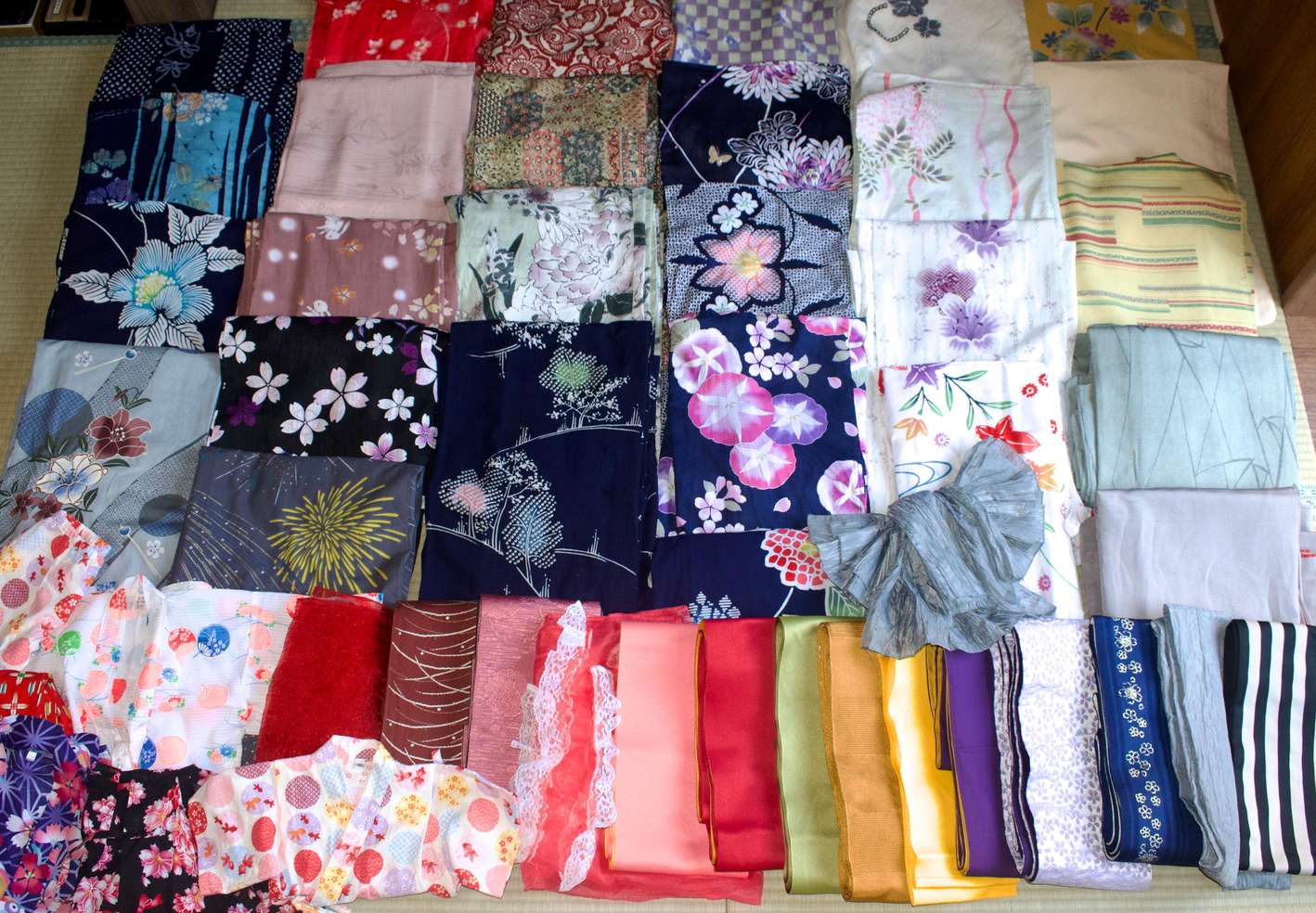
Adding a kimono stretches the schedule, and where the dressing happens decides the arithmetic. At venues where hair styling and dressing take place before the ceremony, the preparation runs 50 to 60 minutes on top of the tea itself, so the whole plan fills two hours or more.
Where the rental shop sits apart, you travel between the two in wooden sandals, which is a different afternoon entirely.
One machiya does it differently. Kyoto: 100% Private Tea Ceremony, Calligraphy, and Kimono reserves the entire 125-year-old house, a 9-minute walk from Kyoto Station, and its full plan with tea, calligraphy and kimono runs about 90 minutes.
The two timings count different things: the 50 to 60 minutes covers dressing and hair styling scheduled before you reach the tea room at split venues, while the machiya's 90 minutes runs from first brush to final sips with dressing folded in, so no hour is scheduled twice.
Calligraphy means brush, ink and your own name, and the artwork goes home with you. Renting a kimono separately can suit outdoor days better, since dedicated rental shops carry a wider range of garments for walking.
Tattoos bring no ban in Kyoto's tea rooms or dressing shops; hosts appreciate them kept discreet in a formal room. Whichever route you take, the ceremony itself stays the same quiet hour on the tatami.
Getting to your private tea ceremony, and finding the door
Kyoto's addresses come from land registry lot numbers, and map apps stumble on them: one lot can hold several buildings, different towns can share a name, and townhouses hide along blind alleys, especially in Nishijin.
Save the venue's own map pin before you set out, and give the last stretch more time than the app claims.
Venues cluster where you would hope. Townhouse ceremonies concentrate in Gion, Higashiyama and along the Kamogawa, with central venues a 9- to 15-minute walk from Kyoto Station exits. The approach near Kiyomizu-dera runs up pedestrian cobblestone slopes, and many tea rooms sit down narrow side alleys, quiet the moment you turn off the main lane.
Getting there with a party in tow
TaxiAbout 10 minutes door to door from Kyoto Station to Gion, no stroller folding
Easy
TrainJR Nara Line one stop to Tofukuji, Keihan Line to Gion-Shijo in about 15 minutes, with elevators and wide gates
Easy
City busDirect in about 20 minutes, but sightseeing routes run packed
Difficult
WalkingCentral townhouse venues sit 9 to 15 minutes from the station exits
Moderate
With strollers or small children, the taxi and the train are the two ways that work. The taxi wins for door-to-door simplicity, and the train wins for elevators and wide ticket gates.
Booking a private tea ceremony, paying, and being on time
Two rules run the booking, and both are about time. The first: some operators charge the card in full when you reserve, so the slot is paid before you arrive. The second matters more.
Doors lock at start time at several venues, and groups more than 10 to 15 minutes late can be denied entry with the session cancelled and no refund, because the hour cannot be stretched for latecomers.
The rule that ends a visit
Doors lock at start time; arrive more than 10 to 15 minutes late and you may be turned away with no refund Plan the buffer into the day: leave early, and if a train or a taxi runs slow, message the host from the road
Put the ceremony where the schedule already has slack, before lunch or after a temple visit, so a slow train only costs you a coffee wait. Tipping settles itself: nothing extra changes hands in Japan, the listed price is the whole cost, and a spoken thank you is the local way to close the session.
And when a venue's page reads as Japanese-only, look at the booking request form anyway; several hosts run dedicated English sessions once the request says so.
Photos, allergies, and the floor at a private tea ceremony
Photos come with house rules. Flash is banned inside the townhouse ceremony, video recording is prohibited at certain venues, and some hosts allow photos only if the images never reach social media. Settle the rules when the session begins, while the host can still adjust the plan.
Allergies need a message in advance. The sweets look harmless and hide common triggers: wheat, soy and nuts appear in common recipes, and Kyoto's kyo-gashi technique kneads wheat flour into the bean paste on purpose. Tell the host about a serious allergy when you book and check the original label on the day.
The floor is the third line. Kneeling in seiza is not compulsory: Jotokuji Temple provides stools, the 100-year-old townhouse seats guests on a small chair on request, and Karasumashijo brings out bamboo chairs if you ask ahead.
Older machiya compensate in other directions, with steep narrow stairs and a raised entrance step, and the century-old townhouse ceremony does not suit wheelchair users.
Posture, when legs fold, has its own quiet rule: shift cross-legged or to the side with the feet tucked away, keeping the soles away from the host.
Should you day-trip to Uji instead of a private tea ceremony in Kyoto?
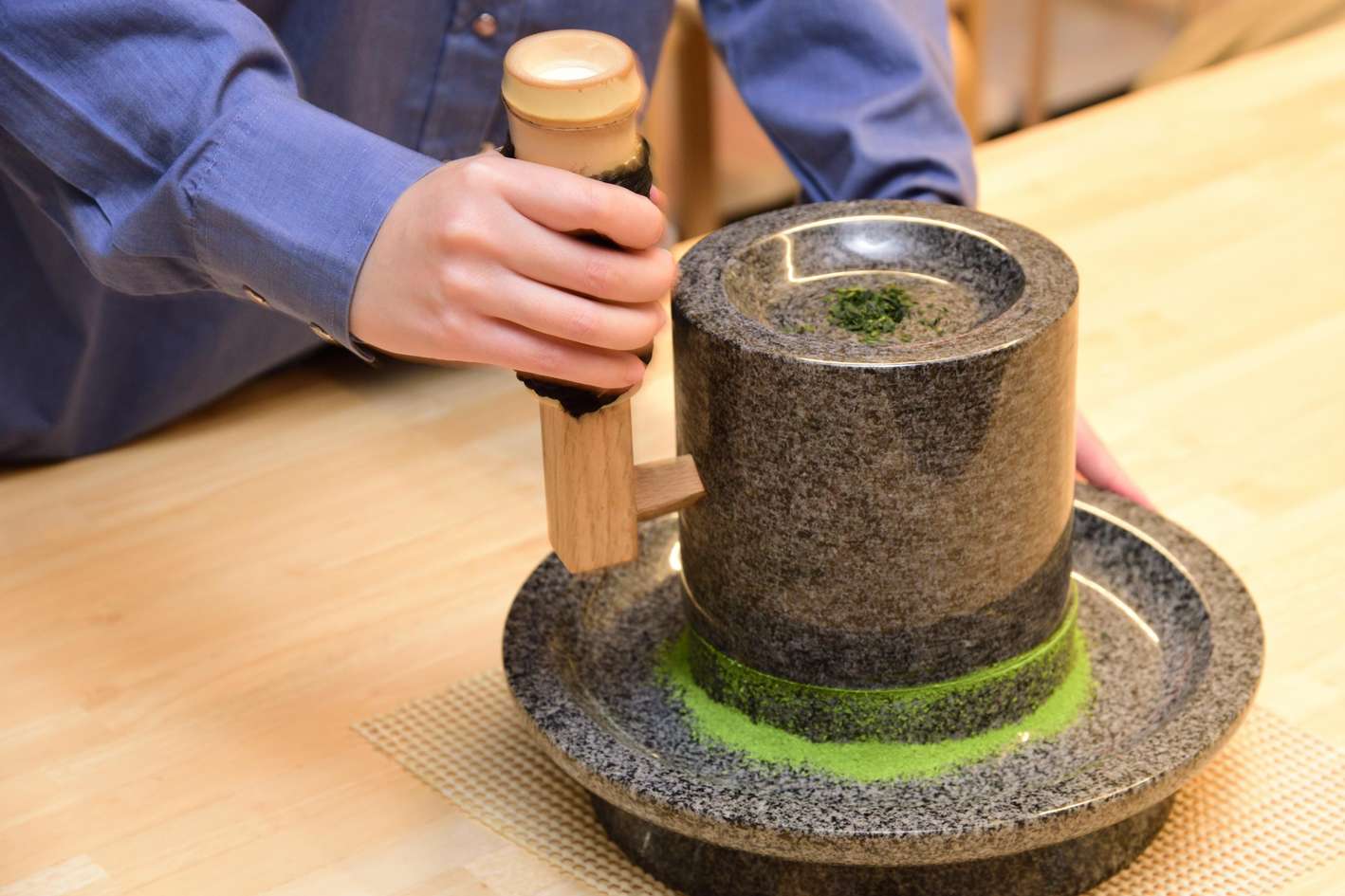
Twenty minutes by train, the tea changes address. Uji developed shade cultivation in the 16th century, the technique behind matcha itself, and its tea houses sit along the river below Byodoin Temple. The JR Nara Line runs direct from Kyoto Station in 17 to 20 minutes, no transfers.
Uji keeps things calmer, with fewer crowds and a less touristy feel than the tea schools in Kyoto. The municipal tea house Taiho-an pours matcha with a sweet to walk-ins when seats are free, and hands-on preparation needs a reservation about three days ahead.
Municipal and cooperative venues generally charge less than the private tea houses of Gion and Higashiyama, and the hills around town grow much of the matcha whisked there.
A half-day covers it: tea shops, lunch, a ceremony and the temple, four to five hours door to door. Treat Uji as the second chapter of a tea-focused trip. Do the private ceremony in Kyoto, then let Uji show where the leaf comes from; the two sit comfortably in one itinerary.
What to pair with a private tea ceremony in Gion and Higashiyama
With the hour booked, Gion supplies the rest of the day on foot. Kennin-ji, Kyoto's oldest Zen temple, sits about 300 meters from the central Gion townhouses, and Kodai-ji with Maruyama Park lies roughly 800 meters on. From there the preserved stone slopes of Ninenzaka and Sannenzaka climb toward Kiyomizu-dera through a designated preservation district.
Historic temples, shrines, and gardens near Gion townhouse tea venues
The lanes run busiest between 10 am and 4 pm, so an early ceremony puts you on the slopes as the shops open, and a late-afternoon ceremony leaves the lantern-lit walk for dusk. It adds up to a half-day loop: temple, ceremony, then the stone slopes climbing toward Kiyomizu-dera.
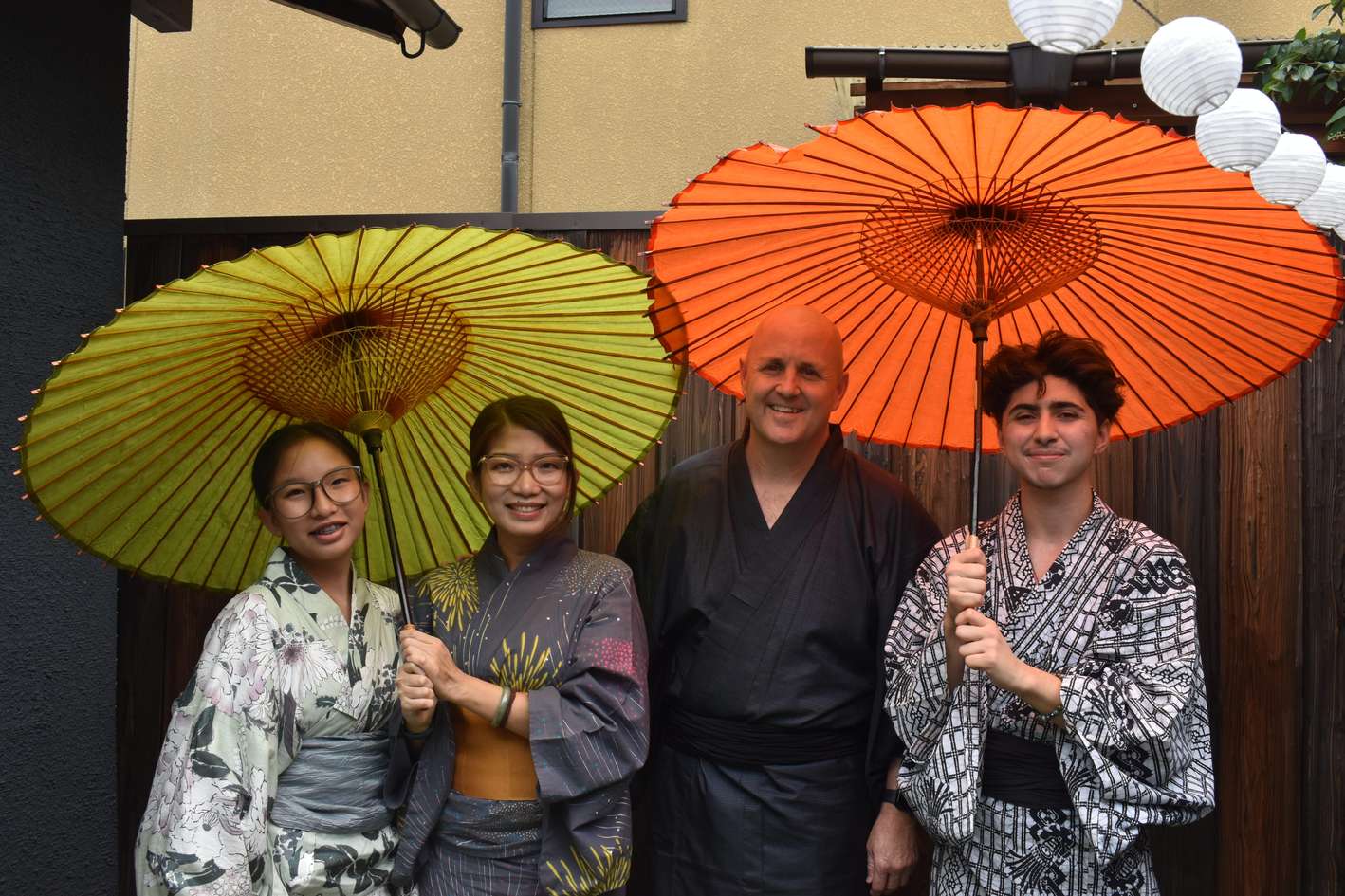
Rented kimono changes the walk: zori sandals tire faster than sneakers on the slopes' steps and stone pavement, so keep the route short and let the photos justify every pause. Book the ceremony first, then let the temples fill the hours around it.
Once the hot pot started whistling I was so relaxed! A calm, peaceful tea sip. Loved learning matcha's history in Japan and how to properly whisk quality matcha into bubbles. Def recommend.
Book the whole machiya when the party wants tea, calligraphy and kimono under one roof, the Gion tearoom when chairs and a central address matter, and the small-group tatami room when sharing suits you fine.
Whichever you choose, reserve well ahead of the cherry blossom and foliage crowds, arrive with buffer to spare, and walk in with clean socks on.
Go ifYou want to ask questions freely without an audienceChildren in the party need room to wiggleYou are marking an occasion and want the house to yourselves
Skip ifYou only want to taste matcha and watch the movements; a small-group session covers itA shared room of fellow travelers sounds like part of the fun
Common questions about a private tea ceremony in Kyoto
Short answers to what travelers ask before booking a private tea ceremony in a Kyoto townhouse.
Kyoto2026
We have the whole machiya to ourselves. The kids napped mid-ceremony and nobody minded. Reserve ahead for spring and autumn.
Is a private tea ceremony in Kyoto worth booking over a shared group session?
It depends on what you want from the room. In a private session the host tailors the scroll, the sweets and the tea bowls to your party, adjusts the pace, and there is time for every question.
If you only want to taste matcha and watch the movements, small group sessions in historic townhouses already keep the room quiet.
Can I bring my children without worrying they will disturb other guests?
Yes, and this is where a private room earns its keep. Your children can wiggle, make noise or even nap without anyone else in the room to disturb.
Age minimums still vary by venue, from around five years old at some tea rooms to ten at the hundred-year-old townhouse, so check the age limit when you book.
Do I need to know Japanese or tea etiquette before I go?
No preparation is needed. Introductory ceremonies for visitors are relaxed from the start, and English-speaking hosts explain the history and the meaning behind each movement. Small slips in etiquette are routinely overlooked at sessions arranged for visitors.
What happens if my group arrives late?
Arrive five minutes before your slot. A private session cannot be extended past its scheduled end, and at some tea houses a group that turns up after the start or more than 10 to 15 minutes late is denied entry with no refund.
How long does a private ceremony last?
Most introductory sessions run 45 to 60 minutes. Plans that add kimono dressing stretch to about 90 minutes, and packages with calligraphy can run to two hours.
Can we take photos or record video during the ceremony?
Photography rules differ by venue. Video recording is off limits at certain tea rooms, flash is not permitted inside the old townhouse, and a few venues allow photos in the room but ask that those images stay off social media. Ask your host before the tea is whisked.
What can we ask the host to include in a private session?
Quite a lot. Guests tailor private sessions with requests such as thick koicha tea, a meal, flowers or calligraphy, and a slower pace for older guests or children works too, since no other group is waiting at the door.
Where can we get complete privacy with no outside spectators?
One experience reserves the whole 125-year-old machiya for your party alone, a nine-minute walk from Kyoto Station, so no other guest sets foot in the house while you are there.
Can friends come along and just watch?
At one tea room, guests not included in the booking cannot enter and cannot wait in the waiting area during the session. Every person in the room, including young children, counts as a participant and needs a place in the reservation.
Our kids dislike bitter green tea. Can the host adjust?
Tell the host in advance. Ceremonies aimed at families often provide alternative drinks and shorter formats, and a child who cannot take caffeine can be offered just a tiny courtesy sip or plain hot water, since decaffeinated matcha does not exist.
Will the host speak English?
Yes. English-speaking hosts guide introductory ceremonies and explain the history and the symbolism behind each movement, and one small-group option is also run in Spanish.
Do I need to tip the tea master afterward?
No. Tipping is not customary in Japan, the listed price covers the full session, and a simple thank you says it well.
Where next after your private tea ceremony in Kyoto