4.9 from 12,907 traveler reviewsFree cancellation up to 24 hours beforeGuided in English and JapaneseReserve now, pay later
Comparison · 10 min read
Tea Ceremony in Kyoto vs Tokyo -Better in Osaka or Kanazawa
Book your tea ceremony where the tradition lives. Compare Kyoto with Tokyo, Osaka and Kanazawa, then whisk your own matcha in a garden tea house near Kiyomizu-dera, with Uji matcha and a seasonal sweet served by a tea master. Reserve a session that runs in English and suits beginners.
Short answerScored on 4 criteria
Book your tea ceremony in Kyoto. Kyoto holds the headships of the three Sen tea schools, and its venues sit in machiya townhouses and temple gardens Tokyo cannot match.
You want century-old wooden venues and garden teahouses around youKyoto
Your Kyoto dates are full during cherry blossom or autumn foliage seasonKanazawa
Your itinerary is loose and you would rather not reserve weeks aheadOsaka
You have just one Tokyo day and want tea on the scheduleTokyo
Our pick for KyotoKyoto: 100% Private Tea Ceremony, Calligraphy, and KimonoCheck availability →
Historic districts; spring and autumn book out first
Machiya townhouses, temple gardens and the three Sen schools, with Uji matcha grown a short train ride away.
Venue authenticity5
Cultural depth5
Crowd-free calm2
Booking ease2
Best for: First-timers who want the setting to match the ritualTours here →
B · Tokyo
Hotel tea rooms, gardens and museum teahouses
Edosenke roots from the Edo era, hosted in hotel tea rooms and garden pavilions rather than wooden teahouse districts.
Venue authenticity3
Cultural depth3
Crowd-free calm3
Booking ease4
Best for: Travelers with no room left for Kyoto
C · Osaka
Castle gardens and Sakai tea houses
Relaxed sessions in castle park and Sakai tea rooms, with same-day booking possible in Dotonbori.
Venue authenticity3
Cultural depth3
Crowd-free calm3
Booking ease4
Best for: Flexible planners who book late
The verdict
Kyoto vs Tokyo, Osaka or Kanazawa
Pick Kyoto when the tea ceremony matters on this trip. The three Sen family schools have their headships there, sessions run in century-old machiya townhouses and temple tea rooms, and Uji matcha is grown a short train ride away.
Tokyo, Osaka and Kanazawa all work as backups. Kanazawa is the strongest of the three if Kyoto is booked solid: its sessions stay quieter, with tea houses inside Kenroku-en and the Higashi Chaya district.
Go ifYou want machiya townhouses, temple rooms and garden tea housesYou care that the tea schools teaching you are rooted in the cityYou will pair the ceremony with kimono and a walk through Gion or Higashiyama
✓Highest concentration of English-friendly tea houses
Many studios run sessions almost fully in English
Dotonbori sessions led by an English instructor
Travel guide · 10 min read
Guide - tea ceremony Kyoto vs Tokyo, city by city
Three Sen tea schools keep their headships in Kyoto, and its ceremonies run in century-old machiya and temple tea rooms. The choice between four cities comes down to setting and booking time, and both favor Kyoto.
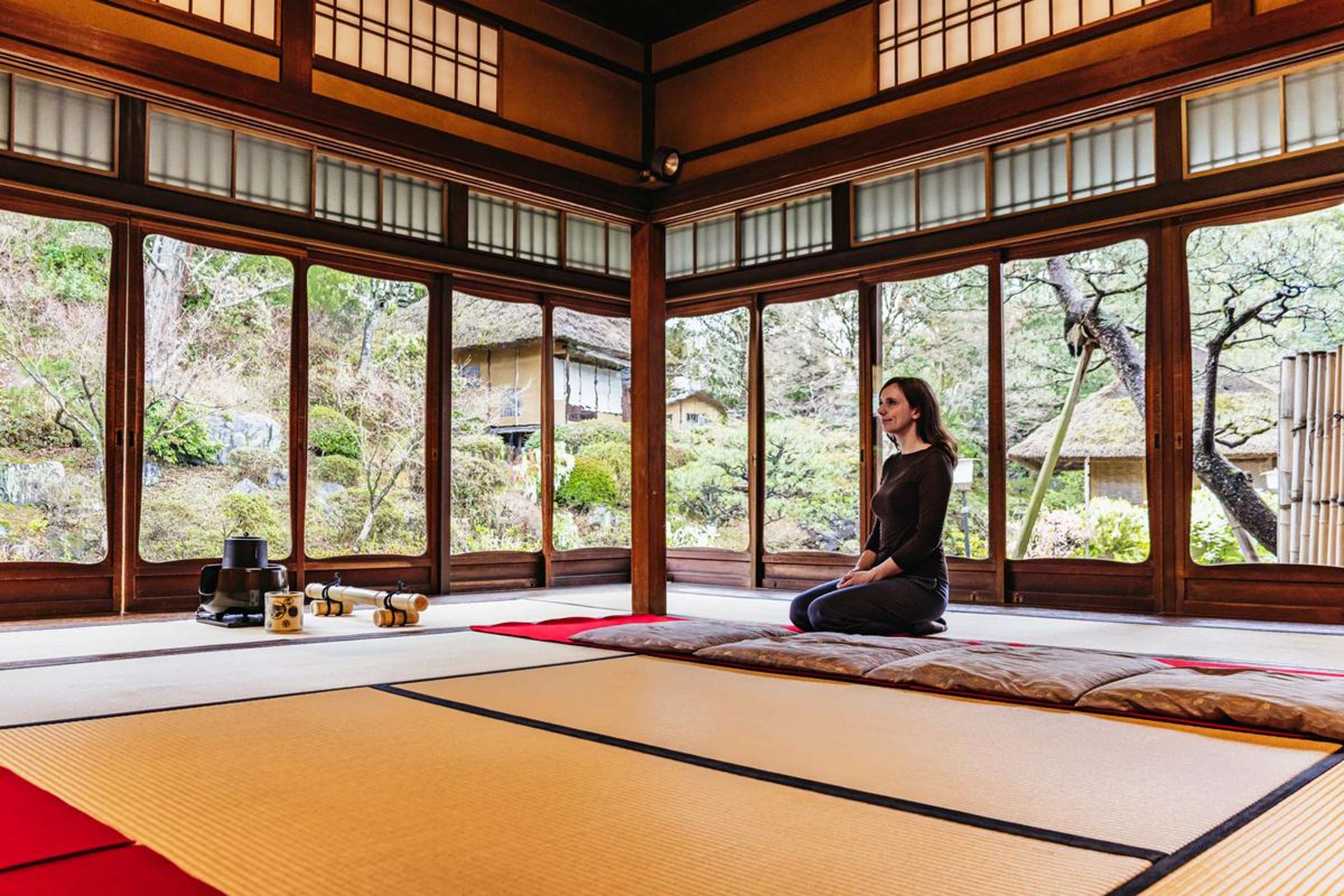
Tea rooms sit on tatami floors where bare feet are not allowed, and most sessions happen on the floor in the traditional kneeling position.
Bring clean socks, and if kneeling hurts your knees or back, request a chair or stool when you book: Jotokuji Temple, the 100-year-old townhouse ceremony, and the Karasumashijo venue all provide seating on request.
Where each city holds its tea ceremony - machiya and temples versus hotel rooms
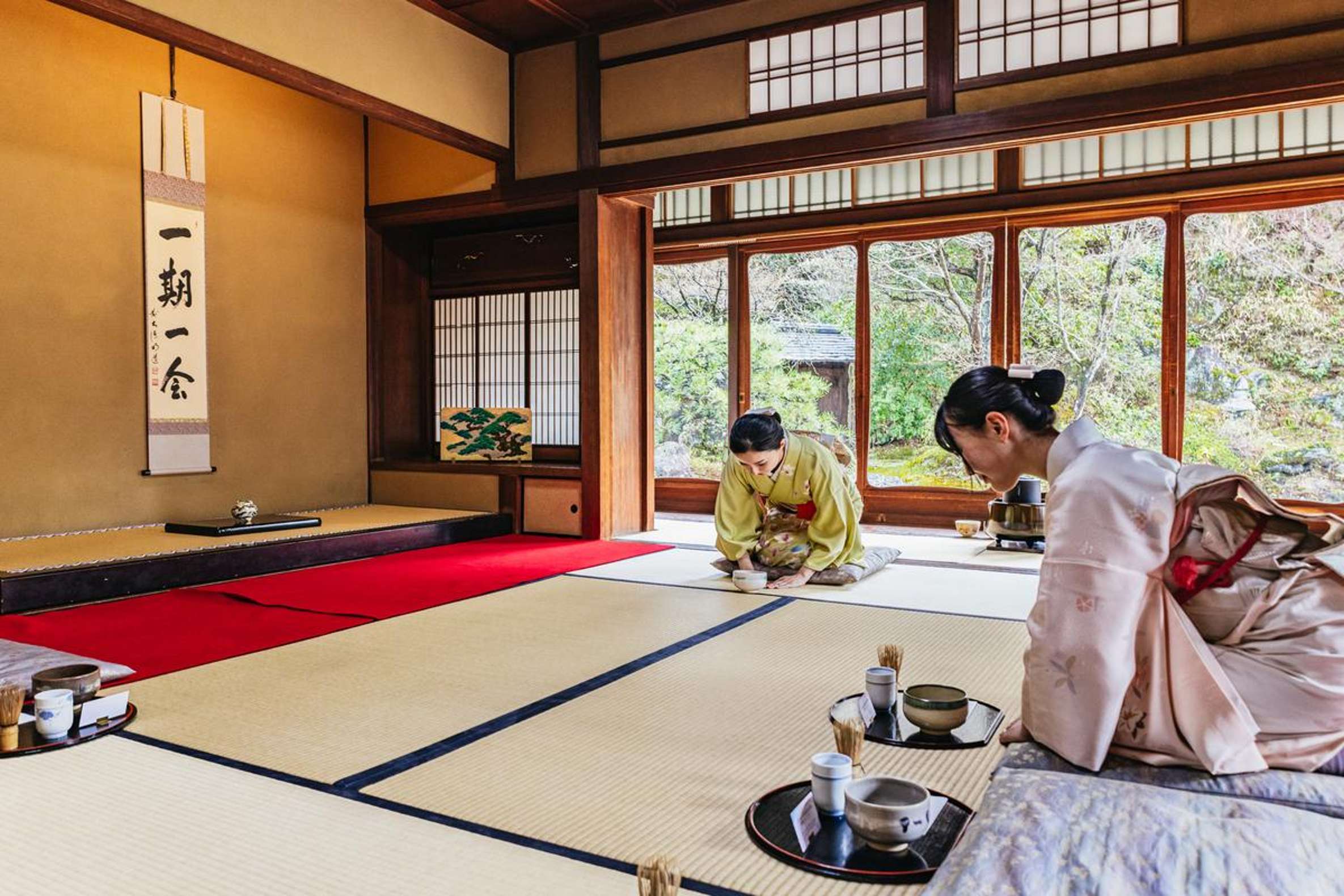
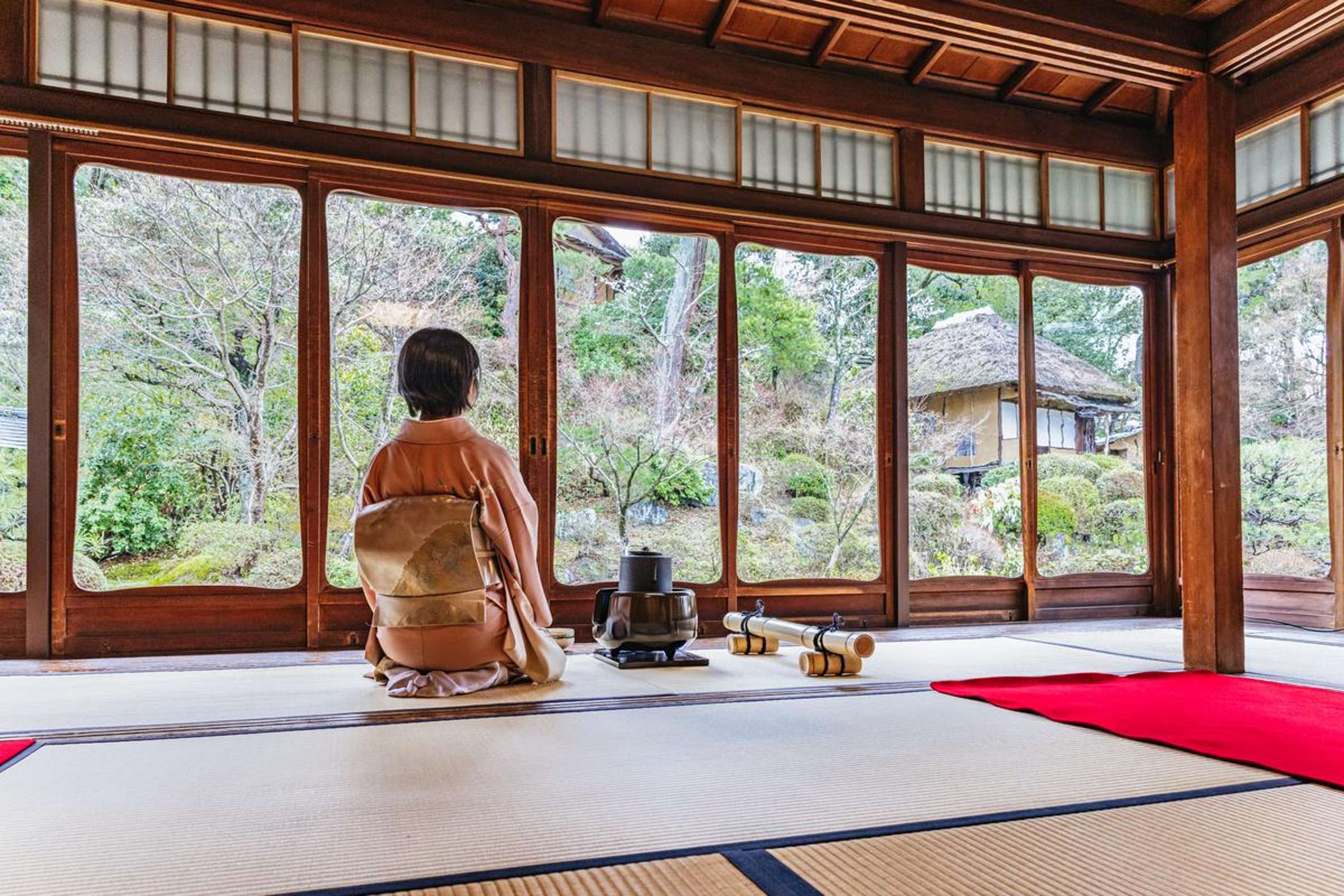
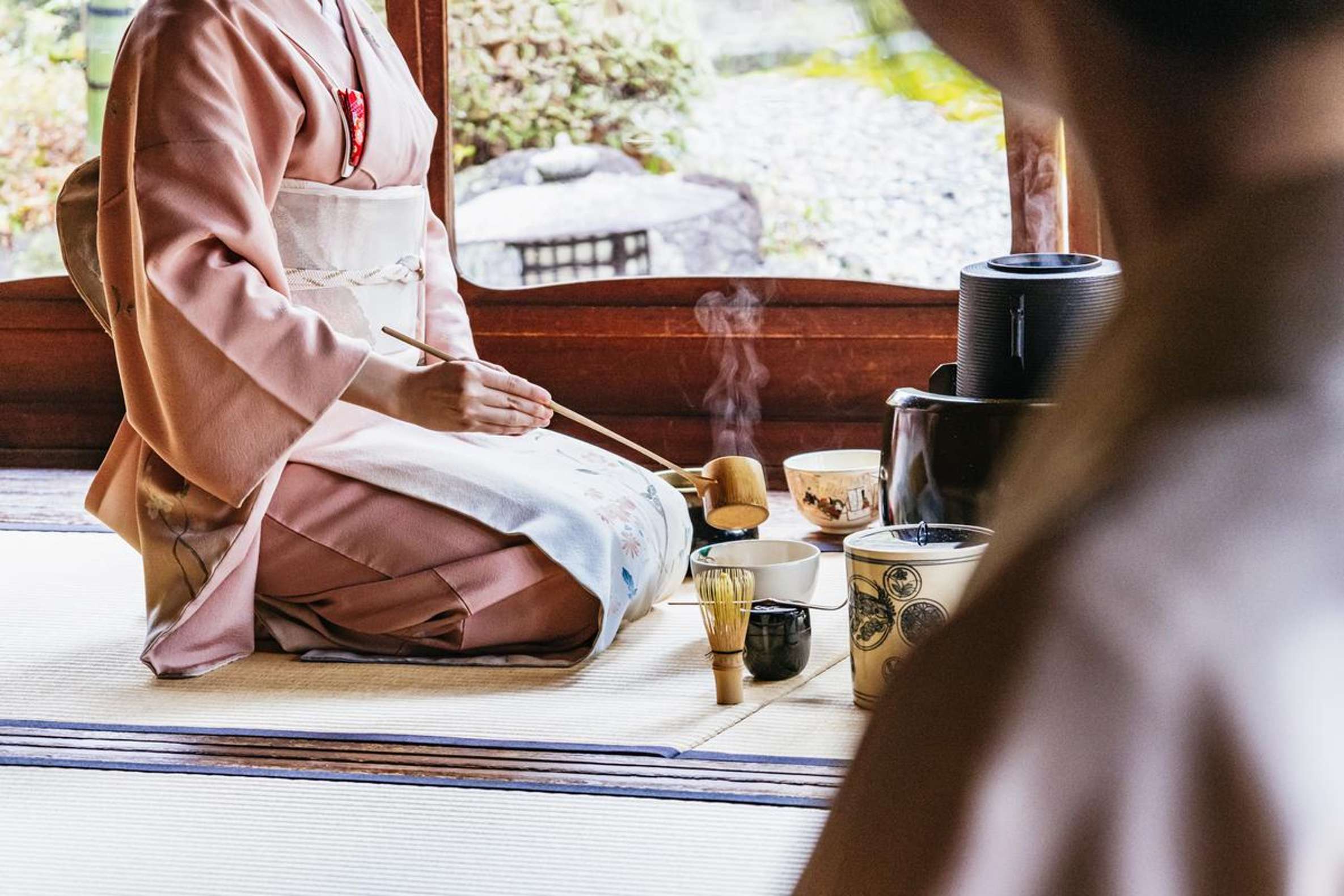
The room decides the ceremony before the whisk ever moves. In Kyoto it is often a preserved machiya townhouse with tatami floors and lived-in rooms, low conversation and careful movement, or a tea house reached through a garden path that pulls you away from the street before you sit.
Most Tokyo sessions sit inside hotels or museums, though real tea houses exist there too, far apart: a teahouse on an island in Hamarikyu Gardens, museum farmhouses at the open-air architectural museum, and formal rooms inside commercial hotels, where some venues set modern art and chairs at the table instead of floor seating.
Osaka gathers its tea rooms in green pockets, from a hermitage in Osaka Castle Park to a museum tea room facing the former home of Sen no Rikyu in Sakai.
Kanazawa holds its own with the oldest teahouse in the city at a family garden, tea rooms inside Kenroku-en, and one in a samurai residence. The difference is density and setting: only Kyoto lets you walk out of a wooden tea room straight into the preserved lanes where they were built.
Tea lineage by city - Kyoto's Sen headships and its rivals' roots
Lineage is the quiet argument for Kyoto. The three Sen family schools, Omotesenke, Urasenke and Mushakojisenke, all keep their headships there, and the Yabunouchi school sits in the city too. When you take tea in Kyoto, you sit inside the tradition's living center.
The rivals each borrowed it. Tokyo's Edosenke school was founded by a disciple of the Omotesenke grand master, sent to Edo in 1750 to spread the way of tea among shogunate officials and merchants.
Kanazawa's story runs through the samurai: in 1666 the Maeda lord invited a Kyoto tea master, and a potter came along to build a kiln for tea bowls in the local amber-glazed style.
Osaka holds the oldest claim of all, Rikyu's birthplace in Sakai, where he trained at a Zen temple before studying under masters in Kyoto.
Tokyo carries the thinnest record: no surviving tea culture sites from the great tea eras, only a few from the Edo period onward. The ritual tastes of deeper roots where the schools themselves live.
Tour for this
Kyoto: Tea Ceremony in a Garden Tea House near Kiyomizu-dera4.8★ (4,618) · 45 minutes · Free cancellation
Does a Kyoto tea ceremony cost you temple time? The itinerary math
Travelers hesitate to give Kyoto temple hours to a tea ceremony and plan the ritual for another city instead. The itinerary says the opposite.
A beginner session runs 45 to 60 minutes, and Kyoto venues sit close to the sights you are seeing anyway, so the ceremony folds into a Higashiyama day instead of costing it a detour.
How long beginner tea ceremonies last
45-60 minstandard group ceremony
20-30 minshort introductory ceremony
90 minceremony with kimono dressing
120 minceremony with kimono and calligraphy
Asakusa packs tea rooms, kimono shops and Senso-ji within walking distance, so Tokyo sessions fit schedules easily, with tea rooms clustered near stations in Asakusa, Ginza and Shibuya. Osaka offers a different rhythm: a quiet pause against Dotonbori's neon noise, which some travelers like as a contrast day.
But the slot goes to the city where the ceremony means the most. Kyoto is the city Japan itself points first-time visitors to for tea, so protect the hour here and squeeze the rest elsewhere.
Crowds, group sizes and how commercialized each city's sessions feel
Not every session is a ceremony. Budget group demonstrations near big temples move visitors through on a tight script, and some guests leave a 40-minute slot feeling processed instead of welcomed.
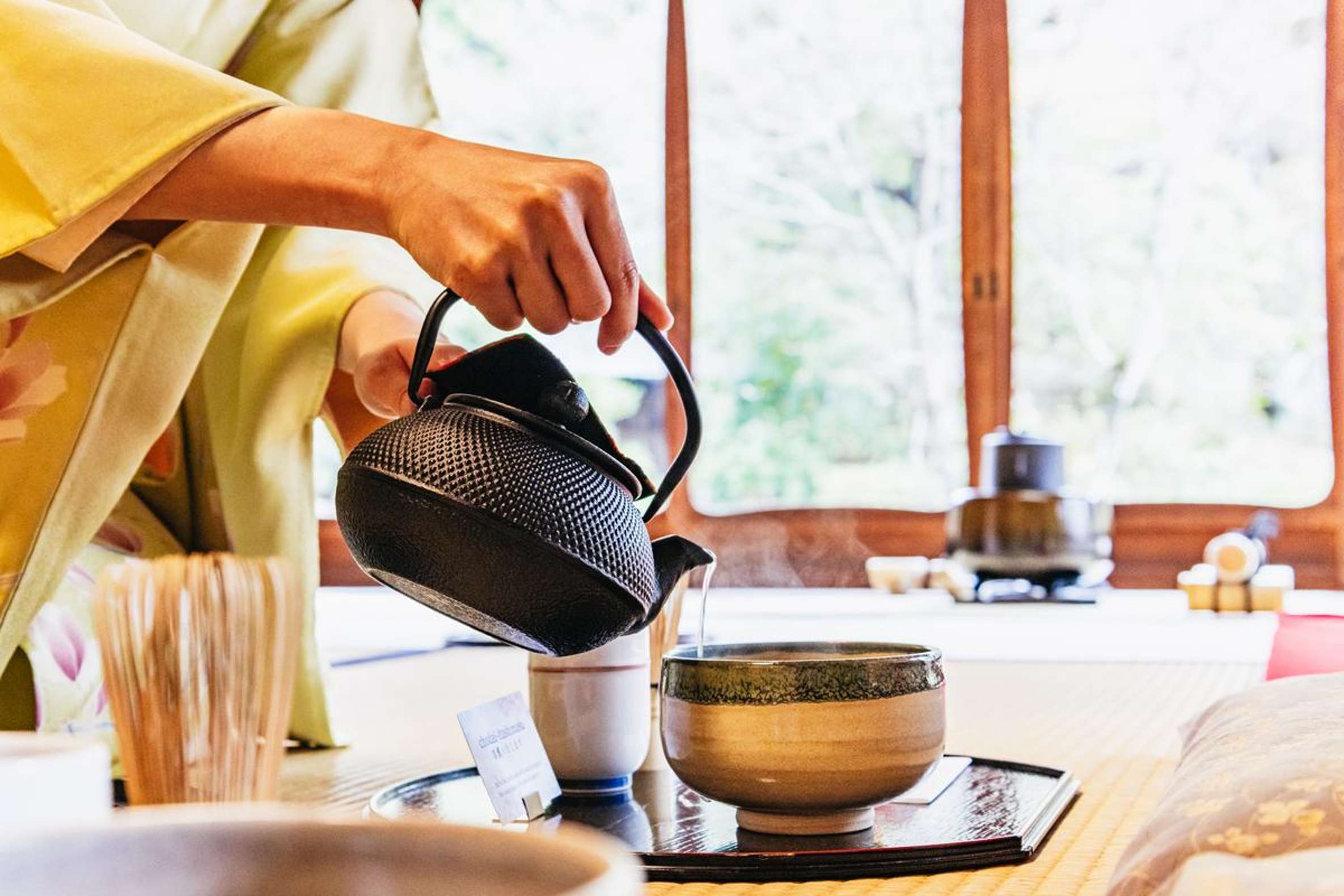
Two checks expose the rushed ones before you book: the group size and the duration in the listing, and whether you whisk your own matcha or only watch.
Tea ceremony bookings and interest across the year in Osaka
July: 5 out of 5 for how busy it gets. Bookings hit their annual peak in midsummer, making advance reservations essential for securing a spot.
HighestApr, Jun to Jul, Sep to Oct
In betweenMar, May, Aug, Nov
LowestDec to Feb
Darker: a higher how busy it gets score, out of 5
Tap a month to read it.
January is the quietest month of the year for tea ceremonies, making last-minute and same-day bookings easiest to find.
HighestJan, Mar13,348 to 13,478 readers a month
In betweenFeb, Apr to May, Aug, Dec10,515 to 11,716 readers a month
LowestJun to Jul, Sep to Nov8,259 to 9,822 readers a month
Darker: more traveler interest, from 8,259 to 13,478 readers a month
Tap a month to read it.
A proper session covers etiquette, history and the utensils alongside the tea itself. Kyoto's townhouse group ceremonies seat around 8 to 12 people, small enough that the English-speaking host answers questions between movements.
Osaka splits between small-group, private and budget formats, and its weekend slots in July and October fill one to two weeks ahead, while winter leaves same-day seats. Kanazawa stays the quietest of the four, casual and close to daily life, where the tea comes without a performance frame.
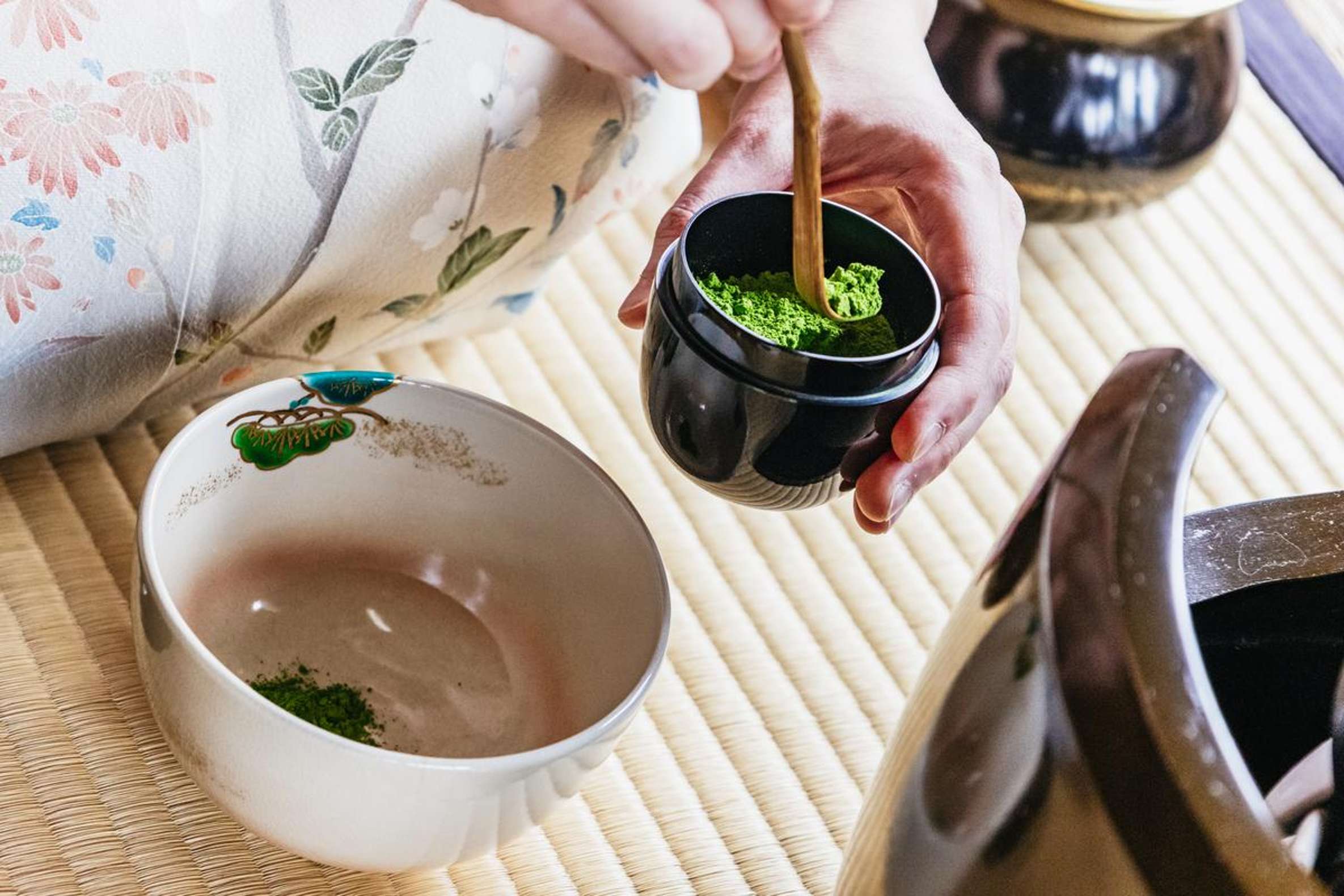
Ask one question when you compare listings: will I make the tea myself? The answer separates a lesson from a demonstration.
Kimono rental and historic streets for walking - Kyoto, Tokyo, Osaka, Kanazawa compared
The photos people keep come from after the ceremony, so the street outside the tea room matters as much as the room.
Kyoto's compact historic center lets a kimono wearer walk between landmarks and tea rooms without trains, and the willow-lined canal paths of Gion Shirakawa suit short strolls, more photos with less walking. Ninen-zaka and Sannen-zaka are preserved slopes worth the steps, though zori sandals on stone pavement tire feet faster than you expect.
Asakusa is where Tokyo's walkable kimono quarter begins and ends: the temple area packs gate, shopping street and Senso-ji together, flat and easy, and beyond it the kimono walking stops.
Osaka pairs rental shops with the lantern-lit Hozenji Yokocho alley and Shinsaibashi's old buildings. Kanazawa's Higashi Chaya district offers flat walking under dark cedar lattice, less crowded than Gion.
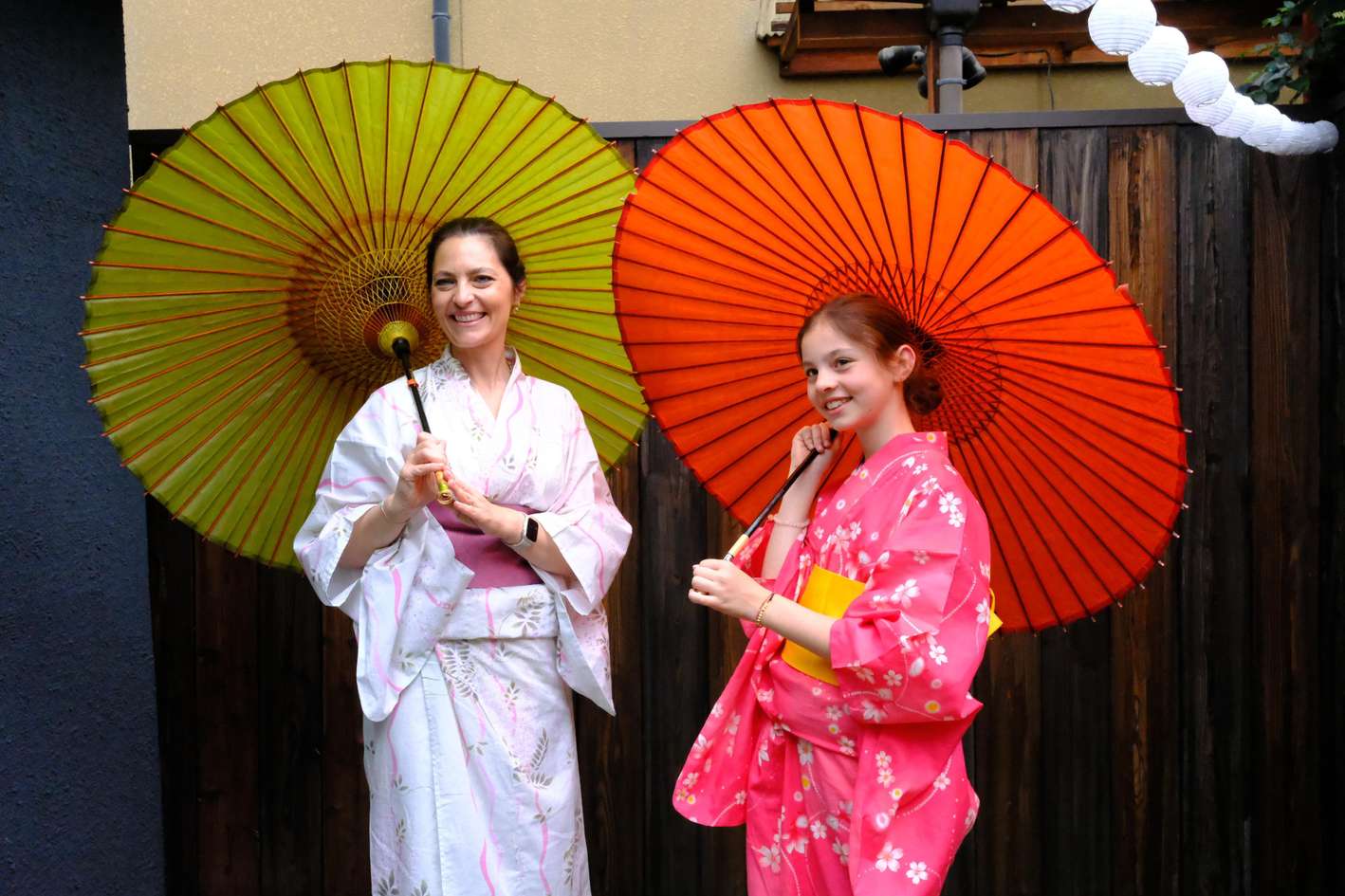
One session pairs the ritual and the walk in a single booking. The Kimono Tea Ceremony at Orizuruya Gion runs about 90 minutes to two hours, dresses you in a kimono from over 200 designs with hairstyling for women, and teaches you to whisk your own matcha.
An expert dresses you, so no one worries about getting it wrong.
How far ahead to book - how fast Tokyo and Kyoto's peak seasons fill up
Booking windows differ sharply, and the month you travel picks the city you can still reserve. Kyoto's popular slots fill in advance during cherry blossom season and again in April, September and November, with walk-ups unreliable; December through February stays the quietest.
Across Japan generally, ceremonies need booking six to eight weeks ahead in the two peak seasons.
When tea ceremony slots fill up
JJanFFebMMarAAprMMayJJunJJulAAugSSepOOctNNovDDec
Kyoto →Peaks April, September, November; winter quietest
TokyoCherry blossom and November foliage peaks
OsakaPeaks April, June, July, September, October; winter open
KanazawaSpring and autumn peaks; book days ahead
At its bestOn
Osaka runs its own calendar, busiest in July and October with spring demand close behind, and winter opens same-day slots. Kanazawa is the forgiving one: during peak months most venues want only three days to a week of notice, with exclusive private rooms the exception.
If your trip falls in April or November, reserve Kyoto first and everything else around it. If you travel in winter, you can leave the choice later and still find seats in every city. The rule is simple: your booking lead time should match the city you choose.
Tour for this
Kyoto: Tea Museum Tickets and Matcha Grinding Experience4.9★ (1,110) · 1 hour · Free cancellation
Kanazawa as your backup when Kyoto is booked solid
Sometimes Kyoto is full, and that is where Kanazawa earns its place on the itinerary. Tea houses cluster around Kenroku-en and the Higashi Chaya district, so a ceremony fits a sightseeing walk: the loop bus from the station links both.
One tea house inside Kenroku-en schedules its sessions at 10 am, 2 pm and 3 pm, and the city's oldest teahouse waits in a family garden near the gate.
Sessions here need only days of notice, and the atmosphere feels like daily life in a quiet room. Walk-in matcha is possible too, at garden pavilions inside Kenroku-en and at a teahouse in the chaya district, no reservation at all.
Treat Kanazawa as the strongest fallback. The setting is real and the welcome is warm, but the machiya lanes, temple rooms and school headships that make the ceremony feel rooted all stay in Kyoto. If the ritual matters on this trip, book Kyoto early and keep Kanazawa in your pocket.
Uji versus Kyoto city - the half-day tea trip twenty minutes from Kyoto Station
Twenty minutes by train from Kyoto Station, Uji is the other answer to the tea question. This is where shade cultivation was developed in the 16th century and matcha began, and much of the tea ground there still grows in the surrounding hills.
The JR Nara Line runs direct in about 17 to 20 minutes; from Gion, the Keihan route takes closer to 30 to 40 minutes with one change.
A municipal tea house by the river takes walk-ins for seated tea with a sweet, no reservation, with same-day tickets sold at the tourist information center in front. Hands-on preparation there needs three days' notice.
Expect a quieter, less touristy session than the city schools, and leaf teas such as sencha and gyokuro that Kyoto rarely serves. Photography inside the tea room is off the table.
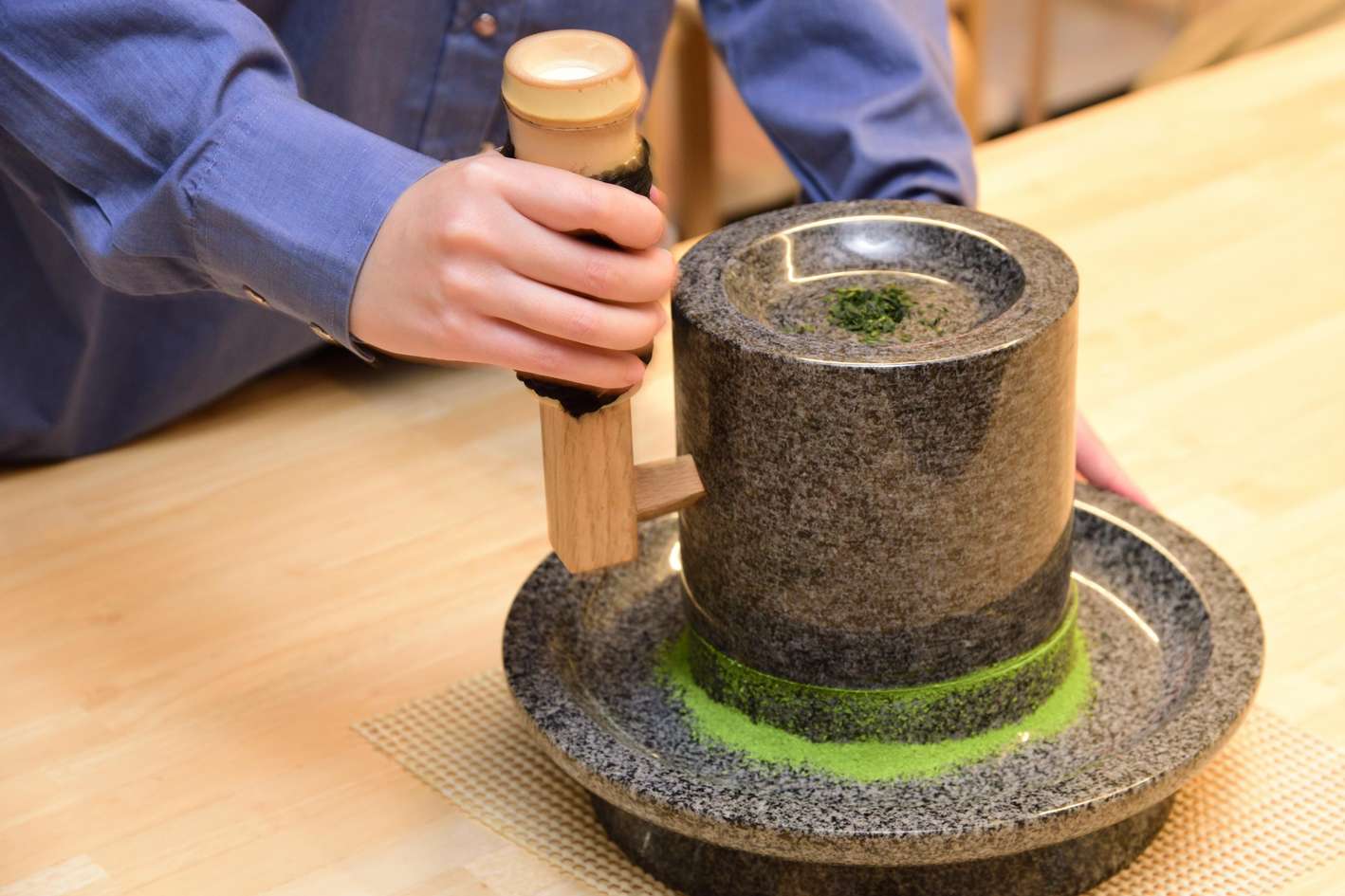
For a hands-on taste, one operator runs a matcha grinding workshop at a tea museum, an hour with a stone mill facing the tea fields. A door-to-door half day in Uji covers tea shops, lunch and a ceremony, and leaves the afternoon free for Nara.
Tour for this
Kyoto: Tea Museum Tickets and Matcha Grinding Experience4.9★ (1,110) · 1 hour · Free cancellation
Tourist session or formal chaji - what authentic looks like in Kyoto
The full ceremony, the chaji, lasts up to four hours with a kaiseki meal, a fire built before the guests, and one bowl of thick tea shared down the line. It requires an invitation.
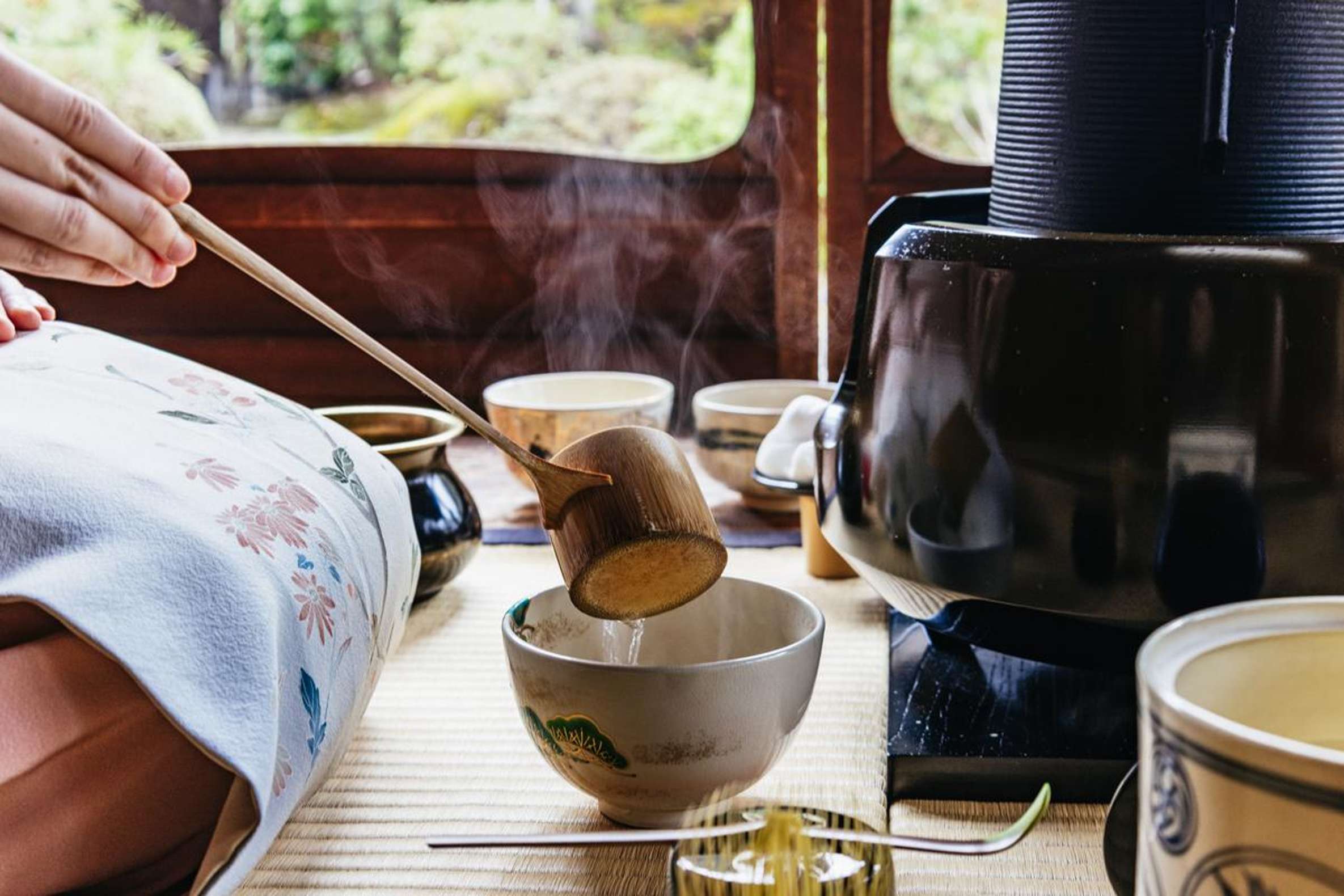
What travelers book is the distilled version, 45 to 60 minutes of demonstration, sweets and explanation, and in Kyoto even the short version carries the real architecture: a roji garden path that settles the mind, a doorway low enough that everyone bows, tatami sized at four and a half mats.
Three assumptions worth dropping
MythA 45-minute session must be fake
Reality
The short format is a genuine lesson in etiquette and utensils; the formal chaji simply needs an invitation and four hours.
MythThe matcha will be unbearably bitter
Reality
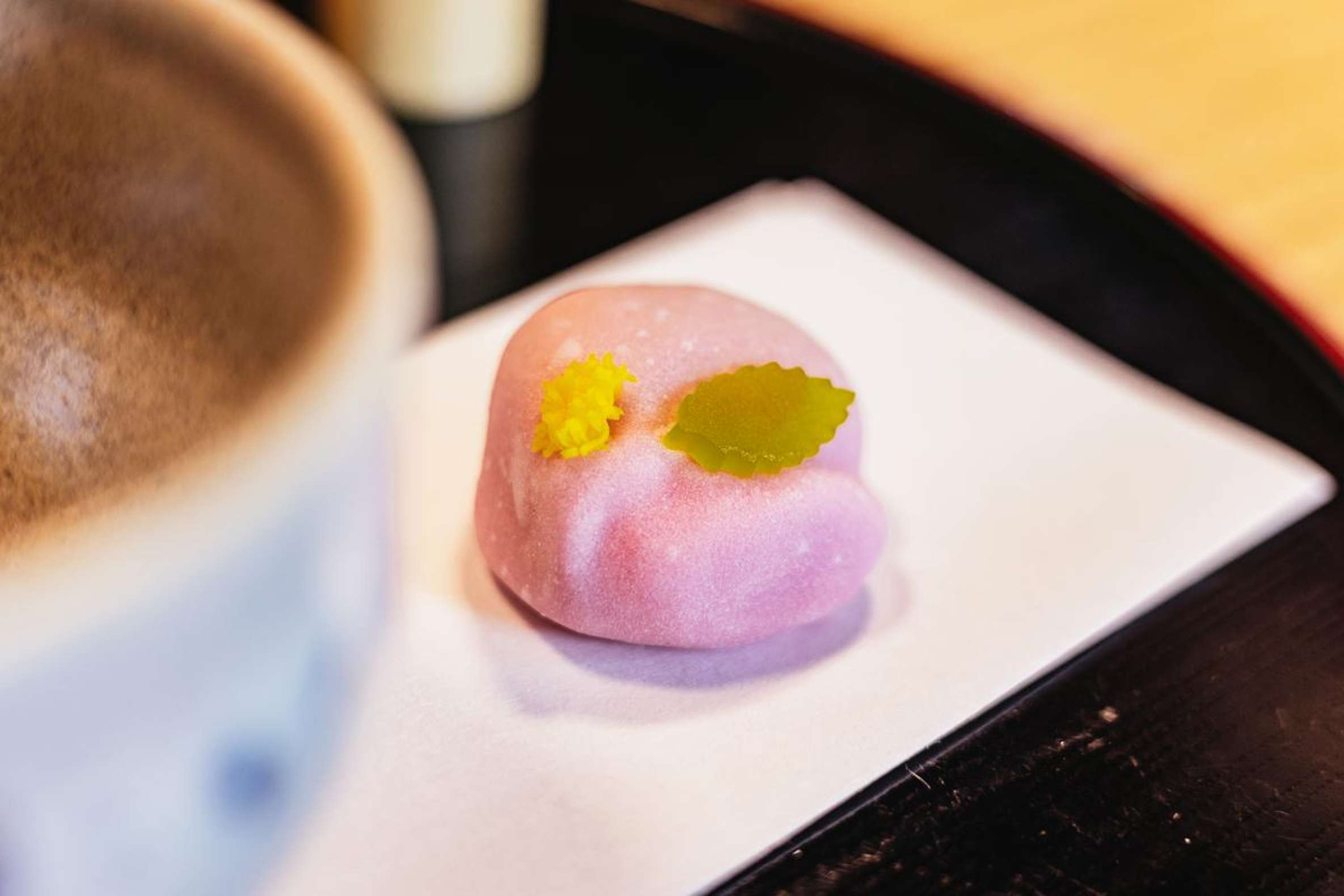
The sweet comes first to balance the tea, and the portion is only a few small sips.
MythA silent, rigid ordeal awaits beginners
Reality
Tourist ceremonies are built as relaxed cultural lessons, and small etiquette mistakes are routinely overlooked.
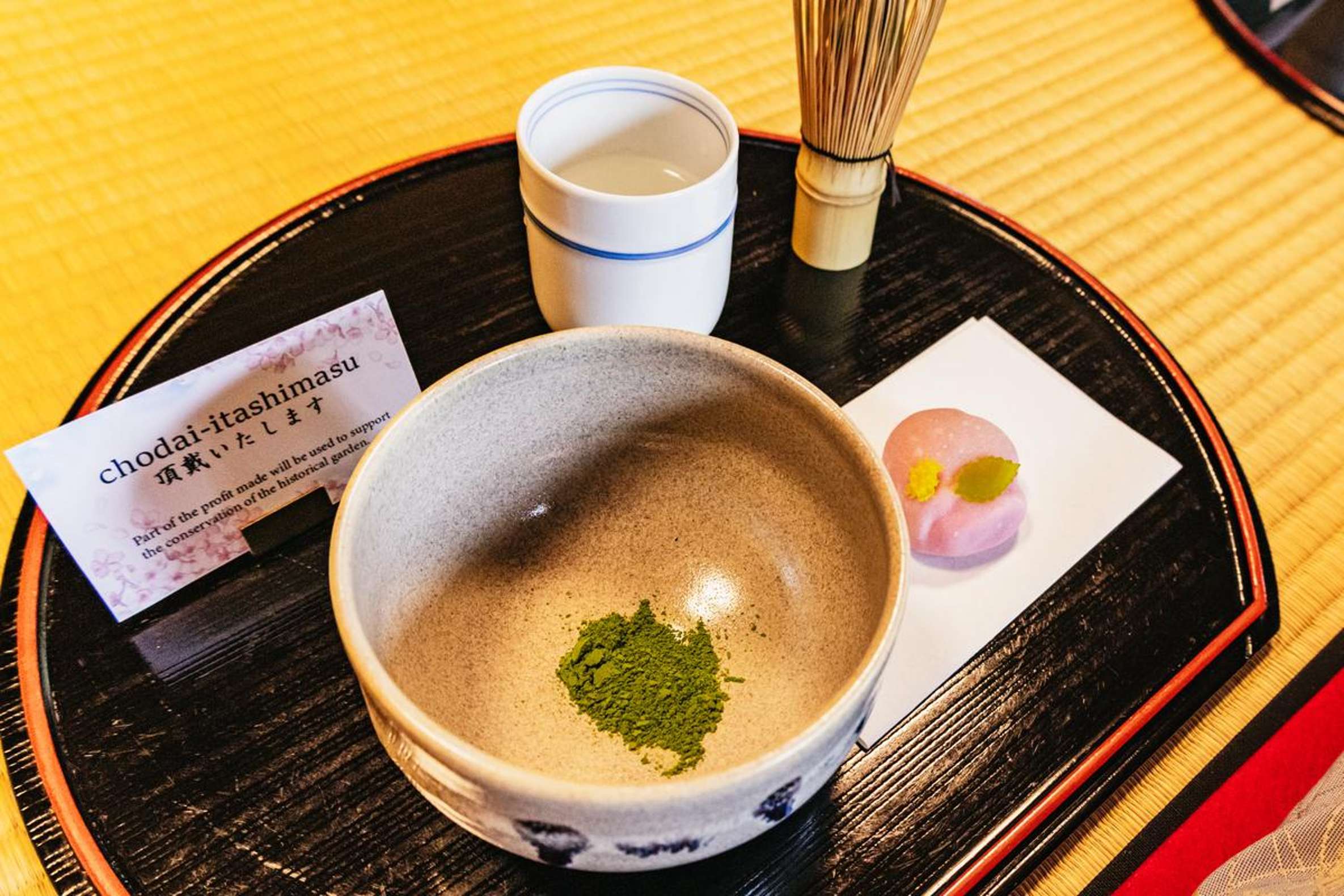
Ceremonies pour Uji matcha, and the sweet changes with the season. Forty-five minutes in a machiya is the honest traveler's version of the four-hour chaji. For the room and the master together, the Tea Ceremony in a 100-year-old Kyo-Machiya Townhouse runs 50 minutes, with kimono rental as an add-on and sweets matched to the season.
Seating, kids and health - who can sit through a tatami ceremony
The quiet worries, answered. Bad knees do not end the plan: Jotokuji Temple provides seats and stools for anyone uncomfortable kneeling, the machiya townhouse offers small chairs, and a tea room near Shijo-Karasuma keeps bamboo chairs on advance request.
When legs fall asleep mid-session, shifting position is fine as long as your feet stay tucked or turned away from the host.
Age limits vary by venue, and they matter. One garden tea house near Kiyomizu-dera admits children from 7, Jotokuji from 5, the Gion shared sessions from 6, and the 100-year-old machiya asks for 10 and up, with a quiet room and a note that disruptive guests may be asked to leave.
Steep, narrow staircases and raised entrance steps make many old townhouses unusable for wheelchairs, so check the venue before the district.
Caffeine has a workaround: there is no decaf matcha, but hosts told in advance will offer a tiny courtesy sip or plain hot water.
Even guests who normally avoid green tea enjoy it here. ::quote A voice from the tatami Even guests who normally dislike matcha are often pleasantly surprised by how fresh and delicious it tastes when prepared during the ceremony
What to wear and how to behave - dress code and etiquette before you go
Dress runs to one rule and a few courtesies. Wear socks, because bare feet never touch tatami, and skip sandals or flip-flops, which some venues refuse at the door.
Choose loose, modest clothing that lets you kneel, long pants or a skirt below the knee, and leave heavy perfume at the hotel: the aroma of the matcha is part of the ritual.
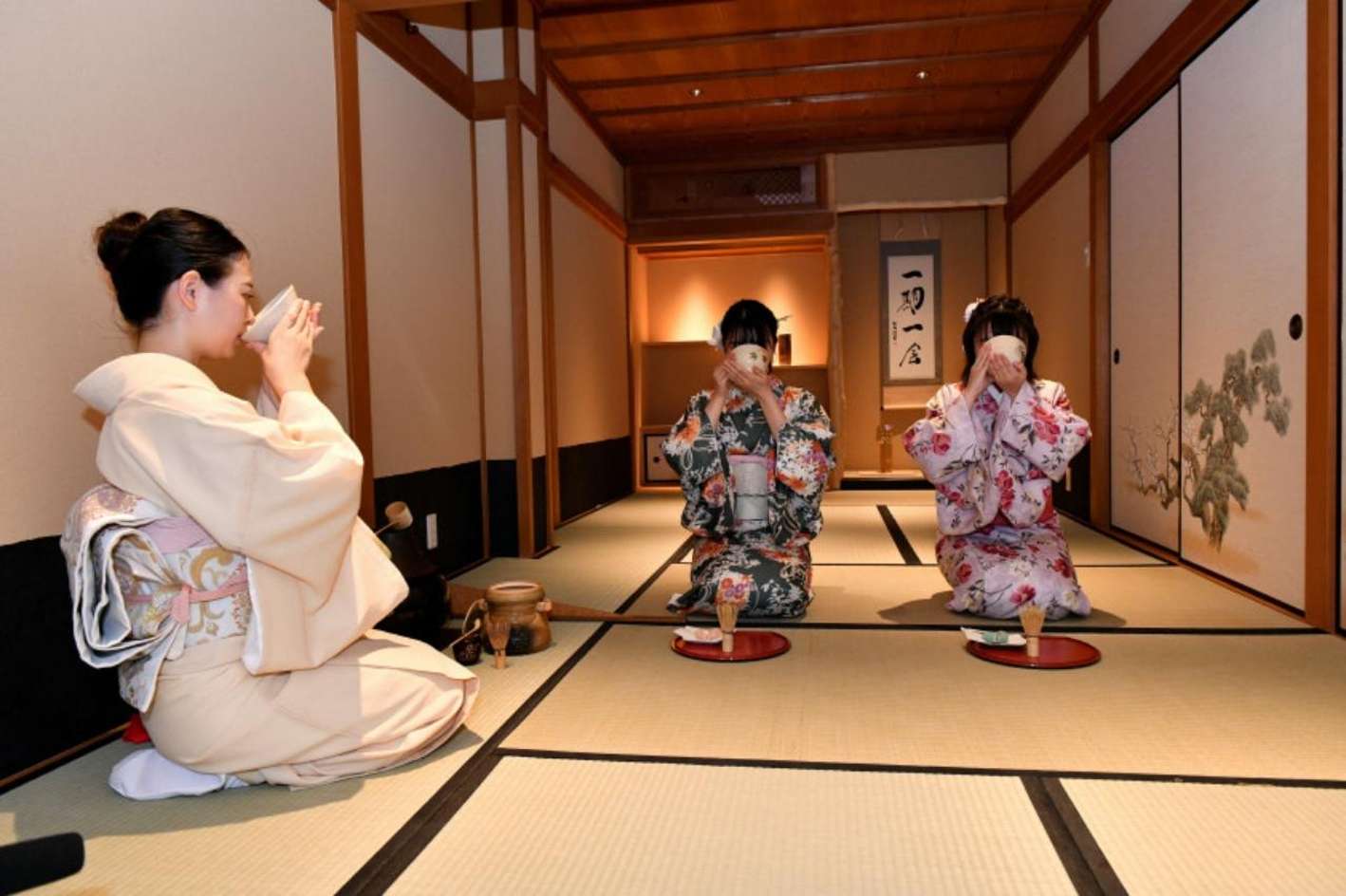
RecommendedPro-tip Pack a clean pair of white socks in your day bag the morning of your ceremony, and skip sandals that day, bare feet are barred from tatami and some venues refuse flip-flops outright.: Rings and watches come off before you handle the bowl, because metal scratches ceramics and lacquerware. At the tea itself, lift the bowl, turn it 90 degrees clockwise away from you, and sip. Lean on nothing: the paper shoji screens tear easily and the cloth borders of the tatami are kept clear out of respect. Photography usually works, flash never does, and some venues bar video outright.
Tattoos face no ban, and wearing kimono as a foreigner is read as appreciation, not appropriation. Tipping never happens in Japan; a simple thank you closes the session properly.
The day itself - best hours to go and what happens if you are late
Two windows work best. Early morning between 9 am and 11 am gives the quietest streets in Gion and Higashiyama before tour groups arrive, and late afternoon from 3:30 pm brings warm light into the gardens as the crowds thin. The lanes between 10 am and 4 pm are the busiest stretch.
Late arrival is the one thing that can end the day. Some venues lock doors at the start time and refuse entry even a minute late; others admit you if you slip in, but the session never runs past its end.
One Uji operator refuses entry once 30 minutes have passed, even for a train delay, with no refund.
Book the slot so that a slow breakfast or a missed bus does not cost the whole reservation, and note that some townhouse venues charge the full fee to a card in advance.
When lateness changes the plan
If this happens
What happens then
Arrive after the start time at some venues
Doors stay locked and the reservation is cancelled without a refund.
Arrive within 10 to 15 minutes late at some tea houses
Entry may be refused and the session cancelled.
Join a session already underway at a lenient venue
The session still ends on time, so you lose minutes.
Arrive more than 30 minutes late in Uji
Entry and participation are denied, and fees are not refunded.
One last practical note: machiya addresses confuse map apps, because land lot numbers double as house numbers along blind alleys. Screenshot the walking route and build in a spare ten minutes.
Who should pick which
Pick Kyoto if
You want machiya townhouses, temple rooms and garden tea houses
You care that the tea schools teaching you are rooted in the city
You will pair the ceremony with kimono and a walk through Gion or Higashiyama
Pick Tokyo if
You cannot fit a Kyoto morning into your route
You prefer chair seating over kneeling on tatami
You want tea near Asakusa, Ginza or Shibuya sightseeing
Pick Osaka if
You decide your plans only a day or two ahead
You want a more relaxed, approachable atmosphere
You will already be at Osaka Castle or Sakai
Book
Kyoto tea ceremony tours to book
KyotoLikely to sell out
45 minutes - 1.5 hours·English, Japanese
5.0(283)
Kyoto: 100% Private Tea Ceremony, Calligraphy, and Kimono
Kyoto is widely considered the premier city in Japan for a first-time ceremony, because tea culture is woven into the city itself.
Tokyo has real venues, including garden teahouses and historic houses at an open-air architecture museum, but hotel studios with modern art and stylish tables sit in the mix too. If you can spare an hour in Kyoto, book it there.
Is a Kyoto tea ceremony worth taking time away from the temples?+
An introductory session runs 45 to 60 minutes, so it fits between sights instead of swallowing a day. Kyoto is regarded as the premier city for a first ceremony, and travelers are generally advised to give it focused time here instead of squeezing it into a stop elsewhere.
Many venues sit within a short walk of Gion and Higashiyama, so you can pair it with a temple on the same walk.
How does Osaka compare for a tea ceremony?+
Osaka offers a relaxed, approachable atmosphere, and its venues range from small group sessions to private bookings. Kyoto carries a different weight: it is the birthplace of chanoyu, and the setting feels part of the ritual.
If your route passes through both, a casual session in Osaka and a formal one in Kyoto can actually work well together.
What if Kyoto is fully booked? Is Kanazawa a good alternative?+
Kanazawa draws far smaller crowds, and its teahouses offer a casual, beginner-friendly welcome with an intimate, daily-life feel. You have several venues to choose from, including a tearoom at Kanazawa Castle Park and one at a samurai family residence.
English instruction is available at several locations too. If Kyoto's calendar is full, Kanazawa keeps the tradition intact.
Will I feel awkward with no Japanese and no etiquette knowledge?+
Introductory tourist ceremonies are built to be fun, relaxed and welcoming to beginners, with cultural lessons and utensil symbolism at the center. English-speaking hosts explain each step and what it means. You will make small mistakes and nobody minds. Save the silent, formal rituals for when you are hooked.
What is the difference between a tourist ceremony and the real thing?+
A formal gathering, called chaji, lasts up to four hours and includes a kaiseki meal, charcoal preparation and a shared bowl of thick tea. That format requires an invitation.
The sessions travelers book are the distilled version: 40 to 60 minutes covering tea preparation, sweets and cultural explanation. Both are genuine; they simply serve different purposes.
How long do beginner ceremonies last?+
Standard introductory group sessions run 45 to 60 minutes, with time to watch a demonstration and whisk your own bowl. Express versions run 20 to 30 minutes, sessions with kimono dressing take about 90 minutes, and packages that add calligraphy can reach two hours. Choose by the time you honestly have.
I have bad knees. Do I have to kneel on tatami?+
No. Seats and stools can be provided at the temple ceremony at Jotokuji, the townhouse session offers a small chair for anyone who prefers it, and bamboo chairs are available on advance request at the Karasumashijo venue. Ask for a chair when you book, so the room is set before you arrive.
Why do they serve a sweet before the tea?+
Ceremonial matcha is strong and bitter, and the sweet eaten first balances it on your palate. The portion of tea itself is only a few small sips, so even visitors who usually avoid green tea tend to be surprised by how fresh it tastes. Drink it soon after it is whisked, before the powder separates.
Tokyo is just the start - where to sit for tea next